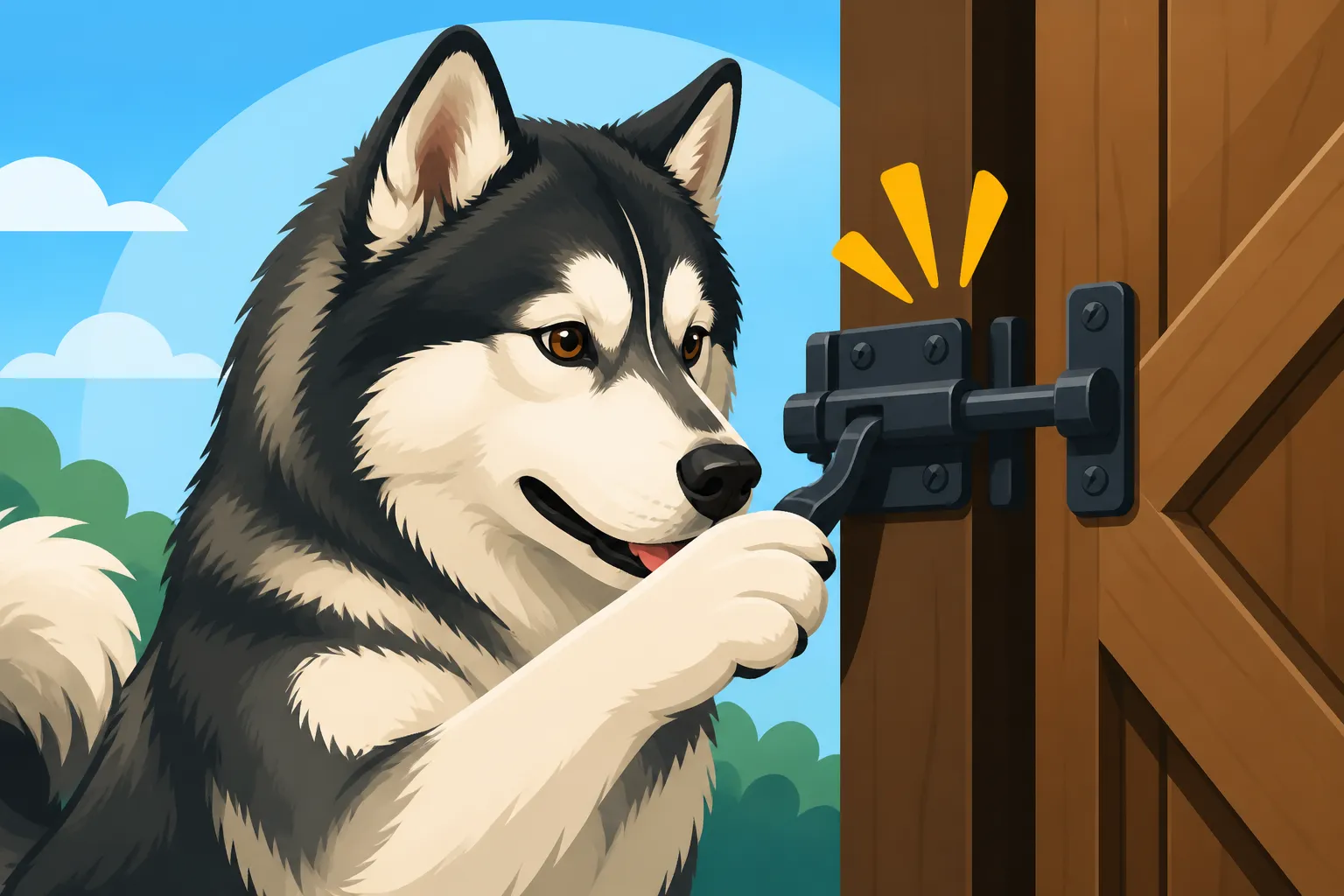
The Gate Latch a Malamute Learns to Open
Few things are as frustrating, or frankly, terrifying, as watching your clever Alaskan Malamute effortlessly unlatch a gate you thought was perfectly secure. You invest time, effort, and money into creating a safe haven, only to discover your furry escape artist has figured out yet another puzzle. This guide is here to shed light on why these magnificent dogs are so adept at gate-opening and, more importantly, what practical, Malamute-proof solutions you can implement to keep them safely where they belong.
Why Your Malamute is a Gate-Opening Houdini
It's not just mischief for the sake of it; there are deeply ingrained Malamute traits that contribute to their remarkable ability to open gates. Understanding these motivations is the first step toward effective prevention.
Their Incredible Intelligence and Problem-Solving Skills
Alaskan Malamutes are brilliant dogs, bred for centuries to work independently and make decisions in harsh environments. This isn't a breed that just follows commands blindly; they assess situations, learn cause and effect, and remember solutions. When faced with a barrier, many Malamutes don't just push against it; they study it. They watch how you operate the latch, they experiment with their paws, noses, and even mouths, until they figure out the mechanics. It's a testament to their innate intelligence, even if it drives us absolutely batty as owners! This problem-solving prowess means a simple lift-and-push mechanism is often just an interesting challenge for them to conquer.
They're observant creatures, often picking up on routines and actions faster than we give them credit for. If your Malamute sees you use a specific motion to open a gate, you can bet they've filed that information away. They learn through observation and repetition, and once they've had a successful "breakout," that memory is deeply reinforced. It’s not just about strength; it’s about their mental agility and persistence.
The Drive to Explore and Chase
Another huge factor in their escape artistry is their powerful instinct to explore and, perhaps more critically, their prey drive. Malamutes were bred to cover vast distances and hunt for food, sometimes independently. This means they have an inherent desire to roam and investigate beyond their immediate surroundings. A gate, to them, isn't just a barrier; it's a doorway to a world of interesting smells, potential "prey" (like a squirrel or the neighbor's cat), or just an open road for an adventure. You might think your yard is exciting enough, but to a Malamute, the grass is always greener, and the smells are always more intriguing, on the other side.
This powerful wanderlust, combined with a strong prey drive, means that even if they are well-exercised and loved, the sight of a rabbit streaking across the street can be an irresistible impulse to open that gate. Their recall is often unreliable in these high-drive situations, which is why physical containment is paramount. Why a Malamute's Recall Cannot Be Trusted is a topic many Malamute owners grapple with, emphasizing why those gates need to be utterly secure.
Boredom and Lack of Stimulation
A bored Malamute is a destructive Malamute, and an escape artist Malamute. These dogs need a job, mental stimulation, and plenty of physical exercise. If they're left alone in a yard with nothing to do, that impressive intelligence quickly turns to finding ways to entertain themselves – and opening a gate is a stimulating puzzle. They're not being malicious; they're simply responding to their breed needs. A lack of appropriate outlets for their energy can turn them into master escape artists, especially during that challenging adolescent phase. Why a Bored Malamute Digs is another common manifestation of this same underlying issue, leading to compromised perimeters.
Imagine being stuck in a room with nothing to do. You'd probably start looking for ways out, right? Your Malamute is no different. Providing ample toys, training sessions, and opportunities for exercise can significantly reduce the motivation to escape. This includes puzzle toys, chews, and regular walks or runs. Think about What an Alaskan Malamute Needs Every Day – it's more than just food and water! Without this, they will find their own entertainment.
Common Latch Types and Why They Fail Against a Malamute
Many standard gate latches are simply no match for the combined intelligence and persistence of an Alaskan Malamute. Here’s a look at common failures.
Simple Thumb Latches and Gravity Latches
These are perhaps the most common and, unfortunately, the least effective against a determined Malamute. A simple thumb latch often involves pushing a lever down or lifting a bar. A gravity latch relies on a simple drop-in mechanism. Your Malamute, with their keen observation skills, can quickly figure out how to push, nudge, or even lift the latch with their nose or paw. They're not necessarily trying to be dainty; they just need to move the mechanism enough for the gate to give.
| Latch Type | Description | Malamute Vulnerability |
|---|---|---|
| Simple Thumb Latch | Plunger or lever pressed by thumb to open. | High – Easy to nudge, push, or paw with enough force/precision. |
| Gravity Latch | Latch arm drops into a catch, lifted to open. | High – Can be lifted by a persistent snout or paw. |
| Spring-Loaded Snap/Carabiner | Clip with a spring-loaded gate. | Medium-High – Can be chewed, shaken, or figured out with dexterity. |
| Lever Handle | Door-style handle, turned to open. | High – Simple leverage often within their reach and capability. |
| Knob Latch | Door-style knob, turned and pulled. | Medium – Requires more dexterity, but some Mals can manage. |
| Slide Bolt | Simple metal bolt slides into a receiver. | Medium – Can be rattled or slid open if not securely fitted. |
| Double-Sided Key Lock | Requires a key from both sides. | Low – High security, but inconvenient for daily use. |
| Heavy-Duty Barrel Bolt | Long, sturdy bolt often with a padlock option. | Low – Very secure, especially with a padlock. |
Gravity latches are notoriously easy for a strong dog to defeat. A good shove or body slam against the gate can often cause the latch to bounce just enough to clear its catch, especially if there's any play in the gate itself. Many owners have returned home to find their Malamute greeting them at the front door, looking completely innocent, after having simply pushed their way through what seemed like a locked gate.
Spring-Loaded Snaps and Carabiners
You might think adding a heavy-duty carabiner or a spring-loaded snap clip is the answer. For a less intelligent or less determined dog, perhaps. But Malamutes are strong, and they use their mouths as tools. A dog can easily gnaw at a snap clip until it opens, or learn to manipulate the spring mechanism. I've heard stories of Malamutes who could effectively "unclip" themselves with surprising dexterity. They'll pull, twist, and apply pressure until the mechanism gives way.
These types of latches, while better than nothing, often require a level of hand-eye (or paw-mouth) coordination that your Malamute might just possess. If the clip is within reach, and they have enough time and motivation, consider it a temporary solution at best. Regularly check for signs of chewing or wear, as a weakened clip is an invitation for escape.
Lever Handles and Knob Latches
Installing a human-style lever handle or doorknob might seem like a smart upgrade, especially if they're higher up. However, many Malamutes quickly learn how to operate these. A lever handle can often be pushed down with a nose or paw. Dogs are surprisingly adept at using their leverage. Knob latches are a bit harder, as they require rotation and a pull, but some exceptionally clever Malamutes have been known to master these too. Think about it: they watch you do it every single day.
The key here is placement and the type of mechanism. If the lever is low enough to be pushed down by a body or paw, it's a risk. A doorknob, while harder, isn't impossible for some. The trick is to make the opening mechanism counter-intuitive or require more than one action simultaneously – something very difficult for a dog to achieve.
Malamute-Proofing Your Gates: Solutions That Actually Work
Now for the good stuff: what does work? It’s often a combination of hardware upgrades and smart strategies.
Double-Locking Mechanisms and Hardware Upgrades
The absolute best defense is a double-locking system. This means having two separate latches or locks on your gate, ideally at different heights and operating on different principles. For example, you might have a heavy-duty barrel bolt mounted high, combined with a padlock or a second, different style of latch mounted lower. The goal is to require two distinct, non-simultaneous actions to open the gate.
Consider investing in heavy-duty, industrial-grade hardware. Look for latches that require a human hand to operate firmly, or mechanisms that are recessed and harder for a paw or nose to manipulate. A sturdy barrel bolt, secured with a padlock, is often a Malamute's nemesis. You can find robust options for these online, on platforms like Amazon, but always prioritize strength and security. Another excellent option is a gate latch that locks automatically when the gate closes, then requires a separate, two-step action to open, such as lifting and pulling a handle simultaneously.
Strategic Placement and Deterrents
Where you place your latches and how you reinforce the gate itself can make a significant difference. Install latches high up, out of reach of even a standing Malamute, and low down, near the ground. This makes it impossible for them to work on both simultaneously. If your gate swings inwards, a sturdy chain and padlock threaded through the gate and post will create an extra layer of security that needs to be manually undone.
For particularly persistent gate-rattlers, consider adding a chew-proof barrier along the bottom of the gate if there's any gap, or reinforcing the gate frame itself. Some owners have even added a small, smooth metal plate over the latch mechanism on the inside of the gate, making it impossible for the dog to get a purchase on the latch itself. Just ensure any additions don't create new hazards for your dog. Remember, the goal isn't just to keep them in, but to keep them safe.
Addressing the Root Cause: Enrichment and Training
Physical barriers are crucial, but they're only one part of the solution. You also need to address why your Malamute is so determined to escape. This means providing ample physical exercise, mental stimulation, and training. A tired Malamute is a good Malamute, and a mentally engaged Malamute is less likely to become a bored escape artist. Ensure they get enough long walks, runs, or opportunities for Whether a Malamute Needs a Job Every Day. If they're not able to get out for their working "fix," they will find other ways to entertain themselves.
Consider enrolling in obedience classes or using online training resources like those offered by BAXTER & Bella. These programs can help teach impulse control, "stay" commands at gates, and generally reinforce good behavior. Working on basic obedience and advanced tasks (like scent work or even urban mushing) can provide the mental stimulation this intelligent breed craves. A Malamute that is regularly challenged and exercised will be far less interested in plotting a gate escape.
Beyond the Latch: A Holistic Approach to Containment
Securing the latch is a critical step, but it's part of a larger strategy to ensure your Malamute's safety and your peace of mind.
The Importance of a Secure Perimeter
A gate is only as strong as the fence it's attached to. Malamutes are known for their ability to dig, climb, and even chew through fences if given the opportunity. If your Malamute can simply dig under the fence next to the gate, the most secure latch in the world won't matter. Fencing a Yard Against a Malamute That Was Bred to Dig is a vital consideration for any Malamute owner. This often means burying fence wire, adding concrete footings, or ensuring your fence is tall enough and climb-proof.
Regularly inspect your entire fence line, not just the gate. Look for loose boards, weakened posts, or new digging attempts. A small crack or loose panel can quickly become a full-fledged escape route for a determined Malamute. Remember, an Invisible Fence Is Wasted Money on a Malamute – they need physical barriers.
Training for Gate Manners
Even with the most secure latches, teaching your Malamute good gate manners is invaluable. This means training them to wait patiently when the gate is opened, rather than bolting through. Start with simple "stay" commands and gradually introduce the gate opening. Reward heavily for calm behavior. Practice this frequently, even if you're just stepping out for a moment. This helps prevent those lightning-fast dashes when you least expect them.
If your Malamute has a tendency to bolt through an open door or gate, consider leash training right up to the gate. Keep them on a leash, even in the yard, during training sessions around the gate, until their impulse control is rock solid. The goal is to instill the habit that an open gate doesn't mean "free for all," but rather, "wait for my cue." This is especially important for The Malamute That Bolts Through an Open Door.
Recognizing the Signs of a Budding Escape Artist
Stay vigilant and recognize the early signs that your Malamute might be eyeing that gate as an exit strategy. Are they spending more time investigating the latch? Are they pawing at the gate or rubbing their nose along the seams? Any increased interest or repeated attempts to manipulate the gate should be a red flag. Don't wait until they succeed to upgrade your security.
Also, observe their general demeanor. Are they pacing more? Are they showing signs of boredom, like chewing inappropriately or excessive vocalization? These can be indicators that they need more mental or physical stimulation, which, if left unaddressed, can manifest as escape attempts. Consider What a Malamute Destroys Before It Turns Two and Whether a Malamute Destroys a Crate might indicate about their energy levels and need for outlets. The earlier you intervene with both physical security and behavioral enrichment, the better your chances of preventing future escapes.
Disclaimer
This article is for general informational purposes only and does not constitute professional advice. Laws, prices and regulations vary by location and change over time. Consult a qualified professional for guidance on your specific situation.