Where a Malamute’s Zinc Lesions Appear First
One of the most disheartening things any Malamute owner can experience is watching their beloved companion suffer from a skin condition, especially when those first tell-tale signs pop up on their beautiful, expressive faces. It’s not just a cosmetic issue; these skin problems can be incredibly uncomfortable, itchy, and even painful for your Malamute. This guide will walk you through exactly where you're most likely to spot the initial lesions of zinc responsive dermatosis, a common yet often misunderstood ailment in our breed, helping you identify it early and seek the right help.
Understanding Zinc Responsive Dermatosis in Malamutes
Alaskan Malamutes are magnificent dogs, known for their strength, endurance, and striking appearance. However, beneath that thick, luxurious coat, some carry a genetic predisposition that makes them uniquely susceptible to certain health issues, and zinc responsive dermatosis is high on that list. It’s not just about getting enough zinc in their diet; it's about how their bodies process it.
Why Malamutes Are Prone to Zinc Issues
You might be feeding your Malamute a top-quality diet, packed with all the right nutrients, and still find yourself facing the frustrating reality of zinc responsive dermatosis. This isn't a reflection on your care; it's often a genetic quirk of the breed. Malamutes, along with a few other northern breeds like Siberian Huskies and Samoyeds, can have a decreased ability to absorb zinc from their intestines, even when it's present in adequate amounts in their food. This means that while other dogs thrive on a certain level of dietary zinc, our Malamutes might be experiencing a functional deficiency at a cellular level. It’s a bit like having a leaky bucket – no matter how much water you pour in, it never quite fills up. This unique challenge often means that a "normal" amount of zinc simply isn't enough for them, leading to a cascade of skin problems. Understanding why these magnificent dogs struggle with this particular nutrient is key to understanding the condition itself. For a deeper dive into how this absorption issue connects to other health concerns, you might want to read about how poor zinc absorption links a Malamute's three disorders.
The Role of Zinc in Skin Health
Zinc is an unsung hero in the body, playing a crucial role in countless physiological processes, especially those related to skin, coat, and immune function. For healthy skin to regenerate, to maintain its protective barrier, and to fight off everyday environmental threats, it absolutely needs sufficient zinc. When a Malamute isn't absorbing enough of this vital mineral, the skin cells can't divide and mature properly. This leads to a breakdown in the skin's integrity, making it fragile, prone to inflammation, and much more susceptible to secondary infections. Think of zinc as the mortar holding the bricks of your Malamute's skin barrier together; without enough, the wall starts to crumble, leaving it vulnerable to invaders. This is why when you see skin issues, zinc deficiency is one of the first things a knowledgeable vet will consider for a Malamute.
Genetic Predisposition vs. Dietary Deficiency
It's easy to jump to conclusions and assume that if your Malamute has zinc issues, their food must be lacking. While a truly deficient diet can certainly cause problems, for many Malamutes, the root cause is genetic. This inherited trait means their bodies simply aren't designed to efficiently extract and utilize zinc from food, regardless of how zinc-rich that food is. This condition is known as Type I zinc responsive dermatosis. There's also Type II, which is more about an excessively fast-growing puppy or a diet that's either genuinely low in zinc or contains high levels of ingredients (like calcium or phytates found in some grains) that actually block zinc absorption. Knowing the difference is critical, as the treatment approach can vary. If it's genetic, dietary adjustments alone might not be enough, and lifelong supplementation will likely be necessary. If it's diet-induced, a food change might be all that's needed. This is why getting a proper veterinary diagnosis is so important – they can help determine whether your Malamute's zinc problem is diet or genetics.
The Initial Signs: Where to Look First
When zinc levels start to drop, the skin doesn't just react randomly. There are very specific areas of your Malamute's body that will typically show the first signs of trouble. These areas are usually characterized by rapid cell turnover or are exposed to more friction and environmental factors, making them prime spots for lesions to manifest. Catching these early can make a world of difference in your Malamute's comfort and recovery.
Early Warning Areas: Face and Muzzle
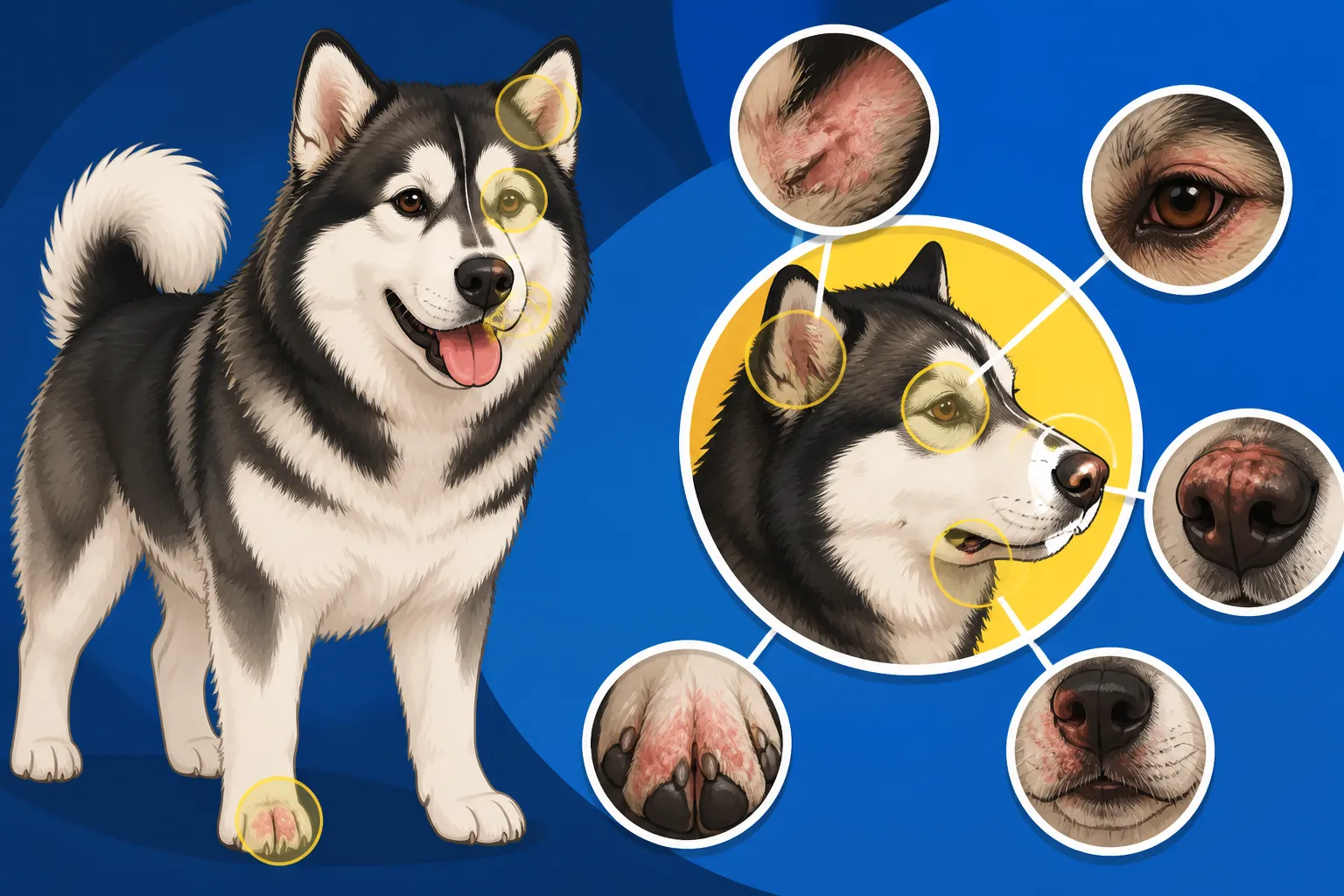
For most Malamutes experiencing zinc responsive dermatosis, the very first place you’ll notice changes is often around their face, particularly their muzzle and nose. You might see a subtle redness or a slight scaling begin to develop. Owners often describe it as a dry, crusty appearance, almost like their Malamute has chapped lips or a perpetual "dirty nose" that just won't wipe clean. This crusting can become quite thick and tenacious, making the skin underneath raw and irritated. It's a key indicator because these areas are so prominent and constantly exposed, making them susceptible to the early breakdown of the skin barrier that zinc deficiency causes. A common question among owners is whether a Malamute's muzzle crusts first, and the answer is overwhelmingly yes. This area, along with the eyes and ears, is a critical diagnostic location.
The Unique Appearance of Nasal and Perioral Lesions
These facial lesions aren't just dry patches; they have a distinct character. Around the nose, mouth (perioral area), and chin, the skin might become hyperkeratotic, meaning it thickens and hardens. This often results in a scaly, flaky appearance, sometimes with deep fissures or cracks that can be quite painful, especially when your Malamute eats, drinks, or plays. The skin might also appear red and inflamed, occasionally oozing or developing secondary bacterial or yeast infections due to the compromised skin barrier. Imagine persistent, itchy scabs that never seem to heal properly, combined with a dull, sparse coat in the affected regions. This isn't just cosmetic; it deeply impacts their quality of life, making their sensitive facial areas constantly uncomfortable. It’s a very specific look that, once seen, is hard to mistake for anything else, especially when combined with other classic symptoms.
Examining the Eyes and Ears
Beyond the muzzle, your Malamute's eyes and ears are other prime locations for those initial, subtle signs of zinc deficiency. Around the eyes, you might observe similar crusting, scaling, and even a loss of hair, giving them a somewhat "spectacled" appearance. The skin can become very fragile and prone to irritation, leading to constant itching and rubbing. Similarly, the edges of the ear flaps – particularly the tips – can develop a dry, flaky, and scabby texture. This isn't your typical ear infection inside the canal; it's a skin issue on the pinna itself. When you run your fingers along the ear tips, you might feel a rough, sandpapery texture, and you might even see small, patchy areas where the fur seems thinner or the skin looks inflamed. If you're concerned about hair loss, checking whether a Malamute loses hair around its eyes can be an important early step. These areas are often overlooked compared to the more obvious muzzle, but they are equally crucial in the early identification of zinc responsive dermatosis.
Progression of Zinc Lesions: What to Expect Next
If left unaddressed, the initial zinc lesions around your Malamute's face and ears won't typically stay localized. The deficiency continues to impact cellular health throughout the body, and the dermatosis will gradually spread to other areas, often targeting specific points that experience more pressure or friction. This progression can escalate the discomfort and potential for secondary health complications.
Spreading to Pressure Points and Joints
Once the facial areas are affected, the dermatosis often moves to other parts of the body that experience constant pressure or friction. This includes the elbows, hocks (ankles), and stifles (knees), as well as the ventral (underside) aspects of the body like the chest and groin. Here, the skin thickens, becomes dry, scaly, and loses hair. These areas can develop "plaques" – raised, flat-topped lesions that are often hyperpigmented (darker). Imagine your Malamute lying down; the parts of their body that repeatedly contact the floor are where these lesions are most likely to appear next. The constant pressure on already compromised skin exacerbates the issue, leading to persistent irritation and a higher risk of secondary infections, which can manifest as pustules or oozing sores. It's a painful cycle, where the skin's inability to repair itself is constantly challenged by everyday movements. In such cases, checking whether a Malamute's elbows go bald can be a clear sign of advancing issues.
Changes in Paw Pads and Foot Health
The paw pads are another critical area where the progression of zinc responsive dermatosis becomes evident. You might notice them becoming abnormally thick, hard, and prone to cracking. This condition, known as hyperkeratosis, makes the pads extremely uncomfortable, leading to lameness or a reluctance to walk. Imagine walking on perpetually cracked heels – it’s painful and debilitating. The thickening can be so severe that the pads lose their natural pliability, making movement stiff and tender. In severe cases, deep fissures can form, bleeding and opening the door wide for bacterial infections, making every step agony for your Malamute. This is not just a nuisance; it significantly impacts their mobility and quality of life. Owners often wonder whether a Malamute's paw pads thicken, and for zinc-deficient dogs, this is a distinct and painful reality. It's vital to examine your Malamute's feet regularly, especially if you're already seeing signs elsewhere.
Secondary Infections and Their Impact
One of the most concerning aspects of advanced zinc responsive dermatosis is the high likelihood of secondary infections. When the skin barrier is compromised and inflamed due, for example, to Zinc Responsive Dermatosis in an Alaskan Malamute, it becomes an open invitation for bacteria (like Staphylococcus) and yeast (like Malassezia) to take hold. These opportunistic pathogens can cause intense itching, leading your Malamute to scratch, lick, and chew the affected areas incessantly. This self-trauma only worsens the skin damage, creating a vicious cycle. The infections manifest as pustules, crusts, red inflamed patches, and often a distinct, unpleasant odor. This is a tell-tale sign that a Malamute's skin smells when infected. These infections not only add to the discomfort but can also be notoriously difficult to clear up without addressing the underlying zinc deficiency. They often require specific antibiotics or antifungal medications in addition to zinc supplementation. It’s a stark reminder that what starts as a "skin issue" can quickly become a much more complex and painful problem.
| Affected Area | Initial Signs (Early Stage) | Progression Signs (Later Stage) |
|---|---|---|
| Muzzle & Nose | Redness, dry patches, subtle scaling, "chapped" appearance | Thick crusting, fissures/cracks, raw skin, hair loss (perioral) |
| Around Eyes | Minor scaling, slight redness, sparse hair | Significant hair loss (spectacled look), persistent crusts, irritation |
| Ear Tips/Edges | Dryness, rough texture, mild flaking | Thickened, scabby patches, increased hair loss, inflammation |
| Elbows/Hocks | Subtle scaling, slight hair thinning | Thickened plaques, hyperpigmentation, significant hair loss, sores |
| Paw Pads | Mild dryness, slight loss of pliability | Severe thickening (hyperkeratosis), deep cracks/fissures, lameness |
| General Skin | Dull coat, mild dandruff | Oily/greasy skin, strong odor, pustules (secondary infection) |
Differentiating Zinc Lesions from Other Skin Issues
Identifying zinc responsive dermatosis can be tricky because many skin conditions share similar symptoms. It's easy to mistake the initial signs for allergies, common infections, or even simple dry skin. This is why a precise diagnosis from your veterinarian is absolutely essential. Self-diagnosing based on appearance alone can lead to incorrect treatment and prolonged suffering for your Malamute.
Ruling Out Allergies and Parasites
When a Malamute starts to develop itchy, crusty skin, especially around the face and ears, many owners (and even some vets) might first suspect allergies or parasites. Environmental allergies (atopy) or food allergies can certainly cause redness, itching, and recurrent skin infections. Fleas, mites, and other external parasites also lead to intense pruritus and skin irritation. The key difference, however, often lies in the distribution and character of the lesions. While allergies tend to be generalized or appear in areas like the belly, armpits, and paws, zinc lesions have a very specific, bilateral (symmetrical) pattern, often starting on the face and pressure points. Parasites might also be identifiable upon close inspection or skin scrapings. Ruling these out is a crucial step in the diagnostic process. A vet will perform diagnostic tests, such as skin scrapings or allergy tests, to ensure you're not missing a more common culprit.
Distinguishing from Autoimmune Conditions
Another group of conditions that can mimic zinc responsive dermatosis are autoimmune diseases, particularly pemphigus foliaceus or discoid lupus erythematosus. These are serious conditions where the body's immune system mistakenly attacks its own skin cells, leading to severe crusting, erosions, and ulcerations, often appearing on the face, paw pads, and mucocutaneous junctions (like around the nose and lips). The lesions can look remarkably similar to severe zinc deficiency, making differentiation challenging without specific tests. For example, discoid lupus often causes depigmentation and crusting on the nose, similar to the "Whether a Malamute's Muzzle Crusts First" symptom of zinc deficiency. However, autoimmune diseases are usually diagnosed through a skin biopsy, which allows a veterinary pathologist to examine the cellular changes under a microscope and identify the characteristic immune responses. Without this crucial step, you could be treating for zinc deficiency while an autoimmune condition quietly progresses, delaying effective treatment.
The Importance of a Vet's Expertise
Given the complex nature of skin conditions and their overlapping symptoms, the importance of a thorough veterinary examination cannot be overstated. Your vet won't just look at the visible lesions; they'll take a complete history, asking about diet, environment, general health, and any other symptoms. They'll also perform a comprehensive physical exam. While the visual signs are highly suggestive, a definitive diagnosis of zinc responsive dermatosis usually involves a combination of clinical signs, ruling out other conditions, and sometimes, a therapeutic trial with zinc supplementation. In some cases, a skin biopsy may be recommended, especially if the presentation is atypical or if other conditions are strongly suspected. Remember, while you are your Malamute's best advocate, your vet has the diagnostic tools and medical knowledge to accurately identify the problem and guide you toward the most effective treatment. Do not hesitate to seek professional help for any persistent skin issues.
Diagnosis and Early Intervention
Once you suspect zinc responsive dermatosis, or any serious skin condition in your Malamute, prompt veterinary attention is paramount. Early diagnosis and intervention can prevent much suffering and reduce the severity of the disease. The process isn't always straightforward, but with the right approach, your Malamute can find relief.
Veterinary Examination and Diagnostic Tests
When you bring your Malamute to the vet with suspicious skin lesions, they'll start with a thorough physical examination, paying close attention to the affected areas – the muzzle, eyes, ears, elbows, and paw pads. They'll likely perform some initial diagnostic tests to rule out other common skin problems. These might include skin scrapings to check for mites, cytology (examining cells from the skin surface under a microscope) to identify bacterial or yeast infections, and possibly fungal cultures. Blood tests can be run to check overall health and organ function, but a definitive zinc blood test isn't always reliable for diagnosing zinc responsive dermatosis because serum zinc levels don't always reflect the zinc status within the skin cells. Often, a presumptive diagnosis is made based on the breed, clinical signs, and exclusion of other conditions. In some cases, a skin biopsy might be recommended to differentiate from autoimmune diseases or other dermatological issues. This comprehensive approach ensures that the correct underlying problem is identified.
The Critical Window for Supplementation
Once zinc responsive dermatosis is suspected or confirmed, starting appropriate zinc supplementation promptly is absolutely crucial. This is your critical window for intervention. The sooner you begin, the faster you can halt the progression of the lesions, alleviate your Malamute's discomfort, and prevent the development of severe secondary infections. Zinc works by correcting the cellular dysfunction in the skin, allowing healthy cell turnover and repair. Delaying treatment can lead to more widespread lesions, deeper cracks in the skin, increased pain, and a higher chance of chronic secondary infections that become more challenging to resolve. While a Malamute puppy may not outgrow zinc deficiency, early supplementation can prevent significant damage. The goal is to flood the system with easily absorbable zinc, which can quickly turn the tide against the dermatosis. Many owners report seeing improvement within a few weeks of consistent, correct supplementation.
Dietary Adjustments and Supplement Choices
For Malamutes with zinc responsive dermatosis, simply feeding a high-quality kibble may not be enough, even if it claims to have "enough" zinc. This is especially true for those with the genetic predisposition where their bodies can't absorb it efficiently. While checking whether a Malamute's kibble contains enough zinc is a good first step, dietary adjustments usually involve more targeted strategies. Your vet might recommend a specific zinc supplement, often in the form of zinc methionine or zinc sulfate, which are generally well-absorbed. The dosage is critical – too little won't help, and too much zinc can harm a Malamute by causing copper deficiency or gastrointestinal upset. It's vital to work closely with your veterinarian to determine the correct supplement type and dosage for your individual dog. In some cases, reducing ingredients known to block zinc absorption, such as high levels of calcium or phytates found in certain grains, might also be part of the dietary strategy. This ensures that every effort is made to improve your Malamute's zinc uptake. If you're wondering which zinc supplement suits a Malamute, your vet is the best source of tailored advice.
Managing Zinc Responsive Dermatosis Long-Term
Zinc responsive dermatosis is rarely a one-time fix; for most Malamutes, especially those with the genetic form, it requires ongoing, dedicated management. This isn't just about clearing up the current flare-up, but about preventing future episodes and ensuring your Malamute maintains healthy skin throughout their life. It's a commitment, but one that yields immense rewards in their comfort and well-being.
Lifelong Management and Monitoring
For many Malamutes, particularly those with the inherited form of zinc malabsorption, zinc supplementation will be a lifelong necessity. This means not just treating the symptoms when they appear, but continuing with a maintenance dose of zinc even when their skin looks perfectly clear. Think of it like managing a chronic condition; consistency is key. You'll need to closely monitor your Malamute's skin, especially the "hot spots" like the muzzle, eyes, ears, and paw pads, on a regular basis. Any reappearance of dryness, scaling, or crusting should prompt a review of their zinc dosage with your vet. It's a journey of adjustments and careful observation, ensuring your Malamute receives the precise amount of zinc they need to thrive without over-supplementing, which can lead to other health issues. This commitment ensures that your Malamute needs zinc for life in a safe and effective way.
Preventative Measures and Environmental Factors
Beyond consistent supplementation, there are several preventative measures you can take to support your Malamute's skin health and minimize the risk of flare-ups. Regular, gentle grooming helps remove dead skin cells and allows you to inspect their skin closely. Keeping their living environment clean and free of excessive irritants can also reduce stress on their skin. Be mindful of extreme weather conditions; while Malamutes are built for cold, prolonged exposure to harsh sun or very dry air can exacerbate skin issues. Providing comfortable bedding can reduce pressure on their joints and elbows, potentially lessening the severity of lesions in those areas. Maintaining a balanced diet and overall good health also supports their immune system, making them more resilient. Early identification is crucial; learning where to check an Alaskan Malamute's skin weekly can make a huge difference in catching problems before they escalate.
The Cost and Commitment of Treatment
Let's be realistic: managing a chronic condition like zinc responsive dermatosis comes with a financial commitment. The cost of lifelong zinc supplementation can add up, and that's not including the initial diagnostic tests, vet visits, and any treatments for secondary infections. These can include antibiotics, antifungal medications, special shampoos, or even more advanced dermatological care. Owners should be prepared for ongoing expenses, which is why having a good pet insurance policy can be incredibly helpful. Companies like Healthy Paws often cover unexpected illnesses, and while pre-existing conditions are typically excluded, a policy purchased early in your Malamute's life can provide a financial safety net for conditions that develop later. The commitment also extends beyond money; it's about the time and dedication required for consistent daily supplementation, regular skin checks, and follow-up vet appointments. However, the peace of mind knowing your Malamute is comfortable and healthy is truly priceless, and with proper management, they can live a full, happy life. The cost of what zinc supplementation costs over a Malamute's life is a consideration many owners budget for.
Disclaimer
The information provided in this guide is intended for educational purposes only and should not be considered a substitute for professional veterinary advice. Always consult with a qualified veterinarian for any health concerns or before making any decisions related to your pet's health and treatment.