What a Malamute’s Cap and Bar Markings Are
When you first fall in love with an Alaskan Malamute, their striking appearance is often one of the first things that captures your heart. But as you delve deeper, you might find yourself wondering about the specific terms breeders and enthusiasts use to describe their coats, leading to questions like "What exactly is a 'cap'?" or "Where is the 'bar' supposed to be?" This guide is here to demystify those often-confusing phrases, breaking down the unique facial markings that help give the Alaskan Malamute its distinctive, majestic, and sometimes mischievous look.
Unpacking the Alaskan Malamute's Distinctive Coat Patterns
The Alaskan Malamute, with its powerful build and noble stance, is often thought of simply as a "black and white" dog. While many certainly fit that description, the truth is that the breed's coat can come in a surprising array of colors and patterns, all contributing to their rugged, wild beauty. Understanding these nuances isn't just for show ring enthusiasts; it helps us appreciate the full spectrum of beauty within the breed and understand what makes each Malamute unique.
More Than Just "Black and White": The Malamute Spectrum
It's true, when many people picture an Alaskan Malamute, their mind immediately conjures an image of a majestic dog with a stark black and white coat. And yes, that's a classic, stunning look! But if you spend any time observing these magnificent animals, you'll quickly discover that their coats are far more diverse and complex than a simple two-tone description allows. You'll find Mals in shades of grey, from a pale silver to a deep charcoal; beautiful reds that range from light auburn to a rich, earthy chestnut; and even sables, which are a beautiful blend of black-tipped hairs over a lighter undercoat, often giving them a grizzled appearance. Some are even pure white, a truly ethereal sight.
These variations in color are then layered with intricate patterns, particularly on their heads, which contribute immensely to their unique aesthetic. These aren't just random splotches of color; they are defined markings that play a significant role in how we perceive the dog's face and overall silhouette. The play of light and shadow across their thick fur, combined with these patterns, gives them that unmistakable "wolf-like" quality that so many people adore. It’s this rich tapestry of color and marking that truly makes each Malamute a walking piece of art, a living testament to their Arctic heritage. The Colors an Alaskan Malamute Comes In
The Importance of Head Markings in Breed Standards
Beyond simply being visually appealing, specific head markings hold significant weight within the breed standard for Alaskan Malamutes. This isn't just about personal preference; it's about preserving the distinctive characteristics that define the breed. These markings are like a signature, clearly distinguishing a purebred Malamute from other Northern breeds, such as the Siberian Husky, which, while similar in some ways, carries different facial patterns and overall conformation. A well-defined cap and bar are highly regarded, not just for aesthetics but as an indicator of adherence to the breed's historical look.
Breeders, for instance, pay close attention to these patterns when evaluating puppies and choosing breeding pairs, aiming to produce offspring that exemplify the breed's ideal traits. While variations are natural and part of the Malamute's charm, the general outline and clarity of these head markings are key identifiers. They contribute to the strong, intelligent, and dignified expression that is so characteristic of the Alaskan Malamute. It’s a bit like looking at a painting; certain brushstrokes are essential for the overall masterpiece, and for the Malamute, their head markings are those essential details that complete their powerful image.
Understanding the "Cap" Marking
When we talk about an Alaskan Malamute's "cap," we're referring to one of the most prominent and defining features of their head markings. It's often the first thing people notice, framing their expressive eyes and strong skull. Think of it as the dog's natural crown, a solid expanse of color that commands attention.
Defining the Malamute's Cap
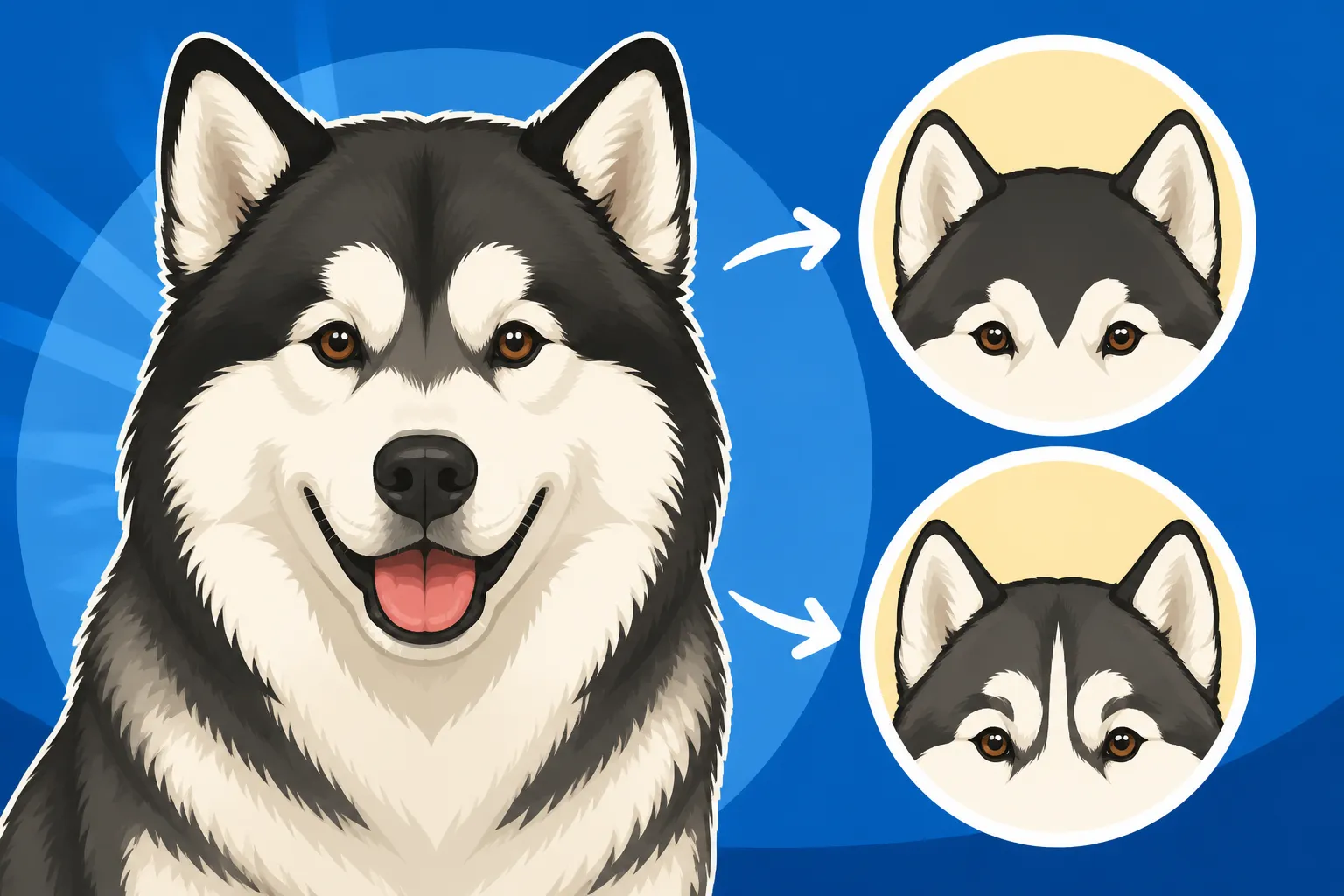
The "cap" on an Alaskan Malamute is typically described as a solid block of color that covers the top of the dog's skull and often extends down over the ears and slightly onto the neck. Imagine a beautifully fitted hood, covering the entire crown of their head. This cap is usually a darker shade – black, various tones of grey, or even a rich red, depending on the dog's overall color. What a Malamute's Cap Marking Looks Like The color of the cap contrasts beautifully with the lighter, often white, fur found on the muzzle, cheeks, and forehead. This contrast is what creates much of the Malamute's striking facial definition.
The edges of the cap can be very clean and sharply defined, or they can be a little softer, with some blending into the lighter areas. Regardless, it forms a distinct "hood" over the head. Sometimes, the cap might have a very subtle lightening or fading in the center, especially on grey or red Malamutes, but for the most part, it presents as a solid, dominant color. It’s this broad, unified area of color that sets the stage for the rest of the facial markings and gives the Malamute its characteristic "mask" when combined with other features.
Variations and Ideal Presentation of the Cap
Just like snowflakes, no two Malamute caps are exactly alike. While the general concept remains the same – a solid color covering the skull – the exact size, shape, and depth of color can vary significantly from one dog to another. Some Malamutes might have a cap that is quite expansive, extending well down their neck and even onto their shoulders, giving them a very "hooded" appearance. Others might have a more minimal cap that primarily covers just the top of their head and ears. The depth of color can also vary; a black cap on one Malamute might be an inky, deep black, while on another, it might be a softer, almost charcoal shade. This is especially true for those beautiful grey Malamutes where the cap can range from light silver-grey to a rich, dark slate.
The "ideal" cap, according to many breed enthusiasts, is one that is clean-edged and well-defined, providing a clear contrast to the lighter areas of the face. However, it's important to remember that these are natural variations, and a Malamute with a less-than-perfectly symmetrical or sharply defined cap is still a magnificent example of the breed. These variations contribute to each dog's unique personality and expression. It's fascinating to observe how the cap interacts with the lighter fur around the eyes, sometimes creating "goggles" or other distinct patterns that further personalize their look. This interplay of color on the head is truly one of the most captivating aspects of the Alaskan Malamute's appearance, making each face a study in natural artistry.
Decoding the "Bar" Marking
Moving from the top of the head down to the muzzle, we encounter another crucial element of the Malamute's facial tapestry: the "bar." This marking adds another layer of definition and often contributes significantly to the dog's overall facial symmetry and expression.
Identifying the Facial Bar
The "bar" is a stripe of color that runs down the bridge of the Alaskan Malamute's nose, starting from between the eyes and extending down towards the nose leather. What a Malamute's Bar Marking Looks Like It's essentially a colored stripe that bisects the usually white or lighter-colored muzzle. The color of the bar typically matches the color of the cap – so if you have a black-capped Malamute, its bar will likely be black; a grey-capped Malamute will have a grey bar, and so on. This consistency helps to create a cohesive and balanced look on the face.
The bar can vary in width, from a narrow, almost pencil-thin line to a broader, more substantial stripe that covers a good portion of the nasal bridge. In many Malamutes, this bar will connect directly with the cap, appearing as a seamless extension of the color from the top of the head down to the muzzle. However, some Malamutes might have a bar that is distinct from the cap, with a break of white fur between the two. The presence and clarity of the bar are key components in the overall "mask" effect that defines the Malamute's face. It contributes to their often serious, intelligent, and sometimes quite intense gaze, drawing attention to their eyes and powerful muzzle.
The Spectrum of Bar Appearances
Just like the cap, the bar marking on an Alaskan Malamute can present with a wide range of appearances, adding to the individuality of each dog. A classic, well-regarded bar is often clean, straight, and evenly colored, creating a clear division down the muzzle. This can make the dog's face appear very symmetrical and bold. However, it's not uncommon to see variations that are equally charming and characteristic of the breed. Some Malamutes might have a bar that is thinner or thicker than average, while others might have a bar that isn't perfectly straight, perhaps with a slight curve or a minor interruption in color.
You might also observe bars that appear "faded" or "broken," where the color isn't as solid or consistent throughout its length, or where small patches of white break up the stripe. These variations are perfectly normal and don't detract from the dog's quality or health. In fact, these unique characteristics are what make each Malamute's face so memorable. The bar plays a crucial role in framing the lighter areas of the muzzle and often complements the "goggles" or other eye markings, contributing to that intense, often smiling, Malamute expression we all adore. Whether perfectly symmetrical or wonderfully unique, the bar is an integral part of the Alaskan Malamute's distinctive facial canvas.
The Symphony of Cap and Bar: How They Work Together
The cap and bar aren't just isolated markings; they are key players in a larger artistic composition that defines the Alaskan Malamute's face. Together, they create what is famously known as the "Malamute mask," a feature that imbues them with their iconic, often wild, and deeply expressive look.
Creating the Classic Malamute Mask
The true magic happens when the cap and bar come together with the lighter fur on the muzzle and forehead, along with the eye rims, to form the classic Malamute mask. Imagine the darker cap flowing down the head, meeting the contrasting white or lighter fur of the cheeks and forehead. Then, the bar cuts a path down the center of the muzzle, usually matching the cap's color, dividing the lighter snout area. This creates a powerful contrast that accentuates their dark, intelligent eyes and strong brow. What a Malamute's Cap and Bar Markings Are
Often, this mask will include "goggles" – rings of darker fur around the eyes that add depth and intensity to their gaze. The contrast is what truly defines the mask: dark against light, creating a chiaroscuro effect that highlights their rugged features. This isn't just a random assortment of colors; it's a carefully orchestrated pattern that has evolved over generations to give the Malamute its distinctive, almost primal appeal. It’s a face that speaks of ancient Arctic winds and tireless journeys, a true hallmark of the breed's heritage.
Impact on Overall Appearance and Expression
The interplay of the cap and bar, and their variations, profoundly impacts a Malamute's overall appearance and the expressions they convey. You might look at two Malamutes with similar base coat colors, but because of subtle differences in their cap and bar, their faces can tell entirely different stories. One might have a very broad, dark cap and a wide, prominent bar, giving them a very serious, stoic, almost formidable expression. Another might have a lighter, more diffused cap and a narrower bar, lending them a softer, perhaps more approachable or even playful look. It’s truly amazing how these pigment patterns can alter the perceived "personality" of their face.
Think about how human expressions change with different makeup or facial hair; it’s a bit similar for Malamutes. A crisp, well-defined bar can emphasize symmetry, while a broken or faded bar might give a more rugged, naturalistic feel. This is also where the difference between a full mask and a cap and bar becomes clear. A full mask Whether a Malamute Can Have a Full Mask typically covers more of the face, including the cheeks and even part of the lower jaw, making the facial features seem more solid and less delineated. The cap and bar, however, highlight the individual components, celebrating the contrast and definition. This intricate dance of color and pattern ensures that while all Malamutes share that unmistakable breed type, each one retains its own unique facial charm.
Why These Markings Matter (And What They Don't)
Understanding the cap and bar markings isn't just about appreciating their beauty; it has practical implications within the breed world, particularly concerning breed standards and identification. However, it's equally important to distinguish between what these markings signify and what they absolutely don't tell you about a Malamute.
Breed Standard and Identification
For anyone involved in the world of purebred dogs, especially those who participate in conformation shows or breeding programs, the specific markings of an Alaskan Malamute's head are of considerable importance. The breed standard, set by organizations like the American Kennel Club, details the preferred appearance, and markings like the cap and bar are explicitly mentioned. A Malamute with clear, well-defined markings that align closely with the standard is often highly regarded in the show ring. This isn't just for arbitrary reasons; these patterns are considered intrinsic to the breed's historical look and help preserve its unique identity.
Beyond the show ring, these markings serve as a crucial identifier. When someone sees a dog with that distinct cap and bar, they immediately recognize it as an Alaskan Malamute, rather than a Siberian Husky or another Northern breed. It’s part of the visual shorthand that helps differentiate these similar-looking dogs. For reputable breeders, these patterns are part of a larger genetic picture, helping them assess lineage and maintain consistency within their breeding lines. While you, as a pet owner, might simply adore your Malamute's markings because they make them unique, know that in the broader breed community, they carry a deeper significance in defining and perpetuating the true Alaskan Malamute type. You can learn more about how breeders screen for health and type by looking into The Health Tests Both Alaskan Malamute Parents Should Have as part of a responsible breeding program.
What Markings Don't Tell You
Here’s where we need to bring in a healthy dose of realism, because it's easy to get caught up in the aesthetics and forget what truly matters. While cap and bar markings are visually significant and important for breed standards, they tell you absolutely nothing about the actual character, health, or working ability of an Alaskan Malamute. Let that sink in. A Malamute with a perfectly symmetrical cap and a crisply defined bar is not inherently healthier, smarter, or more capable than one with a slightly asymmetrical cap or a broken bar. Their markings are purely cosmetic.
It’s easy to project qualities onto a dog based on how "perfect" its markings are, but that's a disservice to the animal. A Malamute’s temperament – whether they’re goofy, stubborn, affectionate, or aloof – is shaped by genetics, socialization, and training, not by the pattern of fur on their head. Similarly, their physical capabilities, whether for pulling a sled or just being an active family companion, are a result of their build, conditioning, and underlying health, not their facial design. So, while you might admire a Malamute's striking cap and bar, remember that the true treasure lies within their robust health, their loyal spirit, and their incredible working drive. If you're buying supplements or special grooming tools from retailers like Chewy, make sure they align with your Malamute's genuine health needs, not just cosmetic preferences. Don't fall into the trap of thinking a "prettier" dog is a "better" dog.
Common Malamute Head Markings: A Quick Comparison
To help you visualize and understand the differences between these important facial markings, here's a quick comparison.
| Feature | Cap | Bar |
|---|---|---|
| Location | Covers the top of the skull, extending over the ears and often slightly down the neck. | A distinct stripe of color running down the bridge of the nose, from between the eyes to the nose leather. |
| Appearance | A broad, often solid block of color (black, grey, red, sable). Can have clean or softer edges. | A linear stripe, typically matching the cap's color. Varies in width from thin to broad. Can be solid or have breaks/fades. |
| Connection | Often connects to the colored "bar" on the muzzle, forming a continuous line of color down the head. | May connect seamlessly to the cap, or there might be a distinct break of white fur between the bar and the cap. |
| Overall Effect | Frames the face, defining the upper portion of the mask. Creates a strong contrast with the lighter forehead and cheeks. | Divides the muzzle, adding symmetry and drawing attention to the eyes and nose. Contributes significantly to the overall "mask" effect. |
| Variations | Can be expansive or more minimal. Color depth can vary. | Can be straight or slightly curved, solid or broken/faded. |
| Significance | Key component of the traditional Malamute "mask," important for breed identification and show standards. | Essential for creating the distinctive facial symmetry and mask. Helps differentiate from other Northern breeds. |
This table should give you a clear visual and descriptive understanding of these primary head markings.
The Evolution of Malamute Markings and What to Expect
It's natural to wonder if these beautiful markings are set in stone from birth or if they change over time. When you bring home that adorable Malamute puppy, its markings might look a little different as it grows, which can sometimes be a surprise to new owners. Understanding this natural progression helps manage expectations and appreciate the subtle transformations your Malamute will undergo.
Do Malamute Puppy Markings Change?
Yes, absolutely! Just like a human baby's hair color might change from infancy to childhood, a Malamute puppy's markings can and often do evolve as they mature. When you first pick up a tiny, fluffy Malamute pup, its cap and bar might appear quite distinct, but often they are softer, or the colors aren't as deeply set as they will be in adulthood. The fur on a puppy is, after all, puppy fur – it's typically softer, sometimes fuzzier, and the pigmentation isn't always fully developed. Whether a Malamute Puppy's Color Changes
You might notice that a puppy with a seemingly darker cap and bar will lighten slightly, or conversely, a lighter-marked puppy will develop deeper, richer tones as their adult coat comes in. The lines of the cap and the definition of the bar can become more pronounced and crisper as the puppy sheds its soft undercoat and its coarser, adult guard hairs grow in. This process usually happens over the first year or two of their life. So, don't be alarmed if your Malamute's mask undergoes some subtle shifts; it's a perfectly normal part of their development and simply another facet of their captivating growth journey. It's one of the many exciting things about watching your Malamute grow up, seeing their full adult coat and markings truly emerge.
Other Facial Characteristics to Note
Beyond the cap and bar, there are a few other facial characteristics that are important to note when appreciating an Alaskan Malamute. One of the most critical is eye color. The breed standard for Alaskan Malamutes explicitly states that eyes should be brown, in any shade. Blue eyes are a disqualifying fault in the show ring, as they suggest a likely cross with a Siberian Husky, which can have blue eyes. So, while a blue-eyed Malamute might be visually striking, it doesn't adhere to the breed standard and isn't considered a purebred trait for a Malamute. Why Blue Eyes Disqualify an Alaskan Malamute
Another interesting feature is the presence of "goggles" – these are often darker rings of fur around the eyes that enhance the dog's expressive gaze and are an integral part of the overall mask. The pattern of white on the forehead, often called a "blaze" if it's a stripe, or simply the white breaking up the cap, also contributes significantly. The nose leather should be black or brown, depending on the coat color (brown for red Malamutes), and eye rims and lips should also be pigmented. All these elements combined with the cap and bar create that powerful, unmistakable Alaskan Malamute face. It's a testament to centuries of natural selection and human stewardship that these dogs retain such distinct and consistent features. When purchasing accessories or grooming products from places like Chewy, you'll find items designed to keep these features, like their beautiful coats and skin, in top condition.
Living with a Malamute: Beyond the Markings
While we've delved deep into the fascinating world of Alaskan Malamute cap and bar markings, it’s crucial to step back and remember that these are just external attributes. Owning a Malamute, or any dog, is about so much more than their looks. It’s about understanding their unique personality, their historical purpose, and their day-to-day needs.
Character and Temperament: More Than Skin Deep
You could have two Alaskan Malamutes with identical, picture-perfect cap and bar markings, and yet their personalities could be as different as night and day. One might be an outgoing, boisterous goofball who loves everyone, while the other might be a more reserved, independent spirit who takes time to warm up. This is because a Malamute's character and temperament are shaped by a complex interplay of genetics, early socialization, consistent training, and the environment they grow up in. Their markings have absolutely no bearing on whether they’ll be prone to digging, vocalizing with their signature "woo," or exhibiting their strong prey drive.
These are dogs bred for hard work and companionship in harsh environments. They are intelligent, strong-willed, and notoriously independent thinkers. They require consistent, positive reinforcement training, a secure environment, and plenty of exercise to thrive. Focusing too much on superficial aspects like markings can distract from the real commitment and understanding required to truly live harmoniously with this magnificent breed. When you’re looking at your Malamute, remember that their value isn't in how well their markings adhere to a standard, but in the unwavering loyalty, joy, and challenges they bring into your life.
The Working Dog Legacy: A Reminder of Purpose
The Alaskan Malamute was bred for freighting – to haul heavy loads over long distances at a steady pace. This historical purpose has ingrained certain traits into their very being that are far more important than any facial marking. Their incredible endurance, their powerful build, their thick double coat, and their intelligent problem-solving nature are all testaments to their working legacy. When you see a Malamute, even a pet Malamute, remember that underneath that beautiful cap and bar lies an animal built for a job. Whether the Working Alaskan Malamute Still Exists
This isn't to say that every Malamute needs to pull a sled for a living, but they do need outlets for their energy and intelligence. Whether it’s long hikes, weight pull sports, or even just challenging puzzle toys, providing them with a "job" helps them stay happy and fulfilled. A bored Malamute is often a destructive Malamute, regardless of how perfectly symmetrical their facial markings are. So, as you admire their distinct appearance, also commit to honoring their heritage by providing for their physical and mental needs. That's the real essence of Malamute ownership – appreciating the whole dog, from their stunning cap and bar to their powerful, ancient heart.
Disclaimer
This article is for general informational purposes only and does not constitute professional advice. Laws, prices and regulations vary by location and change over time. Consult a qualified professional for guidance on your specific situation.