Whether Malamutes Carried Supplies in Wartime
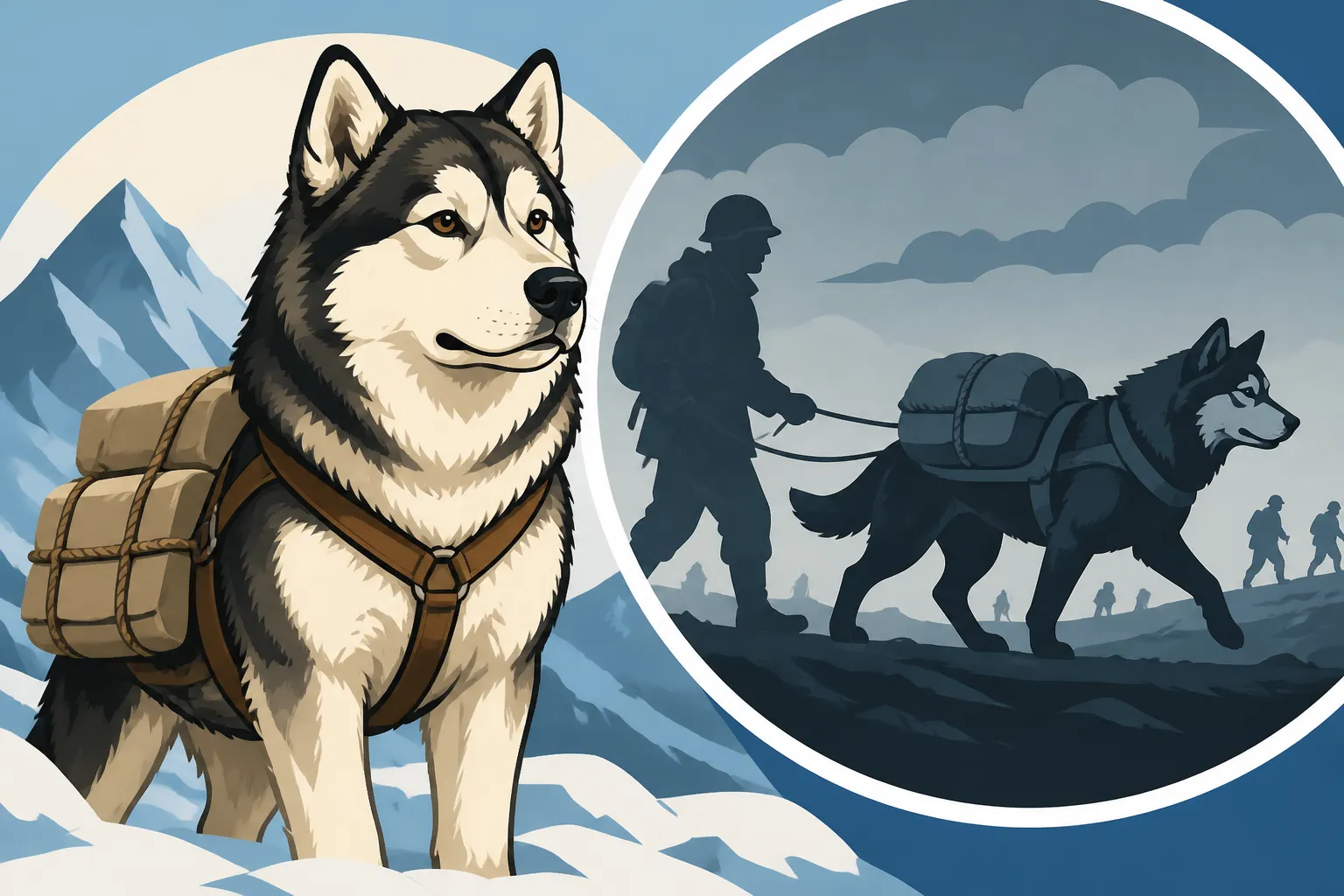
Alaskan Malamutes did help move supplies in wartime, especially in Arctic and other snowbound regions where roads and vehicles could not be relied on. Their strength and cold-weather endurance made them useful for hauling freight, equipment and messages. The historical record does not always identify individual dogs by breed, though, so it is important to distinguish documented sled-dog work from claims about Malamutes alone.
How Malamutes fit into wartime transport
Sled dogs filled gaps vehicles could not
In a winter campaign, a truck is only useful if it can reach its destination. Deep snow, rough terrain, ice and extreme cold could make roads impassable or leave vehicles stranded. In those conditions, dog teams offered a practical way to move loads across terrain that was difficult for wheeled transport.
Alaskan Malamutes were built for hauling rather than sprinting. A team could pull freight over snow at a steady pace, making dogs useful for carrying supplies between remote posts or across stretches where a vehicle could not travel. A sled could be loaded with provisions, tools, communications equipment or other material needed by personnel in the field.
That did not make a dog team a replacement for every military transport system. Teams had their own limits: they needed food, rest, care and experienced handlers, and their loads and pace depended on snow and terrain. Their value was that they could work where other options were limited. For background on the breed’s traditional freight role, see What the Mahlemut Used Their Malamutes For and How Much Weight a Malamute Freight Team Hauled.
Wartime work was broader than carrying supplies
Moving freight is the clearest connection between Malamutes and wartime service, but sled dogs could support other tasks too. In remote winter conditions, a team might help transport a person, carry equipment to a location, or move messages and supplies between separated groups. In emergencies, sled dogs could also assist with travel through snow when ordinary routes were blocked.
These tasks depended on the conditions and the people using the team. A dog did not know a military route or understand a mission; the handler provided direction, judged the terrain and managed the load. The dogs’ contribution was physical and practical: they could keep moving through cold, snowy country with a sled behind them.
It is also worth separating transport work from combat. Malamutes are not best understood as attack dogs or battlefield weapons. Their wartime usefulness was primarily logistical, especially in northern settings. The wider history of military sled teams is covered in Whether Malamutes Served in the Second World War.
What is known about Malamutes in wartime
Breed labels in historical records can be imprecise
When people describe wartime sled dogs as “Malamutes,” they may be referring to dogs of the breed, dogs resembling the breed, or northern sled dogs more generally. Historical records often focus on the team, its handler or its task rather than documenting every dog’s breed and ancestry.
That makes absolute statements risky. It is fair to say that Malamutes were suited to this kind of work and that Malamute-type dogs were associated with hauling in northern conditions. It is less safe to claim that every military sled dog in Alaska or the Arctic was a registered Alaskan Malamute. Teams could include dogs from different backgrounds, and the names used for northern sled dogs were not always consistent.
The distinction matters because the breed’s reputation can make a general sled-dog story sound more specific than the evidence supports. When reading a historical account, check whether it names Malamutes directly or simply describes dogs, sled teams or Arctic transport. For context on the wartime question as a whole, see Whether Malamutes Served in the Second World War and Whether the Army Requisitioned Malamutes.
The Arctic setting shaped what teams could do
Cold-weather transport was not just a matter of attaching dogs to a sled. The handler had to consider snow conditions, route safety, load balance, weather and the dogs’ condition. A team traveling across packed snow faced different demands from one moving through soft drifts or over uneven ice.
The dogs also needed to be managed as working animals. Food, rest and attention to paws and harness fit mattered. A poorly fitted harness could rub; a load that was too heavy or badly balanced could make travel harder and risk injury. In a military setting, those practical details affected whether a team could reliably get supplies where they were needed.
The work was demanding, but it drew on a role the breed had been developed for long before modern military operations. Malamutes had hauled freight and supported human travel in northern communities for generations. That history helps explain why people considered them useful in wartime, without implying that every dog’s service was identical. Related background appears in How Far a Malamute Freight Team Traveled in a Day and Which Expeditions Used Alaskan Malamutes.
| Wartime task | Why a sled team could help | Important limitation |
|---|---|---|
| Hauling freight | Dogs could pull supplies across snow where vehicles struggled | Load and pace depended on terrain, weather and the team’s condition |
| Moving equipment | A sled could carry gear to remote or difficult-to-reach locations | The route still required a knowledgeable handler |
| Carrying messages or provisions | Teams could travel between separated points in winter conditions | Dogs needed food, rest and ongoing care |
| Supporting travel in emergencies | A team could help move people or equipment through snow | This was not the same as combat service |
Why the Malamute was suited to the job
Strength and steady pulling mattered more than speed
An Alaskan Malamute is a large, powerful working dog with a history of hauling loads. In freight work, the goal is not necessarily to move as fast as possible. A steady team that can continue across difficult ground may be more useful than a faster team designed for racing.
This difference is central to understanding the breed’s wartime role. Malamutes were associated with heavy pulling and endurance, not with the speed-focused work often associated with racing sled dogs. A freight team’s success depended on managing effort over distance, keeping the dogs healthy and matching the load to the conditions. For a closer look at the breed’s traditional job, see Freight, Not Speed: What Separates a Malamute From a Racing Dog.
The breed’s build and coat also made it well suited to cold environments. But even a cold-adapted dog is not invulnerable. Working in severe weather still demands proper care, sensible workloads and attention to signs of fatigue or injury. A thick coat does not remove the need for food, water, rest and humane handling.
A team relied on the handler as much as the dogs
A sled team was a partnership. The dogs provided the pulling power, while the handler selected a route, controlled the team and judged when to continue or stop. A handler also had to understand how the dogs worked together and how changing snow or weather could affect the trip.
That human skill is easy to overlook when stories focus on the strength of the breed. In reality, a team could only be useful if it was trained and managed well. The handler had to keep the dogs fed and in working condition, deal with equipment problems, and avoid pushing the team beyond what it could safely do.
The same principle applies to modern Malamute activities. A dog’s natural pulling ability does not mean it should be asked to haul any load at any age or in any weather. Owners who want to explore pulling should learn safe conditioning and equipment use first. If preparing for ordinary ownership, shoppers may find harnesses and basic care items through retailers such as Chewy, but equipment should be selected for the individual dog and its intended activity.
What wartime service meant for the breed
Wartime demand did not always protect the dogs
Military needs can place pressure on working animals. Dogs used for transport were expected to perform under difficult conditions, and the demands of service could include long journeys, cold exposure and heavy work. The specific experience varied by team, location and handler, so it would be misleading to describe all wartime Malamutes as having the same working life.
The larger history of sled dogs during wartime also includes the strain that military use and wartime disruption could place on northern dog populations. When accounts discuss the breed’s history, it is useful to look beyond the heroic image of a dog pulling a sled and ask what happened to the animals, how they were cared for and whether the work affected the breed’s numbers. See Whether Wartime Losses Hurt the Malamute Breed for more on that part of the story.
It is also important not to confuse wartime service with a single, organized Malamute program. The breed’s historical presence in northern regions and its suitability for freight work do not mean that every Malamute was enlisted, formally trained or sent into a military operation. Some claims are about sled dogs in general, while others refer to particular teams or places.
The legacy is practical, not just romantic
Stories of Malamutes carrying supplies can sound dramatic, but the most meaningful lesson is practical: the breed was valued because it could do demanding work in a landscape where transport was difficult. That usefulness grew out of generations of experience with northern dogs and the people who bred, handled and cared for them.
Today, most Malamutes are companions rather than military or freight dogs. They still benefit from exercise and purposeful activity, but modern owners should not assume that a dog needs to haul heavy loads to be fulfilled. Walking, training, scent games and appropriately supervised pulling activities can offer engagement without turning a household pet into a working team.
If planning for a Malamute at home, it helps to think about supplies with the same care that a handler would give working equipment: choose a well-fitting harness, keep food and water accessible, and prepare for seasonal needs. Chewy is one place owners may look for routine food and care supplies; the key is to choose items that suit the dog rather than treating a retailer’s selection as a substitute for veterinary or training advice. For the breed’s traditional background, The Mahlemut of Kotzebue Sound Bred the Alaskan Malamute offers useful context.
What the history can and cannot tell us
The broad answer is yes: Malamutes and Malamute-type sled dogs were associated with wartime supply transport in northern and Arctic conditions. Their strength and ability to pull steadily through snow made them useful where vehicles were limited or ineffective.
The careful answer is that not every wartime sled dog can be identified as a purebred Alaskan Malamute, and not every account of military sled teams describes the same role. Some records emphasize transport, others describe dogs more generally, and individual histories are not always preserved in detail. The most accurate way to tell the story is to recognize the breed’s contribution while being precise about what the records actually identify.
For modern owners, the history is a reminder that the Malamute is a working breed shaped by cooperation between dogs and people. A dog’s strength is only one part of that story. Responsible care, suitable activity, and equipment chosen for the dog’s needs matter just as much as the impressive image of a sled team moving through snow.
Disclaimer
This article is for general informational purposes only and does not constitute professional advice. Laws, prices and regulations vary by location and change over time. Consult a qualified professional for guidance on your specific situation.