Whether a Malamute Can Have a Full Mask
A Malamute can have dark facial markings that people describe as a full mask, but that phrase is not always used consistently. Some owners mean dark color across much of the face; others mean markings around the eyes. This guide explains how those patterns relate to recognized Malamute face markings, what can change as a puppy grows, and when a facial change deserves attention.
What people mean by a full mask on a Malamute
Full mask is a descriptive term, not a precise pattern name
“Full mask” is often an informal description rather than a single, tightly defined Malamute marking. One person may use it for dark coloring across most of the face, while another may mean a dark area around both eyes. That variation can make conversations with breeders confusing, especially when someone is comparing puppy photographs or trying to identify a dog’s color and markings.
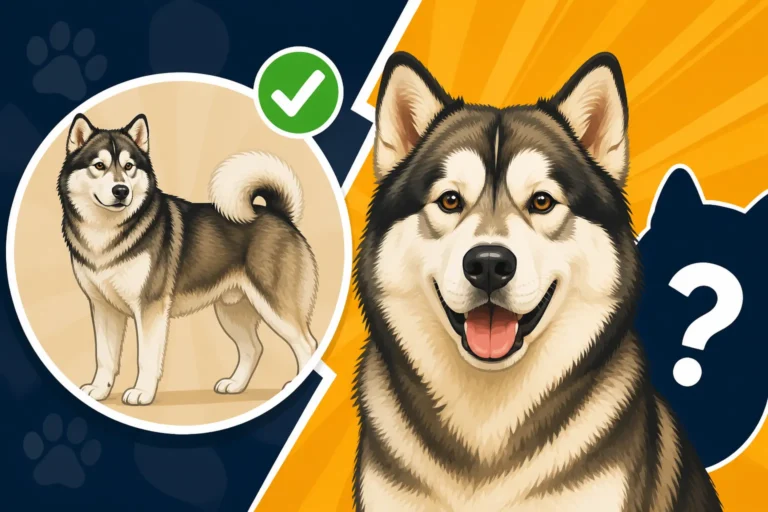
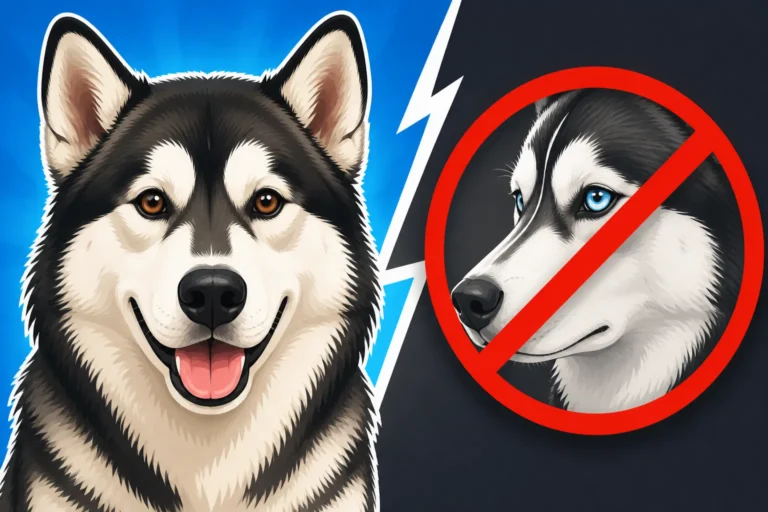
In everyday use, the term usually points to a face that looks more extensively shaded or dark than a mostly white face. The dark color may extend over the forehead and around the eyes, or blend into a band across the face. The exact pattern varies from dog to dog; the phrase alone does not tell you how far the color extends or whether it forms a particular shape.
Malamute face markings are commonly described with terms such as cap, bar, and mask. A cap is colored fur over the top of the head. A bar is a narrow colored marking running down the face. A mask generally refers to colored areas around the eyes or across parts of the face. To see how these terms are used for other patterns, read What a Malamute's cap and bar markings are and What a Malamute's cap marking looks like.
Can a full mask occur in the breed?
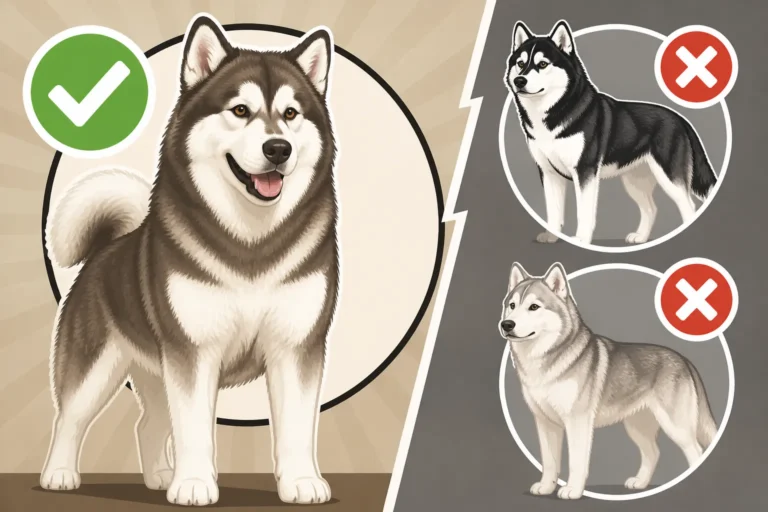
A Malamute can have substantial dark facial markings, including a pattern that an owner or breeder calls a full mask. The breed’s face markings can vary: some dogs have mostly white faces, while others have a cap, bar, mask, or a combination of markings. The overall coat may also include different shades and patterns permitted by the breed standard.
It helps to separate two questions that are often blended together: Can this look occur in a Malamute? and Does the look match a particular show standard or breeder’s preferred pattern? A dark, extensively marked face is not automatically evidence that a dog is a crossbreed or that something is wrong. For show eligibility, interpretation belongs to the applicable breed standard and the judge’s evaluation of the dog as a whole, not to the informal label “full mask.”
The standard’s description of face markings uses specific terms, and those terms do not always match the language people use in casual conversation. If you are evaluating a puppy, ask the breeder to explain what they mean by “full mask” and request photographs that show the face clearly. For more on the accepted range of coat colors and markings, see Which Colors the Alaskan Malamute Standard Allows.
How a Malamute’s face markings are arranged
Mask, bar, cap, and open face
Malamute faces can have a range of patterns. A cap covers colored fur over the top of the head. A bar is a narrow line or band of color running down the face. A mask usually describes darker areas around the eyes or across the face. An open face, by contrast, is mostly white, though a dog may still have colored fur on the head.
These features can appear on their own or together. A dog might have a cap and bar, a cap with shading around the eyes, or a face that is largely white. The boundaries are not always crisp or symmetrical. A pattern that looks like a broad mask in one photograph may look less extensive in another because of lighting, camera angle, winter coat, or the dog’s facial expression.
For examples of individual markings, What a Malamute's bar marking looks like explains the bar pattern, while What a Malamute's cap marking looks like focuses on the cap. Those descriptions are useful starting points, but a real dog’s markings may not fit a neat label. When discussing a particular puppy, a clear front-facing photograph and a side view are more useful than relying on a single word.
How facial markings relate to the whole coat
A full-looking mask is only one part of a Malamute’s overall appearance. The dog’s coat can include a range of colors, with white often appearing on the underside, legs, feet, and parts of the face. The face pattern should be considered alongside the coat’s overall color and distribution rather than treated as a separate coat color by itself.
People sometimes confuse a striking face pattern with a special variety or a separate type of Malamute. A mask is a marking, not a breed or a guarantee of a particular lineage. It does not, by itself, establish whether a dog is show-bred, freight-bred, or from a particular family line. If you are researching lineage and appearance, The Kotzebue and M'Loot Lines Behind Every Modern Malamute offers broader context about the breed’s history.
The term can also be confused with similar-looking markings in other northern breeds. A dark band around the eyes may remind someone of a Husky’s facial pattern, but one feature does not identify a dog’s breed. Overall structure, coat, movement, temperament, pedigree, and appropriate health information all matter when identifying or choosing a dog.
| Description | Common meaning | What to keep in mind |
|---|---|---|
| Full mask | Informal term for extensive dark facial coloring | People use the phrase differently |
| Mask | Colored areas around the eyes or across parts of the face | The exact shape can vary |
| Bar | A narrow marking running down the face | May appear with other markings |
| Cap | Colored fur over the top of the head | Does not necessarily cover the face |
| Open face | Face that is mostly white | The dog may still have color on the head |
What changes as a Malamute grows
Puppy markings can look different in photographs
A puppy’s face can look different as its coat grows in and matures. The proportions of the head change, the coat becomes fuller, and the contrast between light and dark fur may appear different as the dog develops. A puppy photographed close up may also seem to have a broader mask than the same dog in a later, more distant photograph.
Seasonal coat changes can affect how clearly markings appear. When a Malamute sheds its dense undercoat, the coat may look less plush; when it grows back, the face can appear fuller and the pattern may seem more blended. That is generally a change in how the coat presents, not evidence that the dog’s facial marking has suddenly become a different inherited pattern.
If you are considering a puppy and want to understand how its markings may develop, ask the breeder for photographs taken at different ages and in ordinary lighting. Compare the same angle when possible. A photograph taken in strong sunlight, shade, or indoor lighting can make dark fur look more or less pronounced, so images are helpful but not a guarantee of the adult appearance.
Markings are not a reliable health or temperament test
A dark or extensive mask does not, by itself, indicate a health problem, a particular temperament, or a dog’s ability to work. Facial pattern is an appearance feature. It cannot tell you whether a Malamute has inherited a particular condition, how the dog will behave with other dogs, or whether it will be suited to your household.
When choosing a puppy, ask about health screening, veterinary care, the parents’ health history, and the breeder’s approach to matching puppies with homes. Appearance can be part of your preference, but it should not replace those conversations. The Health Tests Both Alaskan Malamute Parents Should Have provides a useful starting point for questions about health information.
Likewise, a face that seems to change quickly may deserve a closer look if the change is actually caused by irritation, swelling, hair loss, crusting, or a new patch of discolored skin. Those are different from ordinary coat markings. If the skin itself looks sore or the dog is rubbing its face, arrange veterinary advice rather than assuming the change is simply a mask developing.
How to assess a Malamute with a full-looking mask
Questions to ask a breeder
If a breeder describes a puppy as having a full mask, ask them to explain the pattern in plain language. Is the color mainly around the eyes, across the forehead, or down the muzzle? Does the puppy also have a cap or bar? These questions help clarify what the breeder means without turning a variable description into a promise about how the adult coat will look.
Ask to see recent photographs of the puppy in natural light, along with pictures of the parents if available. You can also ask whether the breeder has photos of older dogs from related litters. Family photographs may show a range of patterns, but they still cannot predict the exact appearance of an individual puppy with certainty.
A practical checklist can keep the conversation focused:
- Ask the breeder to describe the face pattern without relying only on “full mask.”
- Request clear photographs from the front and side.
- Ask whether the pattern is typical of the breeder’s lines.
- Discuss health screening and veterinary records separately from coat appearance.
- Confirm that the puppy’s paperwork and breed information match the breeder’s claims.
When appearance is only one part of the decision
It is completely reasonable to have a favorite look. A bold mask can be striking, and some people are drawn to a mostly white face instead. But choosing a Malamute solely for a particular facial pattern can lead to disappointment if the adult coat looks different from the puppy photographs—or if appearance distracts from the day-to-day realities of living with a large, active northern breed.
Consider the dog’s needs and your household at the same time. Malamutes need thoughtful exercise, grooming, training, and secure management. A dramatic mask does not make a dog easier or harder to care for. If you are still learning whether this breed fits your life, The Household an Alaskan Malamute Was Built For and What Alaskan Malamute Owners Wish They Had Known can help you weigh the broader commitment.
The clearest answer is that a Malamute can have dark facial markings that people call a full mask, but the phrase is informal and can mean different things. Look at the actual pattern, ask what the breeder means, and evaluate the dog on health, temperament, and fit for your home—not on the label alone.
Disclaimer
This article is for general informational purposes only and does not constitute professional advice. Laws, prices and regulations vary by location and change over time. Consult a qualified professional for guidance on your specific situation.