Whether a Malamute’s Nose Can Be Snow Nose
A Malamute’s normally dark nose can develop a lighter pink or brown patch, often during colder, darker months. That change can be harmless seasonal pigmentation, but crusts, sores, swelling, or discomfort point to a different problem. This guide explains what snow nose looks like, how to tell it from other changes, and when to call your veterinarian.
What snow nose looks like in an Alaskan Malamute
The usual seasonal pattern
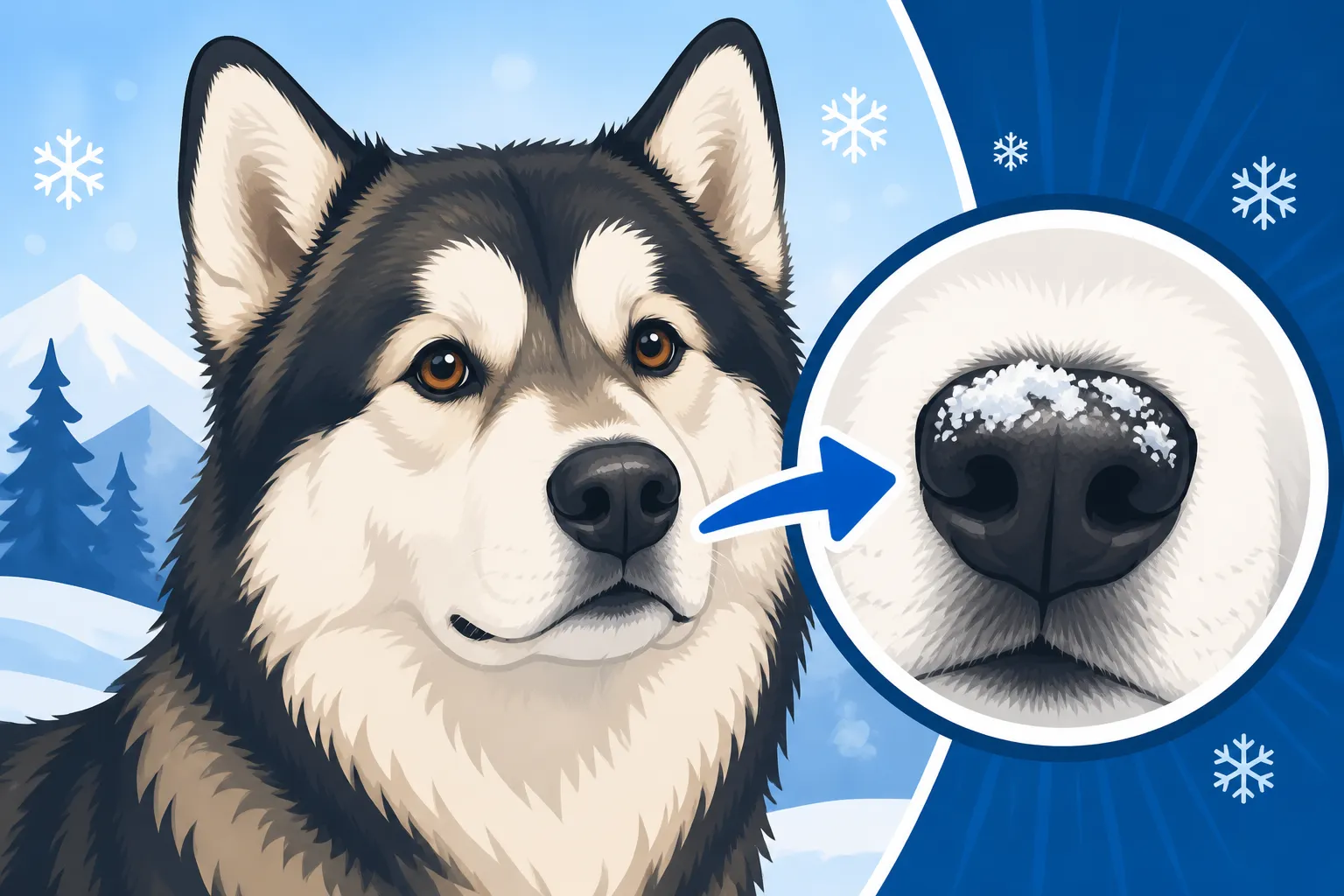
Snow nose, also called winter nose, is a change in pigment on the nose leather. A Malamute’s nose may become partly lighter—often pink or brown—while the skin itself stays smooth and comfortable. The change can be subtle, such as a pale stripe down the middle, or more noticeable across a larger area.
The color may darken again as seasons change, though the timing and degree of change vary from dog to dog. Some dogs have recurring seasonal changes; others retain a lighter area. Despite the name, snow nose does not require a dog to live in snow. It is associated with seasonal changes in pigmentation, not simply with a cold or wet nose.
It can be unsettling to notice a pink patch when you are used to seeing a black nose, especially if the change seems to appear quickly. Take a clear photo in natural light and compare it with earlier pictures. That can help you see whether the area is gradually changing and gives your veterinarian a useful record if you need an appointment.
What the nose should feel like
With uncomplicated pigment loss, the nose generally feels much the same as before. The surface is intact, without a new sore, thick crust, bleeding, swelling, or obvious tenderness. Your Malamute should also behave normally when eating, sniffing, and having the muzzle gently handled.
A change in color alone is different from a change in the skin’s texture. Dryness, repeated cracking, an ulcer, or a patch that appears raw is not something to dismiss as snow nose. Some dogs naturally have a slightly textured nose, so the key is noticing what has changed for your own dog.
Pigment can vary naturally among dogs, and appearance alone cannot confirm a diagnosis. If the pale area persists, spreads, or comes with any other change, a veterinarian can assess the skin and decide whether testing is needed. For a closer look at winter-related nose color changes, see Whether a Malamute's Nose Fades in Winter.
Snow nose compared with other nose and skin problems
Color change versus crusting or irritation
Snow nose usually describes a change in pigment, not a crusting skin condition. If your Malamute’s muzzle is flaky or crusted, the cause could be irritation, infection, an immune-mediated skin condition, or another issue that needs a proper examination. A pale patch surrounded by smooth, healthy skin is different from a painful or inflamed patch.
This distinction matters because trying several creams or supplements on your own can delay the right treatment. For example, changing food or adding zinc is not a reliable way to diagnose a nose problem. Zinc-related skin disease can affect the muzzle, but a veterinarian must consider the full pattern and other possible causes. The article Whether a Malamute's Crusty Skin Means Zinc Deficiency explains why crusting should not automatically be attributed to a nutrient problem.
Look for changes beyond the nose, too. Crusts around the lips or eyes, hair loss, thickened skin, itching, or recurring infections make a simple seasonal color change less likely. If the muzzle is affected, Whether a Malamute's Muzzle Crusts First may help you understand another pattern worth discussing with your vet.
Pigment loss elsewhere on the face or body
A change in nose color can occur on its own, but pigment loss in other places may call for closer attention. Check the lips, eye rims, paw pads, and any area of skin that has changed color. Also note whether the dog seems bothered by sunlight or has redness, discharge, or discomfort around the eyes.
Some disorders that affect pigment can involve more than the nose and may need prompt veterinary investigation. A veterinarian can distinguish a benign seasonal change from a condition involving the skin or eyes. For context on one uncommon but important disease that can affect pigmentation, see Whether an Alaskan Malamute Gets Uveodermatologic Syndrome. That topic is not a reason to assume the worst; it is a reminder that changes around the face deserve attention when they occur alongside eye symptoms.
| What you notice | More consistent with uncomplicated snow nose | Needs veterinary attention |
|---|---|---|
| Color | A gradual pink or brown area on the nose | Rapid or spreading color change, especially with other symptoms |
| Surface | Smooth and intact | Crusted, cracked, ulcerated, thickened, or bleeding |
| Comfort | No apparent tenderness or itching | Pain, repeated rubbing, sensitivity, or swelling |
| Other signs | Dog eats, sniffs, and behaves normally | Eye changes, discharge, lethargy, appetite change, or lesions elsewhere |
How to care for a Malamute with a lighter nose
Keep a simple record and avoid home treatments
Take a photo in similar lighting every week or two while you monitor the change. Make a note of when you first noticed it, whether the color is spreading, and whether the skin feels different. If you have older photos from walks or family pictures, they may help show whether the change has happened before.
Avoid scraping at a crust or applying a human skin product just to see whether it helps. Dogs lick their noses, and ingredients that are acceptable for people may be unsuitable if swallowed. Sunscreens containing zinc oxide are a particular concern if a dog can lick the product. Ask your veterinarian before applying sunscreen, balm, or medication to the nose.
If you are comparing dog-specific nose products through a retailer such as Chewy, check the full ingredient list rather than relying on a label that says “natural” or “soothing.” A product being sold for pets does not automatically make it right for every dog or every skin condition. If the nose is sore, cracked, or inflamed, get veterinary guidance before putting anything on it.
Protect the nose from irritation and sun
A lighter area may have less pigment than the surrounding nose, so ask your veterinarian whether sun protection is appropriate for your dog. The advice can depend on the size and location of the pale patch, your Malamute’s routine, and the product ingredients. Shade and avoiding prolonged, intense sun exposure are sensible precautions while you get guidance.
Do not assume that a nose balm will restore pigment. Balms may help protect dry skin when a veterinarian recommends them, but they do not diagnose or treat the underlying cause of pigment loss. If a product seems to make the nose redder, itchier, or more uncomfortable, stop using it and contact your vet.
When you shop through Chewy or another pet retailer, treat product descriptions as a starting point, not a substitute for veterinary advice. Bring the package or ingredient list to your appointment if you have already used something. That small detail can help your veterinarian assess whether irritation from a product might be contributing to the problem.
When to call the veterinarian
Book an appointment for changes beyond color
Arrange a veterinary visit if the nose develops persistent crusting, cracks, sores, bleeding, swelling, or tenderness. A visit is also sensible if the pale area is spreading quickly, the skin is losing pigment elsewhere, or your dog is rubbing the muzzle. These signs do not prove that something serious is happening, but they deserve more than watchful waiting.
Call promptly if the change comes with eye redness, squinting, cloudiness, discharge, or apparent vision trouble. Those symptoms are not typical features of uncomplicated snow nose. A veterinarian can examine the nose and eyes, review your dog’s history, and decide whether skin tests, lab work, or a specialist referral are appropriate.
At the appointment, mention when you first noticed the color change, whether it varies with the season, and any food or topical products you have tried. If your Malamute also has skin infections or recurring irritation, Whether a Malamute's Skin Infections Are Secondary offers useful background on why the underlying cause matters. If allergies are part of the picture, Whether an Alaskan Malamute Gets Skin Allergies may also help you prepare questions.
What to expect from monitoring
If the nose is smooth, comfortable, and changing only in color, your veterinarian may recommend monitoring rather than treatment. Keep taking occasional photos and follow any advice about sun exposure or skin care. Do not start supplements simply because the nose has become lighter; extra nutrients can be inappropriate, and pigment change alone does not establish a deficiency.
If your veterinarian suspects a different condition, the next steps will depend on what they see. They may examine other areas of the skin, check the eyes, or recommend tests to rule out infection or another cause. There is no single home test that can reliably distinguish every cause of depigmentation.
It is also reasonable to ask whether the change affects your dog’s comfort or everyday activities. Snow nose by itself is generally a cosmetic pigment change, but a sore or irritated nose can make sniffing, eating, and handling uncomfortable. If you are unsure which category your dog’s symptoms fit, a photo and a call to your veterinary clinic are a good first step.
Disclaimer
This article is for general informational purposes only and does not constitute professional advice. Laws, prices and regulations vary by location and change over time. Consult a qualified professional for guidance on your specific situation.