How Deep a Malamute Fence Must Be Buried
One of the most common frustrations for Alaskan Malamute owners is discovering their otherwise well-behaved companion has transformed into an escape artist, often by digging a meticulously crafted tunnel under the fence. It's a tale as old as time for those who love these magnificent dogs, and it often leads to frantic searches, vet visits for injuries, or even heartbreaking losses. This guide will walk you through understanding why your Malamute digs, and more importantly, how deep a fence needs to be buried to finally secure your yard and give you peace of mind.
Understanding the Malamute's Digging Instinct
If you own an Alaskan Malamute, you've likely witnessed their incredible talent for excavation. It's not just a cute quirk; it's a deeply ingrained behavioral trait that stems from their heritage. Ignoring this instinct or simply hoping it will go away is a recipe for frustration and potential disaster.
Why Malamutes Dig: More Than Just Boredom
While boredom can certainly exacerbate digging, it's rarely the sole cause for a Malamute. These dogs are intelligent, problem-solving creatures with an innate drive to work. A bored Malamute will find something to do, and often, that something involves moving earth. They might be digging to explore interesting scents underground, to create a cool den on a warm day, or simply for the sheer enjoyment of the activity. It's a natural behavior that provides both physical and mental stimulation. Thinking of it as "bad" behavior misses the point; it's just Malamute behavior.
The Ancestral Roots of Malamute Digging
To truly understand why your Malamute digs with such gusto, you need to look back at their ancestors, the dogs bred by the Mahlemut people of Alaska. These dogs weren't just sled pullers; they were essential survival partners. They dug dens in the snow for shelter from harsh Arctic winds, creating warm, protective hollows to sleep in. They also used their powerful noses and digging paws to locate prey, such as seals, under the snow or ice. This isn't a learned trick; it's a genetic predisposition, a survival skill passed down through generations. When your Malamute is enthusiastically digging up your prize-winning petunias, they're simply channeling thousands of years of instinct.
Signs Your Malamute is a Serial Digger
It's usually pretty obvious when you have a digger on your hands. You'll find holes appearing as if by magic overnight, often along the fence line, near trees, or under bushes. But sometimes the signs are more subtle. Watch for dirt on their nose, muddy paws even when the ground isn't wet, or loose soil piled up near the base of your fence posts. They might start by testing a spot, scratching tentatively, before committing to a full-scale excavation. If you catch them in the act, you'll see a focused, determined dog, often with a glint in their eye that says, "I'm on a mission!" Early detection means you can address the issue before they've created an escape tunnel large enough for a small pony.
The Bare Minimum: How Deep is Deep Enough?
Given the Malamute's powerful digging capabilities, merely placing a fence on the ground surface is an open invitation for escape. The question of "how deep" isn't just about preventing escapes, but about providing a safe and secure environment for your dog.
The Standard Recommendation for Dig-Proofing
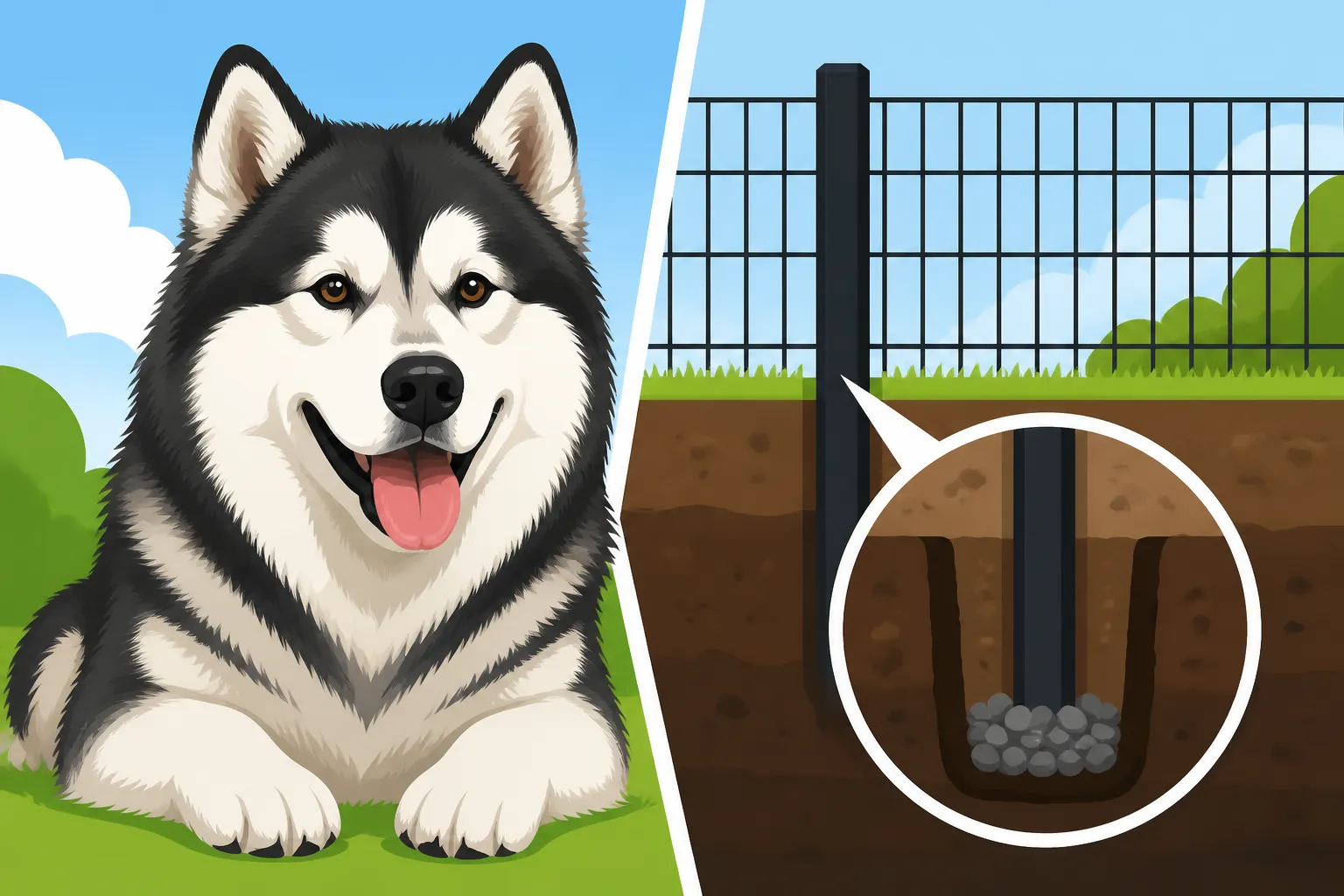
For an average Alaskan Malamute, a minimum burial depth of 18 to 24 inches (approximately 45-60 cm) is generally recommended to deter most digging attempts. This isn't a casual recommendation; it comes from the collective wisdom of countless Malamute owners who have learned the hard way. This depth creates a significant barrier that requires sustained effort to overcome, often making the dog lose interest or move on to a less challenging area.
However, simply burying the fence isn't always enough. The material buried also matters. A loose chain-link fence buried straight down might still be compromised. The goal is not just depth, but also creating an outward or inward deterrent. We'll delve into specific methods in the next section, but remember this benchmark: 18-24 inches is where you should start your planning, not necessarily where you should stop. For a true escape artist, you may need to go deeper.
Factors Influencing Your Malamute's Digging Depth
Several factors can influence how deep your particular Malamute might dig. Their individual drive and personality play a huge role; some Malamutes are more persistent than others. For example, a dog with a very high prey drive might dig tirelessly to reach a squirrel or rabbit scent on the other side of the fence. Weather conditions also matter; a Malamute might dig deeper to create a cool hollow in the summer heat or to shelter from wind in colder months. The soil type in your yard is another critical factor. Loose, sandy soil is far easier to move than heavy clay or rocky ground. My own girl, Luna, struggled mightily in our rocky New England soil, but when we moved to a home with softer loam, her digging prowess seemingly doubled overnight. Consider the terrain and your dog's motivation when determining your specific needs.
The Perils of Underestimating Your Malamute's Prowess
Underestimating your Malamute's digging ability is a mistake many owners make, often with dire consequences. A fence buried only a few inches deep might deter a smaller, less determined breed, but for a Malamute, it's merely a suggestion. They possess incredible strength in their forelegs and a remarkable ability to tunnel. I've heard stories of Malamutes tunneling under foundations, through buried sprinkler lines, and even beneath concrete slabs that weren't properly reinforced. A single successful escape can reinforce the behavior, making them even more determined next time. The cost of a lost dog, a veterinary emergency from an injury, or legal ramifications from an incident can far outweigh the cost and effort of what concrete footings for a Malamute fence cost. It's not just about keeping them in; it's about keeping them safe.
Practical Solutions for Dig-Proofing Your Fence Line
Knowing why they dig and how deep they can go is just the beginning. Now, let's talk about the practical methods for creating a truly dig-proof perimeter. There isn't a one-size-fits-all answer, but rather a combination of techniques that can be adapted to your specific situation and budget.
The L-Footer Method: A Tried-and-True Approach
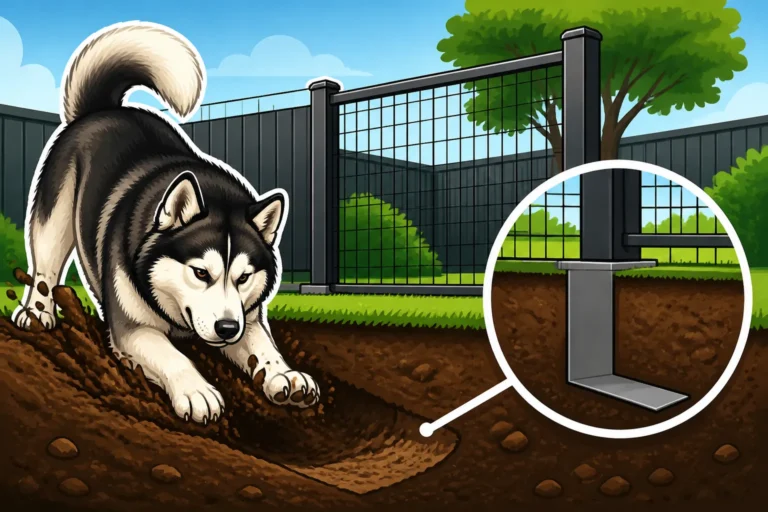
One of the most effective and widely recommended methods for dig-proofing a fence line is the "L-footer" or "L-trench" method. This involves burying a section of fencing material horizontally along the base of your existing fence, extending either inward or outward into your yard.
Here's how it generally works:
- Dig a Trench: Along the entire fence line, dig a trench that is at least 18-24 inches deep and 18-24 inches wide, depending on your Malamute's determined nature and the recommendations for how far down a Malamute will dig.
- Install the L-Footer: Take a roll of heavy-gauge wire mesh, hardware cloth, or even sturdy chain-link fencing, and attach it securely to the bottom of your existing fence. Allow a section of this material (the "foot" of the L) to lay flat at the bottom of the trench, extending outward into the yard (or inward, depending on preference and space). The vertical part of the L will be secured to the existing fence posts or panels.
- Fill the Trench: Backfill the trench with soil, ensuring the mesh or fence material is firmly anchored.
The genius of the L-footer is that when your Malamute attempts to dig at the base of the fence, they quickly encounter a horizontal barrier beneath the surface. This frustrates their natural digging motion, as they cannot get purchase to dig vertically deeper, effectively stopping them in their tracks. It's an ingenious workaround for a dog that loves to tunnel. You can find robust wire mesh and hardware cloth options at retailers like Chewy, which can be useful for this kind of project.
Burying Wire Mesh or Hardware Cloth
If a full L-footer seems too daunting, a simpler yet still effective method involves burying wire mesh or hardware cloth directly vertical or at a slight angle along the fence line. This method is particularly effective for existing fences where major reconstruction isn't feasible, or if your Malamute isn't an extreme tunneler but more of a surface scratcher.
You'll dig a trench, again, aiming for that 18-24 inch depth. Then, insert a sturdy gauge wire mesh or hardware cloth into the trench, securing the top edge to the bottom of your fence line. The key here is to choose a material that your Malamute cannot chew through or bend easily. Avoid flimsy chicken wire. Look for welded wire or hardware cloth with small openings that won't allow a paw to slip through. Once the mesh is in place, backfill the trench firmly. This creates an immediate, vertical barrier below ground that your Malamute will hit if they try to dig down. While not as foolproof as the L-footer for a truly persistent digger, it's a significant improvement over nothing at all and can be easier to install.
Concrete Footings: The Ultimate Deterrent
For the ultimate in dig-proofing, especially for sections of the fence line where security is paramount, concrete footings are the gold standard. This method essentially creates an underground wall that no Malamute can dig through.
This involves pouring a concrete curb or footer along the entire base of your fence. The depth should still be at least 18 inches, extending below the frost line in colder climates to prevent shifting. This is a more involved and often more expensive solution, frequently employed when building new fences or kennel runs. For instance, if you're looking into what a kennel run for a Malamute costs to build, incorporating concrete footings from the start is highly advisable. While it's a significant investment, the peace of mind it offers is often priceless for Malamute owners who've faced repeated escapes. It completely removes the possibility of digging as an escape route, forcing your clever companion to look for other (hopefully less destructive) outlets for their energy.
Alternative and Supplementary Digging Deterrents
While structural modifications to your fence are crucial, they are often most effective when combined with other strategies. Addressing the underlying reasons for digging and providing appropriate outlets can significantly reduce your Malamute's desire to become an underground engineer.
Creating a Designated Digging Area
Since digging is such a powerful and natural instinct for Malamutes, sometimes the best approach isn't to stop it entirely, but to redirect it. Creating a designated digging area can be a game-changer. This involves setting aside a specific spot in your yard where digging is not only allowed but encouraged.
To set up a digging pit:
- Choose a Spot: Select an out-of-the-way corner of your yard, perhaps where previous digging attempts have already begun or where it won't impact your landscaping too much.
- Define the Area: You can use railway ties, large rocks, or landscape edging to create a clear boundary for the pit.
- Fill with Diggable Material: Fill the pit with loose sand, soft soil, or a mixture that's easy and satisfying for your Malamute to dig in.
- Bury Treasures: The key to success is making this pit more appealing than the fence line. Bury toys, long-lasting chews, or even delicious treats (like those from Ollie, if your dog loves fresh food) in the pit. Guide your Malamute to the spot and encourage them to "find it!"
By making the digging pit an exciting and rewarding activity, you can often satisfy that primal urge without risking your fence security. It's a win-win: your Malamute gets to dig, and your yard (and your sanity) remains intact. For more on this, check out giving an Alaskan Malamute its own digging pit.
Landscaping and Hardscaping as Barriers
Beyond the buried fence line, strategic landscaping and hardscaping can provide additional layers of deterrence.
- Large Rocks or Boulders: Placing large, heavy rocks or boulders along the inside of the fence line, particularly in known digging spots, can make it physically impossible for your Malamute to start an excavation. They'd need to move a boulder first, which is typically beyond their capabilities (though I've seen some try!).
- Paving Stones or Concrete Slabs: For a more aesthetic approach, you can lay a border of paving stones or concrete slabs directly against the fence on the inside. These should extend at least 18-24 inches inward. This creates a hard, non-diggable surface at the base of the fence.
- Dense, Thorny Shrubs (with caution): While less common, some owners strategically plant dense, thorny shrubs outside the fence line (where the dog cannot easily reach them to eat) to deter digging from the exterior. This needs to be done with extreme caution, ensuring the plants are non-toxic and your dog cannot become entangled or injured.
Remember, the goal is to create an unpleasant or impossible digging experience near the fence, pushing your Malamute toward their designated digging pit or other acceptable activities.
Behavioral Training and Enrichment
While you can't train away a natural instinct, you can manage and redirect it through consistent training and ample enrichment.
- Increase Exercise: A tired Malamute is often a well-behaved Malamute. Ensure your dog is getting sufficient physical exercise. This doesn't just mean a quick walk around the block; it means activities that truly engage their working dog nature, like long hikes, pulling a cart, or even just extended play sessions in a secure area.
- Mental Stimulation: Alaskan Malamutes are smart. They need their brains worked as much as their bodies. Puzzle toys, obedience training, scent work, and interactive games can help burn off mental energy that might otherwise be directed towards digging. If they're engaged with a Kong filled with peanut butter or working on a new trick, they're less likely to be planning their next great escape.
- Supervision: Especially when you first implement new digging deterrents, supervise your Malamute when they're in the yard. If you catch them attempting to dig at the fence, immediately redirect them to their digging pit or another appropriate activity. Consistency is key to teaching them the "rules" of the yard.
By combining physical barriers with mental engagement and appropriate outlets, you create a holistic approach to managing your Malamute's digging tendencies.
Considering the Overall Enclosure Security
Digging is just one facet of the Malamute's escape artistry. While mastering the buried fence is critical, it’s only one part of creating a truly secure environment for these intelligent and determined dogs. A secure perimeter means considering all angles – up, down, and through.
Fence Height and Climbing Prowess
Even if your fence is buried deep enough to deter the most enthusiastic tunneler, a Malamute might just decide to go over it instead. These dogs are surprisingly agile and resourceful climbers and jumpers, especially when motivated by something on the other side. A standard 4-foot fence, while sufficient for many breeds, is often child's play for a determined Malamute.
For an Alaskan Malamute, a minimum fence height of 6 feet (approximately 1.8 meters) is generally recommended. Even then, some particularly athletic individuals might be able to scale it, especially if there are convenient footholds like trees, sheds, or piles of firewood near the fence line. Some owners even install "coyote rollers" or lean-in extensions at the top of their fences to prevent climbing. These are angled extensions that make it difficult for a dog to get purchase and hoist themselves over. The takeaway here is that you need to evaluate your fence not just for what's below ground, but also for its vertical integrity against a dog bred for rugged terrain. This is why whether chain link holds an Alaskan Malamute needs to consider both strength and height.
Gate Security: A Common Weak Point
It's astonishing how often a perfectly secure fence is compromised by an insecure gate. Gates are often the weakest link in any perimeter, and a clever Malamute will quickly identify and exploit any vulnerabilities.
Here's what to consider for gate security:
- Double Latches: Install two latches, ideally at different heights, that require different motions to open. A simple thumb latch is easily defeated by a smart Malamute (or even just an accidental bump). A sturdy slide bolt combined with a spring-loaded latch offers much better security.
- Padlocks: For extra peace of mind, especially on gates used less frequently or when you're away, a padlock can be invaluable.
- Bottom Gap: Ensure there is no significant gap under the gate that your Malamute can exploit by digging or squeezing through. Just like the rest of the fence, the gate itself needs dig-proofing, whether through a buried L-footer or a concrete threshold.
- Self-Closing/Self-Latching: These features are lifesavers, ensuring the gate closes and latches automatically behind you, preventing accidental escapes by human error.
- Heavy-Duty Hardware: Malamutes are big, powerful dogs. Flimsy hinges and latches won't stand up to a determined Malamute repeatedly testing the gate. Invest in robust, high-quality hardware that can withstand their strength.
Remember, a gate is only as secure as its weakest component. Don't overlook this critical part of your enclosure.
Beyond the Fence: Double Layered Security
For owners of truly persistent escape artists, or those living in areas with high traffic or wildlife, a single fence might not feel adequate. This is where a double-layered security system can provide ultimate peace of mind.
A double-layered fence essentially means having two fences with a space in between them. This could be your main perimeter fence, and then an inner, smaller fence around a specific area where your Malamute spends most of its time, such as a large kennel run. The space between the two fences acts as a buffer zone. If your Malamute manages to get past the first fence, they are still contained by the second, giving you time to intervene.
This approach is not always practical for an entire property but can be ideal for a designated outdoor living space. For example, you might have a secure yard for daily use and a truly fortified kennel setup within it, complete with concrete footings and a roof, where your Malamute stays when unsupervised for longer periods. It's an investment, but for many, it's the only way to genuinely prevent escapes from a dog that sees fences not as barriers, but as puzzles to be solved. If you ever need to board your Malamute, you'll find that facilities often have similarly robust security measures, as whether boarding kennels take Alaskan Malamutes often depends on their ability to contain such an intelligent and powerful breed. And if, despite your best efforts, your Malamute does manage an escape and gets into trouble, having pet insurance like Healthy Paws can certainly help with unexpected vet bills.
Disclaimer
This article is for general informational purposes only and does not constitute professional advice. Laws, prices and regulations vary by location and change over time. Consult a qualified professional for guidance on your specific situation.