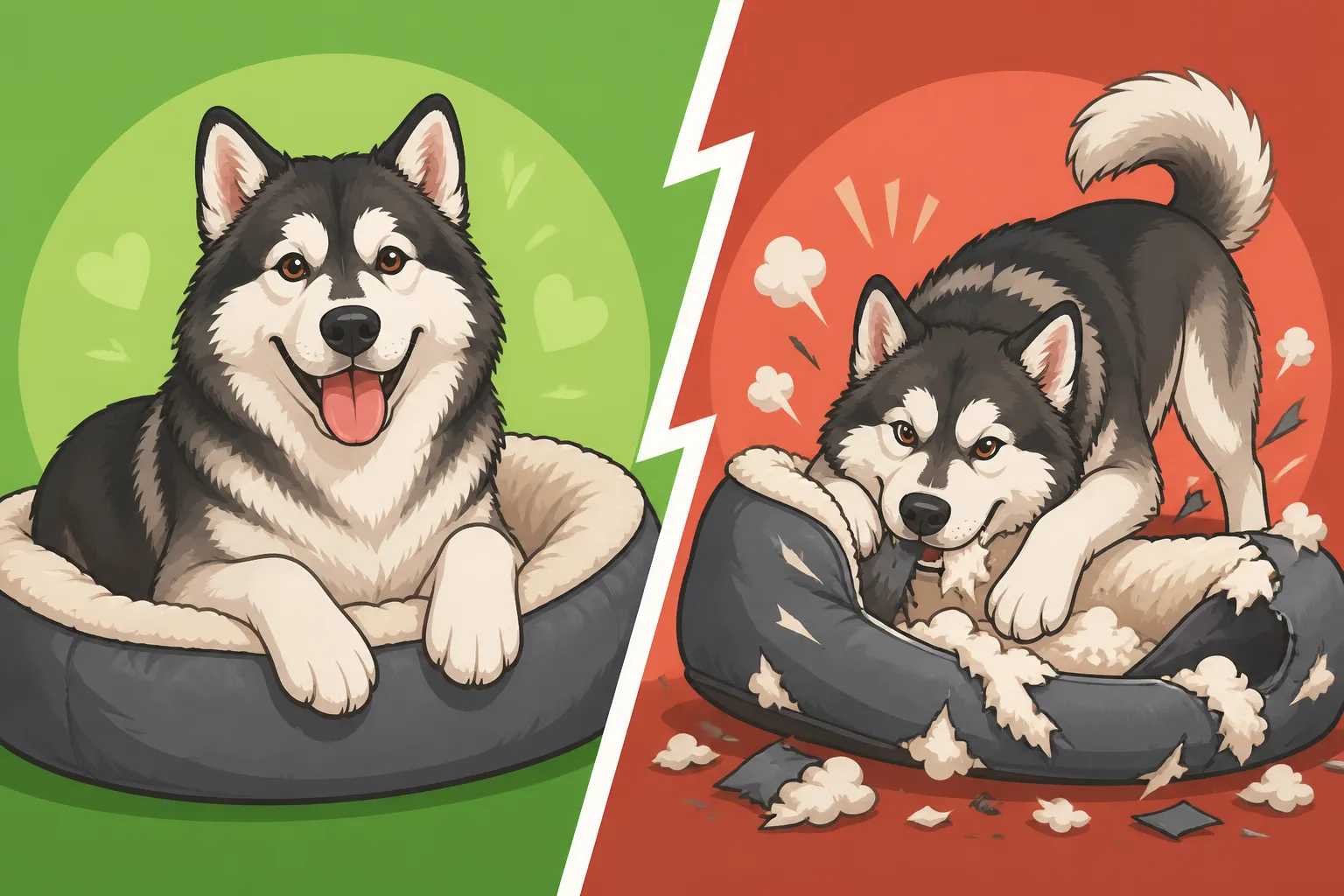
Whether a Malamute Destroys Its Bed
You come home, exhausted after a long day, perhaps already dreading the sheer amount of Malamute hair you'll need to vacuum up, only to be met with a scene that makes your heart sink: the expensive, supposedly "indestructible" dog bed you bought last month is now just a scatter plot of fluffy stuffing and torn fabric across your living room floor. It's a frustration many Alaskan Malamute owners know all too well, a rite of passage almost. This guide will delve deep into why these magnificent, often maddening, dogs seem to view their beds as a personal shredding project, and what realistic steps you can take to protect your investments and your sanity.
The Inevitable Truth: Why Malamutes See Beds as Toys
Let's be honest, few things are truly "Malamute-proof." These dogs are built for power, endurance, and problem-solving in extreme conditions, and that innate drive doesn't simply vanish when they're curled up on a plush dog bed in your warm home. Their intelligence, combined with their powerful jaws and independent spirit, means that a flimsy dog bed stands little chance.
Instinctual Drives and the "Prey" Factor
Alaskan Malamutes are descendants of dogs bred to hunt large game and haul heavy loads, and that deeply embedded prey drive can manifest in surprising ways. For a Malamute, a soft, fluffy dog bed might not seem like a rabbit, but the act of tearing, shaking, and "killing" it taps into a primal instinct. It’s a form of simulated hunting, a way to engage with something tactile and destroy it.
Imagine a wild ancestor, needing to tear apart a hide or dig for food. The sensation of ripping fabric, pulling out stuffing, and deconstructing an object can be incredibly satisfying for a Malamute. It's not malicious; it's instinctual. They aren't thinking, "I'm going to ruin this nice thing for my human." They're thinking, "This object has an interesting texture, and I can make it do things!" This is especially true for younger Malamutes, who are still exploring the world with their mouths. Understanding What an Alaskan Malamute Was Bred to Hunt helps contextualize many of their seemingly destructive behaviors.
Boredom and Under-Stimulation: A Malamute's Worst Enemy
While instinct plays a huge role, boredom is perhaps the single biggest culprit behind shredded beds. An Alaskan Malamute is not a couch potato breed; they require significant physical exercise and mental stimulation daily. If they are left alone for long periods without adequate outlets for their energy and intelligence, they will find their own entertainment, and often, that entertainment involves destruction.
Think of it from their perspective: they’ve got all this energy, a powerful brain, and nothing constructive to do. The dog bed is right there, soft, inviting, and just begging to be "improved" or "rearranged." A bored Malamute can turn into a canine wrecking ball in minutes. This isn't just about walks; it's about engaging their minds with training, puzzle toys, and interactive play. If you've ever wondered Whether a Bored Malamute Destroys the House, the answer is almost certainly yes, and the dog bed is often the first casualty.
Anxiety and Stress: When Comfort Becomes a Target
Sometimes, bed destruction isn't about fun or boredom, but a manifestation of anxiety. Malamutes can suffer from separation anxiety, fear of loud noises, or general stress from changes in their environment. Chewing and shredding can be a self-soothing mechanism, a way for them to cope with overwhelming feelings.
If the destruction primarily occurs when you're away, or after a stressful event (like a thunderstorm or fireworks), anxiety might be at play. They're trying to relieve their stress, and the bed becomes an outlet for that nervous energy. It's heartbreaking to realize they're not just being naughty, but genuinely distressed. Observing How Many Hours an Alaskan Malamute Can Be Left can give you clues about potential separation anxiety triggers.
The Costly Habit: Understanding the Damage and Its Impact
Beyond the immediate frustration and the mess, a Malamute's bed-shredding habit can have significant financial implications and, more importantly, pose health risks to your beloved companion. It's not just about replacing a bed; it's about the potential for much larger problems.
Financial Drain: Constantly Replacing Beds
Let's face it, good quality dog beds aren't cheap, especially for a large breed like an Alaskan Malamute. You buy one, hoping it will last, only for it to be reduced to scraps. The cycle of buying, shredding, and replacing can quickly become a significant financial drain. It feels like throwing money into a black hole.
Consider the cumulative cost. If you replace a decent bed every few months, those costs add up over a year, let alone the lifespan of your Malamute. Many owners eventually give up on traditional beds, opting for more extreme, or less comfortable, alternatives, simply to stem the flow of cash. This constant expenditure contributes to What the Destructive Year Costs a Malamute Owner. You might even start looking at What a Chew Proof Bed for a Malamute Costs, which can be significantly more upfront.
Health Hazards: Ingestion of Stuffing and Fabric
This is arguably the most serious consequence of bed destruction. Malamutes, especially those with a strong chew drive, don't always just shred; they can ingest pieces of fabric, foam, or stuffing. This can lead to serious gastrointestinal issues, including blockages, which are veterinary emergencies.
A blockage can be life-threatening and almost always requires expensive surgery. Imagine the horror of realizing your dog is lethargic, vomiting, or refusing to eat, and a trip to the emergency vet reveals a foreign body obstruction from their bed. This is where pet insurance, like plans offered by Healthy Paws, can become a lifeline, but prevention is always better. The risk isn't worth taking lightly, and it's why addressing the destructive behavior isn't just about your wallet, but your Malamute's well-being.
Behavioral Reinforcement: A Self-Perpetuating Cycle
Every time your Malamute successfully shreds a bed, they get a reward: the satisfaction of the act itself. This reinforces the behavior, making it more likely to happen again. If they're bored, and shredding a bed is stimulating, they learn that it's a great way to pass the time.
This means that simply replacing the bed without addressing the underlying cause can actually make the problem worse. They've learned that destroying things is a fun and effective way to deal with their energy or anxiety. Breaking this cycle requires consistent intervention and proactive management. It's a testament to their intelligence – they learn what works for them, even if it's not what works for us.
Strategies for Survival: Protecting Your Investment and Your Sanity
So, what’s a Malamute owner to do? Giving up on beds entirely might seem like the easiest solution, but every dog deserves a comfortable resting place. The key is a multi-pronged approach that addresses both the behavior and the environment.
Investing in Truly Durable Bedding Options
When it comes to Malamutes, "chew-proof" is often a marketing term, not a guarantee. However, some beds are built significantly tougher than others. Look for beds made with ballistic nylon, heavy-duty canvas, or even aluminum frames with strong, tear-resistant fabric covers. Elevated cot-style beds are also excellent options as they don't have tempting stuffing.
Many brands specialize in these types of beds, often available through major pet retailers like Chewy. While the initial investment might be higher, it can save you money in the long run by reducing the frequency of replacements. Just be aware that a determined Malamute can still make short work of even the toughest materials, given enough time and motivation. It’s an arms race sometimes!
Here’s a quick comparison of popular durable bed types:
| Bed Type | Pros | Cons | Best For |
|---|---|---|---|
| Elevated Cot Bed | No stuffing to shred; easy to clean; airflow for cooling | May not be as "cozy"; some plastic frames can be chewed | Extreme shredders; hot climates; easy maintenance |
| Ballistic Nylon Cover | Extremely tough fabric; often waterproof; good cushioning | Can still be chewed if seam is found; usually more expensive | Moderate shredders; dogs needing cushioning |
| Aluminum Frame Bed | Virtually indestructible frame; replacement fabric covers | Highest initial cost; less portable; metal can be noisy | Very aggressive chewers; long-term investment |
| Heavy-Duty Canvas Bed | Durable natural material; often washable | Can still be chewed; less water-resistant than nylon | Moderate chewers; those preferring natural materials |
Chew Toys and Enrichment: Redirection is Key
One of the most effective strategies is to provide appropriate, highly engaging chew toys that are more appealing than their bed. This is about redirection. Give them something they are allowed to destroy or chew that is satisfying and safe. Puzzle toys, KONGs filled with frozen treats, durable chew bones, and rotation of these items can keep their minds and mouths busy.
Make sure the toys are appropriately sized and truly Malamute-tough. Fluffy "squeaky" toys will last about 30 seconds. Look for virtually indestructible options from reputable brands. Offer these before they even think about their bed, especially when you're leaving the house or when they're prone to boredom. This can significantly reduce destructive tendencies and help prevent problems like What a Malamute Chews Through in a Year in general.
Exercise, Training, and Mental Stimulation
This goes back to the root cause: Malamutes need a job. If they don't have enough physical exercise or mental stimulation, they will find their own jobs, and bed destruction is a common one. Daily, vigorous exercise is non-negotiable for this breed. This could mean long walks, runs, hiking, or even teaching them to pull a cart or sled. Don't underestimate How Much Exercise an Alaskan Malamute Needs.
Beyond physical exertion, engage their minds. Training sessions, even short ones, can be incredibly enriching. Teach them new tricks, practice obedience commands, or engage in scent work. Malamutes are intelligent and thrive on problem-solving. A tired Malamute, both physically and mentally, is far less likely to destroy its bed. Remember, positive reinforcement works wonders; Why Force Fails on an Alaskan Malamute is a key lesson for any Malamute owner.
Beyond the Bed: Addressing the Root Causes
Simply replacing beds or buying tougher ones is a band-aid solution if you don't address why your Malamute is destroying them. A holistic approach focusing on their needs is essential for long-term success.
Managing Anxiety and Stress
If anxiety is the primary driver, then addressing that anxiety is paramount. This might involve:
- Routine: A predictable daily schedule can be comforting for anxious dogs.
- Safe Space: A crate, if properly introduced and seen as a den, can be a secure retreat for them when they feel stressed.
- Calming Aids: Your vet might recommend supplements, pheromone diffusers, or even medication for severe cases.
- Professional Help: For significant anxiety, especially separation anxiety, consulting a certified professional dog trainer or veterinary behaviorist is highly recommended. They can help identify triggers and develop a tailored management plan.
Understanding their temperament and behavior, particularly during challenging phases like The Adolescent Malamute That Rewrites the Rules at Fourteen Months, can help you proactively identify and manage stress points before they lead to destructive outlets.
Environmental Management: Crate Training and Supervision
Sometimes, the simplest solution is management. When you can't supervise your Malamute, especially a young or known shredder, restrict their access to things they might destroy. Crate training, when done positively, provides a safe, secure space for your Malamute. If their bed is prone to destruction, perhaps the bed is removed from the crate when you leave, or replaced with a chew-resistant mat.
Supervision is also critical. If you see your Malamute starting to mouth or scratch at their bed, immediately redirect them to an appropriate chew toy. Consistency is key here. Every time they are redirected, they learn what is and isn't acceptable to chew. It's a continuous process, not a one-time fix. Whether a Malamute Destroys a Crate is another common concern, so ensuring the crate itself is sturdy is also important.
Diet and Overall Health: A Hidden Connection
While not a direct cause, a balanced diet and good overall health contribute to a Malamute's well-being, which in turn can influence behavior. Ensuring they receive proper nutrition can impact their energy levels and mood. If a Malamute isn't feeling well, or their diet is lacking, it could contribute to restlessness or anxiety.
For instance, some owners explore high-quality food options like those from Ollie, ensuring their Malamutes are getting all the nutrients they need, which could indirectly support better behavior and reduce general stress. While food alone won't stop bed shredding, it's one piece of the puzzle in creating a well-adjusted, content Malamute. If you suspect any underlying health issues or nutritional deficiencies, always consult your veterinarian.
Consistency and Patience: The Malamute Owner's Mantra
Finally, and perhaps most importantly, is the need for consistency and boundless patience. Malamutes are intelligent and independent, and they don't always learn things instantly or easily. What works one day might not work the next, and you might feel like you're taking two steps forward and one step back.
It takes time, effort, and understanding to manage a Malamute's destructive tendencies. Celebrate small victories, don't get discouraged by setbacks, and remember that your Malamute isn't trying to be difficult; they're simply being a Malamute. With the right strategies and a lot of love, you can find a way for them to have a comfortable bed that doesn't end up as a pile of fluff.
Disclaimer
This article is for general informational purposes only and does not constitute professional advice. Laws, prices and regulations vary by location and change over time. Consult a qualified professional for guidance on your specific situation.