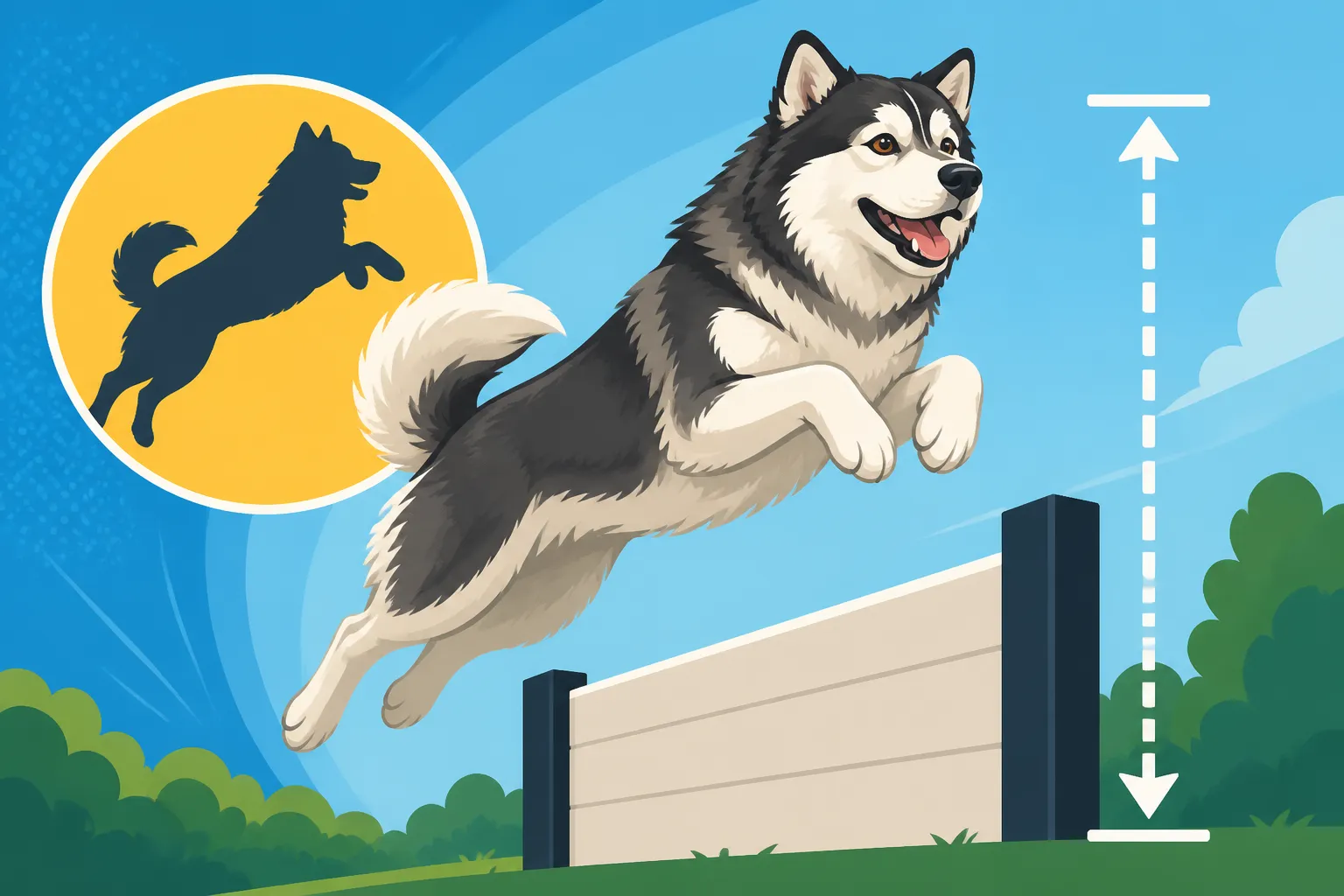
How High a Malamute Can Jump
It’s a truly disheartening moment when you look out your window to find your majestic Alaskan Malamute, a dog you thought was grounded by its impressive size and heritage, sailing effortlessly over a fence that you swore was tall enough. Many Malamute owners, myself included, have faced this particular brand of bewildered frustration. You know these dogs were bred for endurance and strength, hauling heavy loads across vast, icy landscapes, not for performing Olympic-level high jumps! Yet, their surprising agility can catch even the most prepared owner off guard. This guide will delve into the nuances of Malamute jumping abilities, exploring why they do it, how high they can really go, and most importantly, how to manage this often-unwanted athletic prowess to keep both your Malamute and your sanity intact.
The Surprising Agility of the Alaskan Malamute
When you think of an Alaskan Malamute, images of powerful, broad-chested dogs pulling sleds through snowdrifts probably come to mind. They're built like tanks, right? Robust, heavy-boned, and undeniably strong. It's easy to assume that their bulk would keep them from anything resembling nimble acrobatics. But oh, how these clever, powerful dogs can surprise you! Their size often belies a remarkable athletic ability that includes a shocking capacity for vertical leaps. It's a rude awakening for many new owners, and even seasoned Malamute enthusiasts can find themselves needing to re-evaluate their containment strategies.
More Than Just a Freight Dog
While the Alaskan Malamute's primary historical role was indeed freighting—hauling substantial weight over long distances—this didn't mean they were lumbering giants. The Mahlemut people, who developed this incredible breed, needed dogs that were not only strong but also adaptable and capable of navigating diverse, often challenging terrain. This meant they needed to be sure-footed, able to clear obstacles, and possess a certain degree of quickness when necessary, perhaps when avoiding hazards or even engaging in a bit of opportunistic hunting. So, while they might not be built for the sheer speed of a racing husky, they certainly aren't clunky. Their powerful hindquarters, designed for pushing off and driving forward, translate surprisingly well into vertical propulsion. Don't let their stocky appearance fool you; these dogs are incredibly coordinated athletes when they put their minds to it. This underlying athleticism is a key reason why they can accomplish feats of jumping that seem impossible for a dog of their build. It's less about being a dedicated jumper and more about an all-around robust physicality.
Factors Influencing Jump Height
So, how high can a Malamute jump? This isn't a simple, cut-and-dry answer, because it varies greatly from dog to dog and depends on a few critical factors. First, genetics play a role. Some lines might naturally be more athletic or have a leaner build that facilitates jumping. Second, motivation is huge. A Malamute that is truly determined to get to something – whether it's an intriguing scent, a squirrel, or another dog they desperately want to greet (or challenge) – will often surprise you with their capabilities. Think of the sheer will power these dogs possess; it fuels their physical efforts.
Their age and physical condition are also important. A young, healthy, and highly energetic Malamute, especially one that isn't regularly exercised or mentally stimulated, is far more likely to expend that pent-up energy in an attempt to scale a barrier. They aren't trying to be naughty; they're just finding an outlet for their natural drives. Many Malamutes can easily clear a standard 4-foot fence from a standing start, and with a running start or a slight boost from something near the fence, some can easily go over 5 or even 6 feet. I've heard stories, and seen evidence, of Malamutes clearing fences that would make you swear they were part kangaroo! It’s less about a maximum height they can jump consistently, and more about the maximum height they will jump when sufficiently motivated. It's not uncommon for an adolescent Malamute to test every boundary, including the vertical ones, as discussed in The Adolescent Malamute That Rewrites the Rules at Fourteen Months.
Common Jumping Scenarios and Why They Happen
Understanding why your Malamute is jumping is often the first step to mitigating the behavior. It's rarely out of malice, but almost always rooted in their intrinsic drives, curiosity, or simply a lack of appropriate outlets. These dogs are intelligent problem-solvers, and if jumping over something gets them what they want, they will absolutely do it again.
Jumping Fences and Barriers
This is perhaps the most common and alarming jumping scenario for Malamute owners. You install a fence, thinking you've created a secure perimeter, only to find your furry escape artist on the other side. Why do they do it? Often, it boils down to boredom and curiosity. A Malamute left alone in a yard with insufficient mental or physical stimulation will find ways to entertain itself, and exploring beyond the fence is a highly rewarding adventure. They might see a squirrel, hear an interesting sound, catch a compelling scent, or simply decide that the grass is greener on the other side.
Another major driver is prey drive. These dogs were bred to hunt, and that instinct is incredibly strong. A rabbit, a cat, or even a leaf blowing in the wind can trigger a chase response, and a fence often becomes merely a minor impediment. For some, it might be about reaching another dog, whether for play or, in some cases, to assert dominance, particularly with Same Sex Aggression in a Pack Bred Alaskan Malamute. The lure of the unknown, combined with their inherent drive and powerful legs, makes fence jumping a genuine concern for many Malamute owners. It's not a sign of a bad dog, but a dog whose needs aren't being fully met within its current environment.
Counter Surfing and Unwanted Greetings
Beyond fences, Malamutes are notorious for their ability to "counter surf," which is essentially jumping up onto kitchen counters or tables to snatch food. This isn't just about hunger; it's about opportunity and their incredible sense of smell. They can detect that freshly baked pie or unattended dinner plate with startling accuracy. Once they realize they can reach it, and especially if they've been rewarded with a tasty treat (even if it was stolen!), the behavior becomes ingrained. They learn quickly that vertical access equals delicious rewards.
Similarly, some Malamutes will jump on people, either out of over-excitement when greeting visitors or attempting to get attention. Their large size makes this particularly problematic, as even a friendly jump can knock someone over, especially children or the elderly. This is less about agility and more about impulse control and manners, but it still utilizes their vertical reach. They may see it as a way to get closer to your face for a "kiss" or simply to demand interaction. What starts as a cute puppy behavior can become a significant issue when you have a 80-100 pound dog launching itself at guests. Training is key here to manage these excitable leaps.
Practical Strategies for Managing a Malamute's Jumping
Alright, so your Malamute can jump, and you know why they might be doing it. Now, what do you actually do? The good news is that while you can't completely extinguish their natural athleticism, you can absolutely manage it with a combination of environmental adjustments, consistent training, and meeting their fundamental needs. It's about being smarter, not necessarily stronger, than your Malamute.
Securing Your Property
If fence jumping is your primary concern, then upgrading your fencing is paramount. A standard 4-foot fence simply won't cut it for a determined Malamute. A minimum of 6 feet is often recommended, and for some escape artists, even taller might be necessary. But height isn't the only factor. Malamutes are also master diggers, as highlighted in A Malamute's Digging Is Not a Problem, It Is the Breed, so ensuring your fence extends below ground level is crucial. Burying hardware cloth, concrete footings, or a line of large rocks along the base can deter tunneling.
Consider angled extensions at the top of fences, sometimes called "coyote rollers," which make it impossible for them to get purchase to climb over. Make sure there are no easily scalable objects near the fence, like woodpiles, trash cans, or outdoor furniture, that could give them a boost. A "roofed run" or a secure kennel area, especially for times when you cannot directly supervise, might be a necessary investment. For internal jumping issues like counter surfing, simply removing temptation is the most effective immediate strategy. Clear counters, put away food, and don't leave tempting items within their reach. This removes the reward and makes the behavior less likely to continue. You can find robust kennel options and yard-proofing materials on platforms like Amazon.
Training for Impulse Control and Appropriate Behavior
For both external (fence) and internal (counter/people) jumping, consistent training is vital. Start with basic impulse control exercises. Teach a strong "leave it" cue, which can be invaluable for counter surfing or ignoring outside distractions near the fence. Practice "four on the floor" for greetings: teach your Malamute that all four paws must remain on the ground to receive attention. If they jump, immediately turn your back and ignore them. Only reward them with praise and attention when they are calm and all paws are down. Consistency from every family member is key here.
Enroll in positive reinforcement training classes. While Malamutes can be independent, they are highly intelligent and respond well to clear, consistent training that makes sense to them. A program like BAXTER & Bella offers excellent online resources and puppy training courses that focus on building good manners and impulse control from a young age, which is crucial before bad habits become deeply ingrained. Remember, force fails with an Alaskan Malamute, so positive reinforcement and making good choices rewarding is the way to go.
Providing Adequate Mental and Physical Stimulation
A bored Malamute is a destructive Malamute, and that destruction can absolutely include attempts to escape or steal food. These dogs were bred to work, and they have boundless energy and sharp minds. They need more than just a quick walk around the block. Daily, vigorous exercise is non-negotiable. This could mean long walks, runs, hikes, or even opportunities to pull a cart or sled, which taps into their natural instincts and is truly the only job an Alaskan Malamute really wants. Pulling Is the Only Job an Alaskan Malamute Really Wants emphasizes the importance of channeling their energy into appropriate outlets.
Beyond physical exercise, mental stimulation is equally important. Puzzle toys, KONGs stuffed with treats, scent work, and training sessions keep their minds engaged and tire them out in a different way. Rotate toys to keep things interesting. Consider enrolling in dog sports like obedience, rally, or even weight pull, which can provide an excellent outlet for both their physical and mental energy. A Malamute that is well-exercised and mentally engaged is far less likely to be looking for trouble over the fence or on your kitchen counter.
Here's a quick overview of common jumping scenarios and strategies:
| Jumping Scenario | Why it Happens | Management Strategies |
|---|---|---|
| Fence Jumping | Boredom, prey drive, curiosity, desire for company | Install a minimum 6-foot fence, consider angled toppers (coyote rollers), bury the fence line to prevent digging. Eliminate nearby objects that provide a boost. Provide ample daily exercise and mental stimulation. Never leave unsupervised for long periods. Consider a secure kennel run for certain times. |
| Counter Surfing | Scent of food, opportunity, learned behavior | Proactive removal of temptations: keep counters clear, put food away immediately. Teach a strong "leave it" cue. Crate or gate off the kitchen when you can't supervise. Reward calm behavior when food is present but ignored. Ensure adequate feeding schedule so hunger isn't the sole motivator. |
| Jumping on People | Over-excitement, seeking attention, lack of manners | Implement "four on the floor" rule: ignore jumps by turning away, only reward calm behavior with all paws down. Leash greetings for controlled introductions. Teach a "place" command for when guests arrive. Consistently reinforce good manners with all family members and visitors. Manage excitement levels before greetings with brief exercise. Early socialization and training through programs like BAXTER & Bella can build a strong foundation. |
| Escaping a Crate/Gate | Anxiety, boredom, insufficient containment | Ensure crate is appropriate size and highly durable (some Malamutes can destroy a standard crate). Introduce crate training positively; never use it as punishment. Provide chew toys/stuffed KONGs inside. Gradually increase time left alone. Address separation anxiety if present. Consider heavy-duty, reinforced gates. |
When to Seek Professional Help
Even with the best intentions and consistent effort, sometimes a Malamute's jumping habits can be deeply ingrained, dangerous, or indicative of underlying issues. This is when it's absolutely okay – and often necessary – to call in the cavalry. There's no shame in seeking expert guidance, especially with a powerful and intelligent breed like the Alaskan Malamute.
Persistent Jumping and Safety Concerns
If your Malamute's jumping is a persistent problem, despite your best efforts at training and environmental management, it might be time to bring in a professional. This is especially true if the jumping poses a safety risk, whether to your dog (escaping into traffic), to other animals (prey drive leading to conflicts), or to people (knocking over guests, especially children or the elderly). A professional trainer or a certified canine behaviorist can observe your Malamute's behavior in context and identify subtle triggers or factors you might be missing. They can also help you implement more advanced training techniques and create a tailored management plan. Don't wait until an accident happens to seek help. This is where resources like BAXTER & Bella, with their more in-depth consultations, or local certified professionals can be invaluable. It's about finding sustainable solutions for your specific dog and household.
Behavioral Consultation Options
When dealing with complex or entrenched behavioral issues, a certified professional dog trainer or a veterinary behaviorist can be a game-changer. A professional trainer can provide hands-on guidance, teaching you how to communicate more effectively with your Malamute and implement advanced obedience and impulse control exercises. They can help you refine your techniques and ensure consistency.
For more severe cases, or when anxiety and stress might be contributing factors to the jumping and escaping, a veterinary behaviorist is the appropriate choice. These are veterinarians with specialized training in animal behavior, who can assess if there are any underlying medical conditions contributing to the behavior or if pharmacological interventions might be necessary in conjunction with behavior modification. They look at the whole picture – physical health, environment, and learned behaviors – to develop a comprehensive plan. Remember, managing a Malamute’s jumping isn't just about curbing a bad habit; it's about understanding and addressing their needs to foster a happy, safe life for everyone.
Disclaimer
This article is for general informational purposes only and does not constitute professional advice. Laws, prices and regulations vary by location and change over time. Consult a qualified professional for guidance on your specific situation.