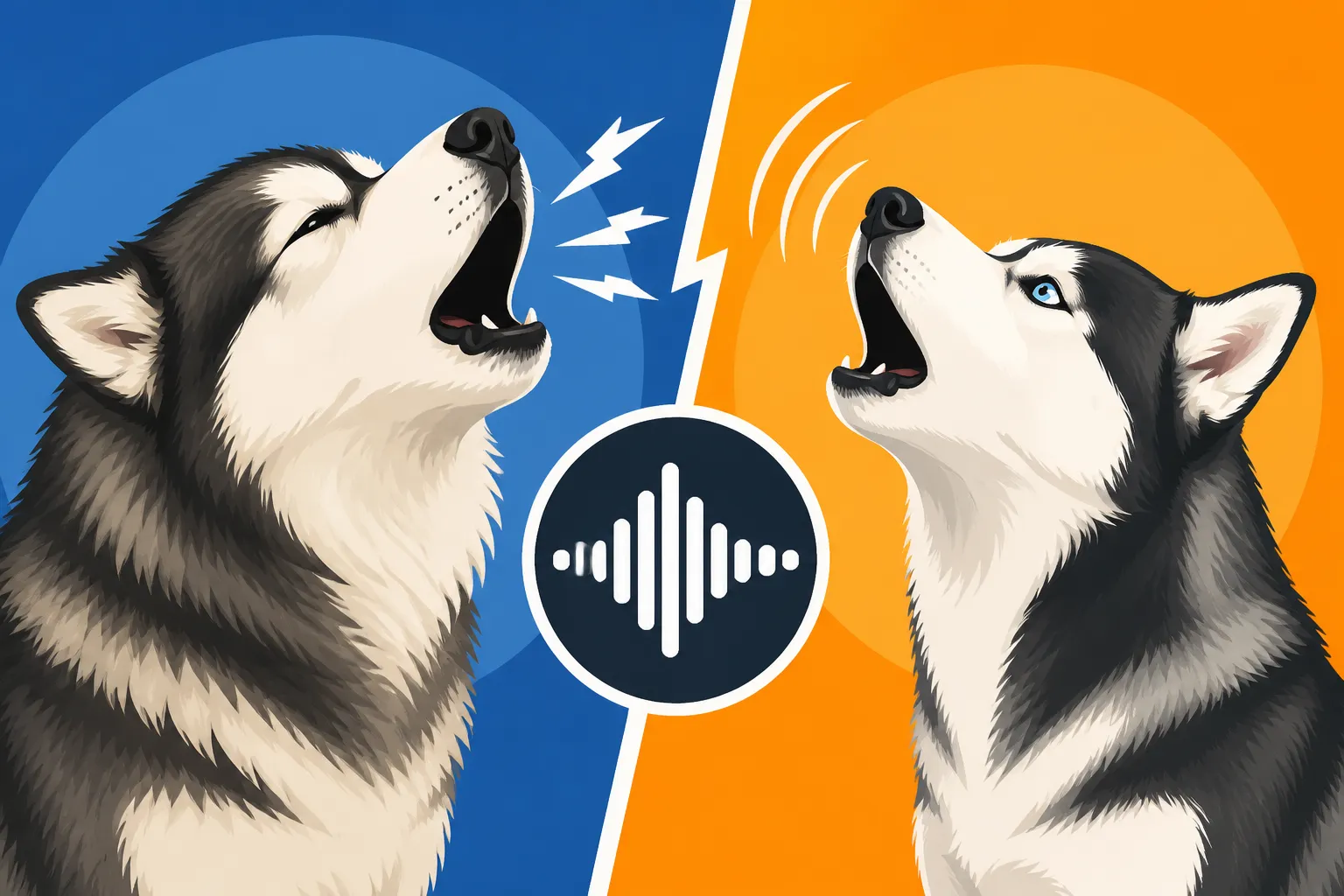
How a Malamute’s Voice Differs From a Husky’s
Many first-time Alaskan Malamute owners, or those simply admiring these majestic dogs from afar, often assume that all Northern breeds sound the same. It’s easy to lump them all together, especially when you think of the iconic howl. However, anyone who has spent time with both an Alaskan Malamute and a Siberian Husky will tell you there’s a distinct difference in their vocal repertoire and how they choose to express themselves. This guide will delve into those unique vocal patterns, helping you understand the melodic (or sometimes surprisingly quiet) world of the Malamute compared to its often more boisterous cousin.
The Malamute's Woo: A Gentle Melody Versus the Husky's Howl
One of the most defining characteristics of an Alaskan Malamute's voice is its distinctive "woo" or "aroo." This isn't your typical dog bark, nor is it the full-throated, often sustained howl that Siberian Huskies are famous for. The Malamute's woo is more nuanced, almost conversational. It often sounds like they are trying to talk to you, a series of elongated, low-pitched vocalizations that can range from a soft greeting to a more insistent demand.
Imagine this scenario: you walk in the door after a long day at work. Your Malamute might trot over, wagging its tail, and let out a soft "woo-woo-wooo" as it leans against you, seeking affection. It’s a sound of welcome, of contentedness, or sometimes, a gentle reminder that it’s dinner time. It’s rarely aggressive or sharp. This vocalization is deeply ingrained in their nature, stemming from their ancestral communication patterns where intricate vocal cues were crucial for pack dynamics and hunting. It's less about alerting to a perceived threat and more about expressing emotions or communicating directly with their human family. What a Malamute's Woo Actually Means offers more insight into this unique form of communication.
In stark contrast, a Siberian Husky's howl is often a powerful, resonant sound that can carry for long distances. While Huskies also "talk" and make various sounds, their go-to long-distance communication is frequently a classic wolf-like howl. This can be in response to sirens, other dogs howling, or simply expressing boredom or loneliness. It’s a sound that evokes the wild, often with a higher pitch and greater intensity than a Malamute's woo. When a Husky howls, neighbors might be thinking of wolves, while a Malamute's woo tends to elicit smiles and curiosity. This difference is important for potential owners, as the impact on a shared wall or quiet neighborhood can be quite significant.
The Infrequent Barking Habits of Alaskan Malamutes
One of the pleasant surprises for many new Malamute owners is how little these dogs tend to bark. If you're used to breeds that bark at every squirrel, mail carrier, or leaf blowing down the street, a Malamute’s relative silence can be quite refreshing. This isn't to say they never bark, but it's typically not their primary mode of communication or alerting. When a Malamute does bark, it's usually for a very specific reason and often brief, rather than sustained, repetitive barking.
For example, a Malamute might let out a sharp, deep bark if there’s a truly unexpected stranger at the door, or if something genuinely alarms them. It’s usually a singular, authoritative sound meant to get your attention, not to endlessly announce the presence of a neighbor walking their dog past the window. Their ancestors, working dogs in vast, quiet Arctic environments, didn't need to bark to protect property in the same way a guarding breed might. Their presence and sheer size were often deterrent enough. Plus, constant barking would have been counterproductive for stealth during hunting. How Little an Alaskan Malamute Barks explores this topic further, and you'll find it's a consistent trait across the breed.
Siberian Huskies, while also not incessant barkers like some terrier breeds, tend to bark more frequently than Malamutes. Their barks can be sharp and piercing, often accompanying their howls or expressive vocalizations. A Husky might bark at passing strangers, other dogs, or simply out of excitement or frustration. This difference means that while both breeds are known for their vocal expressions, the type of vocalization and its frequency can vary significantly. Living in close quarters, like an apartment, these distinctions can make a huge difference in neighbor relations and overall household peace. Considerations around How a Malamute's Noise Carries in a Neighborhood are crucial for any potential owner.
Why a Malamute Is So Vocal Without Barking: A Look at Their Communication Style
So, if Malamutes don't bark much, how do they get their point across? They are incredibly expressive dogs, utilizing a broad spectrum of sounds and body language. Beyond the characteristic "woo," Malamutes are masters of grumbles, groans, chuffs, and even what sounds like sighs. These sounds are often accompanied by specific body language – a head tilt, a paw tap, a leaning posture, or a playful nudge. Their communication is highly interactive and often directed at their human companions.
Consider a Malamute who wants to play. Instead of barking excitedly, they might let out a series of playful woofs, perhaps a low growl that's clearly an invitation to wrestle, or a dramatic sigh if you're ignoring their advances. They communicate their hunger not just by looking at their bowl, but by offering a soft, pleading woo or a low grumble. When they’re feeling particularly cuddly, you might hear soft little mumbles and chuffs as they burrow their head into your lap. This rich tapestry of sounds makes living with a Malamute a constantly entertaining experience, almost like living with a furry, non-verbal roommate who communicates in complex ways. Tools and resources found on platforms like Amazon, for example, might offer puzzle toys or enrichment activities that can help manage boredom-related vocalizations by engaging their minds.
Here's a quick comparison of their typical vocalizations:
| Characteristic | Alaskan Malamute | Siberian Husky |
|---|---|---|
| Primary Vocalization | "Woo" / "Aroo," expressive grumbles, mumbles | Howl, sharp barks, expressive chatter |
| Barking Frequency | Generally infrequent, situational | More frequent than Malamutes, can be sharp |
| Howling Tendency | Low, conversational "woo"; less sustained howl | High, sustained, wolf-like howl |
| Volume | Varied, but woos are often moderate; barks deep | Can be quite loud, especially when howling |
| Purpose | Communication, expression, contentment | Alerting, calling, boredom, excitement |
| Overall Impression | "Talking" dog, less disruptive barking | "Singing" dog, more prone to classic howling |
Training can, of course, influence vocalizations, but it's important to work with their natural instincts. While you can't train a Malamute not to woo, you can certainly guide them on when and where it's appropriate. Early training and socialization, perhaps through online courses from reputable providers like BAXTER & Bella, can help channel their communication in positive ways. Understanding their natural inclination for vocal expression means you can set realistic expectations and create a harmonious living environment. The First Year With an Alaskan Malamute Puppy covers critical early training aspects.
Factors Influencing Vocalizations and How to Manage Them
While the core vocal differences between Malamutes and Huskies are largely genetic and breed-specific, individual dogs will still vary. Several factors can influence how vocal your particular Malamute might be, and understanding these can help you manage their communication in a way that works for your household and your neighbors.
Genetics and Individual Personality
Just like people, every Malamute has a unique personality. Some Malamutes are naturally more inclined to "talk" and express themselves vocally than others. This can be influenced by their specific lineage or even just their individual temperament. A Malamute from a line known for being particularly outgoing might be more vocal in their greetings and demands, whereas a more reserved dog might be quieter. It's similar to how some people are naturally more chatty while others prefer to listen. When you’re selecting a puppy, observing the parents and littermates can sometimes give you a clue about their potential vocal tendencies, though it's never a guarantee.
Furthermore, early experiences play a role. A puppy raised in a quiet home might be less prone to excessive vocalizations than one in a bustling environment with lots of external stimuli. Breeders who prioritize calm temperaments often find their puppies grow into quieter adults. If you’re looking for a Malamute, discussing vocalization tendencies with a reputable breeder is always a good idea. They can often tell you about the typical noise levels of their specific lines.
Environment and Stimuli
The environment your Malamute lives in plays a significant role in their vocal output. A Malamute left alone in a backyard all day with little stimulation might resort to howling or persistent woos out of boredom or loneliness. Conversely, a Malamute living in a busy urban environment might be more prone to alert barks or woos due to the constant sounds of traffic, people, and other dogs. The key is to provide a stimulating, enriching environment that meets their needs.
A bored Malamute is often a vocal Malamute. Ensuring they get adequate physical exercise – at least an hour or two of vigorous activity daily, sometimes more – is crucial. This helps burn off excess energy and keeps their minds engaged. Mental stimulation is equally important. Puzzle toys, training sessions, and interactive games can prevent boredom. What an Alaskan Malamute Needs Every Day provides a comprehensive look at their daily requirements. If your Malamute is still being quite vocal despite adequate exercise and mental stimulation, consider if there are specific triggers in their environment that you can manage. Perhaps closing blinds to prevent them from seeing constant activity outside, or using a white noise machine if they are reacting to distant sounds.
Training and Socialization
Consistent training and socialization from a young age are vital in shaping a Malamute's communication habits. While you can’t completely eliminate their natural vocalizations, you can teach them appropriate timing and intensity. For instance, you can teach a "quiet" cue to help reduce excessive woos or barks. Positive reinforcement methods work best with Malamutes, as they are independent thinkers who respond poorly to harsh corrections. Why Force Fails on an Alaskan Malamute is a must-read for any owner.
Socialization exposes your Malamute to various sights, sounds, and experiences in a positive way, helping them learn to react calmly rather than with alarm. A well-socialized Malamute is generally more confident and less likely to resort to excessive vocalizations out of fear or anxiety. Integrating them into diverse environments and interactions can build their confidence and teach them how to respond appropriately to different situations. Online puppy training programs or local classes can be invaluable resources in teaching both you and your Malamute effective communication strategies.
Living With a Vocal Malamute in a Neighborhood
Understanding a Malamute’s unique voice is one thing, but living with it in a residential setting brings its own set of challenges and responsibilities. While their woos are charming to owners, they can sometimes carry, and their infrequent but deep barks can still startle.
Setting Expectations and Managing Noise
It's important to set realistic expectations for your Malamute's vocalizations. They are not silent dogs, and they will communicate vocally. The goal isn't to silence them entirely, but to manage their noise levels so they don't become a nuisance. This involves understanding their triggers, providing ample exercise and mental stimulation, and consistent training. If your Malamute is prone to howling when left alone, addressing separation anxiety or boredom is key. Interactive toys, frozen Kongs, or even a professional dog walker can help alleviate distress during your absence.
If you have neighbors nearby, open communication can go a long way. Let them know about your Malamute's unique vocalizations and that you are working on managing them. Sometimes, simply explaining that the "woo" is a friendly greeting, not an aggressive bark, can prevent misunderstandings. However, if vocalizations are truly disruptive, then more intensive training or professional help might be needed. For instances where How a Malamute's Noise Carries in a Neighborhood becomes an issue, consider soundproofing solutions for shared walls, or ensuring their outdoor time is managed if they are prone to reacting to external stimuli.
Training for Quiet and Appropriate Expression
Teaching a "quiet" command is incredibly valuable. This involves rewarding your Malamute when they are silent and associating a cue word with that silence. You can start by waiting for a moment of quiet, saying "quiet," and then immediately rewarding them. Gradually, you can introduce the cue when they start to vocalize, rewarding them the moment they stop. Teaching an Alaskan Malamute a Quiet Cue offers practical steps for this.
Consistency is key. Everyone in the household needs to use the same commands and apply the same rules. Malamutes are intelligent and will quickly learn who they can "woo" or "talk" to get their way. If one family member consistently gives in to demanding vocalizations, your Malamute will learn that being noisy sometimes works. Positive reinforcement training, as discussed in Whether Positive Training Alone Works on a Malamute, is the most effective approach for this breed. This doesn't mean you ignore them entirely; it means you teach them how to ask for what they want politely, without excessive noise.
A Malamute's voice is a distinct part of its personality and breed heritage. While different from the more commonly recognized Husky howl and generally less prone to incessant barking, their unique "woo" and expressive vocalizations are a charming, if sometimes loud, part of living with this magnificent breed. Understanding these differences, embracing their communication style, and providing consistent training will lead to a harmonious relationship for both you and your furry companion.
Disclaimer
This article is for general informational purposes only and does not constitute professional advice. Laws, prices and regulations vary by location and change over time. Consult a qualified professional for guidance on your specific situation.