The Age Malamute Dwarfism Becomes Visible
It’s truly disheartening when you bring home a vibrant Alaskan Malamute puppy, full of life and promise, only to notice subtle changes in its growth that stir a deep worry. Many new owners, and even experienced breeders, have faced the confusing and emotionally taxing realization that their beloved pup might be developing Chondrodysplasia, or Malamute dwarfism. This guide aims to shed light on the exact age and specific signs to watch for, helping you understand when this inherited condition typically becomes visible.
Understanding Chondrodysplasia in Alaskan Malamutes
When you first hear the term "dwarfism" in dogs, it can be a bit startling. For Alaskan Malamute owners, this isn't just a curiosity; it's a serious inherited health condition that profoundly impacts a dog's life. Known scientifically as Chondrodysplasia, it's a condition that affects the proper development of cartilage and bone, leading to a distinctive, disproportionate growth pattern. It's not just about a dog being smaller; it's about how it's smaller, with specific physical traits that set it apart.
What Exactly is Malamute Dwarfism?
Chondrodysplasia in Alaskan Malamutes is an autosomal recessive genetic disorder. This means that a puppy must inherit a copy of the defective gene from both its mother and its father to be affected. If it only inherits one copy, it becomes a carrier, perfectly healthy itself but capable of passing the gene on to its offspring. The core issue lies in the development of cartilage, which is crucial for bone formation, especially in long bones. Instead of growing normally, the cartilage and bones develop abnormally, leading to shortened and often bowed limbs, particularly the front legs. Imagine the magnificent, powerful build of a typical Malamute, then picture that same dog with noticeably shorter, sturdier, and sometimes curved legs – that’s the visual hallmark of this condition. It's a fundamental problem with the skeletal structure, not just a matter of reduced size.
This isn't to be confused with a "miniature" Malamute, which is often a misleading term used by unscrupulous breeders for smaller-than-average dogs or even mixes. True Malamute dwarfism is a recognized genetic defect, not a desirable trait. The impact goes far beyond aesthetics, affecting mobility, joint health, and overall comfort throughout the dog's life. Understanding what Chondrodysplasia does to an Alaskan Malamute is the first step in recognizing and managing it.
The Genetic Roots of This Condition
The fact that Chondrodysplasia is a recessive genetic disorder is a huge piece of the puzzle for breeders and future owners alike. It means that two seemingly healthy parent dogs, both carriers of the gene, can produce affected puppies. This is why the condition can sometimes crop up unexpectedly in lines where it hasn't been seen for generations, catching breeders off guard if they haven't performed proper genetic screening. The gene responsible is related to zinc metabolism and skeletal development, highlighting the intricate connections within a dog's biology. When a puppy receives a faulty gene from each parent, its body struggles to process and utilize zinc correctly, which in turn impairs cartilage and bone development.
This genetic mechanism underscores the importance of responsible breeding practices. Without proper testing, breeders might unknowingly mate two carriers, leading to a 25% chance with each breeding that a puppy in the litter will be affected. This is why conscientious breeders emphasize the importance of genetic screening, helping to ensure that the puppies they produce are free from this debilitating condition. It’s a silent threat that can lurk in the background of a perfectly healthy-looking pedigree.
Why Early Detection Matters So Much
For any health issue, early detection is always beneficial, but for Chondrodysplasia, it’s particularly critical. While there isn't a cure for the condition itself, recognizing it early allows owners and veterinarians to begin proactive management strategies. Knowing what you're dealing with from a young age helps you prepare for the specific challenges your dog will face. This includes tailoring their diet, adjusting exercise routines, and preparing for potential joint issues or other complications that often arise as the dog grows. Early detection also provides breeders with invaluable information, enabling them to make informed decisions about their breeding program to prevent future occurrences.
Beyond the practical aspects of care, early detection can significantly impact the emotional journey for an owner. Discovering a condition like this later in a dog's life, after you've already bonded deeply and established expectations, can be even more heartbreaking. If you know early, you can adjust your expectations, educate yourself, and provide the best possible environment for your dwarf Malamute to thrive, celebrating their unique spirit despite their physical challenges. This foresight can also help with financial planning, as conditions like this often involve higher veterinary costs, making a good pet insurance plan like those offered by Healthy Paws a wise consideration.
The Deceptive Early Weeks: When Puppies Appear Normal
One of the most frustrating aspects of Malamute dwarfism is its insidious nature. Unlike some birth defects that are immediately apparent, Chondrodysplasia often hides in plain sight during the first few weeks of a puppy's life. This creates a false sense of security for breeders and prospective owners alike, making the eventual onset of symptoms all the more jarring. It’s a common experience to look at a litter of chubby, playful pups and assume they are all developing perfectly, only for one or two to start diverging from their littermates as they age.
The Illusion of a Typical Malamute Puppy
In their very first weeks, Malamute puppies affected by Chondrodysplasia can appear entirely normal. They nurse well, they play, they sleep, and they grow at what seems to be a consistent rate with their littermates. Their legs might not show any obvious bowing or shortening, and their overall proportions can seem perfectly balanced. This initial normalcy is precisely why the condition can be so heartbreaking and confusing when it finally manifests. Owners often recall their dwarf Malamute puppy looking just like any other, full of the typical puppy mischief and charm, making the realization that something is amiss feel like a sudden betrayal of those early, joyful observations.
This period of apparent normalcy is a cruel trick of genetics. It's during these foundational weeks that much of the initial skeletal growth is still unfolding, and the genetic defect hasn't yet had enough time to visibly alter the developing cartilage and bone structure to a noticeable degree. It highlights why reliance solely on visual assessment in the first few weeks is insufficient for identifying carriers or affected puppies.
Growth Milestones in Healthy Malamutes
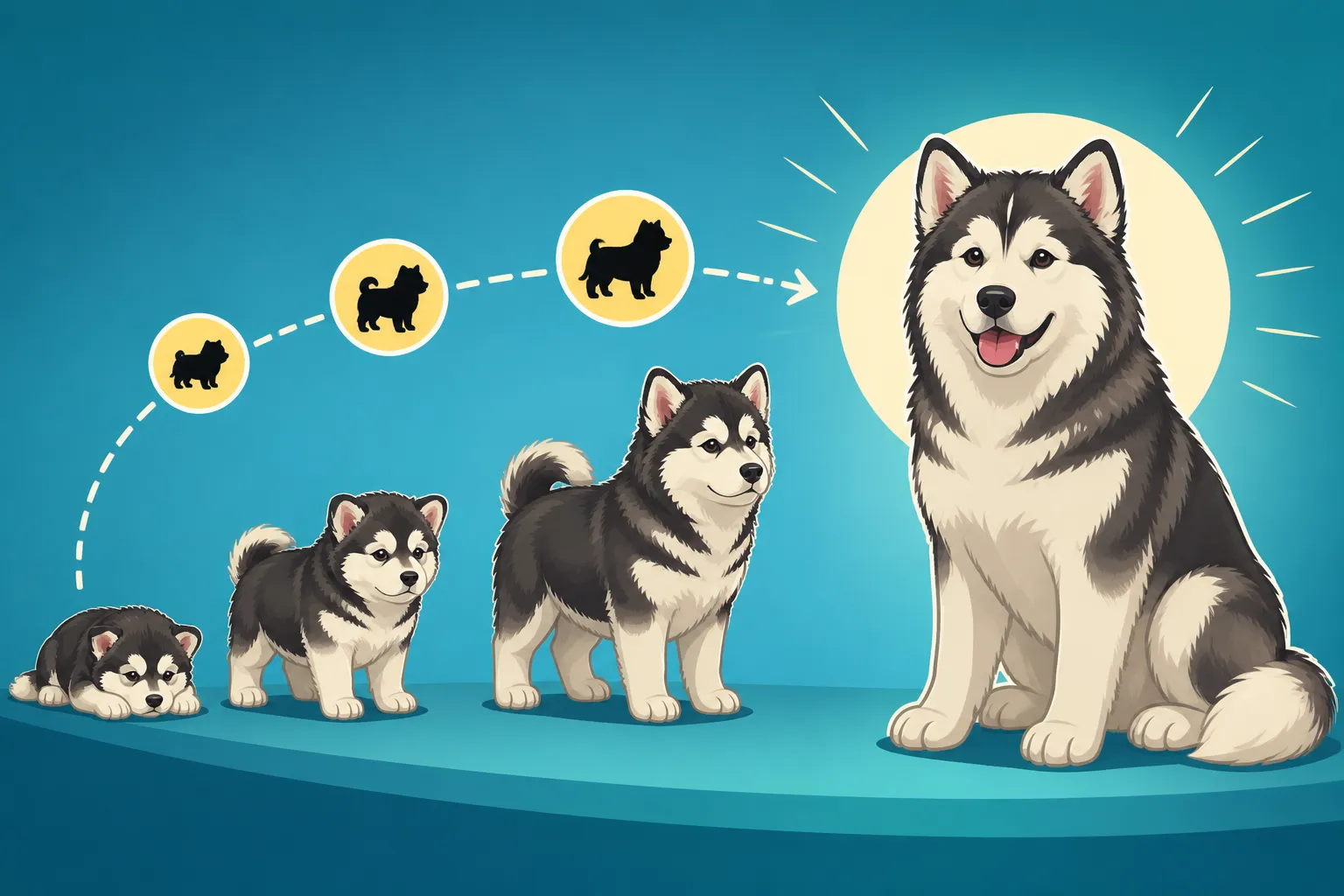
To truly understand when dwarfism becomes visible, it's helpful to know what normal Malamute puppy growth looks like. Healthy Malamute puppies grow rapidly in their first few months, gaining significant weight and height. Their legs should lengthen proportionally with their bodies, allowing for increasingly coordinated movement. By 4 to 6 weeks, they are typically sturdy, beginning to explore their environment with confidence, and their gait is strong and steady. Their bones should appear straight and well-formed.
A healthy Malamute puppy will continue this strong, consistent growth trajectory, steadily gaining size and developing the powerful, robust physique characteristic of the breed. Any deviation from this expected pattern, especially in limb length and bone straightness, should raise a red flag. For example, if you're watching a litter and one pup isn't keeping pace with its siblings' leg growth, even if it's otherwise thriving, it's a sign that warrants closer inspection. This forms the baseline against which you can compare suspected dwarfism.
The Breeder's Initial Observations
Reputable breeders are often the first line of defense in identifying potential health issues. They spend countless hours observing their litters, meticulously monitoring their development, weight gain, and physical milestones. In the initial weeks, a breeder might note that a specific puppy, while otherwise active and healthy, seems to have slightly thicker, shorter limbs than its littermates, or perhaps a slightly broader head compared to its body length. These observations can be very subtle at first, easily dismissed as individual variations within a litter.
However, a breeder experienced with the nuances of the breed will pay close attention to any minor deviations. They might start to track a particular puppy's growth more closely, comparing it not just to its siblings but also to historical growth charts for their lines. The frustration here is that even the most diligent breeder can be fooled initially, as the defining characteristics of chondrodysplasia simply aren't pronounced enough in the very youngest puppies to be definitively identified. Their keen eyes are looking for the earliest indicators, knowing that even a slight difference can be significant for the future of that puppy.
Pinpointing the Onset: The Age When Dwarfism Becomes Visible
This is where the rubber meets the road. While affected puppies might seem perfectly normal at birth, Chondrodysplasia doesn't stay hidden forever. The critical period for visible signs to emerge is typically between 4 and 12 weeks of age. This is a time of rapid growth, and the genetic defect starts to make its presence known through changes in skeletal development that become increasingly undeniable.
The Critical Window: Around 4-6 Weeks Old
For many affected Alaskan Malamute puppies, the first subtle signs of dwarfism often begin to appear around 4 to 6 weeks of age. At this stage, while all puppies are still relatively small, a discerning eye might notice that one particular puppy's legs, especially its front ones, seem a touch shorter or sturdier compared to its littermates. They might not yet be dramatically bowed, but the general impression is one of stockiness that doesn't quite match the elegant proportions of a typical Malamute puppy.
During this window, an affected puppy might also exhibit a slightly more lumbering gait than its siblings. While all puppies are a bit clumsy, a dwarf puppy might seem to carry its weight differently, with less fluidity in its movements. This is often the point where a conscientious breeder might begin to harbor suspicions, even if they can't yet confirm their concerns. The crucial point here is that the changes are still subtle enough that an inexperienced observer might easily overlook them, assuming it's just a "big-boned" or "short-legged" individual.
Subtle Clues at the 8-Week Mark
By 8 weeks of age, the signs of Chondrodysplasia typically become more pronounced and harder to ignore. This is often the age when puppies are ready to go to their new homes, which is why it's so important for prospective owners to be aware. At this point, the disproportionate growth becomes clearer. The affected puppy's legs, particularly the forelimbs, will be noticeably shorter than those of its healthy siblings. You might also start to see the distinctive bowing of the front legs become more apparent. The bones will look thicker and heavier, and the joints might appear larger or slightly angulated.
Another clue might be in the puppy's overall stance and movement. While still able to play and move, a dwarf Malamute puppy at 8 weeks may not have the same easy stride as its littermates. It might seem to have a more restricted range of motion or appear to waddle slightly. Their body might appear longer in proportion to their leg length, giving them a lower-slung appearance. This is a point where the differences in bone growth truly start to manifest in a way that’s difficult to dismiss.
Here's a quick comparison of growth indicators:
| Feature | Healthy Malamute Puppy (8 Weeks) | Dwarf Malamute Puppy (8 Weeks) |
|---|---|---|
| Leg Length | Proportionate to body, steadily lengthening | Noticeably shorter, especially front limbs |
| Leg Straightness | Straight, strong bones | Often shows slight bowing of front legs |
| Bone Thickness | Sturdy but balanced | Appears thicker, heavier for its length |
| Gait | Coordinated, fluid, growing confident | Slightly more lumbering, restricted, waddles |
| Overall Proportions | Balanced, athletic build emerging | Lower-slung, body appears longer relative to legs |
Clearer Indicators by 10-12 Weeks
By the time an affected Malamute puppy reaches 10 to 12 weeks old, the characteristic features of Chondrodysplasia are usually quite evident. The front legs will likely be distinctly bowed, and their overall shortness compared to the rest of the body will be unmistakable. The head might appear larger in proportion to the body due to the shortened limbs. The puppy’s movement will also show more obvious signs of stiffness or awkwardness, making it harder for them to keep up with their more agile, long-legged siblings.
At this age, owners often report their dwarf puppy tripping over its own feet more frequently, or struggling with stairs or even getting in and out of a low bed. The muscle development on the shortened limbs might also seem less robust. If a puppy shows these signs, it's crucial to consult a veterinarian who can confirm the diagnosis through physical examination and potentially X-rays. This definitive identification allows for immediate adjustments to their care plan and helps prevent further complications down the road. The age Malamute dwarfism becomes visible is often right when they are settling into their new homes, making it a critical time for vigilance.
Recognizing the Specific Physical Markers of Dwarfism
Once you know what to look for, the physical markers of Chondrodysplasia become quite distinct. It’s not just a general smallness, but a very specific set of anatomical deviations that point directly to the condition. These markers are crucial for both breeders and owners to identify, guiding them toward appropriate veterinary consultation and care.
Disproportionate Limb Growth
The most striking and consistent physical marker of Malamute dwarfism is the disproportionate growth of the limbs, particularly the long bones of the legs. While the torso and head of an affected puppy may grow to a relatively normal size for a Malamute, the legs will remain noticeably short. This creates a distinct visual effect where the dog appears to have a full-sized body mounted on stumpy legs. This is a key differentiating factor from a simply smaller-than-average Malamute, where all body parts would typically be proportionately reduced in size.
This disparity in growth means that as the puppy gets older, the difference between its body length and leg length becomes more and more apparent. The powerful chest and broad shoulders characteristic of the breed will sit much closer to the ground, giving the dog a unique, compact silhouette. This proportional anomaly is what fundamentally defines Chondrodysplasia and is usually the first truly definitive visual cue that something is genetically different with the puppy's development.
The Characteristic Bowing of Front Legs
Another hallmark sign of Malamute dwarfism is the characteristic bowing of the front legs. This bowing, or curvature, is a direct result of the abnormal cartilage and bone development. The radius and ulna, the two bones in the forearm, often grow unevenly or are malformed, causing the leg to bend outwards, resembling an "H" shape when viewed from the front, or a distinct curve when viewed from the side. This isn't just a slight curvature; it can be quite pronounced, impacting the dog's ability to stand and move with proper alignment.
The bowed legs contribute significantly to the altered gait of a dwarf Malamute. They restrict the normal range of motion in the joints and place undue stress on the wrists and elbows. This can lead to discomfort, early onset arthritis, and a predisposition to other orthopedic issues as the dog ages. Observing these bowed front legs in a dwarf Malamute is a strong indicator of the condition and necessitates veterinary assessment to confirm the diagnosis and discuss management strategies.
Other Skeletal Anomalies to Watch For
While disproportionate limbs and bowed front legs are the most common and visible signs, other skeletal anomalies can also accompany Malamute dwarfism. Some affected puppies may have broader, more rounded skulls, giving their head a somewhat "boxy" appearance compared to the more refined heads of unaffected Malamutes. Their feet might also appear larger or flatter, sometimes splaying out, as they try to compensate for the altered leg structure. You might also notice that the puppy's growth plates, the areas of growing tissue at the ends of the long bones, close prematurely or develop abnormally.
In some cases, there might be subtle spinal abnormalities, though these are less common or visible than the limb issues. Rib cages might appear slightly flattened or unusually deep. These less obvious signs further underscore the systemic nature of Chondrodysplasia, affecting multiple aspects of skeletal development. For a comprehensive diagnosis, a veterinarian would likely perform a thorough physical exam, evaluate gait, and take X-rays to visualize the bone and joint structures, confirming the extent and specific nature of these anomalies.
Navigating the Progression and Long-Term Implications
Understanding that Chondrodysplasia is a lifelong condition is crucial. It’s not something a puppy outgrows. Instead, its effects often progress and can lead to a range of health challenges that require diligent management throughout the Malamute's lifespan. Being prepared for these implications allows owners to provide the best possible care.
How Dwarfism Affects Overall Development
The most immediate impact of dwarfism on overall development is, of course, on mobility. The shortened, often bowed limbs mean that a dwarf Malamute will never possess the same athletic prowess as its unaffected counterparts. Their gait will remain altered, and activities like jumping, running at high speeds, or even navigating stairs can be significantly more challenging, if not impossible. This doesn't mean they can't be active; it simply means their activities must be modified to suit their physical capabilities.
Beyond mobility, the abnormal skeletal structure can also affect how muscles develop. Muscles attached to malformed bones might not develop optimally, potentially leading to muscle weakness or atrophy in certain areas. While their internal organs generally develop normally, the strain on their unique skeletal structure can lead to secondary issues over time. Owners need to be mindful of this modified physical capacity and adjust expectations for exercise and play, focusing on enrichment that supports their comfort and well-being.
Health Challenges Associated with Chondrodysplasia
The long-term health challenges associated with Malamute dwarfism are primarily orthopedic. The uneven weight distribution and abnormal joint angles put immense stress on developing joints. This often leads to a higher incidence of arthritis in an older Alaskan Malamute, sometimes starting at a much younger age than typically seen in the breed. Conditions like patellar luxation (kneecap dislocation) or elbow dysplasia can also be more common. The abnormal bone growth can sometimes lead to issues with spinal alignment, though severe spinal problems are less frequent.
Furthermore, some research indicates that Chondrodysplasia may be linked to issues with zinc absorption, even if the primary visible signs are skeletal. This means affected dogs might require special dietary considerations or even zinc supplementation for a dwarf Malamute throughout their lives. Regular veterinary check-ups, including monitoring for joint pain and mobility issues, become essential. Discussing these potential issues with your vet and exploring options like physical therapy or joint supplements from a trusted brand like Healthy Paws can greatly improve your dwarf Malamute’s comfort and quality of life.
Quality of Life for a Dwarf Malamute
Despite the physical challenges, it's vital to emphasize that dwarf Malamutes can lead full, happy, and loving lives. They are still Alaskan Malamutes at heart – intelligent, affectionate, and full of personality. Their spirits are not diminished by their physical form. Owners often find that dwarf Malamutes compensate for their physical limitations with incredible resilience and a zest for life. They may not be able to pull a sled or hike for miles, but they can still enjoy walks, play with toys, and be cherished companions.
The key to ensuring a good quality of life lies in proactive management and adaptation. This includes providing a safe, accessible home environment, offering appropriate exercise that minimizes stress on their joints, and consistent veterinary care. Owners may need to build ramps, use orthopedic beds, and carefully monitor their weight to avoid putting extra strain on their delicate joints. With love, understanding, and dedicated care, a dwarf Malamute can be just as joyful and fulfilling a family member as any other. It’s a testament to their incredible spirit.
Breeder Responsibilities and Owner Vigilance
The presence of Chondrodysplasia in a breed highlights the critical roles that both breeders and prospective owners play in promoting the health and well-being of Alaskan Malamutes. Informed decisions and transparent communication are paramount to reducing the incidence of inherited conditions like dwarfism.
The Role of DNA Testing in Prevention
Because Chondrodysplasia is a genetic, autosomal recessive condition, DNA testing is the single most effective tool for prevention. Breeders can test their breeding stock to identify carriers of the gene. If a breeder knows which dogs are carriers, they can make informed decisions about pairings, ensuring that two carriers are never bred together. This completely eliminates the risk of producing affected puppies. Even if one parent is a carrier, if the other parent is tested clear, none of the puppies will be affected, although some will be carriers themselves.
Many commercial laboratories, like Embark and Wisdom Panel, offer comprehensive DNA tests that include screening for Chondrodysplasia and other inherited Malamute diseases. Reputable breeders will openly share the results of these tests for both parent dogs. This transparency gives prospective owners peace of mind, knowing that their puppy has a significantly reduced risk of inheriting this condition. The cost of these tests is minimal compared to the heartache and expense of raising an affected dog. Knowing whether Malamute dwarfism has a DNA test is empowering for everyone involved.
What to Look For in a Reputable Breeder
When seeking an Alaskan Malamute puppy, choosing a reputable breeder is non-negotiable. A responsible breeder will prioritize the health and temperament of their dogs above all else. Here's what to look for:
- Health Clearances: They should provide documented proof of DNA testing for Chondrodysplasia (CD) on both parent dogs, showing that at least one parent is clear, or preferably, both are clear. They should also provide certifications for hips, elbows, and eyes.
- Transparency: A good breeder is open about their dogs' health history, allows you to meet the puppy's parents, and is willing to answer all your questions honestly, including those about potential health issues in their lines.
- Knowledge: They should be highly knowledgeable about the Alaskan Malamute breed, its specific health concerns, and proper care.
- Environment: Puppies should be raised in a clean, stimulating home environment, well-socialized, and appear healthy and vibrant.
- Contract: They typically have a contract that outlines health guarantees, spay/neuter agreements, and a commitment to take the dog back if needed.
- No Red Flags: Avoid breeders who sell puppies without health testing, push for quick sales, or offer "miniature Malamutes," which often indicates poor breeding practices or misrepresentation.
Always remember that a truly responsible breeder views their puppies as lifelong commitments, not just transactions.
Advocating for Your Puppy's Health
As a prospective or new owner, you are your puppy's primary advocate. Don't be afraid to ask tough questions of breeders. Request to see all health certificates, not just take their word for it. When you bring your puppy home, establish a strong relationship with a veterinarian who understands large breeds and is familiar with Malamute-specific health concerns. Schedule regular check-ups and voice any concerns you have about your puppy's growth, gait, or overall health.
If you suspect your puppy might be developing dwarfism, seek veterinary attention immediately. Early diagnosis can lead to better management and preparation. Continue to educate yourself about the breed and its health needs. Consider pet insurance from providers like Healthy Paws that can help cover unexpected veterinary costs, especially for conditions that require ongoing care. Your vigilance and commitment are essential in ensuring your Alaskan Malamute, whether affected by dwarfism or not, receives the best possible start and a lifetime of well-being.
Disclaimer
Please remember that the information provided in this article is intended for general informational purposes only and does not constitute veterinary advice. Always consult with a qualified veterinarian for any health concerns or before making any decisions about your pet's health or treatment.