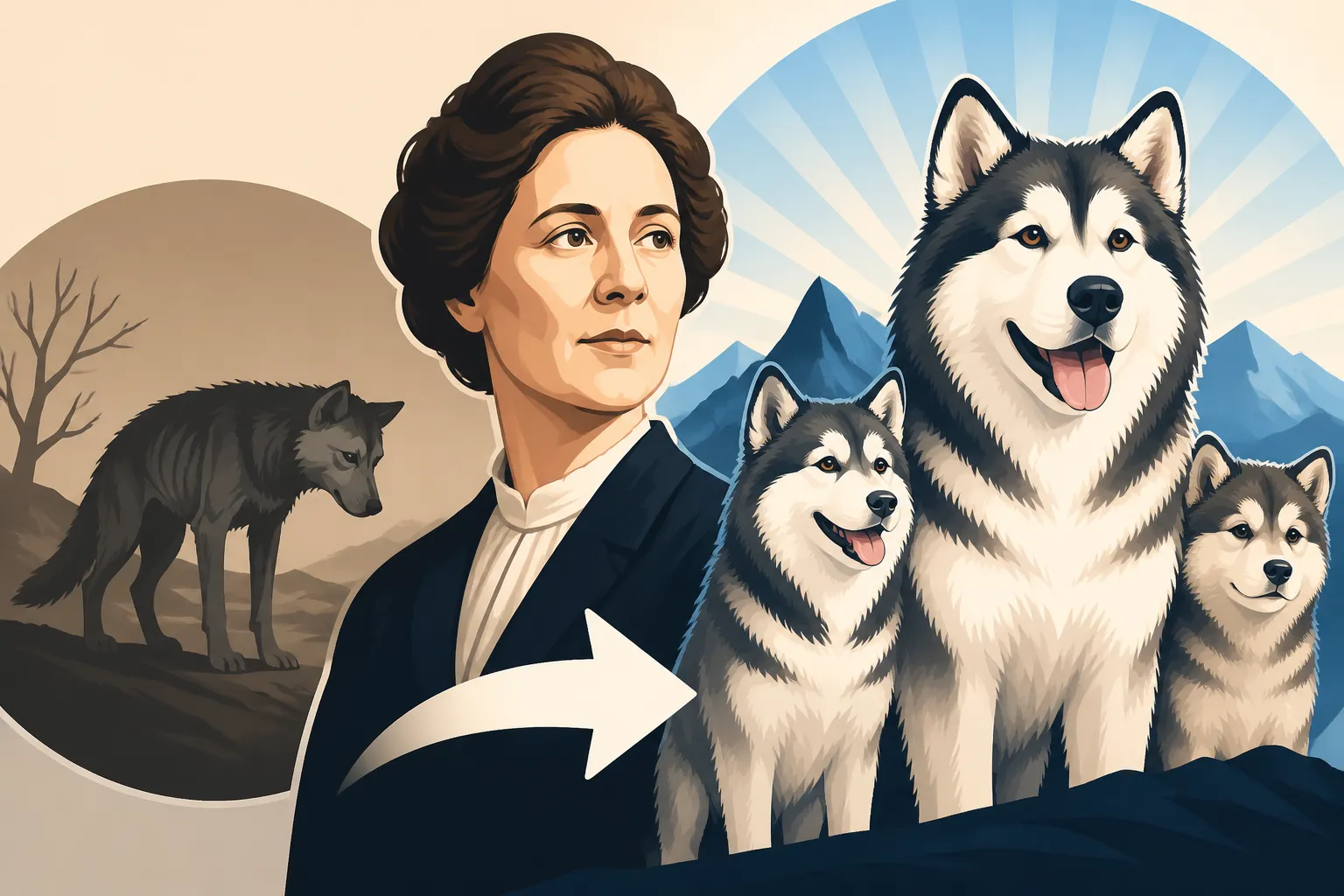
Whether Eva Seeley Rebuilt the Malamute Breed
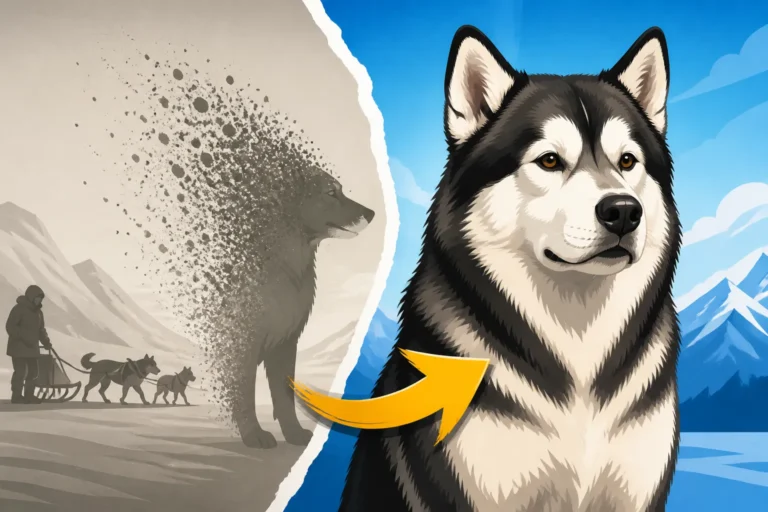
It's easy to look back at a magnificent breed like the Alaskan Malamute today and assume it has always existed in its current form, thriving and recognized. But the truth is, this powerful, majestic dog faced serious threats to its very existence, particularly during a tumultuous period in Alaska's history. Many wonder if one remarkable woman, Eva B. Seeley, truly rebuilt the breed, bringing it back from the brink of obscurity or dilution. This guide will delve into the historical context and Seeley's profound contributions to understand just how instrumental she was in shaping the Alaskan Malamute we know and love.
The Alaskan Malamute Before the Early 20th Century
Before the modern era, the Alaskan Malamute was inextricably linked to the indigenous Mahlemut people of the Kotzebue Sound region. Their lives, and indeed their survival, depended heavily on these incredible dogs, who were far more than just pets; they were partners in the most literal sense.
A Breed Shaped by Utility
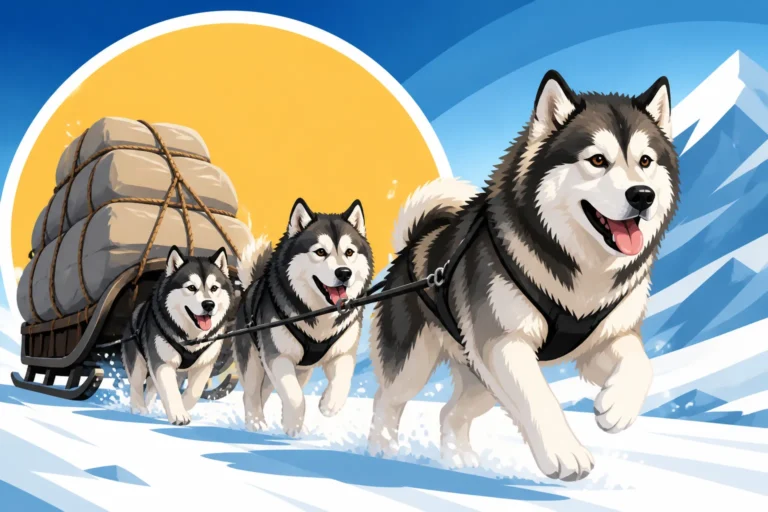
Imagine the harsh, unforgiving Arctic landscape: vast stretches of snow and ice, extreme temperatures, and limited resources. In this environment, the Mahlemut people relied on their dogs for everything from transportation to hunting. These were not dogs bred for speed in a race, but for immense strength and unparalleled endurance. They were freighting dogs, capable of pulling heavy loads over long distances, often for days on end, without complaint. Their thick double coats provided insulation against the bitter cold, and their strong, compact bodies were built for efficiency in motion.
These dogs also played a crucial role in hunting. They were known for assisting in the hunt for large game like seals, sometimes locating blowholes, and even had a historical connection to hunting bears. How a Malamute Hunted Bears Alongside the Mahlemut wasn't a casual pastime; it was a matter of sustenance and survival. This deep-rooted utility forged a dog with specific physical traits – powerful shoulders, deep chests, robust bone structure – and an equally distinct temperament: intelligent, resourceful, incredibly loyal to its human family, but also independent and possessing a strong pack drive. This was a dog bred to work, to survive, and to contribute directly to its human companions' well-being.
The Gold Rush and Its Impact
Then came the late 19th and early 20th centuries, bringing the Alaska Gold Rush. Thousands of prospectors, adventurers, and opportunists flooded the territory, and with them came a chaotic mix of dogs. Every available canine was pressed into service, and there was a rampant demand for sled dogs. However, the prospectors often prioritized speed or simply quantity over the preservation of pure bloodlines. Crossbreeding became widespread, with various breeds like Siberian Huskies, Eskimo dogs, and even European breeds mixed in to create faster teams or simply to get more dogs.
This period was incredibly dangerous for the pure, traditional Malamute stock. Without concerted effort, the unique characteristics honed over centuries by the Mahlemut people risked being diluted beyond recognition. Whether the Gold Rush Nearly Ruined the Malamute is a question that historians and breed enthusiasts often ponder, and the answer leans heavily towards "yes." The traditional Malamute, an ancient breed, faced the very real threat of genetic absorption into a generic pool of "sled dogs." This chaotic intermingling created a vacuum, a desperate need for someone to step in and identify, gather, and systematically breed the remnants of the true Malamute.
The Role of Eva B. Seeley and Chinook Kennels
It was into this tumultuous environment that Eva B. Seeley stepped forward, a woman whose dedication and vision would fundamentally change the destiny of the Alaskan Malamute. Her work at Chinook Kennels in New Hampshire became the cornerstone of the breed's modern revival.
The Vision for Preserving the Breed
Eva Seeley was a passionate and astute dog enthusiast who recognized the Alaskan Malamute as a distinct and historically significant breed at a time when many were simply lumped together as "sled dogs." She saw past the varied mixes and identified the unique characteristics of the true Mahlemut dog – its incredible strength, its deep chest, its powerful stride, and its resilient temperament. She understood that these dogs were not merely working animals but living historical artifacts, a testament to centuries of partnership between humans and canines in one of the world's harshest environments.
Her vision was clear: to preserve and standardize the Alaskan Malamute. She aimed to protect the breed from further dilution and ensure that its distinctive traits, both physical and mental, were carried forward. This wasn't a casual hobby; it was a mission driven by an unwavering commitment to the integrity of the breed. She knew that without focused breeding programs, the true Malamute might vanish, leaving behind only mixed-breed descendants.
The Kotzebue Line and Its Influence
Seeley's primary contribution came through her work with what became known as the Kotzebue line. Her foundation dogs for this line were acquired from the polar explorer Arthur Walden, who had brought dogs from Alaska to his Chinook Kennels in New Hampshire. These dogs, believed to be direct descendants of the Mahlemut dogs, formed the genetic bedrock of Seeley's breeding program.
She meticulously selected dogs for breeding based on their adherence to the "type" she envisioned – a compact, powerfully built dog with a thick coat, intelligent eyes, and a stable, tractable temperament. The Kotzebue line, under Seeley's careful guidance, became renowned for its uniformity in size and appearance, and its consistent, reliable working temperament. She believed in breeding dogs that could perform the tasks they were historically bred for, and her Kotzebues were indeed formidable freighting animals. This focus on consistency and utility helped cement a recognizable standard for the breed. If you're looking for high-quality supplies to maintain the health and vigor of your own Malamute, retailers like Chewy offer a wide array of specialized foods and supplements that align with such dedicated care.
Seeley's Breeding Philosophy and Standards
Eva Seeley's breeding philosophy was rooted in preserving the original working abilities and physical characteristics of the Alaskan Malamute. She wasn't just breeding for show; she was breeding for function. Her dogs were known for their excellent health, robust constitutions, and calm, confident dispositions. She kept detailed records, tracked pedigrees, and was incredibly selective about which dogs she bred.
Her efforts were instrumental in developing the first official breed standard. She worked tirelessly with others to outline the specific traits that defined an Alaskan Malamute, covering everything from coat color to gait, eye shape, and tail carriage. This standardization was crucial because it provided a blueprint for future breeders, ensuring that the breed would maintain a consistent identity. Without such a blueprint, the breed could easily splinter into various types, losing its core essence. Her dedication provided the framework that allowed the Alaskan Malamute to eventually gain recognition from major kennel clubs, securing its place among established breeds.
Other Key Figures and Lines in Malamute History
While Eva Seeley's influence was monumental, it's also important to acknowledge that the Alaskan Malamute's journey to modern recognition involved other dedicated individuals and distinct bloodlines. The breed's history is a tapestry woven with several threads.
Paul Voelker and the M'Loot Line
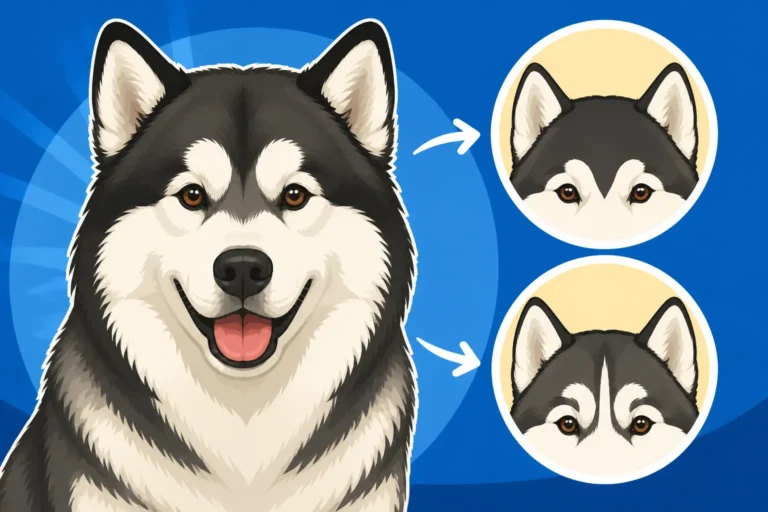
One of the most significant complementary influences came from Paul Voelker and his M'Loot line of Alaskan Malamutes. Voelker's dogs were generally larger, often with longer coats and more varied appearances than Seeley's uniform Kotzebues. While Seeley focused on a consistent type, Voelker's approach was somewhat different, leading to a broader range of traits within his line. The M'Loot dogs also traced their ancestry back to Alaskan working dogs, often from different regions than Seeley's stock, giving them a slightly different genetic foundation.
The M'Loot line contributed significantly to the gene pool, bringing in genetic diversity that proved invaluable. What the M'Loot Malamute Line Is often describes a dog that might be slightly less uniform but equally powerful and capable of incredible work. Their temperament, while still Malamute in essence, could sometimes be perceived as a little more independent or "wild," a stark contrast to the carefully curated calmness of many Kotzebues. This difference would later lead to debates and challenges within the breed community.
Roland Anderson and the Hinman Line
Another, though less widely recognized, contributor was Roland Anderson, associated with the Hinman line. These dogs also emerged from Alaskan stock and, like the M'Loots, added to the genetic fabric of the breed. While perhaps not as numerous or as broadly influential as the Kotzebue or M'Loot lines, the Hinman dogs represented another piece of the puzzle, emphasizing that the breed's survival was not solely dependent on a single source, even if that source was incredibly powerful.
The Blending of Lines and Modern Malamute
Initially, there was a strong division, and sometimes even animosity, between the proponents of the Kotzebue and M'Loot lines. Breeders fiercely defended their specific type, believing it to be the "truest" representation of the Alaskan Malamute. For a time, it seemed as though the breed might split into two distinct factions.
However, over several decades, a crucial decision was made to merge these lines. This move, while controversial for some purists, was ultimately vital for the breed's long-term health and genetic diversity. Whether the Two Malamute Lines Were Ever Merged is a key point in Malamute history, as this blending led to the broader, more robust genetic pool seen in modern Alaskan Malamutes. The characteristics we see today in many registered Malamutes – from coat variations to size and even certain aspects of temperament – are often a result of this thoughtful (and sometimes contentious) integration. This blending ensured that the breed could thrive, drawing on the strengths of both foundational lines to create a resilient and adaptable companion and worker. Many breeders today continue to honor these lines in their pedigrees, often purchasing specialized dog food and equipment from trusted sources like Chewy, knowing that top-tier care supports this rich heritage.
Evaluating Seeley's Legacy: Rebuilder or Preserver?
The question of whether Eva Seeley "rebuilt" the Malamute breed is more than just semantics; it speaks to the depth and impact of her work. To truly appreciate her contribution, we must consider the state of the breed before her intervention.
Defining "Rebuilding" in Breed History
When we talk about "rebuilding" a breed, it often implies taking remnants of a fragmented or nearly lost population and, through careful and systematic breeding, establishing a recognizable and stable genetic foundation that adheres to a specific standard. It's more than just preserving a few individuals; it's about resurrecting the idea of the breed and solidifying its future. Given the widespread crossbreeding during the Gold Rush, the "pure" Alaskan Malamute was indeed in a precarious state, scattered and diluted. There wasn't a unified type or consistent standard.
Eva Seeley didn't just find a few Malamutes and let them breed. She actively sought out dogs believed to be of original Mahlemut stock, brought them into her kennels, and, with immense dedication, developed a consistent line (the Kotzebues) that embodied what she believed to be the ideal Alaskan Malamute. She created a genetic blueprint and a standard where little formal structure existed before. This systematic, intentional reconstruction of a definitive type from a chaotic mix of dogs certainly qualifies as rebuilding. She didn't invent the Malamute, but she certainly re-established its form and function in the modern era.
Seeley's Enduring Contribution
Eva B. Seeley's legacy is undeniable and enduring. Her tenacious efforts at Chinook Kennels provided the primary foundation stock for the modern Alaskan Malamute breed. The Kotzebue line, which she meticulously developed, established a consistent type and temperament that set the benchmark for what an Alaskan Malamute should be. Her work, alongside others, led directly to the breed's formal recognition by the American Kennel Club in 1935, a pivotal moment that cemented its place in canine history. The Year the AKC Recognized the Alaskan Malamute marks the moment when the breed moved from a regional working dog to a recognized standard.
Furthermore, her breeding philosophy, emphasizing both working ability and correct type, laid the groundwork for responsible breeding practices that many still adhere to today. Many of the core characteristics we expect from a Malamute – their powerful build, their impressive endurance, and their generally stable temperament – can be traced back to her vision and the dogs she produced. Without her dedication, the Alaskan Malamute might have faded into obscurity, a mere historical footnote. Instead, she provided the anchor that allowed the breed to not only survive but to thrive, ensuring that future generations could experience the joy and challenge of sharing their lives with these magnificent dogs. Today, prospective owners often rely on detailed information from breeders about their dogs' lineage, and many discover the importance of proper nutrition and care, often finding their dog's favorite food and toys from online stores like Chewy.
| Aspect | Kotzebue Line (Eva Seeley) | M'Loot Line (Paul Voelker) | Modern Alaskan Malamute (Blended) |
|---|---|---|---|
| Origin | Primarily from Arthur Walden's polar expedition dogs, believed to be pure Mahlemut stock. | Dogs from various Alaskan working lines, often less documented initially. | A blend of Kotzebue and M'Loot lines, plus other early Alaskan dogs. |
| Size | Generally smaller, more compact, and uniform in size. | Often larger, with a wider range of sizes. | Exhibits a range of sizes, generally larger than original Kotzebues but within a standard. |
| Appearance | Consistent type, often with shorter coats, traditional markings. | More varied in appearance, sometimes longer coats, more diverse markings. | Diverse appearances, but all conforming to the established breed standard. |
| Temperament | Known for stable, tractable, and consistent working temperament. | Could be more independent, sometimes seen as more challenging or "wild." | Combines traits from both, aiming for stable, friendly, yet independent. |
| Contribution | Provided foundational consistency, established breed standard, AKC recognition. | Introduced genetic diversity, contributed to larger gene pool. | The unified breed, embodying the strengths and characteristics desired. |
Disclaimer
This article is for general informational purposes only and does not constitute professional advice. Laws, prices and regulations vary by location and change over time. Consult a qualified professional for guidance on your specific situation.