How a Malamute Hunted Bears Alongside the Mahlemut
It’s no secret that living with an Alaskan Malamute can be an adventure, filled with independent thinking, boundless energy, and sometimes, a prey drive that leaves you scratching your head, wondering where on earth it comes from. You might marvel at their strength and intuition, but also find yourself frustrated by their unwavering focus on a squirrel or bunny. This guide will take you back in time, revealing the profound historical role these magnificent dogs played alongside the Mahlemut people in hunting bears, and how understanding this ancient partnership can illuminate the instincts that still shape your Malamute's behavior today.
The Mahlemut's World and Their Canine Partners
Imagine a world where survival hinged on an intimate understanding of the land, the seasons, and the animals within it. This was the reality for the Mahlemut, an Indigenous Alaskan people who resided in the harsh, beautiful landscape around Kotzebue Sound. Their existence was a testament to resilience, and central to that resilience were their dogs – the ancestors of our modern Alaskan Malamutes. These weren't just pets; they were integral working partners, chosen and bred over generations for very specific, life-sustaining tasks.
The environment demanded dogs that were robust, intelligent, and capable of enduring extreme cold and long treks. It wasn't about speed, like some of the lighter sled dogs, but about power, stamina, and a keen sense of direction. The Mahlemut people developed a unique bond with these animals, recognizing their profound capabilities and fostering a partnership built on mutual respect and necessity. Every trait, from their dense double coat to their powerful shoulders and independent mind, was honed for purpose, making them indispensable allies in a challenging world.
While freighting and hauling supplies were crucial roles, the Malamute's utility extended far beyond the sled. Their impressive olfactory senses, acute hearing, and ability to move silently across snow and ice made them exceptional hunters, capable of tracking game that meant the difference between feast and famine. Understanding The Mahlemut of Kotzebue Sound Bred the Alaskan Malamute gives us a foundational insight into the very essence of the breed – a dog designed by necessity for a life of hard work and intelligent partnership, a far cry from simply pulling a pretty sled.
The Malamute's Specialized Role in Bear Hunting
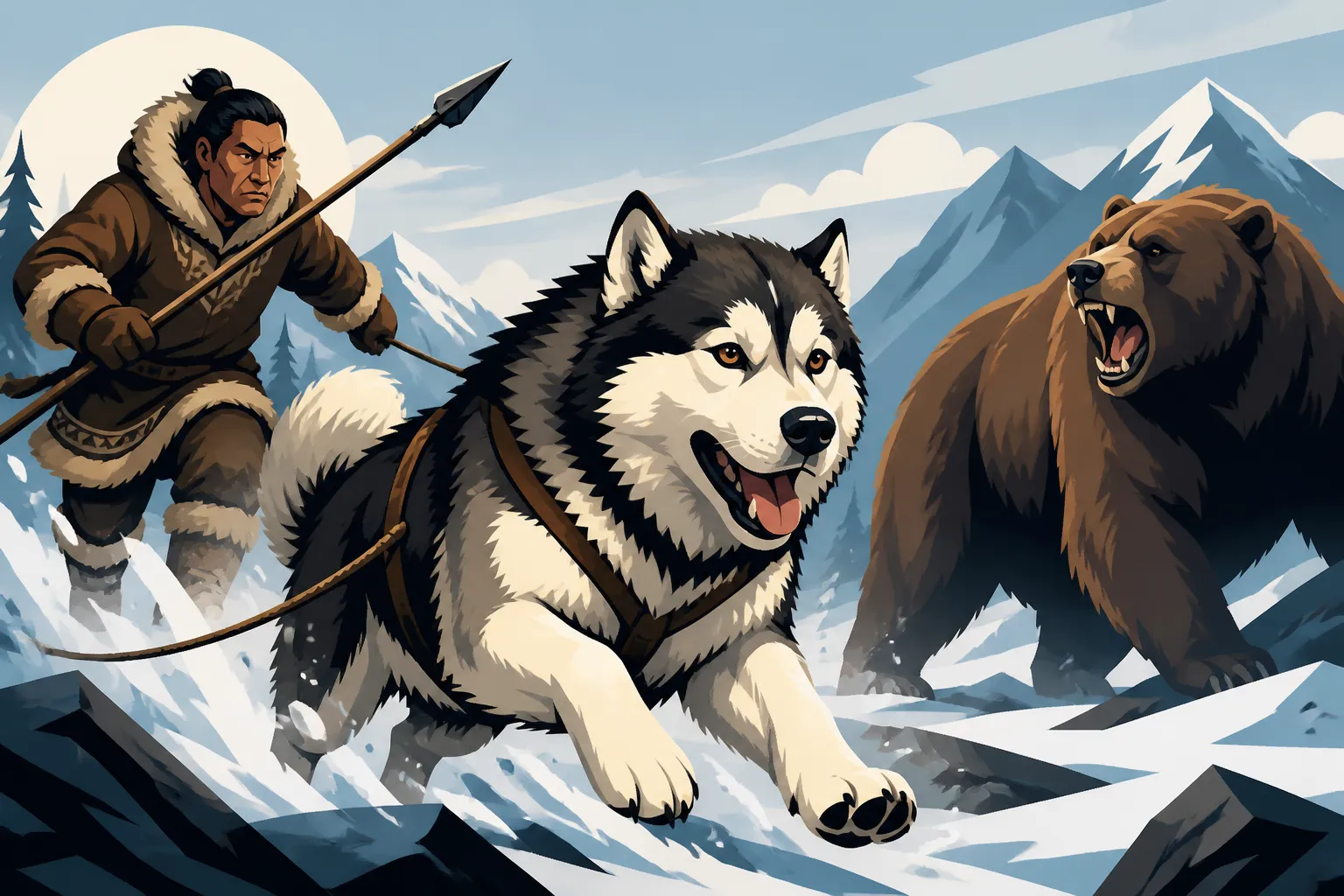
When we talk about Malamutes hunting bears, it's crucial to understand that their role was not to engage in a direct, kill-or-be-killed combat with such formidable animals. A fully grown bear, whether a polar bear or a grizzly, is an incredibly powerful creature, and even the strongest Malamute would be outmatched in a head-on fight. Instead, the Malamute's brilliance lay in its ability to locate, track, corner, and hold the bear at bay, allowing the Mahlemut hunters to approach safely and deliver a fatal blow. This required a sophisticated blend of instinct, bravery, and cooperative intelligence.
Think of it like this: a Malamute would use its superior scenting ability to pick up a bear's trail, even faint or old ones, leading the hunters through treacherous terrain. Once the bear was located, the real work began. The dogs would fan out, circling the bear, barking and distracting it, but always maintaining a safe distance. Their deep, resonant "woo-woos" and barks weren't just noise; they were a calculated strategy to keep the bear's attention, preventing it from escaping or focusing its aggression on any one dog or hunter. This allowed the Mahlemut to carefully maneuver into a position where they could effectively hunt the animal, often with spears or bows.
This intricate dance between dog and bear, under the watchful eyes of the human hunters, highlights the Malamute's unparalleled courage and tactical prowess. It wasn't about a mindless charge, but a strategic containment. This cooperative hunting method, often against animals vastly larger and stronger, cemented the Malamute's reputation as an intelligent, indispensable partner, not just a brute force machine. Their ancestral programming wasn't about aggression for aggression's sake, but a highly effective, coordinated effort. This is a far cry from what many people assume when they hear "hunting dog."
Training, Instinct, and Generations of Partnership
The skills required for bear hunting weren't just inherent; they were meticulously cultivated over generations through a combination of selective breeding and intensive training. Malamutes demonstrating the right temperament—courageous but not reckless, intelligent, and biddable enough to work in tandem with humans—were favored for breeding. Puppies would learn by observing older, experienced dogs, mimicking their movements and understanding the nuanced cues from their Mahlemut handlers. This apprenticeship was a vital part of their education, a process that continues to echo in the modern Malamute's desire to learn from and work with their human companions.
Early socialization and consistent training were paramount. A Malamute puppy wasn't just left to figure things out; it was guided, corrected, and encouraged to develop its natural instincts in a controlled, purposeful way. Imagine a young Malamute learning to use its nose to follow a scent, or to hold its ground against a simulated threat, all while maintaining focus on its handler. This wasn't about breaking their spirit, but channeling their immense drive. For modern owners struggling with their Malamute's independent streak or strong will, understanding this history can be incredibly validating. It wasn't obedience for obedience's sake; it was collaboration for survival.
Even today, those strong instincts remain. Many Malamute owners find that positive reinforcement, clarity, and consistency are key to successful training. If you're looking for guidance, programs like those offered by BAXTER & Bella can provide structured online support for channeling your Malamute's intelligence and drive, helping you build a strong working relationship based on mutual understanding. This ancestral need for purpose and partnership is why many Malamutes thrive when given a job, whether it's pulling a cart, carrying a pack, or engaging in complex scent games. Their minds are wired for problem-solving and collaboration.
Echoes in the Modern Malamute: From Bear Hunter to Best Friend
The legacy of the Malamute's bear-hunting past profoundly shapes the breed we know and love today. That incredible scent drive, once vital for tracking game, manifests as an intense curiosity about every sniff on a walk, sometimes leading to a strong desire to explore beyond the leash. This is why Why an Alaskan Malamute Will Never Have a Reliable Recall is a phrase often repeated among Malamute enthusiasts – their instincts to track and range can easily override even the most well-practiced commands when a compelling scent presents itself.
Their independent nature and remarkable problem-solving abilities, honed through generations of strategic hunting, mean they aren't dogs that will blindly follow commands without understanding the "why." They are intelligent partners who will weigh the situation, often making their own decisions if they feel it's in their best interest or if the reward isn't compelling enough. This can be frustrating for new owners expecting unquestioning obedience, but it's a testament to their ancestral role where quick, decisive action was often critical for survival.
Consider their communication style: the famous Malamute "woo-woo" instead of a sharp bark. This unique vocalization could have been advantageous in hunting scenarios, allowing them to communicate with their human partners or other dogs in a way that was less likely to alert prey prematurely compared to a loud, sharp bark. This instinct to vocalize rather than bark is still a charming, albeit sometimes noisy, trait in modern Malamutes. You can almost hear the echoes of ancient hunts when they start their characteristic chorus.
| Ancestral Trait (Bear Hunting) | Modern Manifestation (Pet Behavior) | Practical Implication for Owners |
|---|---|---|
| High Prey Drive | Intense focus on small animals (squirrels, cats), urges to chase. | Constant leash vigilance, secure fencing, What an Alaskan Malamute Does to Small Animals. |
| Strong Scenting Ability | Nose-to-the-ground exploration, easily distracted by smells. | Needs engaging mental stimulation, scent work activities, tracking. |
| Independent Problem-Solving | Will make own decisions, can be "stubborn" or selective in obedience. | Requires consistent positive reinforcement, variety in training, clear leadership. |
| Cooperative Instinct | Thrives on working with humans, enjoys tasks and a "job." | Excel in dog sports (weight pull, skijoring), long hikes, carrying packs. |
| Vocalizations (Woo-Woo) | Limited barking, but expressive howls and "talks." | Can be noisy with specific triggers (sirens, greetings), requires management in close quarters. |
| Physical Hardiness | Built for endurance, requires significant exercise and mental stimulation. | Needs daily vigorous activity, boredom leads to destructive behaviors. |
Even their robust physical attributes are linked to this history. Their powerful build and incredible endurance, while obviously crucial for freighting, also lent themselves to the arduous task of tracking and holding a large, dangerous animal over varied terrain. If your Malamute has an endless capacity for walks and seems happiest when "working" or exploring, you're seeing those ancient instincts alive and well.
Understanding this deep-seated history isn't just a fascinating anecdote; it's essential for being a responsible and empathetic Malamute owner. It helps you anticipate their behaviors, manage their instincts effectively, and provide the enrichment they truly need to thrive. Whether you're researching sturdy leashes and harnesses on Amazon to manage their pulling or exploring advanced training courses to keep their intelligent minds engaged, remembering their past as partners to the Mahlemut in the unforgiving Arctic will help you appreciate the magnificent creature by your side. They are truly living history, a testament to a remarkable partnership between humans and dogs.
Disclaimer
This article is for general informational purposes only and does not constitute professional advice. Laws, prices and regulations vary by location and change over time. Consult a qualified professional for guidance on your specific situation.