Whether the Iditarod Uses Malamutes
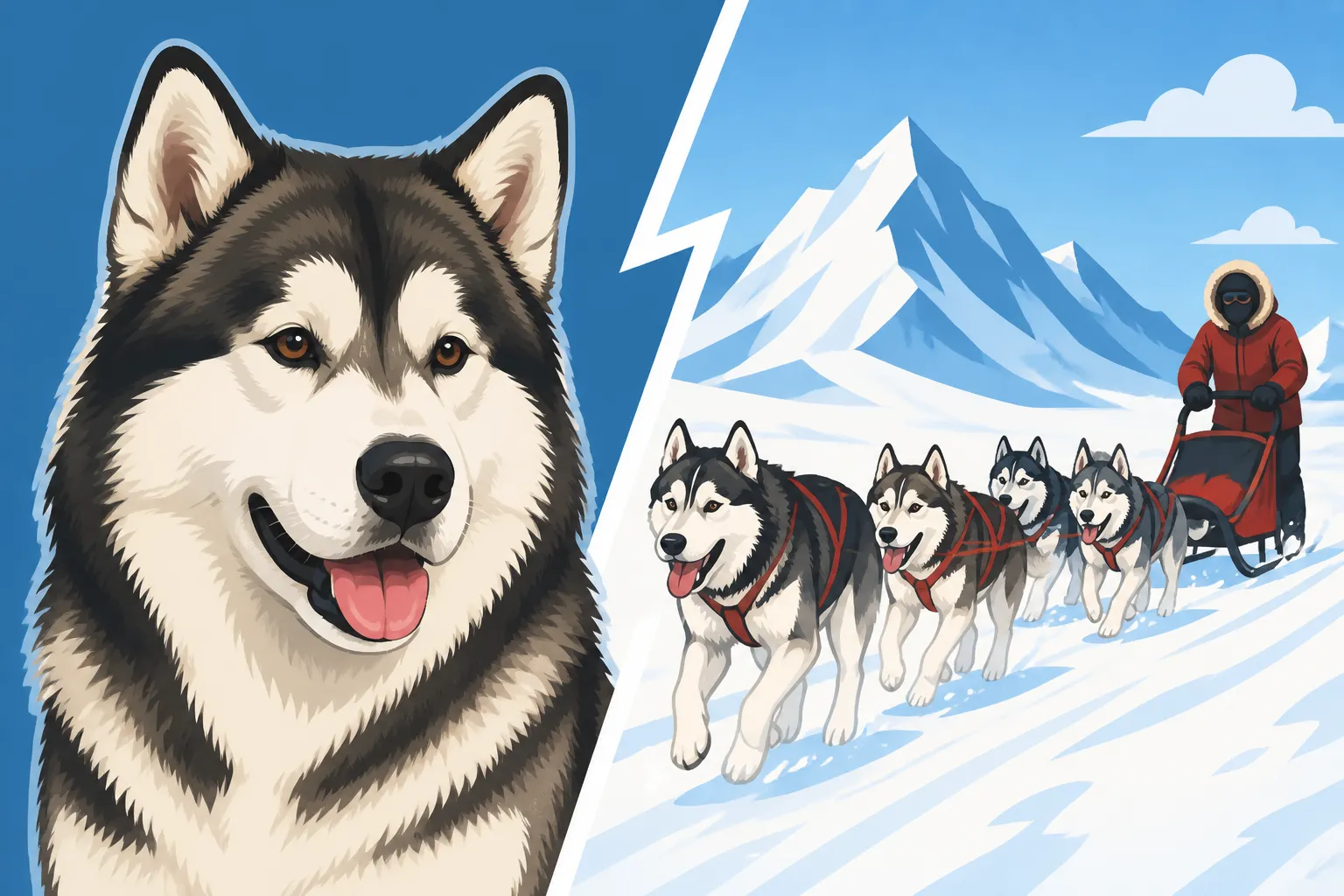
It's a common image that comes to mind when you hear "Alaskan sled dog race" – a team of majestic, fluffy Alaskan Malamutes, pulling with all their might through the snow. However, if you've ever watched the Iditarod Trail Sled Dog Race, you might have noticed the dogs look a little different from the Malamutes you know and love. The truth is, while the Alaskan Malamute is an iconic breed inextricably linked with the history of sledding, the modern Iditarod race largely favors a different kind of canine athlete. This guide will help clarify why these powerful freighting dogs are not typically seen on the Iditarod trail today and what kinds of dogs truly shine in this grueling event.
The Heart of the Iditarod: Speed vs. Strength
Understanding why Malamutes aren't typically Iditarod racers comes down to the fundamental difference between their traditional role and the demands of competitive long-distance racing. It's a classic case of horses for courses, or rather, dogs for different types of pulling.
What the Iditarod Demands
The Iditarod is often called "The Last Great Race on Earth," and for good reason. It’s a relentless endurance challenge covering nearly 1,000 miles of unforgiving Alaskan wilderness. Mushers and their teams face blizzards, treacherous ice, dense forests, and temperatures that plunge far below zero. To conquer such a race, dogs need an incredible combination of speed, stamina, and resilience. Every ounce of energy counts, and the ability to maintain a strong pace for days on end, with minimal rest, is paramount. They need to be lean, efficient machines capable of sustained high-speed output.
Think of it like this: if you were running a marathon, would you pick a weightlifter or a long-distance runner? While the weightlifter is immensely strong, their build isn't optimized for sustained speed over such distances. The marathon runner, with their leaner, more agile physique, is built for that specific challenge. Similarly, Iditarod dogs need to cover vast distances quickly, making speed and a lighter, more athletic build absolutely essential.
The Malamute's Traditional Role
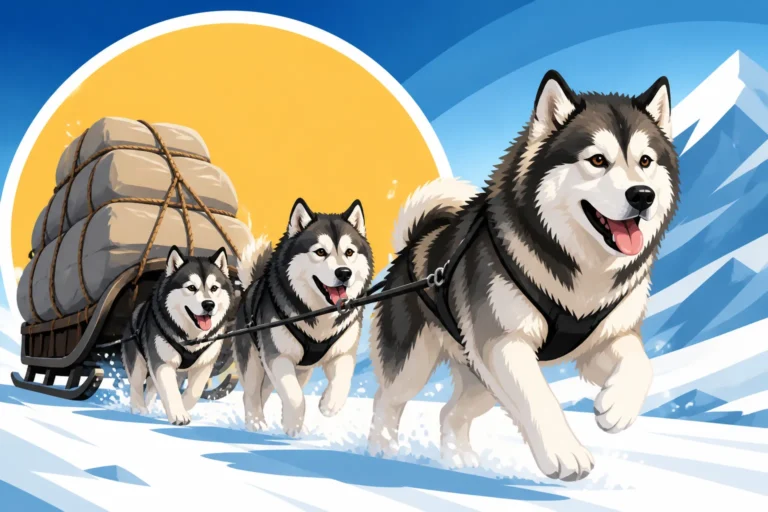
Now, let's talk about our beloved Alaskan Malamute. These magnificent dogs were bred by the Mahlemut people of Alaska's Kotzebue Sound for one purpose: to pull heavy loads over long distances at a steady, deliberate pace. They were the trucks of the Arctic, not the race cars. Their immense strength, powerful build, and dense double coat were perfectly adapted for hauling large amounts of freight, like hunting equipment, supplies, or even seals back to camp. They could work tirelessly for hours, days even, in the harshest conditions, but always at a pace that conserved energy. This is why we say that Freight, Not Speed: What Separates a Malamute From a Racing Dog.
A Malamute's body is designed for this kind of work. They are heavily boned, with deep chests, muscular shoulders, and robust frames built for power. Their thick, insulating coats are fantastic for staying warm while resting in sub-zero temperatures, but they can make dissipating heat difficult during high-speed, intense exertion. While they possess incredible endurance, it's a different kind of endurance—more akin to a powerful tractor steadily pulling a heavy load than a greyhound sprinting across a field. You can imagine How Much Weight a Malamute Freight Team Hauled required their unique build.
Why Sled Dogs Look Different Now
Over time, as sled dog racing evolved into a distinct sport, the type of dog best suited for competitive speed events also changed. The focus shifted, leading to the development of specialized athletes for racing.
The Rise of the Alaskan Husky
When you see a dog team in the Iditarod, you're almost certainly looking at what's commonly referred to as an "Alaskan Husky." Now, this can be a bit confusing because "Alaskan Husky" isn't a recognized purebred breed in the same way an Alaskan Malamute or Siberian Husky is. Instead, it's a type of dog, meticulously bred for performance on the race trail. These dogs are often a sophisticated mix of various breeds, each contributing specific traits vital for racing.
The ancestry of an Alaskan Husky might include Siberian Huskies for their inherent sled dog instincts and efficiency, but also breeds like various pointers (German Shorthaired Pointers, English Pointers) for their explosive speed and drive, Greyhounds or Salukis for their lean athleticism and long stride, or even hounds for their endurance. The goal is to create the ultimate racing machine: a dog that is fast, incredibly durable, mentally tough, and possesses an insatiable desire to run. These dogs are lean, often rangy, with a variety of coat lengths and colors, and their appearance can vary significantly even within the same team. They are fine-tuned athletes, bred purely for the demands of competitive mushing.
Traits That Favor Speed Over Freight
The physical and behavioral traits of these specialized racing dogs stand in stark contrast to the Alaskan Malamute's characteristics. For high-speed racing, lighter bone structure is preferred. It means less weight to carry and more efficient movement. Longer legs allow for a longer stride, which translates directly to greater speed. Their coats, while still dense enough to offer protection in cold weather, are generally shorter and less heavy than a Malamute's. This allows them to cool down more efficiently during intense exertion, preventing overheating—a critical concern during a long race.
Consider the Alaskan Malamute Against the Siberian Husky for a moment. Even the Siberian Husky, while a faster, lighter dog than the Malamute, is often not quite fast enough for the elite levels of the Iditarod, hence the further cross-breeding that created the Alaskan Husky. The Malamute's majestic, plush double coat, while perfect for lounging in freezing temperatures, becomes a disadvantage when pushing speeds for hours on end, as it traps heat. Their powerful, more compact build, ideal for pulling huge weight, isn't as aerodynamic or energy-efficient for sustained high-speed running. The physical demands of racing mean that every trait is selected for maximum efficiency and speed.
The Malamute's Place in Modern Sledding
While the Iditarod might not be their arena, the Alaskan Malamute certainly hasn't been relegated to the sidelines of the sledding world. They continue to thrive in roles that highlight their magnificent strength and enduring spirit.
Where Malamutes Still Excel
Alaskan Malamutes are the undisputed champions of weight pulling. These are competitions where dogs, harnessed to a sled or cart, pull increasingly heavy loads over a short distance. This is where their sheer power and low center of gravity truly shine. It's an incredible display of their genetic heritage and a testament to their strength, and if you've ever seen it, you understand why Pulling Is the Only Job an Alaskan Malamute Really Wants. These events perfectly align with what they were historically bred to do.
Beyond competition, Malamutes are cherished companions for recreational freighting, long-distance trekking, and skijoring (where the dog pulls a skier). They are superb partners for adventures where the pace is steady, consistent, and the goal is journeying rather than sprinting. A Malamute thrives on having a job, and even if it's just a long hike with a backpack, it fulfills their innate drive. Many owners use special harnesses and equipment, often found through retailers like Chewy, to ensure their Malamute can safely and comfortably engage in these activities. You might even feed Feeding an Alaskan Malamute That Works Two Days a Week a specific diet to support their robust physique and energy needs for these endeavors.
Understanding Different Types of Sled Dog Races
It's important to recognize that not all sled dog sports are about breakneck speed. Sled dog racing is a diverse world with various disciplines, each suiting different dogs.
- Sprint Races: These are short-distance, high-speed events, often just a few miles long. These are almost exclusively dominated by Alaskan Huskies due to their incredible burst of speed.
- Mid-Distance Races: Ranging from 50 to 300 miles, these races still demand speed but also significant endurance. Again, lean, fast Alaskan Huskies are the norm.
- Ultra-Long-Distance Races (like the Iditarod and Yukon Quest): These are the multi-day, multi-hundred-mile races where sustained speed, mental toughness, and incredible stamina are paramount. The dogs seen here are the highly specialized Alaskan Huskies.
- Freighting/Traditional Sledding: This is where Malamutes shine! These activities focus on hauling heavy loads or steady travel over distance, often at a slower, more deliberate pace. Here, the Malamute's power and incredible cold tolerance are invaluable.
So, while a Malamute wouldn't likely win the Iditarod, they are absolutely superstars in their own right, dominating categories that celebrate their strength and enduring spirit, just as their ancestors did.
Distinguishing a Malamute from an Iditarod Dog
If you're still picturing the majestic, wolf-like dog you know as an Alaskan Malamute and trying to reconcile it with the dogs you see tearing across the Iditarod finish line, let's break down the key differences.
Physical Differences You Can See
The differences between an Alaskan Malamute and a typical Iditarod racing dog (Alaskan Husky) are quite distinct when you know what to look for. It's not just about size; it's about overall conformation, designed for very different types of work.
| Feature | Alaskan Malamute | Iditarod Racing Dog (Alaskan Husky) |
|---|---|---|
| Size & Build | Larger, heavier bone, more muscular, stocky | Typically leaner, lighter bone, athletic, often rangy |
| Weight | Often 75-100+ lbs (34-45+ kg) for males | Typically 35-65 lbs (16-30 kg) |
| Coat | Very dense, thick double coat (wool-like undercoat) | Varies, usually shorter/medium length, less dense |
| Head Shape | Broad, powerful head | Often narrower, more refined |
| Ears | Medium-sized, triangular, set wide apart | Can be larger, more upright, or slightly smaller |
| Tail | Plumed, carried over the back | Can be plumed or brush-like, often carried lower |
| Eye Color | Always brown (any other color is a fault) | Can be brown, blue, or heterochromatic (different colors) |
| Pace | Steady, powerful trot, designed for freight | Fast, efficient gallop/trot, built for speed |
As you can see, the Malamute's build is all about power and insulation, designed to move heavy objects in deep cold. Meanwhile, the Iditarod dog's physique is streamlined for speed and endurance over vast distances, where every ounce of weight and hair length is optimized for performance. You'll notice What an Alaskan Malamute Actually Weighs is significantly more than most Iditarod racers. And remember, for a purebred Malamute, Why a Malamute Should Never Have Blue Eyes is a breed standard requirement, whereas it's perfectly common in Alaskan Huskies and Siberian Huskies.
Temperament and Drive
Beyond the physical, there are often subtle but important differences in temperament and drive, shaped by their respective historical roles. Alaskan Malamutes are known for their independent nature, intelligence, and sometimes stubborn streak. They are strong-willed dogs that require a firm, consistent, and positive leader. They thrive on challenging jobs and often exhibit an "efficient metabolism" where they don't always eat as much as you'd expect for their size, as discussed in The Efficient Metabolism That Surprises Every New Malamute Owner. They are incredibly loyal to their families but can be reserved with strangers. Their prey drive can be intense, a remnant of What an Alaskan Malamute Was Bred to Hunt.
Iditarod-type Alaskan Huskies, on the other hand, are bred for an almost obsessive desire to run and pull, coupled with a highly trainable disposition that makes them eager to please their musher. They often possess an unparalleled work ethic and focus on the trail, bred to respond to commands and work cohesively as a team under immense pressure. While individual personalities vary greatly, the overall selection process for racing dogs favors those with an unyielding drive to move forward, even when exhausted, and a robust mental resilience to handle the extreme stress of racing.
In essence, both types of dogs are incredible athletes, but they are built for different purposes. The Alaskan Malamute remains a magnificent testament to strength and endurance, an invaluable partner for freighting and adventuring at a powerful, steady pace, but the Iditarod has evolved to demand a different kind of speed-demon athlete.
Disclaimer
This article is for general informational purposes only and does not constitute professional advice. Laws, prices and regulations vary by location and change over time. Consult a qualified professional for guidance on your specific situation.