How Much a Male Alaskan Malamute Weighs
A male Alaskan Malamute can look enormous under his coat, so a number on the scale does not tell the whole story. The usual adult male benchmark is about 85 pounds, but healthy dogs vary with frame, muscle, age, and activity. This guide explains the breed standard, how to assess your dog’s condition, and when a weight change deserves attention.
The typical weight of a male Alaskan Malamute
The adult male breed-standard benchmark
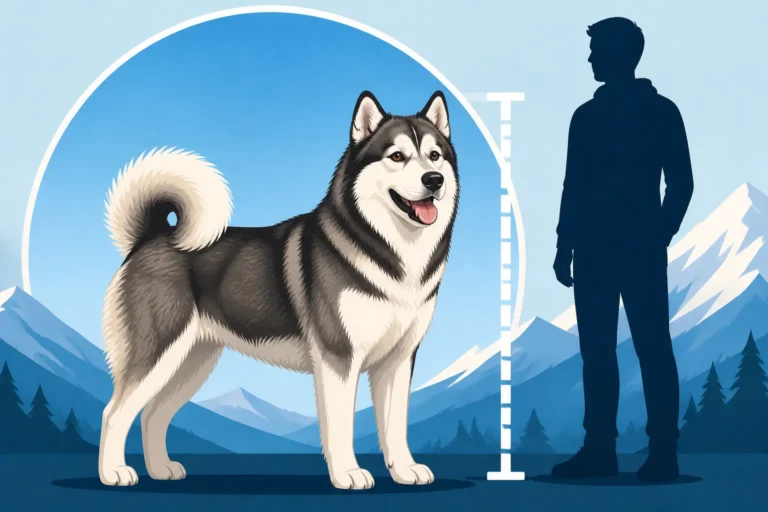
The Alaskan Malamute breed standard describes an ideal adult male as weighing about 85 pounds and standing about 25 inches at the shoulder. These are benchmarks for a well-proportioned dog, not a strict weight limit that every male must meet. A healthy individual may weigh somewhat less or more depending on his build, and the number alone cannot tell you whether he is at a suitable weight.
That distinction matters with a breed built for strength and endurance. Two males can both be healthy while looking quite different: one may be more compact and solid, while another is taller or more lightly built. A dog with substantial muscle may weigh more than a less muscular dog of similar height without carrying excess fat.
The 85-pound figure is a useful starting point when discussing your dog with a veterinarian or breeder. It is not a target to reach by adding food, nor a reason to put a naturally larger-framed dog on a diet. For a broader look at adult size and build, see What an Alaskan Malamute Actually Weighs.
Why individual males can weigh differently
Genetics, body frame, muscle, age, and daily workload all influence a Malamute’s weight. A male from lines selected for freighting work may have a different outline from a dog bred primarily for conformation. Activity also matters: a dog regularly conditioned for appropriate pulling work may carry more muscle than a pet who mostly takes neighborhood walks.
Coat can make those differences difficult to judge. A full Malamute coat adds visual volume, and seasonal coat changes can make the same dog seem to gain or lose size. That is why comparing your dog with a photograph, another Malamute, or a number you saw online is less useful than tracking his own weight and body condition over time.
You may also hear about “giant” Malamutes. A dog can be unusually large, but bigger is not automatically healthier or more correct for the breed. Size should be considered alongside sound movement, comfortable breathing, a suitable body condition, and the dog’s overall health—not treated as a goal in itself.
| Dog or life stage | Useful reference | What to keep in mind |
|---|---|---|
| Adult male | About 85 pounds is the breed-standard ideal | An individual’s healthy weight depends on build and body condition |
| Growing puppy | No single weight fits every age | Compare growth over time with veterinary guidance |
| Active, conditioned adult | Muscle and workload affect the scale | More weight is not necessarily excess fat |
| Older or less active adult | Activity and body composition may change | Reassess food portions and body condition regularly |
When your dog’s number needs context
A scale reading becomes more helpful when you know how it has changed. Record your dog’s weight at regular veterinary visits, or weigh him at home if you have a dependable method. If you do not have a large enough scale, some veterinary clinics can weigh him during a routine visit. Try to use similar conditions each time, such as weighing before a meal and on the same scale.
A single reading can be misleading. A dog may weigh more after a meal or less after an unusually active day, and different scales may show slightly different numbers. What matters most is the pattern: steady growth during puppyhood, relative stability as an adult, or a gradual change that cannot be explained by a change in activity or routine.
If your Malamute’s weight changes noticeably without an obvious reason, talk with your veterinarian rather than immediately changing his food. Weight loss or gain can have several causes, and a physical examination can help determine whether the issue is diet, activity, or something that needs medical attention.
How to tell whether a male Malamute is at a healthy weight
Look and feel, not just the scale
A thick coat can hide the outline of a dog’s body, so use your hands as well as your eyes. You should generally be able to feel your Malamute’s ribs beneath a light layer of tissue without pressing hard. They should not be sharply visible, but you should not have to push through a heavy layer of fat to find them either.
Look down at him from above. A visible waist behind the ribs is a helpful sign, though it may be subtle in a heavily coated dog. From the side, the abdomen usually rises somewhat toward the hind legs rather than forming a straight, heavy line. These observations are not a diagnosis, but they can help you notice changes between veterinary appointments.
If you are unsure what you are feeling under the coat, ask your veterinarian to show you during an exam. That quick demonstration can make at-home checks much less confusing. The guide Feeling for Ribs Under an Alaskan Malamute's Coat explains the same practical check in more detail, and How to Spot a Heavy Malamute Under Its Coat focuses on signs that can be easy to miss.
Avoid judging by appearance alone
Malamutes naturally have a powerful, substantial outline. A broad chest, thick neck, and dense coat can make a fit dog look heavier than he is. On the other hand, a dog can appear trim from a distance while carrying extra fat beneath a plush coat. Neither a “big-looking” silhouette nor a flattering photo is enough to decide whether a dog needs to lose weight.
Pay attention to how your Malamute moves and feels during ordinary activities. Is his waist becoming harder to find? Are his ribs more difficult to feel than they were a few months ago? Does he seem less willing to move, or does he tire sooner than usual? Those signs do not prove that weight is the cause, but they are good reasons to take a closer look and discuss any persistent change with your vet.
It can help to keep a simple record: date, weight, food portions, treats, exercise, and any notable changes. If you share that record with your veterinarian, it is easier to spot a slow trend than it is to rely on memory. This is especially useful when your dog’s winter coat or coat blow makes visual comparisons tricky.
How work and activity affect body condition
A working Malamute’s weight should reflect his actual conditioning, not an assumption that every dog of the breed needs a high-calorie working ration. A dog pulling regularly has different energy demands from a pet whose main exercise is a daily walk. Even so, activity varies from week to week, and food portions may need to be adjusted when the workload changes.
More muscle can contribute to a higher scale reading. That does not mean that every heavy, active dog is fit, or that every lighter dog is underweight. Look at body condition and performance together: whether the dog moves comfortably, maintains muscle, and recovers normally from his usual activity. For more on the differences in build and conditioning, see Whether a Working Malamute Is Leaner Than a Show One and Keeping an Alaskan Malamute at a Working Weight.
Avoid increasing exercise or adding a pulling workload solely to make the scale move. A sudden jump in activity can be hard on an unconditioned dog, and puppies need special care while they grow. Your veterinarian can help you make a safe plan that accounts for age, joints, health, and current fitness.
How male Malamutes grow from puppyhood to adulthood
Puppy growth does not follow one exact chart
Puppies vary in size, and their weight should be considered in relation to their age, frame, growth pattern, and health. A single puppy-weight chart cannot account for every litter or individual. If you have a young male, your veterinarian can assess whether he is growing steadily and whether his condition is appropriate for his stage of development.
It is sensible to weigh a puppy regularly and keep the measurements together rather than comparing him with an unrelated puppy of the same age. A sudden slowdown, unexpected loss, or very rapid gain is worth raising at a checkup. The goal is steady, appropriate development—not the fastest possible growth or reaching adult size early.
For related questions about timing, see The Age an Alaskan Malamute Stops Growing and Whether an Alaskan Malamute Fills Out After Two. Height and weight do not necessarily finish changing at the same time; a young adult may continue to mature in muscle and body shape after he has nearly reached his adult height.
Why slow, steady growth is preferable
Large-breed puppies should not be encouraged to grow as quickly as possible by overfeeding. Extra weight places additional load on a developing body, and a puppy that looks round under his coat may be getting more food than he needs. Feed according to a suitable growth diet’s directions as a starting point, then adjust with veterinary advice and regular condition checks.
Do not add supplements or switch foods just because your puppy seems smaller than a dog in an online picture. A veterinarian can review his growth pattern and help determine whether his diet is appropriate. If you compare food options on a retailer such as Chewy, focus on whether the formula is intended for the puppy’s life stage and discuss any planned change with your vet, especially if your puppy has a medical concern.
Keep treats and training rewards in the daily picture, too. A few extras may seem insignificant, but they can add up when a puppy is rewarded frequently. Rather than cutting meals sharply, ask your vet how to balance treats, meals, and growth needs.
When a young dog still looks like he is filling out
Some Malamutes look rangier during adolescence, then become more substantial as they mature. Others remain relatively lean, especially when they are active. The important point is not whether a young male looks as massive as an adult, but whether his growth and condition are appropriate for him.
If you are concerned that your dog is unusually small or large, bring his recorded weights and ask your vet to assess his overall development. A breeder familiar with the parents and their adult sizes may provide helpful background, but that information does not replace an individual health evaluation.
Feeding and monitoring a male Malamute’s weight
Start with portions, then adjust thoughtfully
Food-bag directions are a starting point, not a perfect prescription for every Malamute. Dogs differ in metabolism and activity, and treats, chews, table scraps, and food used for training all contribute to daily intake. Measure meals rather than estimating by eye, and review portions when your dog’s workload or body condition changes.
If your adult male is gaining weight, first check the whole routine: meal portions, snacks, shared food from family members, and activity. If he is losing weight or seems hungry despite a normal routine, do not assume that simply adding more food is the answer. A veterinary check can help rule out health problems and guide a safe feeding adjustment.
When comparing food labels, product pages at Chewy can make it convenient to review ingredients and life-stage information. Still, a product description cannot determine what your individual dog needs. Ask your veterinarian before switching to a weight-management formula or making a major change, especially if your Malamute has a diagnosed health condition.
Recheck weight after changes
After changing portion sizes or daily activity, keep monitoring rather than assuming the first adjustment solved the problem. Use the same scale when possible, note changes in body condition, and give your veterinarian an update if progress is not as expected. For a dog with excess weight, gradual, veterinarian-guided change is safer than a crash diet.
If the dog’s activity has dropped—for example, because of an injury, a change in household routine, or retirement from regular work—his previous portions may no longer suit him. Conversely, a substantial increase in planned activity may change his energy needs. How Much an Adult Alaskan Malamute Should Eat and Taking Weight Off a Malamute That Is Not Working offer related guidance on these situations.
A food retailer such as Chewy may help you compare available formulas, but the right choice depends on your dog’s age, health, and body condition. Keep the focus on measured portions and the dog in front of you, not a label promising a particular result.
When to call the veterinarian
Arrange a veterinary discussion if your Malamute’s weight changes unexpectedly, his ribs become difficult to feel or prominently visible, or his appetite or energy changes along with his body shape. Seek advice sooner if a change is rapid or accompanied by other signs of illness, such as vomiting, diarrhea, weakness, or unusual thirst.
A vet can check more than the number on the scale. They can assess body condition, muscle, joints, and general health, then recommend whether the next step is a feeding adjustment, a change in activity, or further evaluation. If you use Chewy to research food or supplies after the visit, treat that research as a way to compare options—not as a substitute for the plan your veterinarian gives you.
For most male Alaskan Malamutes, about 85 pounds is a useful adult reference point, not a pass-or-fail test. Regular weighing, hands-on body checks, and a conversation with your veterinarian are more dependable than judging by coat or comparing your dog with another Malamute.
Disclaimer
This article is for general informational purposes only and does not constitute professional advice. Laws, prices and regulations vary by location and change over time. Consult a qualified professional for guidance on your specific situation.