Whether an Alaskan Malamute Fills Out After Two
An Alaskan Malamute can look leggy or narrow at two, especially after a growth spurt, and it is easy to wonder whether your dog is finished developing. Many do continue to gain muscle and breadth after their second birthday, but healthy “filling out” is different from simply gaining fat. This guide explains what may change, what to monitor, and when to call your veterinarian.
What “filling out” means in an Alaskan Malamute
Height and bone growth are not the same as adult build
A Malamute’s height generally settles before the dog looks fully mature. The long bones stop growing once their growth plates close, but that does not mean the dog has reached its finished adult appearance. Chest depth, muscle, and overall substance can continue to develop after the upward growth has slowed.
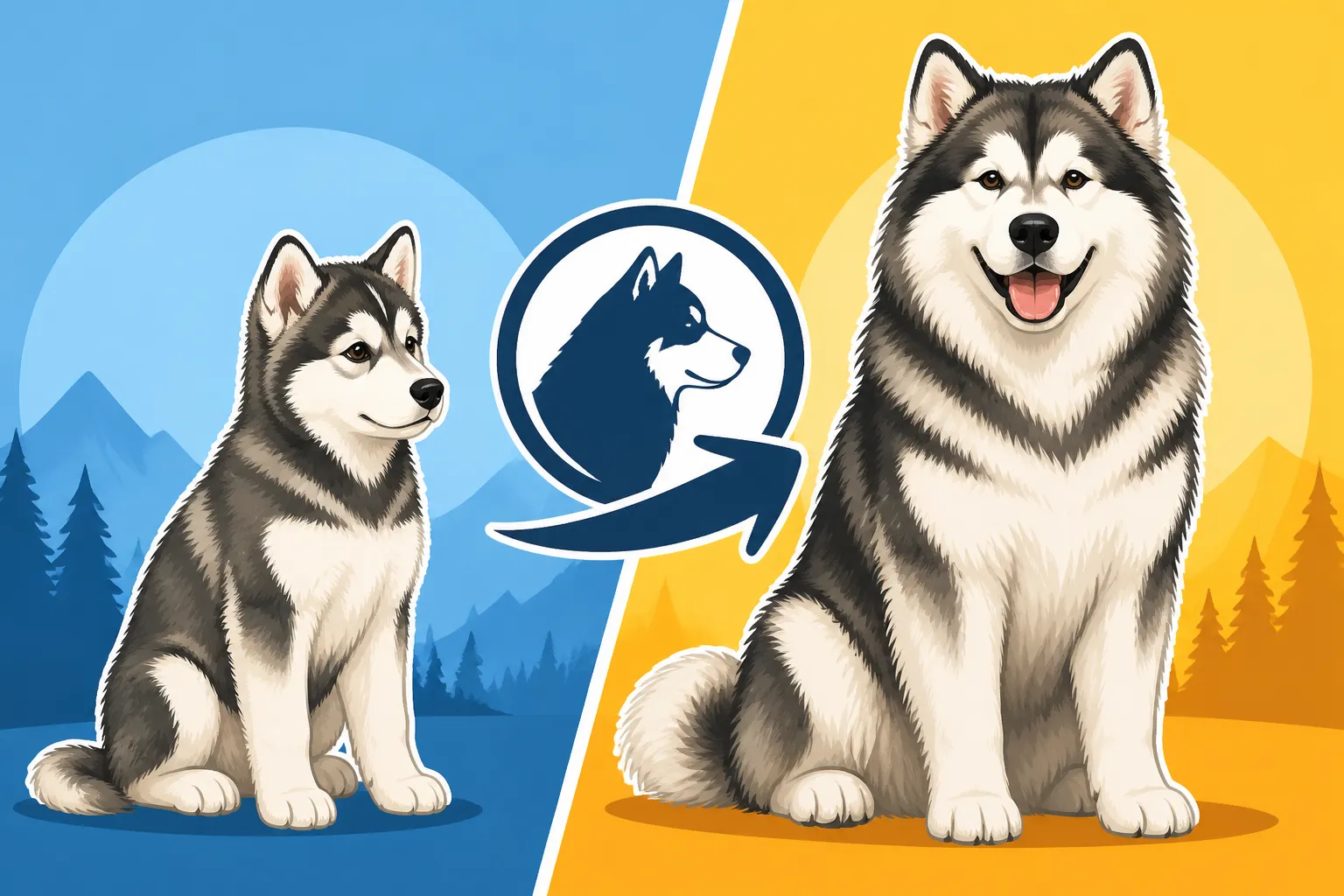
That difference can be confusing. A young adult might already be tall but still look narrow through the chest, with a lean outline and long-looking legs. Over the next stretch of maturity, the same dog may develop more muscle and a broader, more solid appearance without becoming much taller.
There is no single birthday when every Malamute is “done.” Genetics, sex, activity, health, and individual development all influence the pace. For a broader look at the timeline, see The Age an Alaskan Malamute Stops Growing.
Adult substance develops gradually
Malamutes are substantial working dogs, but a healthy adult should not look bulky just because the breed is large. A young dog that is still developing may add muscle as its exercise becomes more consistent and its coordination improves. That change can make the dog look stronger and more filled out, even if its weight changes only modestly.
Think of a young Malamute who has just finished growing taller. At two, the dog may look a little angular beside a mature relative. By the time it is older, its chest and shoulders may appear more developed, and its body may look more balanced. That can be normal maturation rather than a sign that the earlier diet was inadequate.
Breed standards and typical adult weights can offer context, but they are not a personal target for every dog. A dog’s frame and body condition matter more than whether it matches a number you saw online. The articles What an Adult Male Alaskan Malamute Weighs and What an Adult Female Alaskan Malamute Weighs can help explain why sex and build affect expectations, but your veterinarian is best placed to assess your individual dog.
How to tell healthy maturity from excess weight
Use body condition, not the scale alone
A scale can show whether weight is changing, but it cannot tell you whether that change is muscle, normal development, or extra fat. The Malamute’s thick coat makes visual guesses harder still. Regularly feeling your dog’s body can give you a clearer picture.
In a dog at a healthy condition, you should generally be able to feel the ribs beneath a light covering, without pressing hard. Viewed from above, the body usually has a visible waist behind the ribs; viewed from the side, the abdomen should tuck up rather than hang in a straight line. These are useful observations, not a diagnosis, and individual body shapes vary.
Try checking in the same way every few weeks, ideally with your dog standing relaxed. If the ribs become difficult to feel, the waist disappears, or your dog’s shape changes quickly, arrange a veterinary check rather than assuming it is simply “filling out.” For practical guidance, see Feeling for Ribs Under an Alaskan Malamute's Coat and How to Spot a Heavy Malamute Under Its Coat.
| What you notice | What it may suggest | A sensible next step |
|---|---|---|
| More chest or shoulder muscle, with ribs still easy to feel | Gradual physical maturity or conditioning | Track weight and body shape over time |
| Weight rises while the waist becomes less visible | Possible excess weight, not just adult development | Review portions and ask your veterinarian to assess body condition |
| A sudden change in weight or appetite | A change that deserves attention | Contact your veterinarian, especially if other symptoms appear |
| Narrow build but normal energy and steady growth | Individual frame or a slower maturation pattern | Discuss it at the next routine examination |
| Difficulty rising, limping, or reluctance to exercise | Possible pain or another health issue | Arrange veterinary advice rather than increasing exercise |
Weight gain is not automatically a problem, but it is worth watching because extra weight can put more strain on joints. If you are unsure whether your dog’s build is changing normally, photos taken from the side and above can help you compare its shape over time. Take them in similar positions and lighting; a thick coat can make small differences look dramatic.
Consider the whole dog, not one feature
A broad chest does not by itself mean a Malamute is overweight, just as a narrow chest does not prove that a dog is underfed. Coat volume, posture, age, and body structure all influence appearance. A wet or freshly brushed coat can make the outline look very different from a full winter coat.
Look at several clues together: the ease with which you can feel the ribs, the waist from above, the abdominal tuck from the side, and whether your dog moves comfortably. Also consider energy and stamina in ordinary activities. A dog that appears heavier but remains comfortable may simply have a different build; a dog that is gaining weight and slowing down needs a closer look.
You can read more about the breed’s naturally efficient appetite in The Efficient Metabolism That Surprises Every New Malamute Owner. If your Malamute is putting on weight easily, Whether a Malamute Gains Weight Easily offers related context. Neither general breed tendencies nor an online comparison can replace an examination when you notice a persistent change.
Feeding and exercise while your Malamute matures
Keep meals steady and adjust with professional guidance
A young adult’s nutritional needs can shift as its growth slows and its activity changes. Avoid making a sudden switch in food or increasing portions just because your dog still looks lean. A Malamute may naturally have a relatively lean outline, and adding food without checking body condition can lead to unwanted weight gain.
If you are deciding whether to continue a growth diet or move to an adult formula, ask your veterinarian for guidance based on your dog’s age, condition, and health. A gradual transition is often easier on the digestive system than an abrupt change. Follow the feeding directions as a starting point, then review the amount in light of your dog’s actual condition and activity.
When comparing food labels or arranging a regular food order through Chewy, keep the same practical questions in mind: does the diet suit your dog’s life stage, is the portion measured consistently, and is your dog maintaining a healthy body condition? The retailer is only one part of the process; a product listing cannot tell you whether a particular food or serving amount is right for your dog.
If your dog’s food changes, note the date and measure portions rather than relying on a casual scoop. Keeping a simple record helps you and your veterinarian connect changes in diet with changes in weight, stool, appetite, or energy. You can also use Keeping an Alaskan Malamute at a Working Weight for more about matching food and activity to a dog’s routine.
Build fitness gradually rather than trying to add bulk
Exercise helps a maturing dog develop coordination and fitness, but there is no need to push a young Malamute into intense work to make it look more muscular. Long, hard sessions, repetitive high-impact activity, or heavy pulling are not a shortcut to a healthier adult build. A dog’s exercise plan should reflect its age, conditioning, health, and the advice of its veterinarian.
For an ordinary companion dog, regular walks and age-appropriate play can support fitness. Increase activity gradually, watch how your dog moves during and after exercise, and allow rest. If your Malamute is being trained for pulling or another demanding activity, get advice about readiness and workload rather than using appearance as the guide.
Pay attention to recovery. A dog that is stiff, limping, unusually reluctant to move, or noticeably tired after an activity may need a lighter schedule and veterinary assessment. Appropriate conditioning is about comfortable movement and good health—not chasing a particular weight or trying to make a young dog resemble a mature working adult.
When to ask a veterinarian about growth or weight
Bring a pattern, not just a guess
It is reasonable to ask about development during a routine visit, especially if your Malamute still seems very narrow after two or if its weight has changed. Bring a record of weights if you have one, along with notes on food portions, treats, exercise, and appetite. A few photos from different months can be useful too.
Your veterinarian can assess body condition, muscle, growth history, and overall health together. That is more helpful than comparing your dog with a relative, a show photograph, or a breed-weight chart. If a dog is otherwise well and maintaining healthy condition, a lean or late-maturing appearance may simply reflect its individual build.
When you shop for food through Chewy or another retailer, keep packaging and feeding information available if your veterinarian asks what your dog eats. Small details—such as frequent training treats, chews, table scraps, or a change in activity—can help explain a weight trend that is not obvious from the main meals alone.
Seek advice promptly for sudden or concerning changes
Slow, gradual changes in muscle and breadth can be part of maturation. A sudden drop in weight, loss of appetite, persistent digestive upset, marked lethargy, or a rapid change in body shape is different and should not be dismissed as a growth phase. Likewise, signs of pain or difficulty moving deserve attention, particularly in a large, active breed.
Do not try to correct unexplained weight loss by simply feeding more, or manage unexplained weight gain by sharply cutting portions. Either change can obscure what is happening or create a new problem. A veterinary assessment can help determine whether the issue is feeding, activity, a health condition, or some combination.
As your dog matures, aim for steady health rather than a particular silhouette. Some Malamutes look more finished shortly after two; others take longer to gain adult substance. What matters most is that the dog maintains appropriate body condition, moves comfortably, and develops without abrupt or troubling changes.
Disclaimer
This article is for general informational purposes only and does not constitute professional advice. Laws, prices and regulations vary by location and change over time. Consult a qualified professional for guidance on your specific situation.