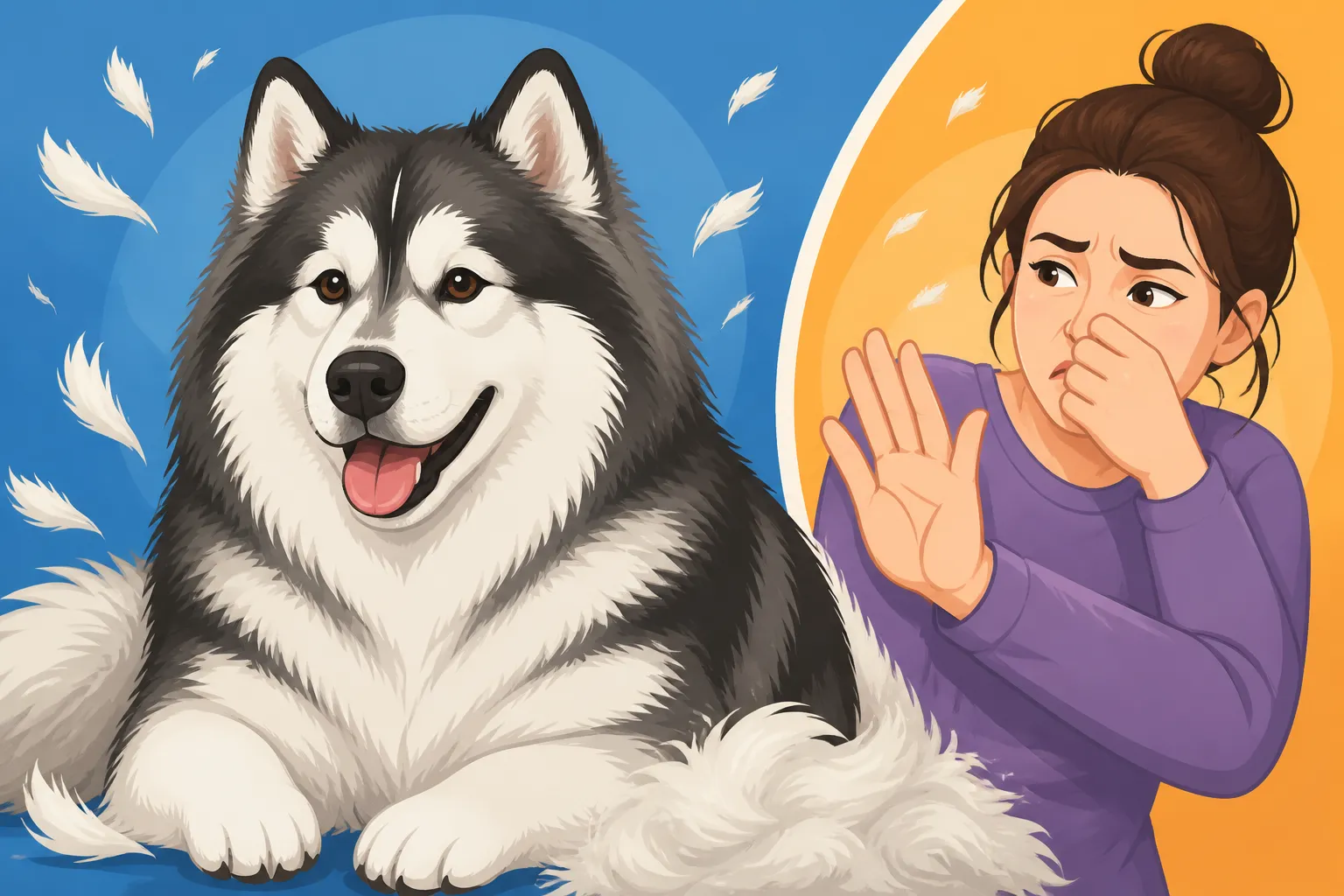
Whether the Shedding Puts People Off Malamutes
An Alaskan Malamute can leave enough fur on a sofa to make a dark outfit look suddenly gray, and seasonal coat blow can turn a routine brushing into a pile of undercoat. That reality does put some people off the breed. This guide explains how much shedding to expect, what daily life with the coat is like, and how to decide whether it fits your home.
Why Malamute shedding can be a dealbreaker
The coat is part of the breed, not a small grooming quirk
Malamutes have a dense double coat: a softer undercoat beneath a coarser outer coat. That insulation suits a dog developed for cold-weather work, but it also means loose hair accumulates in the home. It lands on clothing, gathers along baseboards, sticks to blankets, and can drift into corners you thought you had just cleaned.
The amount you notice depends on the dog, the season, and your household. A light-colored Malamute may leave pale fur on a dark sofa; a dark-coated one may make it especially visible on pale upholstery. If you share a small apartment or keep clothes on open racks, the fur may feel less like a minor inconvenience and more like part of the household decor.
That’s why shedding can be a genuine dealbreaker for people who want a consistently tidy home, have little time for cleaning, or feel uncomfortable with pet hair on their belongings. It isn’t a sign that an individual dog is poorly cared for. Shedding is normal, and a Malamute’s coat naturally releases undercoat throughout the year, with heavier periods often associated with seasonal coat changes. For more detail on those cycles, see When an Alaskan Malamute Blows Its Coat and Whether an Alaskan Malamute Sheds All Year.
Coat blow is a different experience from everyday shedding
Everyday shedding can be steady and familiar: a little fur on the dog bed, some in the vacuum, and a few strands caught on your pants. During a coat blow, loose undercoat may come away in larger amounts. You might brush your dog and find another layer of fluff ready to lift a short time later. That can be startling if you expected one grooming session to clear the coat completely.
Imagine brushing your Malamute before work, cleaning the floor that evening, and discovering fresh tufts by the hallway the next morning. That kind of week is one reason people look up The Malamute Coat Blow That Fills a Vacuum in an Afternoon. A coat blow can make normal grooming feel like a household project, especially if the dog spends a lot of time indoors.
The timing and intensity vary from dog to dog. Indoor heating, climate, health, and individual coat patterns can affect what an owner notices, so it’s risky to assume the dog will shed only during two neat windows on the calendar. Even between heavier coat changes, you should expect some loose fur. The practical question is not whether a Malamute will shed, but whether you can comfortably live with the amount and manage the cleanup.
People are often surprised by the work behind a tidy coat
A thick coat can hide loose hair until it begins working its way out. Brushing helps remove dead undercoat before it spreads around the home, but it doesn’t permanently stop shedding. Some owners also find that a quick brush over the top layer misses fur underneath, so grooming takes patience and the right approach rather than a few hurried strokes.
The work can be frustrating when you’re busy, when the dog dislikes being brushed, or when hair collects in places that are difficult to clean. If you’re used to a short-coated dog, the difference may be especially noticeable. A Malamute may need regular coat care even when the coat looks fine from across the room.
For a closer look at the routine, How Often an Alaskan Malamute Needs Brushing is a useful companion topic. It helps to think of brushing as ordinary ongoing care, not just a way to prepare for visitors. If grooming repeatedly becomes a struggle, a veterinarian or experienced groomer can help you check whether the dog is uncomfortable or whether your technique and tools need adjusting.
What living with the coat looks like day to day
Fur affects more than the vacuuming schedule
Hair tends to gather in predictable places: the dog’s favorite resting spot, under furniture, near entryways, and around the edges of rooms. It can cling to fleece, blankets, car upholstery, and fabric furniture. Some owners keep washable covers on the sofa, place a dedicated blanket on the dog’s bed, and store a lint roller near the door. Those habits don’t eliminate fur, but they make it easier to contain.
Clothing is another everyday consideration. If you’re heading to work in black trousers, you may want to change after cuddling your dog or give the fabric a quick pass with a lint roller. Visitors who wear dark clothes may notice the coat, too. That is not a reason a Malamute can’t be a welcoming family dog, but it helps to be honest about the home environment you want.
Some owners also notice fur inside the car, particularly after trips to a park or trail. A washable seat cover and a brush-off routine before getting in can reduce the mess. But if you want a home and vehicle that remain nearly free of visible hair, a heavy-shedding breed may not match your expectations. Whether an Alaskan Malamute's Hair Weaves Into Carpet explores one particularly persistent part of the cleanup.
Cleaning becomes a routine rather than an occasional deep clean
A practical Malamute household often relies on frequent light cleaning rather than waiting for a major weekend clean. A vacuum suited to pet hair, washable throws, a broom or handheld vacuum for quick pickups, and lint rollers can make the work feel less overwhelming. Some owners keep supplies near the rooms where their dogs spend the most time, so cleaning a small patch is easy instead of a whole-house event.
You may need to adjust the routine during a heavy shed. For example, you might brush outside when weather and the dog’s comfort allow, then vacuum the dog’s favorite resting area more often. If you live in a rainy or muddy area, brushing and drying after walks can add another layer to the routine. In a compact home, storing grooming supplies and finding a place to brush without sending hair into every room can take some planning.
Chewy carries pet-care and grooming supplies that owners may compare when setting up a basic routine, but the right choice depends on the dog’s coat and how the tool feels in your hands. Read the tool’s intended use, check that it suits a double coat, and introduce it gently. A tool that causes discomfort or scrapes the skin is not a good trade for a cleaner floor.
A quick comparison can clarify what you’re signing up for
Shedding is only one part of coat care. The table below gives a realistic overview of the different tasks an owner may encounter.
| Coat-care task | What it involves | What to expect |
|---|---|---|
| Routine brushing | Working through the coat regularly to remove loose hair and check for tangles | Helps manage loose undercoat but does not stop shedding |
| Coat blow grooming | Spending extra time removing shed undercoat during a heavier shedding period | Fur may keep coming loose across multiple sessions |
| Home cleanup | Vacuuming, washing covers, and removing hair from clothing and furniture | Often becomes a frequent household habit |
| Bathing and drying | Cleaning the coat and making sure it dries thoroughly | Takes more time than bathing many short-coated dogs |
| Professional grooming | Getting help with coat maintenance when needed | Can be useful, but does not remove the need for care at home |
Owners sometimes assume a groomer can make shedding disappear. A grooming session may help remove loose undercoat, but it cannot stop the coat’s natural cycle. If you’re considering outside help, Whether a Groomer Handles a Malamute's Blow Better can help you weigh that option against brushing at home.
How to manage shedding without harming the coat
Use tools carefully and brush with a plan
A suitable brush or undercoat tool can make grooming more effective, but more force is not better. Work calmly, use light pressure, and pay attention to how your dog responds. If your Malamute shifts away, tenses, growls, or repeatedly tries to leave, pause and consider whether the tool is pulling, scratching, or catching on a sensitive area.
Rather than trying to clear the entire coat in one exhausting session, many owners find it easier to brush a section at a time. Choose a place where fur is manageable, keep sessions relaxed, and reward cooperation. A dog that learns brushing is predictable and comfortable is usually easier to groom than one who only encounters the brush when the coat is already a tangled, stressful mess.
The tool should reach the areas that need attention without irritating the skin. For guidance on choosing, see Which Brush Gets Through a Malamute's Undercoat. For some households, a force dryer is part of the grooming setup, but it is not essential for every owner. Whether a Malamute Owner Needs Their Own Force Dryer covers the trade-offs. If you shop through Chewy or another retailer, check product details carefully and choose tools designed for coat type rather than assuming a popular brush will suit every Malamute.
Avoid shaving the coat to solve a hair problem
Shaving may seem like an obvious way to reduce fur, especially during hot weather, but a Malamute’s double coat serves important functions. Clipping or shaving should not be treated as a routine solution to shedding or a substitute for brushing. If the coat is matted, the dog has a medical problem, or a veterinarian recommends clipping for a specific reason, ask a professional about the safest approach.
Heat management also calls for more than removing the coat. Provide shade, fresh water, and a cool resting area, and adjust outdoor activity to the conditions. A shaved coat does not make a Malamute a low-shedding dog in the long run, and it may take time for the coat to grow back normally. For more about this concern, read Why an Alaskan Malamute Must Never Be Shaved.
Check the skin instead of focusing only on loose hair
Most shedding is ordinary, but sudden changes deserve attention. Watch for bald patches, persistent itching, redness, sores, an unpleasant smell, or hair loss that seems uneven or excessive for your dog. Mats can conceal skin irritation, so part the coat gently during grooming and check the skin rather than judging by the surface appearance alone.
If shedding changes sharply or comes with other symptoms, contact your veterinarian. A coat problem can have causes beyond normal seasonal shedding, and trying random supplements or changing food without a clear reason may waste time or complicate the picture. Chewy may offer grooming and skin-care products, but retail products are not a substitute for a veterinary assessment when the skin looks inflamed or your dog seems uncomfortable.
Regular brushing is helpful not only because it reduces the amount of loose fur left around the home, but also because it gives you a chance to notice changes early. Make grooming a calm check-in with your dog, not a frantic attempt to pull every loose hair out at once.
Deciding whether a Malamute’s shedding fits your life
Ask how much mess you can realistically accept
Before choosing a Malamute, picture ordinary life rather than an idealized snowy walk. Would you be comfortable finding fur on your couch and clothes? Can you vacuum regularly? Are you willing to brush a large, thick-coated dog through both quiet weeks and heavier shedding periods? If the honest answer is no, it is kinder to recognize that now than to hope the coat will be easier than it is.
Also consider who shares your home. A partner may be relaxed about fur while a roommate is not. Someone with a strong preference for clean furniture may struggle even if they adore the dog. People with allergies should discuss their situation with a medical professional; a Malamute should not be assumed to be suitable simply because brushing or cleaning is frequent.
Your housing situation matters as well. A large home does not automatically make the coat easy to manage, and a small home does not automatically rule the breed out. The key is whether you have a workable cleaning and grooming routine, along with enough patience for the fur to be a normal part of your surroundings.
Consider the full breed match, not just the coat
Shedding may be the first concern someone notices, but it should be considered alongside the breed’s exercise needs, strength, independence, and prey drive. A prospective owner who is comfortable with fur but unprepared for the rest of daily life may still find the match difficult. Learn about the household demands in The Household an Alaskan Malamute Was Built For and consider whether your schedule and experience suit the breed.
It can also help to meet adult Malamutes in person and talk honestly with their owners. Ask what the coat is like in their home, how often they brush, what they do during coat blow, and which parts still frustrate them. Seeing a coat in a living room or car gives a more useful picture than looking at a freshly groomed dog outdoors.
If you decide the coat is manageable, plan for it before bringing a dog home. Set aside a place for brushing, gather basic supplies, and agree on household expectations about furniture, car rides, and cleaning. Chewy is one place owners may browse for routine grooming and cleanup supplies; compare options and choose what suits your dog rather than buying a large collection before you know what works.
Make the decision before the fur becomes a surprise
Yes, shedding puts some people off Alaskan Malamutes, and that is a reasonable response. The breed’s coat can mean visible hair around the house, regular brushing, and particularly busy cleanup during heavier shedding periods. For people who enjoy grooming and do not mind a fur-covered blanket or an extra vacuuming session, those tasks may simply become part of sharing life with the dog.
For others, constant hair is a source of daily stress. It is better to recognize that mismatch before adopting or buying a Malamute than to expect the dog to shed very little or to rely on shaving as a fix. If you’re still unsure, speak with owners and groomers, observe an adult dog during a coat blow if possible, and consider how the coat fits your actual home and routine.
The right decision is not the one that proves you can tolerate the most fur. It is the one that respects both the dog’s needs and your household’s limits. When you understand what the coat asks of you, you can make a much more confident choice.
Disclaimer
This article is for general informational purposes only and does not constitute professional advice. Laws, prices and regulations vary by location and change over time. Consult a qualified professional for guidance on your specific situation.