The CNGB3 Test for Malamute Day Blindness
It’s truly disheartening to see your spirited Alaskan Malamute, a breed built for wide-open spaces and the crisp outdoors, struggle and squint in the bright sunshine. That hesitant gait, the bumping into familiar objects when the light is too intense, it’s a puzzling and often worrying symptom for any owner. This comprehensive guide will walk you through everything you need to know about the CNGB3 gene and the vital test that helps identify or rule out congenital stationary night blindness (CSNB), more commonly known as "day blindness," in our beloved Mals, offering clarity and peace of mind.
Understanding Day Blindness in Alaskan Malamutes
When your Malamute seems perfectly fine in dim light or even at night, but then becomes visibly distressed, hesitant, or even disoriented when the sun is shining brightly, it’s not just a quirk; it’s a serious concern that points towards day blindness. This isn't just about mild discomfort; it can severely impact their quality of life.
What Day Blindness Actually Looks Like
Imagine trying to navigate your world through an overly bright, washed-out lens. That's a bit like what a Malamute with day blindness experiences. In bright daylight, their vision is significantly impaired. You might notice them squinting excessively, trying to shield their eyes, or refusing to go out into direct sun. They might be reluctant to leave the shade or hug walls and furniture to navigate, almost as if they can't quite make out where they're going in open spaces. Their pupils may also appear abnormally constricted in bright light. This isn't just an occasional inconvenience; it's a profound visual challenge that impacts their ability to see shapes, perceive depth, and move confidently.
The difficulty is often most pronounced when moving from a dimly lit area into bright sunlight, or vice versa, as their eyes struggle to adapt. While their vision might seem adequate indoors or during overcast conditions, any strong light source, especially direct sunlight, can render them practically blind. This makes simple activities like playing fetch in the yard, going for a walk, or even just relaxing in a sunny spot incredibly difficult and stressful for them.
The Frustration of Bright Light
For an active breed like the Alaskan Malamute, designed for endurance and navigating varied terrain, having their vision compromised by daylight is incredibly frustrating for them and heartbreaking for us. Owners often report their dogs becoming withdrawn, anxious, or even irritable when exposed to bright light. They might bump into furniture, misjudge steps, or seem to "freeze" when outside, unwilling to move forward. This isn't stubbornness; it's genuine fear and disorientation. The dog knows it should be able to see, but its eyes aren't cooperating, leading to a sense of vulnerability and helplessness.
This constant struggle with light can lead to a significant drop in their confidence. A Malamute that once eagerly bounded through fields might now stick close to you, head down, straining to see. It can be particularly challenging for working lines or those involved in canine sports, where sharp vision is paramount. Observing your companion’s world shrink due to this condition is a difficult reality for many owners to face.
Impact on Daily Life and Activities
The implications of day blindness stretch far beyond just avoiding sunny days. It affects everything from basic navigation to socialization and training. A day blind Malamute might have difficulty playing with other dogs outdoors, as they can't clearly see approaching playmates or toys. Training in bright outdoor environments becomes nearly impossible, as they cannot focus on visual cues or track treats. Even their appetite might be affected if they feel too vulnerable to eat outdoors.
The need to constantly manage their environment to prevent visual distress adds a layer of complexity to daily life for their human companions. You might find yourself adjusting walk times to early mornings or late evenings, investing in shaded outdoor runs, or even limiting their time outside altogether on very sunny days. This level of adaptation can be demanding, but it's essential for providing a good quality of life for a dog with this condition. You can read more about What Day Blindness Does to a Malamute to understand the full scope.
The Science Behind CNGB3-PRA
Understanding the genetic underpinnings of day blindness in Alaskan Malamutes is crucial not only for diagnosis but also for responsible breeding practices. This condition is formally known as CNGB3-PRA, where CNGB3 refers to the specific gene involved, and PRA stands for Progressive Retinal Atrophy, although this specific form is stationary.
The Genetic Mutation Explained
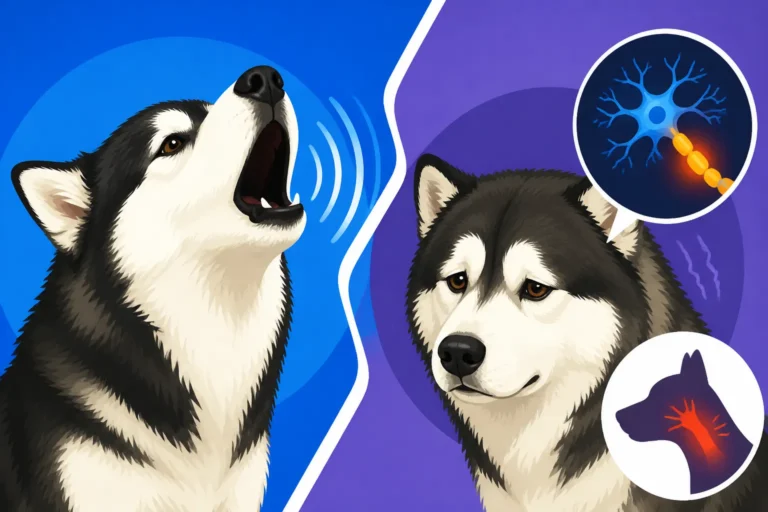
The day blindness seen in Alaskan Malamutes is caused by a specific mutation in the CNGB3 gene. This gene is responsible for producing a crucial protein subunit of the cone photoreceptor cyclic GMP-gated channel. Cone photoreceptors are the cells in the retina that are responsible for vision in bright light and for color perception. When the CNGB3 gene is mutated, this protein doesn't function correctly, severely impairing the ability of the cones to respond to light.
Essentially, the cone cells, which are vital for seeing in bright conditions, simply don't work as they should. Unlike progressive forms of PRA where the cells degenerate over time, in CNGB3-PRA, the cone cells are present but dysfunctional from an early age. This means the condition is typically present from puppyhood and doesn't worsen over the dog's lifetime – it's a "stationary" condition.
How it Affects Vision
When the cone photoreceptors are compromised due to the CNGB3 mutation, the dog's ability to see detail and perceive color in bright light is severely reduced. While the rod photoreceptors, which handle dim light and night vision, are unaffected, the cones simply cannot transmit clear visual information to the brain when there's an abundance of light. This is why a day blind Malamute might navigate perfectly well in low light, often even better than a dog with normal vision whose cones struggle to adjust, but becomes effectively blind in full sun. This phenomenon is precisely Why a Day Blind Malamute Sees Better at Dusk.
The bright light essentially overwhelms the malfunctioning cone system, creating a visual "whiteout." It’s not just a matter of things being a little fuzzy; the world can become a confusing, featureless blur, which is incredibly disorienting and stressful for the dog. Think of it like trying to read a book in a spotlight so bright that the pages are completely washed out.
Inheritance Patterns
The CNGB3 mutation is inherited in an autosomal recessive pattern. This means that for a Malamute to be affected by day blindness, it must inherit two copies of the mutated gene—one from each parent.
- Clear dogs have two normal copies of the gene and will not develop day blindness, nor will they pass the mutated gene to their offspring.
- Carriers have one normal copy and one mutated copy. They do not show any symptoms of day blindness themselves because the single healthy gene copy is sufficient for normal cone function. However, they can pass the mutated gene to their offspring.
- Affected dogs have two copies of the mutated gene and will develop day blindness.
Understanding this inheritance pattern is absolutely critical for breeders. If two carriers are bred together, there is a 25% chance that each puppy will be affected, a 50% chance they will be carriers, and a 25% chance they will be clear. This is why genetic testing is so important for making informed breeding decisions and gradually reducing the incidence of this condition in the breed.
The CNGB3 Test: How it Works
Fortunately, thanks to advances in canine genetics, a straightforward and reliable DNA test is available to identify the CNGB3 mutation. This test has been a game-changer for Alaskan Malamute breeders and owners.
The Simple Collection Process
The CNGB3 test typically involves a simple, non-invasive cheek swab (buccal swab). You don't need a vet visit for the collection itself, though your vet can certainly perform it or guide you through the process. Most reputable genetic testing labs provide a kit that includes sterile swabs and detailed instructions. You simply rub the swab firmly against the inside of your dog's cheek for about 30 seconds to collect enough cells, then allow it to air dry before sending it back to the lab.
The beauty of this method is its ease and lack of stress for the dog. There's no blood draw, no sedation, just a quick swab. This makes it feasible to test even young puppies, which is invaluable for breeders. It's a quick, painless process that yields powerful information about your Malamute's genetic health.
What the Lab Looks For
Once your sample reaches the laboratory, technicians extract DNA from the collected cheek cells. They then use a specific genetic test, often a Polymerase Chain Reaction (PCR) based assay, to look for the precise mutation in the CNGB3 gene that causes day blindness. They are essentially checking the "spelling" of that particular gene to see if the error associated with day blindness is present, and if so, how many copies of it exist.
The laboratories are looking for the presence or absence of this specific genetic marker. It's a highly accurate test designed to identify whether your dog is genetically clear, a carrier, or affected by the condition. This targeted approach ensures that the results are precise and directly relevant to the potential for day blindness. Companies like Embark and Wisdom Panel typically include the CNGB3 test as part of their comprehensive genetic panels.
Understanding the Test Results
The results from the CNGB3 test will categorize your Malamute into one of three distinct genetic statuses:
| Result Status | Genetic Profile | Phenotype (Symptoms) | Breeding Implications |
|---|---|---|---|
| Clear | N/N (two normal copies) | Will not develop day blindness | Can be safely bred with any dog without risk of producing affected offspring. |
| Carrier | N/A (one normal, one mutated copy) | Will not develop day blindness | Can be bred with a "Clear" dog. Should NOT be bred with another "Carrier" or an "Affected" dog due to risk of producing affected offspring. |
| Affected | A/A (two mutated copies) | Will develop day blindness | Should not be bred, as all offspring would receive at least one mutated gene copy. |
Understanding these results is crucial. A "carrier" dog might never show symptoms, but they are genetically important for understanding the spread of the gene. An "affected" result confirms the genetic basis for any observed day blindness. This information is invaluable for both managing the dog's life and making responsible breeding decisions. Learning about What the Malamute Day Blindness Test Costs can help owners budget for this important screening.
Why Testing is Crucial for Malamutes
Genetic testing for CNGB3-PRA isn't just a good idea; it's a vital component of responsible dog ownership and preservation of the Alaskan Malamute breed. It empowers owners and breeders with knowledge, directly impacting the health and well-being of individual dogs and future generations.
Informing Responsible Breeding Practices
For breeders, the CNGB3 test is an indispensable tool. Knowing the genetic status of potential breeding dogs allows them to make informed decisions that prevent the birth of affected puppies. By carefully selecting pairings, breeders can ensure that no two carrier dogs are bred together, thereby eliminating the risk of producing offspring that will suffer from day blindness. This is a cornerstone of ethical breeding, aiming to improve the health of the breed with each generation. You can refer to The Health Tests Both Alaskan Malamute Parents Should Have for a broader perspective on responsible breeding.
While it's generally advised not to breed affected dogs, carriers can still be part of a breeding program if paired with a clear dog, as none of their offspring will be affected (though 50% will be carriers). This allows breeders to retain valuable genetic diversity within the breed, rather than prematurely removing good dogs from the gene pool solely because they carry a single copy of a recessive gene. The ultimate goal is to gradually reduce the frequency of the CNGB3 mutation until it is no longer a concern.
Early Identification for Better Management
For pet owners, testing their Malamute puppy or adult dog, especially if symptoms are suspected, offers immense value. An early diagnosis of day blindness means you can implement management strategies immediately, rather than going through months or years of trying to figure out what's wrong or feeling frustrated by your dog's seemingly odd behavior in the sun. Knowing exactly what you're dealing with allows for proactive environmental adaptations and greater empathy for your dog's struggles. For example, if you suspect your Malamute puppy is struggling, knowing for sure allows you to protect their eyes from the outset. Consider discussing with your vet if a Malamute puppy should be tested for CNGB3.
This early knowledge can significantly improve your dog's quality of life. Instead of forcing them into situations that cause distress, you can create a world where they feel safe and comfortable. It also helps prevent misdiagnosis and unnecessary treatments, saving both stress and financial strain. Planning for potential health issues, including genetic ones, is also where pet insurance providers like Healthy Paws can offer a lifeline, helping to cover diagnostic tests or specialized consultations if needed.
Peace of Mind for Owners
Perhaps one of the most underrated benefits of the CNGB3 test is the peace of mind it provides. If your Malamute tests clear, you can rest assured that they will not develop day blindness due to this specific genetic mutation. If they are a carrier, you understand their genetic status without the worry of them developing the condition themselves. And if they are affected, the diagnosis brings clarity. It explains their symptoms and allows you to move forward with a clear understanding of their needs, rather than continually guessing or worrying about a mysterious ailment.
Knowing that you have done everything possible to understand and support your Malamute's health is incredibly reassuring. It transforms vague anxieties into concrete knowledge, enabling you to be a more informed and effective advocate for your furry family member. This proactive approach to health management is something every Malamute owner strives for, whether through diligent care or investing in comprehensive pet insurance like Healthy Paws to cover unexpected health challenges.
Living with a Day Blind Malamute
Receiving an "affected" diagnosis for CNGB3-PRA can be overwhelming, but it's important to remember that day blindness is a stationary condition; it won't get worse. With thoughtful adjustments and understanding, a day blind Alaskan Malamute can still lead a fulfilling and happy life.
Adapting the Home Environment
The primary goal in adapting your home for a day blind Malamute is to minimize their exposure to harsh, bright light while maximizing their ability to navigate safely. Inside, this might mean drawing curtains or blinds in rooms that receive direct sunlight during the brightest parts of the day. Consider using dimmer switches or warmer-toned light bulbs to create a more comfortable ambient light. Ensuring good, consistent lighting in areas your Malamute frequently uses, avoiding stark contrasts between light and shadow, can help.
Creating safe, shaded outdoor spaces is also crucial. A covered patio, a sturdy dog run with a solid roof, or even a large shade sail can make a huge difference. Inside, strategically placed rugs can help them feel more confident on slippery floors. It's about thinking like your Malamute and trying to see the world from their perspective, identifying areas where bright light causes distress and making them more comfortable.
Managing Outdoor Activities
Outdoor activities will require a bit more planning and creativity. The best times for walks or playtime are typically early morning, late evening, or on heavily overcast days when the light is diffused. If going out during brighter times is unavoidable, consider protective gear. Dog sunglasses (doggles) specifically designed for canines can be a lifesaver for some Malamutes, significantly reducing glare and allowing them to see more clearly. Introduce them slowly and positively, making them a comfortable accessory.
Leash walks are essential for safety, as a day blind Malamute could easily become disoriented or get into dangerous situations if off-leash in bright light. Avoiding open, brightly lit spaces and sticking to shaded trails or parks can also help. Remember, your Malamute still needs physical and mental exercise, so finding alternative activities or adjusting the timing of their adventures is key. Many owners find that their day blind Malamutes truly flourish once these environmental modifications are in place, often leading to a good quality of life. You can explore whether a day-blind Malamute can live normally with proper adjustments.
Support and Resources
You are not alone in managing a day blind Malamute. Many owners have successfully adapted their lives and homes to accommodate this condition. Online communities, breed-specific forums, and local Malamute clubs can be invaluable sources of advice, shared experiences, and emotional support. Connecting with others who understand the unique challenges can provide practical tips and a sense of camaraderie.
Your veterinarian is also a critical resource. They can help you monitor your dog's overall eye health, recommend specialists if needed, and discuss any concerns you might have. While there is no cure for day blindness, understanding the condition fully allows for the best possible care and management strategies. Remember that even with a genetic condition, routine vet visits and preventative care are crucial, and pet insurance like Healthy Paws can help manage these ongoing health costs.
The Future of Day Blindness in the Breed
The good news is that day blindness, thanks to genetic testing, is one of the more manageable genetic conditions in Alaskan Malamutes. The proactive efforts of breeders and informed owners are making a significant difference in reducing its prevalence.
The Success of Genetic Screening Programs
The availability and widespread adoption of the CNGB3 test have had a profound impact on the Alaskan Malamute breed. Reputable breeders now routinely test their breeding stock, making informed decisions to avoid producing affected puppies. This systematic screening is slowly but surely reducing the number of carriers in the gene pool and, consequently, the number of affected dogs born each year. This is a testament to the power of genetic tools when used responsibly and ethically.
Breed clubs and organizations play a vital role in promoting and sometimes even mandating these health screenings for their registered dogs. Their dedication to breed health means that the future looks brighter for Alaskan Malamutes regarding day blindness. It’s encouraging to know that through these efforts, screening has nearly eliminated Malamute day blindness in many responsible lines.
Breeder Responsibility and Transparency
Responsible breeders understand that their commitment extends beyond simply producing healthy-looking puppies. It involves a deep understanding of genetic health and a transparent approach to sharing test results with prospective puppy buyers. A breeder should be able to provide clear and verifiable CNGB3 test results for both parent dogs, demonstrating their commitment to breeding healthy Malamutes. Don't hesitate to ask for these records.
Transparency also means being open about carrier status. While carrier dogs themselves are healthy, they are still important for genetic diversity. Reputable breeders will openly discuss how they manage carriers in their breeding programs, ensuring that any pairings with carriers involve only clear mates to guarantee unaffected offspring. Understanding this shows true dedication to the long-term health of the breed, as covered in Whether a Malamute Breeder Should Publish DNA Results.
The Goal: Eliminating the Disease
The ultimate goal for CNGB3-PRA, as with many other inherited diseases, is its eradication from the Alaskan Malamute gene pool. While this is a long-term endeavor, the CNGB3 test provides a clear path forward. By consistently testing all breeding stock and making smart breeding choices, the incidence of day blindness can continue to decline.
This ongoing commitment from the Malamute community—from individual owners seeking to understand their dog's health to dedicated breeders working to improve the breed—is what ensures a healthier future. It’s a collective effort to safeguard the magnificent Alaskan Malamute for generations to come, allowing them to enjoy their lives to the fullest, even on the sunniest of days.
Disclaimer
Please remember that the information provided in this article is intended for general informational purposes only and does not constitute veterinary advice. Always consult with a qualified veterinarian for any health concerns or before making any decisions about your Alaskan Malamute's care, diagnosis, or treatment. Genetic testing should be performed by reputable laboratories, and results should always be discussed with a veterinary professional or a qualified genetic counselor.