Whether Day Blindness Still Occurs in Malamutes
It's incredibly disheartening to imagine your beloved Alaskan Malamute struggling with something as fundamental as sight, especially when they're otherwise robust and full of life. Many prospective and current Malamute owners worry about inherited conditions, and day blindness, or cone degeneration, has certainly been a concern in the past. This guide will walk you through the current understanding of day blindness in Alaskan Malamutes, addressing whether it's still a significant issue and what you can do to ensure your furry family member's bright future.
Understanding Canine Day Blindness in Alaskan Malamutes
When we talk about canine day blindness in Alaskan Malamutes, we're really talking about a specific genetic condition that affects a dog's ability to see properly in bright light. It's not like they're totally blind; it's a very particular kind of vision impairment that can be quite distressing to witness in your otherwise active companion.
What is Day Blindness Cone Degeneration
Day blindness, scientifically known as achromatopsia or progressive retinal cone degeneration (CD), targets the cone cells in a dog's retina. Think of it like this: your dog's eyes have two main types of photoreceptor cells – rods and cones. Rods are fantastic for low-light vision and detecting motion, which is why dogs generally see well at dusk and dawn. Cones, on the other hand, are responsible for vision in bright light and for color perception. When these cone cells don't function correctly or degenerate, your Malamute struggles significantly in well-lit environments.
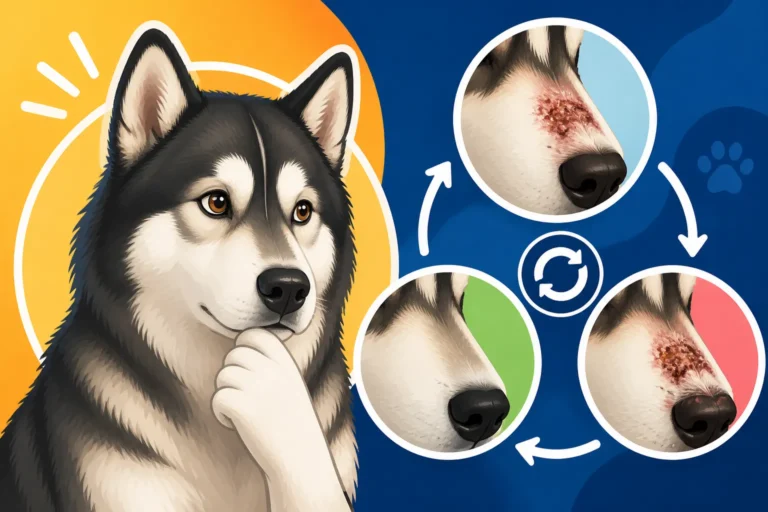
Imagine stepping outside on a sunny day and suddenly everything is a blinding white glare, or trying to navigate a familiar path when you can barely make out shapes because of the overwhelming light. That's essentially what a dog with day blindness experiences. They might squint excessively, appear hesitant or clumsy when moving from a dimly lit area into bright sunshine, or even bump into objects they'd normally avoid. You might notice they're much more comfortable and confident indoors, or that their vision seems to improve dramatically as the sun starts to set. It's a cruel irony that a breed so synonymous with wide-open, often bright, snowy landscapes could be afflicted by such a condition. If you ever observe your Malamute exhibiting these signs, especially struggling outdoors on a sunny day but seeming perfectly fine indoors or at night, it's natural to feel a knot of worry in your stomach. To learn more about the specific behaviors, check out our article on How a Day Blind Malamute Behaves in Sunlight.
The Genetic Root of the Problem
The frustrating thing about day blindness is that it's an inherited condition, meaning it's passed down through a dog's genes. Specifically, in Alaskan Malamutes, it's caused by a mutation in the CNGB3 gene. This gene is vital for the proper function of those cone cells we just talked about. If there's a fault in this gene, the cone cells simply can't do their job effectively.
This condition is inherited in an autosomal recessive pattern. What does that mean for us pet parents? It means a Malamute needs to inherit two copies of the mutated gene – one from each parent – to actually develop day blindness. If a dog inherits only one copy of the mutated gene and one normal copy, they become a "carrier." Carriers don't show any symptoms of day blindness themselves because their single healthy gene copy is enough to ensure their cone cells function normally. They have perfect vision and you'd never know they carried the gene just by looking at them. However, if two carriers are bred together, there's a 25% chance with each puppy that it will inherit two copies of the faulty gene and thus be affected by day blindness. This genetic lottery made managing the disease incredibly difficult before the advent of genetic testing, as healthy-looking carriers could unknowingly pass the trait to their offspring. This silent spread is what made day blindness such a pervasive problem in the past.
The Breakthrough: The CNGB3 DNA Test
For a long time, dealing with genetic diseases felt like playing a cruel guessing game. Breeders tried their best to avoid affected dogs, but without knowing who the carriers were, it was a constant uphill battle. That all changed with the development of the CNGB3 DNA test. This scientific advancement has been nothing short of revolutionary for the Alaskan Malamute breed.
How the Test Transformed Breeding Practices
Before the DNA test for the CNGB3 mutation became widely available, breeders were largely reliant on observing symptoms or, tragically, finding out a dog was affected after puppies were born. Imagine the heartbreak and financial strain of raising a litter only to discover some puppies have severely impaired vision. It made responsible breeding incredibly challenging. But with the advent of the CNGB3 DNA test, breeders gained a powerful tool.
This simple, non-invasive test, often done with a buccal swab (a fancy way of saying a cheek swab), allows breeders to determine a dog's genetic status regarding day blindness with 100% accuracy. The results categorize dogs into three clear groups: "clear" (meaning two normal gene copies, no risk of developing the disease, and won't pass it on), "carrier" (one normal, one mutated copy, no symptoms, but can pass the gene to offspring), and "affected" (two mutated copies, will develop the disease). This knowledge empowers breeders to make informed, ethical decisions about their breeding pairs. They can ensure that no affected puppies are ever produced by simply never breeding two carriers together, or an affected dog to a carrier. For a deeper dive into how this test functions, you can read our guide on The CNGB3 Test for Malamute Day Blindness.
The Initial Impact on Prevalence
The introduction and widespread adoption of the CNGB3 DNA test had an immediate and dramatic positive impact on the prevalence of day blindness within the Alaskan Malamute population. Responsible breeders, eager to eliminate this debilitating condition, quickly integrated testing into their health protocols. As more dogs were tested and breeding decisions were made based on these results, the number of puppies born with day blindness plummeted.
It was a huge relief for the Malamute community. Families no longer had to face the difficult reality of a visually impaired dog, and breeders could confidently offer puppies from parents proven to be clear or bred responsibly to avoid affected offspring. The collective effort of dedicated breeders meant that a condition that once caused significant concern began to recede, becoming increasingly rare in well-bred lines. This success story stands as a testament to the power of genetic testing in improving the health of our beloved breeds. Indeed, it nearly ended the condition, as detailed in our comprehensive piece: Day Blindness and the CNGB3 Test That Nearly Ended It in Malamutes.
Why Day Blindness Can Still Appear in Malamutes Today
While the CNGB3 test has been a game-changer, the reality is that day blindness, while significantly rarer, can still occur in Alaskan Malamutes. This isn't due to the test itself being flawed, but rather how consistently and universally it's applied across the breed.
Untested Lines and Backyard Breeders
The unfortunate truth is that not all individuals breeding Alaskan Malamutes are responsible, ethical, or even well-informed. We often call them "backyard breeders" or "puppy mills." These are operations that prioritize profit over the health and welfare of their dogs, often skipping crucial health screenings, including DNA tests for conditions like day blindness.
If a breeder isn't testing their breeding stock for the CNGB3 mutation, they're essentially rolling the dice. They could unknowingly be breeding two carrier Malamutes together, or even a carrier with an affected dog, leading to litters where affected puppies are born. These puppies might end up in homes with unsuspecting families who only discover the problem when their young Malamute starts showing signs of vision impairment in bright light. It's a heartbreaking situation that could be entirely avoided with simple, proactive testing. When looking for an Alaskan Malamute puppy, always ask about health clearances, including genetic testing for conditions like day blindness, to avoid these potentially devastating outcomes. Don't be shy about asking to see the documentation for both parents.
The "Carrier" Conundrum
The concept of a "carrier" is where things can sometimes get a bit nuanced. As we discussed, a carrier Malamute has one normal gene and one mutated CNGB3 gene. They themselves will never develop day blindness because that one good gene is enough. They live perfectly normal, healthy lives with excellent vision. However, they can pass that mutated gene on to their offspring.
Responsible breeders understand that carriers exist, and sometimes, a carrier dog might possess other highly desirable traits—perhaps exceptional temperament, outstanding conformation, or strong working drive—that make them valuable to the breed's gene pool. The ethical way to use a carrier in a breeding program is to always breed them to a "clear" (non-carrier) dog. In such a pairing, statistically, half the puppies will be clear and half will be carriers. Critically, no affected puppies will be produced. The problem arises when a breeder, either through ignorance or negligence, breeds two carriers together, or breeds a carrier to an affected dog. In those scenarios, affected puppies are a very real possibility. While breeding carriers isn't inherently irresponsible, doing so without careful planning and guaranteed clear mates is. Understanding Whether a Carrier Malamute Can Be Bred is crucial for both breeders and prospective owners.
Misinformation and Lack of Awareness
Even with the widespread availability of genetic testing, misinformation and a general lack of awareness can still contribute to day blindness appearing in Malamutes. Not every aspiring Malamute owner or even some novice breeders might be fully educated on all the inherited health conditions that can affect the breed, or the importance of comprehensive health testing.
Perhaps they've heard that "day blindness isn't a problem anymore" and assume testing is no longer necessary, or they simply don't know to ask the right questions when acquiring a puppy. This knowledge gap can lead to supporting breeders who aren't transparent or thorough in their health screening. Social media groups and breed clubs do a great job of educating, but if someone isn't connected to those resources, they might miss vital information. It's a reminder that ongoing education for everyone involved in the Malamute world—from seasoned breeders to first-time puppy buyers—is essential to keep these conditions at bay. Always insist on seeing proof of health testing for both parents. Our article, Whether a Malamute Buyer Can See the Breeder's Results, delves into why this transparency is so vital.
How Responsible Breeding Minimizes the Risk
The cornerstone of keeping day blindness out of our Alaskan Malamute lines rests squarely on responsible breeding practices. It's not just about producing pretty puppies; it's about safeguarding the health and future of the entire breed.
The Role of DNA Testing in Modern Breeding
In today's world, for any reputable Alaskan Malamute breeder, DNA testing for inherited conditions like day blindness isn't optional—it's absolutely mandatory. These breeders understand that their role isn't just to produce new lives but to ensure those lives are as healthy and free from genetic burdens as possible. They consistently test all their breeding stock for the CNGB3 mutation, typically before any breeding takes place. This proactive approach eliminates the guesswork entirely.
The process for DNA testing is remarkably straightforward, usually involving a quick and painless cheek swab collected by the breeder or veterinarian. The sample is then sent to a specialized genetics lab. Once the results come back, the breeder knows precisely if their dog is clear, a carrier, or affected. This information then dictates breeding decisions. For example, a clear dog can be bred to any other clear or carrier dog without producing affected puppies. A carrier dog should only be bred to a clear dog. An affected dog should never be bred. This meticulous approach ensures that puppies born into their care have the best possible chance at a life free from day blindness. For a comprehensive look at all recommended tests, refer to The Health Tests Both Alaskan Malamute Parents Should Have.
Health Databases and Transparency
Beyond individual testing, the commitment to transparency and public health registries is another hallmark of responsible breeding. Organizations like the Orthopedic Foundation for Animals (OFA) play a crucial role in maintaining databases of health clearances, including genetic tests for diseases like day blindness. Reputable breeders will submit their dogs' CNGB3 test results to OFA, making them publicly searchable.
As a prospective puppy buyer, this means you don't just have to take a breeder's word for it. You can, and absolutely should, go online and verify the health clearances of the parent dogs. Simply search the OFA database by the registered name or registration number of the sire and dam, and you should be able to find their CNGB3 status, along with other important health certifications like hip and elbow scores. This level of transparency offers peace of mind and ensures you're supporting breeders who are genuinely committed to the health of the breed. If a breeder hesitates or refuses to provide this information, it's a significant red flag. Always ask to see those published results, as discussed in Whether a Malamute Breeder Should Publish DNA Results.
What to Do if You Suspect Day Blindness
Even with all the efforts in responsible breeding, sometimes the unexpected happens, or perhaps you've adopted an adult Malamute with an unknown history. If you notice any signs that make you suspect your Malamute might be experiencing day blindness, it's crucial to act promptly.
Recognizing the Signs in Your Malamute
It's important to be observant of your Malamute's behavior, especially in different lighting conditions. While a dog can't tell you they're struggling to see, their actions speak volumes. Reiterate the signs we've discussed: watch for excessive squinting or blinking when outdoors on a bright, sunny day. Notice if they seem hesitant to go outside into bright light, or if they're particularly clumsy, bumping into familiar objects only when the sun is strong.
Perhaps they walk with a lowered head, or their gait seems more cautious than usual when bright light is present. Conversely, observe if their confidence and ability to navigate improve dramatically as evening approaches or when they're in a more dimly lit room. These contrasts are key indicators. For example, Why a Day Blind Malamute Sees Better at Dusk offers deeper insight into this specific symptom. If these behaviors become consistent, it's not something to brush off. Your Malamute is relying on you to understand and address their struggles.
Seeking Veterinary Diagnosis and Management
If you suspect day blindness, the very first step is to schedule an appointment with your veterinarian. Don't delay. Your vet will conduct a thorough general eye exam, but for definitive diagnosis of day blindness, they'll likely refer you to a veterinary ophthalmologist. These specialists have advanced equipment and expertise to properly assess your dog's vision and retinal health.
A veterinary ophthalmologist can perform specialized tests, such as electroretinography (ERG), which measures the electrical responses of the cells in the retina to light. This test can precisely identify if the cone cells are dysfunctional. A definitive diagnosis will also involve a DNA test for the CNGB3 mutation, which confirms the genetic basis of the condition. While there isn't a cure for day blindness, understanding the diagnosis allows for management strategies. This might include providing doggy sunglasses to reduce glare outdoors (yes, they're a thing!), ensuring most exercise happens during cooler, lower-light times of day like early morning or dusk, and enriching their indoor environment. Living with a day blind Malamute requires thoughtful adjustments, but they absolutely can live full and happy lives. Our article Whether a Day Blind Malamute Can Live Normally provides more detail on living arrangements. If you're concerned about the costs of specialized diagnostics or ongoing care, it's worth noting that pet insurance providers like Healthy Paws can offer significant financial relief for unexpected veterinary bills. Having insurance in place means you can focus on getting your Malamute the best possible care without added financial stress.
| Genetic Status of Parents | Probability of Offspring Being Clear | Probability of Offspring Being Carrier | Probability of Offspring Being Affected |
|---|---|---|---|
| Clear x Clear | 100% | 0% | 0% |
| Clear x Carrier | 50% | 50% | 0% |
| Carrier x Carrier | 25% | 50% | 25% |
| Clear x Affected | 0% | 100% | 0% |
| Carrier x Affected | 0% | 50% | 50% |
| Affected x Affected | 0% | 0% | 100% |
The Future of Day Blindness in the Breed
While tremendous strides have been made, the future of day blindness in the Alaskan Malamute breed isn't something we can take for granted. It requires continuous effort and a shared commitment from everyone who loves these magnificent dogs.
Continued Vigilance and Education
The success we've seen in reducing the incidence of day blindness is a direct result of widespread genetic testing and responsible breeding. However, the fight isn't over. Continued vigilance is absolutely paramount. As long as there are Malamutes being bred without proper health screening, there's a risk that this condition could resurface more frequently. New Malamute owners must be educated on the importance of asking for health clearances, including the CNGB3 test, when choosing a puppy. They need to understand what What Day Blindness Does to a Malamute entails for an affected dog.
Breeders, even those with lines that have been clear for generations, should not become complacent. Occasional retesting or at least being aware of the genetic history of all dogs in a breeding program is critical. Education campaigns through breed clubs, online forums, and reputable breeders themselves are essential to ensure that every new generation of Malamute enthusiasts understands the history of this condition and the tools available to prevent it. We want to ensure that the knowledge gained through years of research isn't lost. If you're considering a Malamute puppy, always inquire Whether a Malamute Puppy Should Be Tested for CNGB3.
The Long-Term Goal: Eradication
The ultimate, long-term goal for day blindness in the Alaskan Malamute breed is complete eradication. With a simple, reliable DNA test available, there's no genetic reason why this disease should persist. If every Malamute intended for breeding were tested, and only clear-to-clear or clear-to-carrier breedings were allowed, affected puppies would become a thing of the past.
This ambitious goal requires a unified effort from the entire Malamute community: breeders, owners, breed clubs, and veterinarians. It means consistently choosing responsible breeders, sharing health data openly, and promoting education. The progress already made demonstrates that it's an achievable goal, and the reduced prevalence is a testament to what dedicated individuals can achieve when working together for the health of their beloved breed. We’ve come a long way, and Whether Screening Has Nearly Eliminated Malamute Day Blindness indicates just how effective these efforts have been. Partnering with pet insurance like Healthy Paws can also empower owners to handle any unforeseen health challenges that may arise, demonstrating a commitment to their dog's well-being throughout its life.
Disclaimer
Please remember that the information provided in this article is intended for general knowledge and informational purposes only, and does not constitute veterinary advice. Always consult with a qualified veterinarian or veterinary specialist for any health concerns or before making any decisions about your pet's health or treatment.