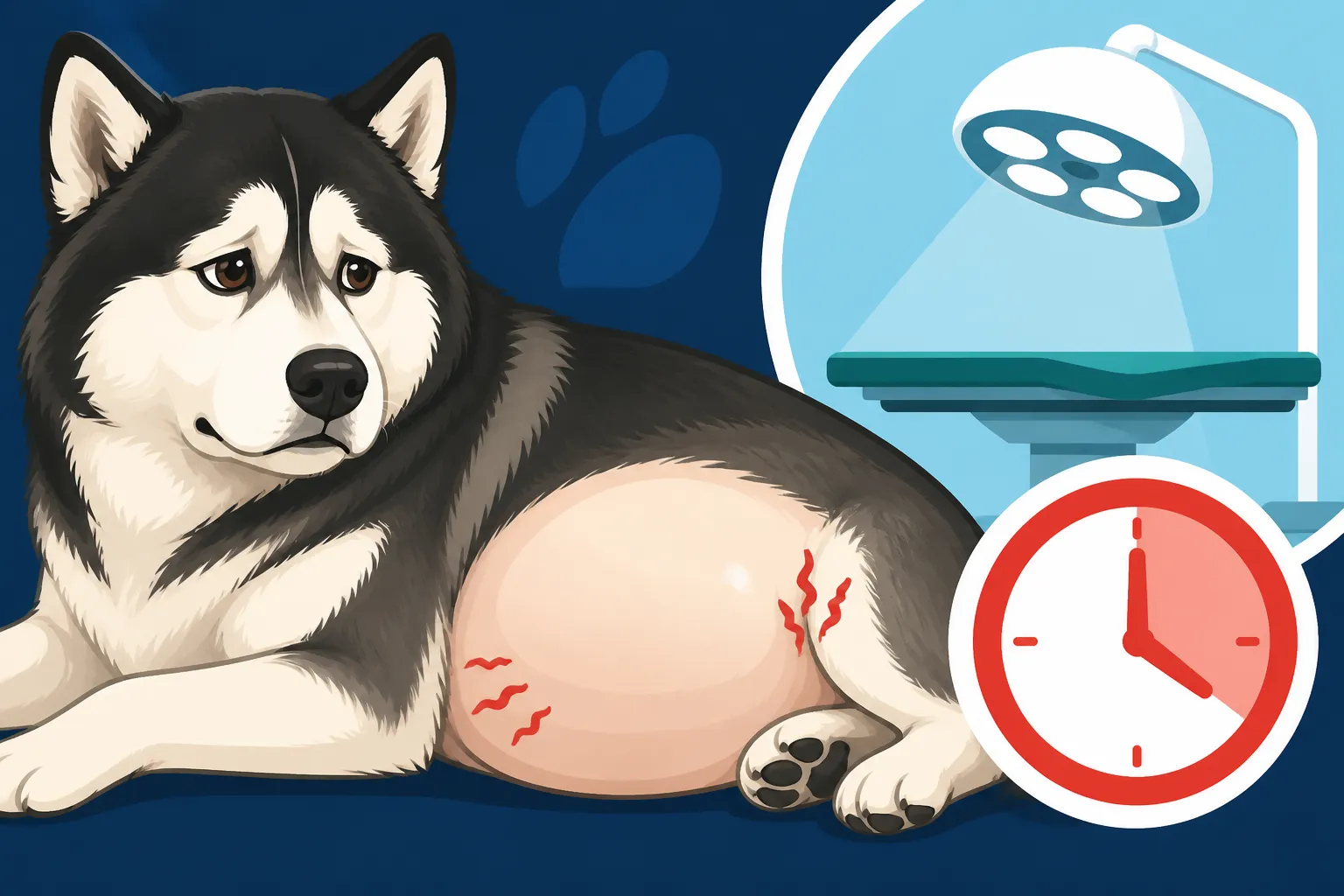
How Long a Bloating Malamute Has Before Surgery
There's nothing more terrifying than seeing your majestic Alaskan Malamute suddenly look distressed, pacing, trying to vomit but nothing comes up. That gut-wrenching feeling of knowing something is terribly wrong, but not knowing how wrong or how fast you need to act, is a common fear for Malamute owners. This guide is here to walk you through the urgent timeline of bloat, also known as Gastric Dilatation-Volvulus (GDV), and what you absolutely need to know about getting your beloved furry family member to surgery when every second counts.
Understanding Bloat Gastric Dilatation-Volvulus in Alaskan Malamutes
Bloat, or Gastric Dilatation-Volvulus (GDV), is a condition that strikes fear into the hearts of large breed dog owners, and Alaskan Malamute guardians are no exception. It's not just an upset stomach; it's a rapidly progressing, life-threatening emergency where a dog's stomach fills with gas, food, or fluid (dilatation) and then twists upon itself (volvulus). This twisting cuts off blood supply to the stomach and can impact other vital organs like the spleen, leading to shock and organ failure if not treated immediately.
Alaskan Malamutes, with their deep chests and active lifestyles, are unfortunately predisposed to this condition. It often feels like it comes out of nowhere, transforming a happy, playful dog into one in severe distress within a matter of minutes or a couple of hours. The sheer speed at which this can escalate is what makes it so terrifying. One moment your Malamute is fine, the next they're showing clear signs of extreme discomfort and panic, and as an owner, you feel utterly helpless unless you know precisely what steps to take.
The Ticking Clock: How Fast Bloat Progresses
When we talk about bloat in an Alaskan Malamute, we're not talking about a condition that gives you days to decide. We are talking about hours, sometimes even minutes, where the difference between life and death hangs in the balance. Once the stomach twists, the blood supply is severely compromised. This leads to tissue death in the stomach wall, and toxins can then leak into the bloodstream, causing systemic shock.
The speed of progression can vary, but it's universally fast. Some Malamutes might show subtle signs for an hour or two before a rapid decline, while others can go from seemingly normal to critical in under an hour. This isn't a situation where you can "wait and see" if your dog feels better. Every minute that passes with a twisted stomach means more damage to internal organs, increasing the complexity and risk of surgery, and severely diminishing the chances of a full recovery. It's a true race against time, and understanding this urgency is paramount.
Recognizing the Urgent Signs of Bloat
Knowing the signs of bloat is critical because early recognition can genuinely save your Malamute's life. It's easy to mistake some early symptoms for simple indigestion, but for a Malamute, you must always err on the side of caution. The classic signs include unproductive retching or dry heaving – your dog looks like they're trying to vomit but nothing, or very little, comes up. This is a huge red flag.
Another tell-tale sign is a distended or swollen abdomen, particularly on the left side, which may feel taut like a drum. Your Malamute might pace relentlessly, unable to get comfortable, constantly shifting positions, or exhibiting obvious signs of pain when you gently touch their belly. They might drool excessively, whine, become lethargic, or even collapse. Their gums can become pale, and their breathing might be shallow and rapid. If you notice any combination of these symptoms, especially the unproductive retching and a distended belly, you need to act immediately. Don't wait to see if these Signs a Malamute Is Bloating subside on their own.
Immediate Action: What to Do When Bloat Strikes
The most crucial piece of advice for any Malamute owner faced with suspected bloat is simple: get to an emergency veterinary clinic immediately. This isn't a situation for home remedies, calls to your regular vet for advice if they aren't open, or searching the internet for cures. This is a full-blown emergency that demands professional medical intervention without delay. The sooner your Malamute receives treatment, the better their prognosis.
While on your way to the vet, stay calm, which is easier said than done when your beloved companion is in distress. Ensure your Malamute is as comfortable as possible. Avoid trying to force them to vomit or attempting to massage their stomach, as these actions can worsen the situation. Your primary focus must be on safe and swift transport to the nearest veterinary emergency room. Make sure you know the route to a 24-hour emergency clinic before a crisis hits. Planning ahead for such events can save precious time and help you manage the incredible stress of the situation. Emergency bloat surgery can be incredibly expensive, often running into thousands of dollars. Having a plan, perhaps pet insurance from providers like Healthy Paws, can alleviate some of that financial pressure in a crisis.
The Race to the Emergency Vet
Every minute counts when bloat is suspected. Seriously, I cannot stress this enough. Before you even put your Malamute in the car, if possible, call the emergency vet clinic to let them know you're coming and what symptoms your dog is exhibiting. This allows them to prepare their team and equipment for your arrival, potentially shaving off critical minutes. When you arrive, clearly state your Malamute's breed and that you suspect GDV/bloat. This information will trigger an immediate response from the veterinary staff, who are trained to understand the urgency of this condition in large, deep-chested breeds.
Don't spend time debating if it's "just gas." The risk is far too high. Think of it like a human heart attack—you wouldn't wait to see if the chest pain went away. You'd go straight to the emergency room. The same principle applies here. Your quick decision and action are the most important factors in your Malamute's survival. Consider implementing preventative measures, such as knowing Whether a Slow Feeder Reduces a Malamute's Bloat Risk or ensuring Whether a Malamute Should Rest After Eating, but these are for prevention, not treatment of an active bloat episode.
Initial Stabilization and Diagnostics at the Clinic
Once you arrive at the emergency clinic, the veterinary team will jump into action. Their immediate priorities are to stabilize your Malamute and confirm the diagnosis. They'll typically start with intravenous (IV) fluids to combat shock, administer pain medication, and potentially sedate your dog to reduce stress and allow for examination. In some cases, they might attempt to decompress the stomach by passing a tube down the esophagus into the stomach to release gas and fluid. If a tube cannot be passed, a large needle may be used to pierce the abdominal wall and stomach to release pressure, a procedure called trocharization.
The definitive diagnosis of GDV is usually made with an X-ray. This imaging will clearly show if the stomach is dilated with gas and, crucially, if it has twisted into an abnormal position. Once GDV is confirmed, the decision for surgery is almost always immediate and non-negotiable, provided the Malamute's overall condition allows for it. This initial phase of stabilization and diagnosis is often a flurry of activity, but it's essential to get your dog ready for the operating room.
The Surgical Intervention and Post-Op Care
The ultimate solution for a twisted stomach is surgery. There’s no medication or non-invasive procedure that can untwist the stomach once it has rotated. The goals of surgery are multi-faceted: to untwist the stomach (derotation), to assess the viability of the stomach tissue and other affected organs, and to perform a gastropexy. A gastropexy is a procedure where the stomach is surgically attached to the abdominal wall to prevent future twisting, significantly reducing the risk of recurrence.
This is a major abdominal surgery, and it carries risks, especially if the dog is already in shock or if there's significant damage to the stomach tissue. However, without surgery, the outcome for a Malamute with GDV is almost universally fatal. Post-operative care is just as critical as the surgery itself, often requiring intensive monitoring for several days in the hospital to manage pain, fluids, and watch for potential complications such as cardiac arrhythmias, infections, or further tissue damage. For many Malamute owners, this is a discussion that often comes after the fact, once the immediate danger is over, but it’s important to understand the full scope of what your dog will go through.
What Happens During GDV Surgery
During GDV surgery, your Malamute will be under general anesthesia. The surgeon will open the abdomen and carefully untwist the stomach, returning it to its normal anatomical position. Once untwisted, the stomach wall is thoroughly inspected for any areas of necrosis (tissue death) due to the lack of blood supply. If any parts of the stomach are severely damaged, they may need to be removed, which adds to the complexity and risk of the procedure. The spleen, which often twists along with the stomach, is also examined, and sometimes, if severely damaged, may need to be removed as well.
After the stomach is derotated and any compromised tissue addressed, the gastropexy is performed. This involves tacking a part of the stomach lining to the inside of the abdominal wall. There are several techniques for gastropexy, but they all aim to permanently secure the stomach in place. This preventative measure is incredibly important because, sadly, Malamutes who experience GDV are at a very high risk of it happening again if a gastropexy isn't performed. This is why discussions around Whether a Malamute Should Have a Gastropexy are so vital for predisposed breeds, even as a preventative measure.
Recovery and Long-Term Outlook
The initial recovery period after GDV surgery is critical and typically requires hospitalization for several days. During this time, your Malamute will be closely monitored for pain, hydration, and any signs of complications. Vets will watch for issues like arrhythmias (irregular heartbeats), which are common after GDV due to toxins released from damaged tissues, or peritonitis if any stomach contents leaked. They'll also manage their pain and slowly introduce small amounts of water and bland food.
Once home, your Malamute will need a quiet, comfortable space to recover, with limited activity for several weeks. You'll be given specific instructions on diet, medication, and activity restrictions. While a gastropexy significantly reduces the risk of recurrence, it doesn't eliminate it entirely, nor does it prevent the initial dilation. Therefore, continuing to manage feeding practices, like using slow feeders and ensuring rest after eating, remains important. The good news is that with prompt surgical intervention and dedicated post-operative care, many Alaskan Malamutes make a full recovery and go on to live out their The Ten to Fourteen Years an Alaskan Malamute Lives. It truly is a testament to their resilience and the dedication of their owners.
| Symptom of Bloat (GDV) | Urgency and Action Required |
|---|---|
| Unproductive Retching/Dry Heaving | IMMEDIATE EMERGENCY – Vet visit within minutes to 1-2 hours. |
| Distended, Hard Abdomen | IMMEDIATE EMERGENCY – Vet visit within minutes to 1-2 hours. |
| Pacing, Restlessness, Discomfort | URGENT – Vet visit within 1-2 hours, monitor closely. |
| Excessive Drooling | URGENT – Vet visit within 1-2 hours, monitor closely. |
| Pale Gums, Rapid/Shallow Breathing | CRITICAL EMERGENCY – Vet visit now, indicative of shock. |
| Collapse or Weakness | CRITICAL EMERGENCY – Vet visit now, indicative of severe shock. |
Disclaimer
This article is intended for informational purposes only and does not constitute veterinary advice. If you suspect your Alaskan Malamute is experiencing bloat or any other medical emergency, please seek immediate veterinary attention. Always consult with a qualified veterinarian for any health concerns or before making any decisions about your pet's medical care.