Signs a Malamute Is Bloating
There are few moments more terrifying for an Alaskan Malamute owner than witnessing your beloved, stoic companion suddenly display signs of intense discomfort, restlessness, and an unsettling distention of their abdomen. This isn't just an upset stomach; it could be bloat, or Gastric Dilatation-Volvulus (GDV), a condition that can turn fatal in a matter of hours. This comprehensive guide is dedicated to helping you recognize the critical, often subtle, signs that indicate your Malamute might be bloating, empowering you to act swiftly and potentially save their life.
Understanding Gastric Dilatation-Volvulus (GDV) in Malamutes
Bloat, medically known as Gastric Dilatation-Volvulus (GDV), is a truly horrifying condition where a dog's stomach fills with gas, expands, and often twists on itself. This twisting, or volvulus, traps the gas and food inside, cuts off blood supply to the stomach, and can even compress major blood vessels, leading to shock and death if not treated immediately. It's a race against time, and for Malamute owners, understanding this threat is paramount.
What Exactly Is Bloat and Why Malamutes Are Prone
Imagine a balloon suddenly inflating inside your dog's abdomen, and then imagine that balloon twisting, sealing off both ends. That's essentially what happens with GDV. The exact cause isn't fully understood, but it's widely accepted that certain factors significantly increase risk. For our magnificent Alaskan Malamutes, their deep-chested build is a primary culprit. Breeds with deep, narrow chests, like Malamutes, Great Danes, German Shepherds, and Standard Poodles, have more "swing room" for their stomach to rotate when it's distended.
Beyond their anatomy, a Malamute's lifestyle and eating habits can contribute. Eating one large meal quickly, especially if followed by vigorous exercise or excessive water intake, can increase the risk. The gas production from digestion, coupled with gulping air while eating, can cause the stomach to dilate. When it dilates enough in a deep-chested dog, it becomes susceptible to twisting. It’s a terrifying reality, and as Malamute owners, we often live with this silent dread, knowing how sudden and devastating it can be.
The Urgency of Recognizing Early Symptoms
The most crucial thing to impress upon any Malamute owner is that time is not on your side when it comes to bloat. From the moment the stomach twists, every minute counts. The longer the stomach remains twisted, the more damage is done to its tissue, the greater the risk of widespread organ failure, and the lower the chances of survival. Veterinarians will tell you that the prognosis significantly worsens if surgery isn't performed within a few hours of onset.
Compounding this urgency is the stoic nature of many Malamutes. They are tough, resilient dogs bred for endurance in harsh environments, and they often mask pain or discomfort until it becomes unbearable. This means that by the time a Malamute is overtly showing severe signs of distress, the condition may already be quite advanced. This is why learning to spot even the subtlest early indications is a life-saving skill. Don't wait for all the classic signs to appear; if you suspect bloat, even vaguely, it's an immediate emergency. If you're wondering How Long a Bloating Malamute Has Before Surgery, the answer is, not long at all.
Key Behavioral Changes and Physical Cues to Watch For
Recognizing bloat often starts with observing subtle shifts in your Malamute's behavior, especially if they are usually calm and predictable. These changes can be easy to dismiss initially, but when considered together, they paint a critical picture.
Restlessness and Discomfort
One of the earliest and most telling signs of bloat in a Malamute is an inability to settle. Your dog might pace incessantly, unable to find a comfortable spot to lie down. They might get up and lie down repeatedly, sighing or shifting positions in an agitated manner. This restlessness is born from deep, internal discomfort that they cannot alleviate. You might notice them looking back at their flank or abdomen, as if trying to pinpoint the source of their pain.
This isn't just typical Malamute stubbornness or a desire for attention; it's a profound, unsettling anxiety. They might whine softly, uncharacteristically, or pant even when they haven't been exercising. Any deviation from their normal demeanor, especially when coupled with signs of discomfort, should immediately raise a red flag. Pay close attention to these subtle cues, as our Malamutes can be masters at hiding pain, as explored in articles like Why a Malamute Shows Nothing Until It Cannot Work.
Unproductive Vomiting and Retching
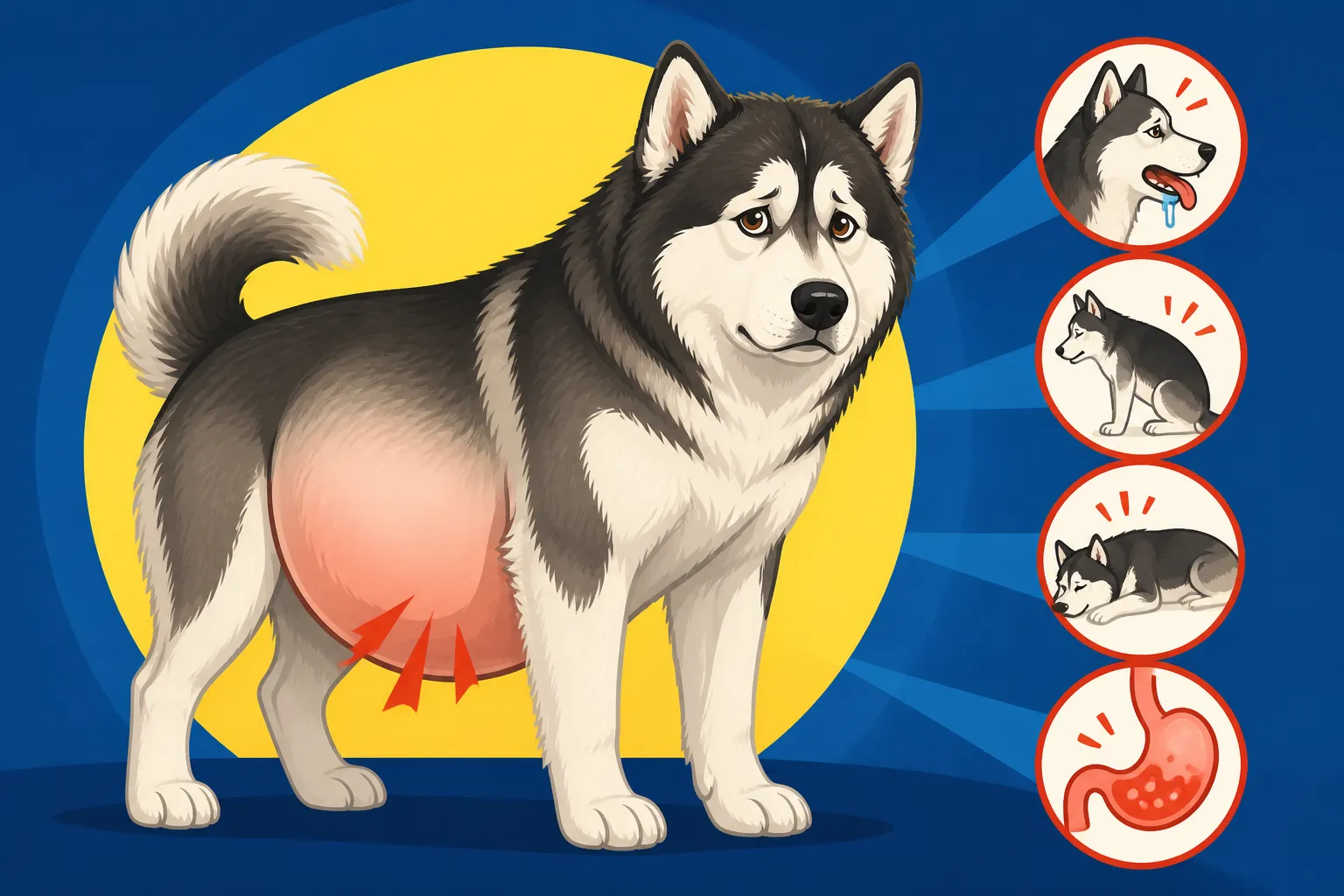
This is perhaps the most classic and alarming symptom of bloat, and it demands immediate veterinary attention. Your Malamute will make repeated attempts to vomit, hunching their back, straining, and making retching sounds, but nothing or very little will actually come up. Sometimes, a small amount of foamy saliva might be produced, but no food or bile.
This unproductive retching occurs because the twisted stomach has sealed off the exit to the esophagus. Your dog feels intense nausea and the urge to expel what's in their stomach, but the physical obstruction makes it impossible. If you see your Malamute exhibiting this behavior, do not delay. It's a critical indicator that GDV is likely occurring. Do not confuse this with normal vomiting, which usually results in expelled stomach contents.
Drooling and Excessive Salivation
Along with the unproductive retching and overall discomfort, you might notice your Malamute drooling more than usual. This excessive salivation is often a direct result of profound nausea and the body's attempt to dilute or flush out an irritant, even if nothing is actually being expelled. Their mouth might appear foamy, particularly around the lips, or you might find larger puddles of drool than normal around where they've been lying.
While drooling alone can be caused by many things (excitement, heat, anticipation of food), when it's combined with restlessness and, most importantly, unproductive retching, it becomes another crucial piece of the bloat puzzle. It's their body's way of signalling severe gastrointestinal distress, and it shouldn't be overlooked.
Palpable and Visible Signs of Bloat
As bloat progresses, the internal distress begins to manifest as more obvious physical changes, which you can often see or feel. These signs are typically later indicators and signify a more advanced, and thus more dangerous, stage of GDV.
Abdominal Distension (Swollen Belly)
The most commonly recognized sign of bloat is a visibly swollen, distended abdomen. This swelling is usually most noticeable on the left side of your Malamute's body, behind the last rib. However, depending on the degree and direction of the twist, it can appear more generalized or on the right side. The abdomen will feel hard and tight, like a drum. If you gently tap on it, you might even hear a hollow, drum-like sound due to the trapped gas.
For Malamutes, with their thick coats and sometimes deep body conditioning, this distension might be harder to spot immediately than in a short-haired breed. You'll need to run your hands firmly over their sides and belly to feel for the hardness. Comparing their current belly size and firmness to what's normal for them can be helpful. Don't wait for a grossly enlarged belly to confirm your suspicions; even a subtle hardness or swelling, coupled with other symptoms, warrants immediate action.
Pale Gums and Rapid Heartbeat
As the stomach twists, it not only traps gas but also begins to compress major blood vessels, including the vena cava, which returns blood to the heart. This reduces blood flow throughout the body, leading to a cascade of systemic shock. One of the clearest indicators of this is changes in your Malamute's gum color and heart rate.
Gums will appear pale, greyish, or even bluish (cyanotic) instead of their usual healthy pink. This signifies poor circulation and lack of oxygen. Check their capillary refill time (CRT) by pressing firmly on their gum with your finger until it blanches, then releasing. The color should return within 1-2 seconds. A longer refill time is a red flag. Simultaneously, you'll likely notice a rapid heart rate, as their body tries desperately to compensate for the reduced blood flow, often accompanied by a weak pulse and rapid, shallow breathing. These are signs of severe systemic distress and indicate a life-threatening emergency.
What to Do Immediately if You Suspect Bloat
If you've observed any combination of these symptoms in your Alaskan Malamute, particularly unproductive retching, restlessness, and a distended abdomen, there is only one course of action: immediate emergency veterinary care. There is no time for hesitation or home remedies.
Emergency Veterinary Care is Non-Negotiable
This cannot be stressed enough: if you suspect bloat, you need to get your Malamute to an emergency veterinary clinic right away. Do not try to make them vomit, give them antacids, or wait to see if the symptoms improve. Every minute that passes increases the risk of irreversible damage and reduces their chances of survival. GDV is a true surgical emergency.
Call your nearest emergency veterinary hospital while you are on your way. Inform them that you suspect your Malamute has bloat and that you are inbound. This allows them to prepare their team and equipment for your arrival, potentially saving precious minutes. Drive safely but directly to the clinic. Your calm demeanor, despite the internal panic, will also help your Malamute remain as calm as possible during this stressful time.
Preparing for the Vet Visit
While the urgency is paramount, there are a few things you can do to prepare for the vet visit. First, try to keep your Malamute as calm and still as possible during transport. Minimizing movement can sometimes prevent further twisting, though it’s not guaranteed. Avoid any activities that might increase their discomfort or gas production.
Once at the clinic, be ready to provide the veterinary staff with all the details: when you first noticed symptoms, what those symptoms were, how quickly they progressed, what your Malamute has eaten recently, and any other relevant medical history. This information is vital for the vet to quickly assess the situation and formulate a treatment plan. Remember that emergency veterinary care, including diagnostics, stabilization, and potential surgery, can be very costly. This is where comprehensive pet insurance like Healthy Paws can truly be a lifesaver, allowing you to focus on your Malamute's recovery without the added financial stress. For a detailed breakdown of potential costs, you might want to read What Bloat Surgery Costs on an Alaskan Malamute.
Prevention and Long-Term Considerations for Malamute Owners
While immediate action is crucial during a bloat emergency, focusing on prevention is equally important for Malamute owners. Understanding the risk factors and implementing strategies to mitigate them can significantly reduce the chances of your beloved companion ever experiencing this terrifying condition.
Strategies to Reduce Bloat Risk
Preventing bloat starts with smart feeding practices. Instead of one large meal, consider feeding your Malamute smaller, more frequent meals throughout the day. This reduces the amount of food and gas in the stomach at any one time, making it less likely to distend. Our Malamutes are often efficient eaters due to their heritage, but this can also mean they gulp down food and air too quickly. Breaking up meals can help with this. You can find more information on optimal feeding schedules in How Many Meals a Day an Alaskan Malamute Needs.
Crucially, avoid strenuous exercise or high-stress situations immediately before or after meals. Give your Malamute at least an hour of rest before and after eating. This quiet period allows for proper digestion without the jostling and internal movement that vigorous activity can cause. Many Malamute owners, myself included, often ensure their dogs get their walk or training session done well before mealtime. If you're looking for more guidance, checking out Whether a Malamute Should Rest After Eating can provide further insights.
Consider using a slow feeder bowl, which forces your Malamute to eat at a more measured pace, reducing the amount of air they ingest with their food. There are many designs available, from bowls with raised obstacles to puzzle feeders, and these can be incredibly effective. You can explore the benefits of these in detail by reading Whether a Slow Feeder Suits an Alaskan Malamute. Also, while some older advice suggested raised feeding bowls to prevent bloat, current veterinary consensus indicates this actually increases the risk for large breeds. So, stick to ground-level bowls. For more on this, check out Whether an Alaskan Malamute Eats From a Raised Bowl. Minimizing stress, especially around meal times, can also play a role, as stress can impact digestion.
The Role of Prophylactic Gastropexy
For Malamute owners, especially those with dogs at higher risk for bloat (e.g., family history of GDV, or already had one bloat episode), a prophylactic gastropexy is a serious consideration. This surgical procedure involves permanently attaching, or "tacking," the stomach to the abdominal wall. The stomach can still dilate with gas, but it cannot twist. While it doesn't prevent the stomach from filling with gas (dilatation), it effectively prevents the life-threatening twist (volvulus).
Many owners opt to have a gastropexy performed at the same time as spaying or neutering, as the dog is already under anesthesia. It’s an added procedure, but the peace of mind it offers is invaluable. It’s an elective surgery that turns a potential emergency into a manageable upset stomach. While it's a significant decision, the thought of preventing future bloat episodes for your cherished Malamute often outweighs the concerns. Your vet can discuss the pros and cons, the procedure itself, and recovery. For a deeper dive into this preventative measure, consider reading Whether a Malamute Should Have a Gastropexy. Knowing that your pet insurance, like Healthy Paws, might cover emergency GDV treatment, but typically not elective prophylactic surgeries, can help you plan your preventative healthcare budget.
| Symptom Category | Signs of Normal Discomfort (Mild) | Signs of Potential Bloat (Severe) |
|---|---|---|
| Behavioral | Mild restlessness, shifts position, seeks attention | Pacing, inability to settle, frantic, whining, looking at flank |
| Gastrointestinal | Vomiting (produces food/bile), soft stool, burping | Unproductive retching/dry heaves, excessive drooling, foamy mouth |
| Abdominal | Mild tenderness, soft to touch, slight gurgling | Distended, hard, drum-like abdomen, especially on left side |
| General Health | Normal gum color, normal heart rate, bright/alert | Pale/grey gums, rapid heart rate, weak pulse, rapid/shallow breathing, signs of shock, extreme lethargy |
| Urgency | Monitor closely, may resolve on its own, vet if persists | IMMEDIATE EMERGENCY VET VISIT REQUIRED |
Disclaimer
The information provided in this article is for educational purposes only and is not a substitute for professional veterinary advice. If you suspect your Alaskan Malamute is experiencing bloat or any other medical emergency, contact your veterinarian or nearest emergency animal hospital immediately.