Whether a Malamute Should Have a Gastropexy
The sudden, terrifying onset of bloat in an Alaskan Malamute is every owner's nightmare, a race against time where minutes can mean the difference between life and death. The crushing weight of that fear often leads concerned Malamute parents to wonder if a proactive step, like a gastropexy, is the right choice for their beloved companion. This comprehensive guide will walk you through everything you need to know about gastropexy, helping you make an informed decision for your Malamute's health and longevity.
Understanding Bloat in Alaskan Malamutes
Bloat, scientifically known as Gastric Dilatation-Volvulus (GDV), is an acute and life-threatening condition that can affect any deep-chested dog breed, and sadly, the Alaskan Malamute is among those at higher risk. It's not just a bad tummy ache; it's a critical emergency requiring immediate veterinary intervention. Understanding what happens during bloat, why Malamutes are particularly susceptible, and how to recognize its signs quickly is absolutely essential for every Malamute owner.
What Happens During Bloat Gastric Dilatation-Volvulus
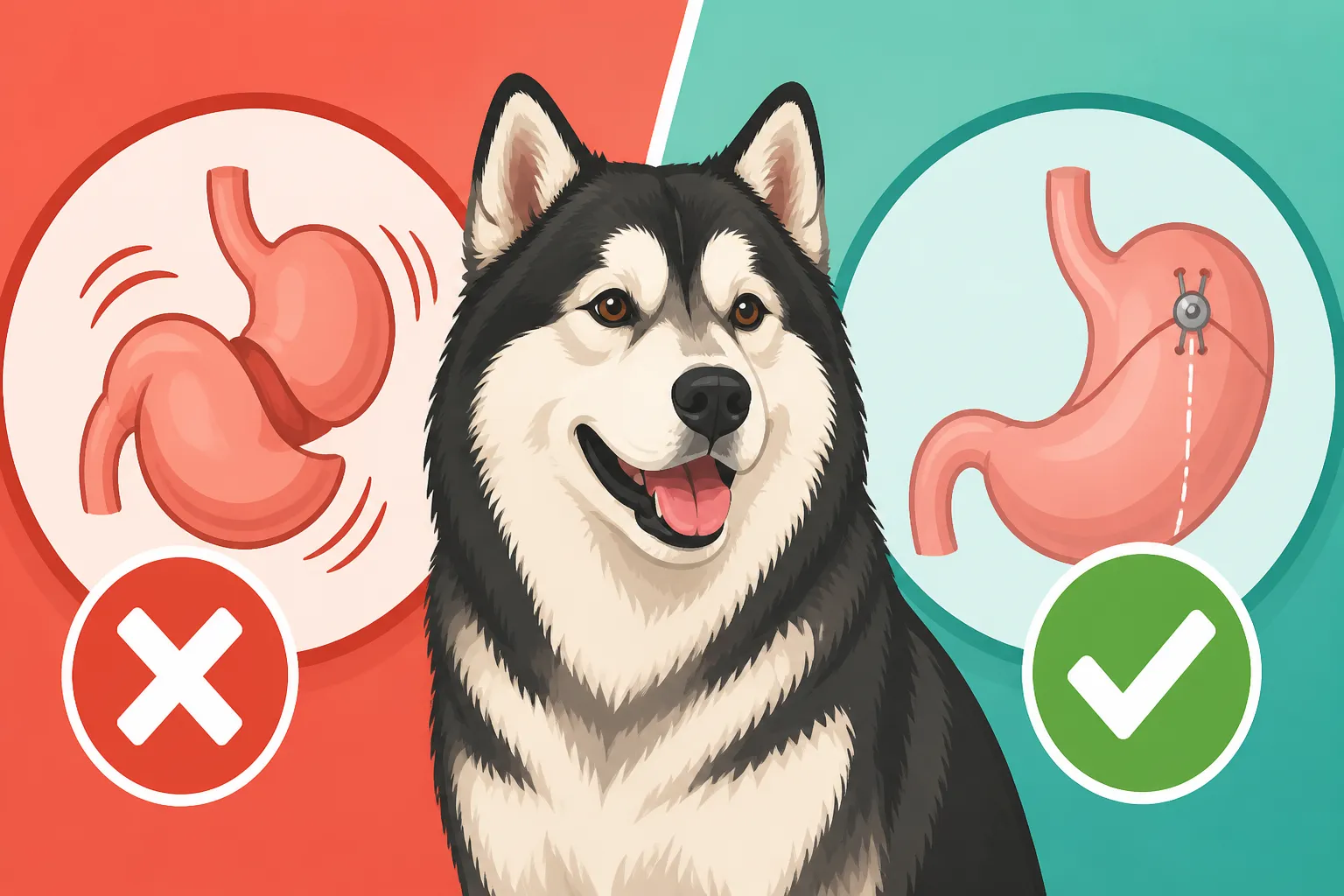
When bloat strikes, it typically begins with the stomach filling rapidly with gas, food, or fluid, causing it to distend massively—this is the "dilatation" part. Imagine a balloon inflating inside your dog's abdomen, pressing against other organs and restricting blood flow. This alone is incredibly painful and dangerous. But the real catastrophe occurs when the stomach then twists on its axis, a phenomenon called "volvulus." This twisting pinches off both the entrance (esophagus) and exit (duodenum) of the stomach, trapping everything inside. It also cuts off blood supply to the stomach wall, which can lead to tissue death, and impacts vital organs like the spleen and heart. The pressure can also make it difficult for your Malamute to breathe properly. The speed at which this can progress from mild discomfort to a critical state is truly shocking, often in just an hour or two.
Why Malamutes Are at Higher Risk for Bloat
Alaskan Malamutes possess several characteristics that unfortunately place them on the list of breeds prone to GDV. Their large size and deep chest conformation are primary culprits. A deep, narrow chest allows more room for the stomach to swing and twist within the abdominal cavity compared to a broader, shallower chest. While exact genetic predispositions are still being researched, it's widely accepted that breed type plays a significant role. Factors like eating too quickly, consuming one large meal a day, excessive exercise before or after eating, and even stress or anxiety have all been implicated as potential triggers, though no single cause has been definitively identified.
It’s crucial to remember that even with careful management, a Malamute can still experience bloat. This inherent breed risk is why many owners and veterinarians consider prophylactic measures. If you're looking for more details on the general condition, you can read our comprehensive guide on Bloat in an Alaskan Malamute.
Recognizing the Urgent Signs of Bloat
Time is of the essence when bloat is suspected. Knowing the signs means you can act swiftly, potentially saving your Malamute's life. The most common indicators include a distended abdomen that feels hard and taut, restlessness, pacing, and obvious discomfort. Your Malamute might attempt to vomit but produce nothing or only foamy saliva. This non-productive retching is a classic sign. They might also appear weak, have pale gums, or show signs of shock, such as a rapid heart rate and shallow breathing. Excessive drooling, reluctance to move, or a hunched posture from abdominal pain are also red flags.
Do not wait to see if these signs improve. If you notice any combination of these symptoms, especially the distended abdomen and non-productive retching, consider it an emergency. Get your Malamute to the nearest emergency veterinary clinic immediately. Every moment counts, and delaying treatment can drastically reduce their chances of survival. For a full breakdown of what to look out for, consult our article on Signs a Malamute Is Bloating.
What is a Gastropexy and How Does It Work?
Given the terrifying nature and high mortality rate of bloat, many Malamute owners seek preventive solutions. This is where gastropexy comes into play. A gastropexy is a surgical procedure specifically designed to prevent the stomach from twisting (volvulus) in the event of bloat. It's not a cure-all for all stomach issues, but it addresses the most life-threatening aspect of GDV.
The Surgical Procedure for Gastropexy
At its core, a gastropexy involves permanently attaching a section of the stomach wall to the abdominal wall. This physical attachment prevents the stomach from rotating. The most common technique is called an incisional gastropexy, where a small incision is made in the stomach lining and then sutured to a corresponding incision in the inner abdominal wall. This creates a strong adhesion as the tissues heal, effectively anchoring the stomach in place. Historically, this was done via a large incision in the abdomen, which is still an option, especially if emergency bloat surgery is already underway.
However, advancements in veterinary medicine have introduced less invasive options. Laparoscopic gastropexy, or keyhole surgery, uses small incisions and a camera to guide the procedure. This typically results in less pain, faster recovery times, and smaller scars for your Malamute. While the technique varies, the objective remains the same: to secure the stomach and prevent its dangerous rotation.
Types of Gastropexy Procedures
There are several methods for performing a gastropexy, each with its own benefits and considerations.
- Incisional Gastropexy: As mentioned, this is the traditional method, creating a strong attachment by suturing two incised tissue layers together. It can be performed through an open abdominal incision or laparoscopically.
- Belt-Loop Gastropexy: This technique involves creating a flap of stomach muscle, passing it through a tunnel created in the abdominal wall, and then suturing it back to the stomach, forming a "belt loop." It also creates a very strong adhesion.
- Laparoscopic-Assisted Gastropexy: This popular minimally invasive approach involves two small incisions. A camera is inserted through one, and instruments through the other. The surgeon then attaches the stomach wall to the abdominal wall, often using a variant of the incisional technique. This procedure is generally less painful and allows for quicker recovery compared to open surgery.
- Circumcostal Gastropexy: This method involves wrapping a portion of the stomach around a rib and suturing it in place. While effective, it's less commonly performed today due to the widespread success and lower invasiveness of incisional or laparoscopic techniques.
The choice of procedure often depends on the individual Malamute's health, the veterinarian's expertise, and the available equipment at the clinic. It's always best to discuss all options thoroughly with your vet to determine the most suitable approach for your dog.
The Goal: Preventing Gastric Volvulus
It's important to clarify what a gastropexy does and does not do. The primary goal of a gastropexy is to prevent the stomach from twisting (volvulus). It does not prevent the stomach from distending with gas (dilatation). This means that a gastropexied Malamute can still experience bloat in its initial stage—the stomach can still fill with gas and cause discomfort, pain, and even rupture if left untreated. However, the critical, often fatal, twisting motion is averted.
By preventing the volvulus, the gastropexy buys precious time. A dog experiencing dilatation can often be treated non-surgically by decompressing the stomach (e.g., passing a tube or trocarization) without the need for emergency, high-risk surgery to untwist the stomach. This significantly improves the prognosis and reduces the immediate danger. While it's not a complete bloat prevention, it eliminates the most deadly component, offering immense peace of mind to owners of at-risk breeds like the Alaskan Malamute.
The Benefits and Risks of Prophylactic Gastropexy for Malamutes
Deciding whether to pursue a prophylactic gastropexy for your Alaskan Malamute is a significant choice, weighing potential benefits against inherent surgical risks. It’s a discussion you’ll want to have with your veterinarian, considering your Malamute's individual health, lifestyle, and your own comfort level with elective surgery.
The Lifesaving Advantages of Gastropexy
The most compelling advantage of a prophylactic gastropexy is its proven ability to drastically reduce the risk of death from GDV. Studies have shown that while it doesn't prevent gastric dilatation entirely, it prevents the stomach from twisting in nearly all cases. This means that if your Malamute were to experience bloat, it would likely be the less severe, non-twisting form, which is far more treatable and less immediately life-threatening. The survival rate for dogs that undergo emergency GDV surgery for a twisted stomach is significantly lower than for dogs with simple gastric dilatation, often complicated by tissue damage and shock.
By opting for a gastropexy, you're essentially removing the most critical component of bloat from the equation. This can translate into fewer emergency vet visits for suspected bloat, less stress for both you and your dog, and ultimately, a longer, healthier life for your Malamute. For a breed already facing health challenges such as Zinc Is the Thread Running Through Three Malamute Diseases or Hip Dysplasia in a Freighting Alaskan Malamute, mitigating a risk like GDV can be a profound benefit.
Potential Surgical Complications and Considerations
Like any surgical procedure, gastropexy carries potential risks. These include general anesthesia risks such as adverse reactions to medication, respiratory issues, or cardiac complications. Post-operative complications can involve infection at the surgical site, pain, bleeding, or suture dehiscence (where the surgical incision reopens). While rare, there's also a small chance the gastropexy could fail, though this is uncommon with proper surgical technique.
The recovery period, though usually straightforward with laparoscopic techniques, still requires diligent post-operative care, including restricted activity and pain management. It's essential to follow your vet's instructions precisely to minimize complications. While the risks are generally low, particularly for healthy dogs undergoing elective surgery, they are never zero. It’s a calculation that each owner must make in consultation with their veterinary team.
Financial Implications and Insurance Coverage
The cost of a prophylactic gastropexy can vary significantly depending on your location, the veterinary clinic, the specific technique used (open vs. laparoscopic), and whether it's combined with another procedure like spaying or neutering. Generally, an elective gastropexy will be less expensive than emergency GDV surgery, which can run into thousands of dollars due to the urgency, extended hospitalization, and intensive care required. You might want to consider What Bloat Surgery Costs on an Alaskan Malamute if you're weighing the preventive cost against emergency treatment.
It’s worth noting that many pet insurance providers, such as Healthy Paws, cover prophylactic gastropexy when performed as part of another approved procedure, like a spay or neuter. However, coverage for elective procedures as a standalone surgery can vary, so it's critical to check your policy details or contact your provider directly before scheduling the surgery. Understanding your pet insurance coverage for such procedures can help you plan financially for your Malamute's care. Being prepared for potential costs is part of responsible Malamute ownership, just like budgeting for routine care. For insights into overall financial planning, you might explore How Much a Malamute Owner Should Bank Each Month.
When to Consider a Gastropexy: Timing and Decision Factors
The decision to have your Malamute undergo a prophylactic gastropexy isn't one to be taken lightly. It involves careful consideration of several factors, including your dog's age, overall health, and discussions with your trusted veterinarian.
Age and Health Status of Your Malamute
The ideal time for a prophylactic gastropexy is often when your Malamute is still young and healthy, typically between 6 months and 2 years of age. This timing often coincides with spaying or neutering, allowing the gastropexy to be performed concurrently, which reduces the need for multiple anesthesia events and recovery periods. Performing it when the dog is young means they are generally in peak health, which helps minimize surgical risks and promotes a smoother recovery.
However, a gastropexy can also be performed on older Malamutes, provided they are in good health. For older dogs, a thorough pre-surgical workup, including blood tests and possibly chest X-rays, is even more critical to assess their suitability for anesthesia. If your Malamute is already past eight, you might also be looking into Caring for an Alaskan Malamute Past Eight, which could factor into discussions about any elective surgeries. A Malamute with pre-existing health conditions, like Whether an Alaskan Malamute Gets Kidney Disease, might face higher risks, making a careful risk-benefit analysis with your vet paramount.
Combining Gastropexy with Other Procedures
One of the most common scenarios for prophylactic gastropexy is combining it with spaying (for females) or neutering (for males). This approach is highly advantageous for several reasons. First, your Malamute will already be under anesthesia for the spay/neuter, eliminating the need for a separate anesthetic event for the gastropexy. This saves on both cost and stress for your dog. Second, it consolidates the recovery period into one, making post-operative care more efficient.
Veterinarians often recommend this combination, particularly for at-risk breeds like Malamutes. While the spay/neuter procedure is typically performed between 6 months and 1 year, discuss the optimal timing for both procedures with your vet. This can be an efficient and effective way to address multiple health concerns at once, ensuring your Malamute is protected from both unwanted pregnancies and the life-threatening risks of GDV. If you're curious about how age of neutering impacts vet bills, check out Whether Neutering Age Changes a Malamute's Vet Bill.
Consulting with Your Veterinarian
The decision ultimately rests on a detailed discussion with your veterinarian. They know your Malamute's individual health history, temperament, and can assess the specific risks and benefits. Come prepared with questions: What are the specific risks for my dog? Which surgical technique do you recommend? What is the expected recovery time and care? What are the costs involved, and how does my pet insurance (e.g., Healthy Paws) factor in?
Your vet can also provide current statistics on GDV risk in Malamutes and the success rates of prophylactic gastropexy. They might recommend additional diagnostics before surgery, especially for older dogs, to ensure they are fit for the procedure. Trust your vet's guidance, as their expertise is invaluable in making the best choice for your furry family member. Don't hesitate to seek a second opinion if you feel it's necessary to fully understand your options.
Living with a Malamute After Gastropexy
Undergoing a gastropexy is a significant step in protecting your Alaskan Malamute from the most severe form of bloat. However, the journey doesn't end once the surgery is complete. Understanding post-operative care, continued prevention strategies, and the limitations of the procedure is key to ensuring your Malamute thrives.
Post-Operative Care and Recovery
The recovery period following a gastropexy, especially a laparoscopic one, is generally straightforward but requires adherence to veterinary instructions. Immediately after surgery, your Malamute will likely be closely monitored in the clinic for pain management and to ensure there are no immediate complications. Once home, activity restriction is paramount. This means no jumping, running, or strenuous play for several weeks, typically 2-4, to allow the surgical site to heal properly and the stomach to adhere firmly to the abdominal wall.
You'll need to monitor the incision site daily for any signs of redness, swelling, discharge, or opening. An Elizabethan collar (cone) will likely be necessary to prevent your Malamute from licking or chewing the incision. Pain medication and possibly antibiotics will be prescribed, and it's vital to administer these exactly as directed. Follow-up appointments with your vet will be scheduled to check on healing and remove sutures if non-dissolvable ones were used. A smooth recovery is largely dependent on strict adherence to these instructions.
Lifestyle Adjustments and Continued Bloat Prevention
While gastropexy prevents twisting, it doesn't eliminate the risk of gastric dilatation. Therefore, continued vigilance and certain lifestyle adjustments remain important. This includes feeding smaller, more frequent meals rather than one large one. Avoid intense exercise immediately before or after meals. Ensuring access to fresh water at all times is also vital.
Consider using a slow feeder bowl if your Malamute tends to gulp down their food quickly; this can significantly reduce the amount of air they ingest with their meal. While the gastropexy is a powerful preventative, combining it with sensible feeding and activity routines provides the best protection. For more on these feeding strategies, explore Whether a Slow Feeder Reduces a Malamute's Bloat Risk and Whether a Malamute Should Rest After Eating.
What Gastropexy Does Not Prevent
It's crucial to have realistic expectations about what a gastropexy accomplishes. As previously mentioned, it primarily prevents the stomach from twisting. It does not prevent gastric dilatation, meaning the stomach can still fill with gas. If this occurs, your gastropexied Malamute will still show signs of discomfort, pacing, and perhaps non-productive retching. The key difference is that the condition is no longer immediately life-threatening due to the lack of twisting.
However, even simple dilatation can be incredibly painful and, if left untreated, could lead to issues like stomach rupture, though this is rare. Therefore, if your gastropexied Malamute shows signs of bloat, you still need to contact your veterinarian immediately. They may advise bringing your dog in for examination and potentially stomach decompression. Gastropexy is an incredible tool for risk reduction, but it does not mean you can ignore bloat symptoms entirely.
Alternative and Complementary Bloat Prevention Strategies
Even if you opt for a gastropexy, or if surgery isn't an option for your Malamute, there are many proactive steps you can take to reduce the risk of bloat. These strategies are also important complements to a gastropexy, as they help mitigate the initial gastric dilatation.
Dietary Management and Feeding Practices
Diet plays a significant role in managing bloat risk. Here are some key recommendations:
- Smaller, More Frequent Meals: Instead of one large meal, split your Malamute's daily food allowance into two or three smaller meals. This reduces the amount of gas and food in the stomach at any one time.
- Slow Feeder Bowls: These bowls are designed with ridges or obstacles to force your dog to eat more slowly, thereby reducing air intake. Many Malamute owners find these invaluable.
- Avoid Elevating Food Bowls: While once thought to prevent bloat, recent studies suggest that elevated bowls might actually increase the risk in large breeds. Feed your Malamute at ground level unless medically advised otherwise.
- High-Quality Diet: Ensure your Malamute is on a high-quality, easily digestible diet. While no specific ingredient causes bloat, consistency and nutritional balance are key. Some theories suggest diets with high amounts of fermentable carbohydrates or certain fats might increase risk, but evidence is not conclusive.
- Limit Water Intake Around Meals: Don't restrict water entirely, but avoid allowing your Malamute to gulp down large quantities of water immediately before or after eating, as this can contribute to stomach distension. Offer smaller amounts more frequently.
Implementing these dietary changes can make a substantial difference in reducing the overall risk of bloat, regardless of whether your Malamute has had a gastropexy.
Activity Levels and Stress Reduction
Physical activity and emotional well-being also play a part in bloat prevention.
- Avoid Strenuous Exercise Around Meals: Never let your Malamute engage in vigorous activity, such as running, jumping, or pulling a sled, for at least an hour before and two hours after eating. This allows the stomach to digest food without excessive movement or jostling.
- Manage Stress and Anxiety: Some research suggests that stress or anxiety can be a contributing factor to bloat. Create a calm and predictable environment for your Malamute, especially around meal times. If your dog suffers from anxiety, discuss management strategies with your vet or a certified professional dog trainer.
- Consistent Routine: Dogs thrive on routine. Consistent feeding times, exercise schedules, and daily interactions can help reduce overall stress levels.
Monitoring and Emergency Preparedness
Even with all preventative measures, it’s vital to remain vigilant. Knowing the signs of bloat and having an emergency plan can save your Malamute’s life.
- Know the Symptoms: Revisit the signs of bloat regularly. The more familiar you are, the faster you'll react. Remember the non-productive retching and distended abdomen as critical indicators.
- Emergency Vet Information: Have the contact information and directions to the nearest 24-hour emergency veterinary clinic readily available. Don't waste precious minutes searching during a crisis.
- Discuss with Your Vet: Talk to your vet about your concerns and what their protocol is for suspected bloat cases. They can offer personalized advice and prepare you for a potential emergency.
- Pet Insurance: Having pet insurance, such as through providers like Healthy Paws, can alleviate the financial burden of an emergency. While not all policies cover every scenario, comprehensive plans often cover emergency treatments like bloat surgery. Confirming your coverage, including any waiting periods or exclusions, is always a good idea, especially regarding inherited conditions. Insurance can be a lifeline when unexpected health crises occur. If you're pondering Whether Insurance Excludes a Malamute's Inherited Diseases, now is the time to confirm with your provider.
By combining informed decisions about procedures like gastropexy with diligent daily care and preparedness, you can significantly enhance your Alaskan Malamute's chances of avoiding the devastating impact of bloat.
Disclaimer
The information provided in this article is for educational purposes only and should not be considered a substitute for professional veterinary advice. Always consult with a qualified veterinarian for any health concerns or before making any decisions about your Alaskan Malamute's medical care.