Whether a Malamute Owner Can Skip the Groomer Entirely
As an Alaskan Malamute owner, you've likely stared at a cloud of fur drifting across your living room and wondered if there’s any way to manage that majestic double coat without a professional groomer. It's a common struggle, and the answer isn't a simple yes or no. This guide will dive deep into the realities of caring for that incredible Malamute coat, outlining what it truly takes to handle grooming yourself, when it might be okay to skip the professional, and when calling in the experts becomes an absolute necessity for your sanity and your Malamute's well-being.
Understanding the Alaskan Malamute's Unique Double Coat
Before we even talk about skipping the groomer, we need to talk about the coat itself. The Alaskan Malamute's coat isn't just "fur"; it's a marvel of Arctic engineering, designed for extreme cold and heavy work. It’s what makes them so iconic, but it’s also what makes grooming such a monumental task. You're dealing with two distinct layers, each with its own purpose and grooming demands.
The Guard Coat and the Undercoat
Think of the Malamute's coat as a natural, built-in winter suit. The outer layer, known as the guard coat, consists of coarse, straight hairs that are resilient and water-repellent. Their job is to protect against snow, ice, and external elements, much like a good quality weatherproof jacket. These hairs shed, but they don't form the massive tumbleweeds you typically associate with a Malamute.
The real star, or perhaps the villain depending on your perspective, is the undercoat. This soft, dense, woolly layer acts like nature's down insulation. It's incredibly thick, often an inch or two deep, and it's what keeps your Malamute warm in sub-zero temperatures. This is the layer that sheds in prodigious amounts, especially during what we affectionately call "coat blow." It comes out in clumps, sheets, and seemingly endless tufts, and if not properly managed, it can easily mat and cause serious skin problems. Understanding these two layers is crucial because you can't groom a Malamute effectively without addressing both.
The Infamous Coat Blow Phenomenon
If you've never experienced a Malamute's "coat blow," prepare yourself. It's not just shedding; it's an event. Typically, Malamutes will "blow their coat" twice a year, usually in spring to shed their heavy winter insulation and again in fall to prepare for a thicker winter coat. However, depending on climate, hormones, and individual genetics, it can feel like a continuous process. During this period, which can last several weeks, your Malamute will shed huge amounts of undercoat.
This isn't just about aesthetics or keeping your house clean; it's a health issue. If the dead undercoat isn't removed, it can become tightly packed and matted against the skin. This dense matting traps moisture, prevents air circulation, and creates a perfect breeding ground for bacteria, leading to painful skin irritations, hot spots, and infections. It also interferes with their natural cooling process in warmer weather, making them more susceptible to overheating. It's a critical time when diligent grooming truly matters. The Malamute Coat Blow That Fills a Vacuum in an Afternoon is a very real experience.
The Realities of DIY Alaskan Malamute Grooming
So, can you skip the groomer entirely? Theoretically, yes, if you are truly dedicated and have the right tools and knowledge. But let's be realistic about what that entails. This isn't just a quick brush once a week; it's a commitment to consistent, thorough care.
Essential Tools and Techniques for Home Grooming
To tackle Malamute grooming yourself, you'll need an arsenal of specialized tools. A simple slicker brush won't cut it. You'll need:
- Undercoat Rake: This is your MVP during coat blow. It's designed to reach deep into the undercoat and pull out loose, dead fur without damaging the guard hairs. Look for one with rotating teeth to prevent snagging.
- Pin Brush: Great for daily maintenance and working through the longer guard hairs, but less effective for the dense undercoat.
- Slicker Brush: Useful for smaller areas or to smooth the outer coat, but again, not for heavy duty undercoat removal.
- Force Dryer (High-Velocity Dryer): This is arguably the most crucial tool for a Malamute owner who wants to skip the professional groomer. These powerful dryers blast water and loose hair out of the coat after a bath, significantly reducing drying time and aiding in undercoat removal. They are not like human hair dryers, which can overheat.
- Wide-toothed Comb: Essential for checking your work and ensuring there are no hidden mats after brushing and drying.
- Nail Clippers or Dremel: Regular nail trims are vital for your Malamute's comfort and joint health. A Dremel grinder offers a smoother finish and can be less stressful for some dogs.
- Shampoo and Conditioner: Choose formulas designed for dogs with dense coats or sensitive skin. Avoid harsh detergents that can strip natural oils.
- De-matting Spray: Can be helpful for minor tangles, but prevention is key.
Learning proper techniques is just as important as having the right tools. You need to brush in layers, getting all the way down to the skin. During coat blow, this can mean an hour or more of brushing several times a week. After a bath, using a force dryer correctly to "line dry" (separating the coat and drying small sections at a time) is a skill that takes practice. It's a full-body workout for both you and your dog. Which Tools a Malamute Owner Buys Once are an investment, but they're worth it if you're serious about DIY.
The Time and Effort Investment
Let's be blunt: grooming a Malamute properly at home is a massive time commitment. It's not something you can rush.
- Regular Brushing: Even outside of coat blow, plan for at least 30-60 minutes of thorough brushing 2-3 times a week. This helps keep the undercoat managed and prevents minor tangles from becoming major mats. How Often an Alaskan Malamute Needs Brushing really depends on the individual dog and season, but it's never "rarely."
- Coat Blow Season: During coat blow, you might spend several hours a week brushing, possibly even daily for short bursts, just to keep up. It's an ongoing battle against the tide of fur.
- Bathing and Drying: Bathing a Malamute is a production. Getting their dense coat fully wet takes effort, and getting it fully dry without a force dryer is nearly impossible, often taking hours, sometimes even days, to air dry completely. If the undercoat remains damp, it can lead to skin infections and a musty smell. A proper bath and force dry can easily take 2-3 hours from start to finish.
- Nail Trims: Depending on how quickly your Malamute's nails grow and their activity level, you'll need to trim them every 2-4 weeks.
If you lead a busy life, this level of commitment might be challenging to maintain. Skipping brushing sessions, especially during a coat blow, will almost certainly lead to matting, which can be painful for your dog and much harder (and more expensive) to resolve later. Remember, a well-groomed coat is also a healthy coat. Regularly checking their skin while grooming can help you spot potential issues like Reading a Malamute's Skin Before the Crusts Appear or other irritations.
When a Professional Groomer Becomes Essential
While DIY grooming is possible, there are definite times when a professional groomer isn't just a luxury, but a necessity. Ignoring these signs can lead to discomfort, pain, and even serious health problems for your Malamute.
Tackling Severe Matting
This is probably the number one reason Malamute owners eventually throw in the towel and call a professional. Matting in a Malamute's dense undercoat can quickly become severe, especially in areas like behind the ears, armpits, flanks, and around the tail. These mats pull on the skin, causing extreme discomfort and pain. They can restrict movement, hide skin infections, and even cut off circulation in severe cases.
Trying to brush out severe mats at home with a regular brush can be agonizing for your dog and ineffective. Professional groomers have specialized tools, techniques, and often a stronger stomach for painstakingly de-matting. In some cases, if the mats are too tight or extensive, the only humane solution is to shave the dog down. This is a last resort and should only be done by a professional, as shaving a double-coated dog like a Malamute can permanently damage the coat's structure, affecting its ability to regulate temperature and protect the skin. Why an Alaskan Malamute Must Never Be Shaved explains why this is a significant concern.
During Peak Coat Blow
While you can manage a typical coat blow at home with diligent brushing and a good force dryer, some Malamutes shed so profusely that it feels like an insurmountable task. If you're overwhelmed, or if your dog is particularly sensitive to brushing, a professional groomer can be a lifesaver. They can often do a "deshedding treatment" that includes a specialized bath, conditioning, and powerful force drying to remove the maximum amount of dead undercoat in one session. This can cut down your home grooming efforts dramatically for weeks afterward. Whether a Deshedding Treatment Is Worth It on a Malamute is a question many owners ask, and during a severe coat blow, the answer is often a resounding yes. They are set up to handle the sheer volume of fur that comes off.
For Specialized Care or Health Issues
Sometimes, grooming goes beyond just brushing. If your Malamute develops skin issues like hot spots, dandruff, or unexplained bald patches, a groomer trained to recognize these problems can be invaluable. While they aren't vets, they can often spot early signs of trouble and recommend a vet visit. They also have access to medicated shampoos and specialized skin treatments that might be hard for you to apply effectively at home.
Beyond skin, professional groomers are experts in nail care. If your Malamute is anxious about nail trims or if their nails have become overgrown and require significant work (like addressing quicked nails), a groomer can often handle this with less stress and more expertise. This is particularly important for an active breed like the Malamute, as overgrown nails can lead to foot pain and joint problems. Ensuring your Malamute's overall health and comfort is part of What an Alaskan Malamute Needs Every Day.
Making Grooming a Positive Experience for Your Malamute
Whether you decide to go the DIY route, use a professional groomer, or a combination of both, the goal is always to make grooming a positive and stress-free experience for your Alaskan Malamute. A dog that hates being groomed will make the process miserable for everyone involved.
Early Socialization and Positive Reinforcement
Start grooming your Malamute puppy from day one. Get them used to being touched all over their body – paws, ears, tail, muzzle. Make it a fun experience with lots of treats and praise. Short, positive sessions are far more effective than long, frustrating ones. Use high-value treats to reward calm behavior. Even if they're just tolerating the brush for a few seconds, celebrate that success.
Introduce grooming tools slowly. Let them sniff the brush, turn on the dryer from a distance, and associate these things with good outcomes. If you're struggling, consider enrolling in puppy classes that include handling exercises. This early conditioning sets the stage for a lifetime of easier grooming, whether it's by you or a professional.
Maintaining a Consistent Routine
Consistency is key to managing a Malamute's coat and their temperament around grooming. If grooming only happens when their coat is already matted or during a stressful coat blow, your Malamute will naturally associate it with discomfort. Regular brushing prevents mats from forming and keeps their skin healthy. Regular baths (when needed) prevent dirt and odors from building up.
Even if you rely on a professional groomer, regular brushing at home between appointments will make their job easier and more pleasant for your dog. A consistent routine also helps you keep an eye on your Malamute's overall health, noticing any changes in their skin, coat, or body. You might even discover little lumps or bumps that warrant a vet check, potentially covered by pet insurance like Healthy Paws if it's a new condition.
Leveraging Nutrition for a Healthy Coat
While grooming is external, what goes into your Malamute can significantly impact their coat quality. A healthy, balanced diet provides the nutrients necessary for strong hair follicles and healthy skin. For instance, adequate zinc and essential fatty acids (like Omega-3s) are crucial for a gleaming coat and preventing dry, flaky skin.
Some Malamutes, unfortunately, have a genetic predisposition to zinc deficiency, which can manifest as dry, crusty skin and poor coat quality. If your Malamute struggles with these issues, discussing dietary changes or supplementation with your vet is important. High-quality dog food brands often focus on these nutrient profiles. You might find a great selection of foods and supplements on sites like Chewy that cater to specific dietary needs, or even explore fresh food options like Ollie that could support overall skin and coat health. Investing in good nutrition can make your grooming efforts much more effective and reduce some of the challenges you might face with a dull or unhealthy coat.
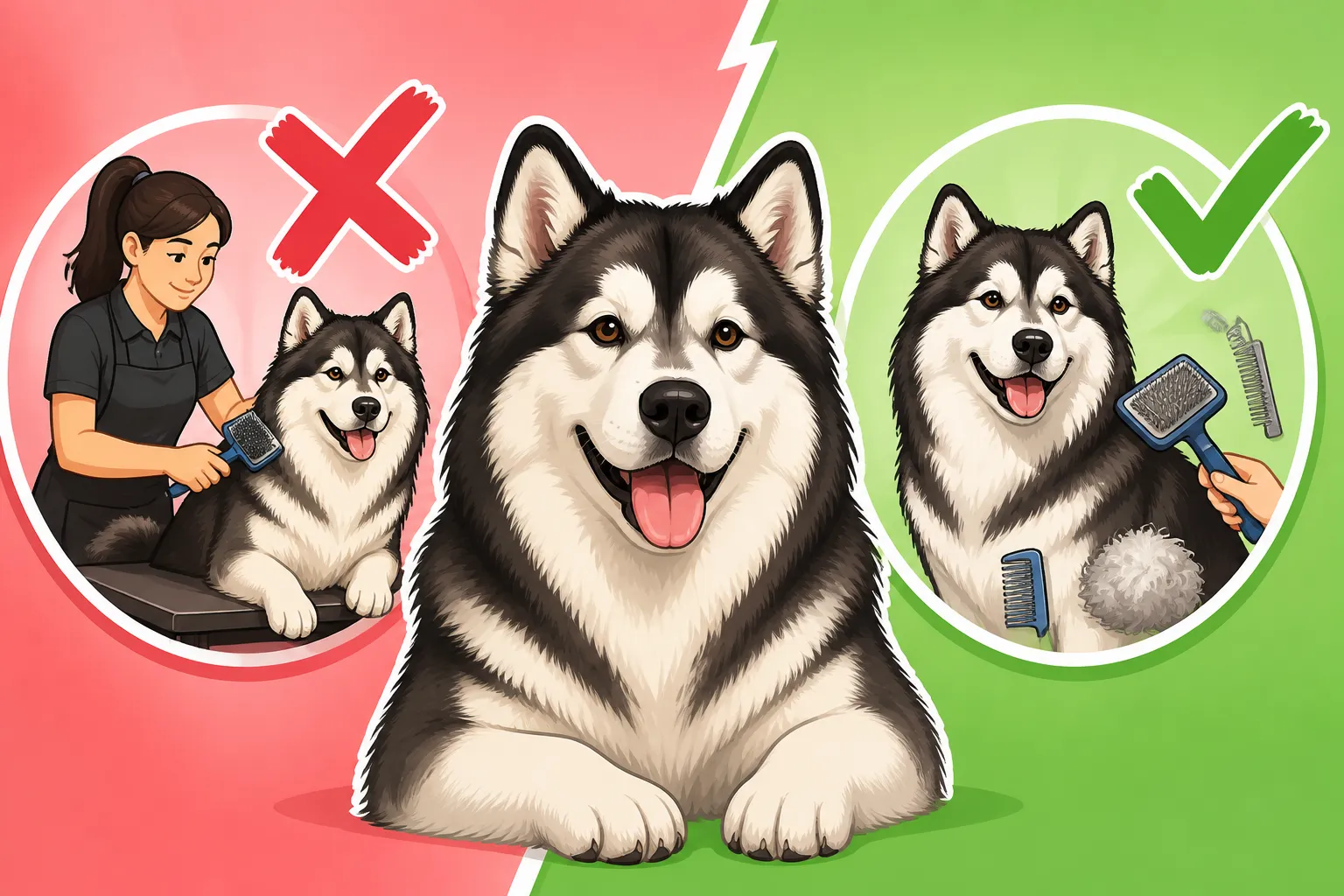
Ultimately, skipping the groomer entirely with an Alaskan Malamute is a huge undertaking. It requires dedication, the right tools, and a significant time commitment to prevent discomfort and health issues. While it's certainly possible for some owners, many find that a combination of diligent home care and occasional professional appointments provides the best outcome for both them and their magnificent Malamutes.
| Grooming Aspect | DIY at Home (with effort) | Professional Groomer (Specialized Service) |
|---|---|---|
| Routine Brushing | Possible with undercoat rake, pin brush, and consistency | Can offer maintenance brushing, but daily is still on owner |
| Coat Blow Deshedding | Very challenging, requires force dryer, hours of work | Highly effective, uses professional tools and techniques |
| Bathing & Drying | Possible with appropriate tub setup & force dryer | Specialized tubs, powerful dryers, less stress for owner |
| Nail Trims | Possible with clippers/Dremel, requires training | Expert handling, can manage difficult dogs |
| Severe Matting | NOT recommended, can cause pain and skin damage | Essential for humane removal, may require shaving |
| Skin/Coat Issues | Can monitor, but treatments often require vet/groomer | Can apply medicated baths, spot issues early |
| Time Investment | High (hours weekly/bi-weekly, more during blow) | Low for owner (drop-off service) |
| Equipment Cost | Significant initial investment for quality tools | Covered by service fee, no equipment purchase needed |
Disclaimer
This article is for general informational purposes only and does not constitute professional advice. Laws, prices and regulations vary by location and change over time. Consult a qualified professional for guidance on your specific situation.