How Two Male Malamutes Work Out Rank
When you have two male Alaskan Malamutes under one roof, the idea of a peaceful coexistence can sometimes feel like a distant dream, especially as they mature and start to test boundaries. It's a common, incredibly frustrating challenge many Malamute owners face, and it often leaves you wondering if you're doing something wrong. This guide aims to shed light on how male Malamutes typically work out their social structure, what to expect, and how you can manage these dynamics to foster a more harmonious household.
Understanding Malamute Social Dynamics
Bringing two male Malamutes into the same household, especially if one or both are approaching adolescence or adulthood, means you're stepping into a world dictated by ancient instincts. These aren't just your average house dogs; they are descendants of powerful pack animals, and their social structures, while often nuanced in a domestic setting, are deeply ingrained. It's not about being "alpha" in the outdated sense, but more about understanding their unique ways of communicating and establishing who gets what, when, and where.
The Instinctual Pack Hierarchy
Alaskan Malamutes, with their rich history as working sled dogs and companions to the Mahlemut people, possess a strong sense of social order. In a natural or multi-dog household environment, they will inevitably work to establish a pecking order. This isn't necessarily about constant fighting or aggression; rather, it's often a complex dance of subtle cues, body language, and consistent interactions that solidify who has priority. It's a dynamic, ongoing negotiation, not a one-time event where a winner is declared forever.
Think of it like this: in a traditional Malamute team, each dog has a role. While there might be a lead dog, every member understands their place and contribution. In your home, this translates to who gets to go through the door first, who gets the prime sleeping spot by the fire, or who gets to chew on the favored bone. These are the small, everyday interactions where rank is implicitly, and sometimes explicitly, negotiated. For us humans, it's vital to recognize that this isn't personal; it's just how they're wired.
Not Just "Dominance" – It's Complex Communication
The term "dominance" has been widely misunderstood and often misapplied, leading to harmful training methods. When we talk about how two male Malamutes work out rank, it's far more intricate than simply one dog dominating another through force. It's about a series of interactions, compromises, and assertions that lead to a generally accepted understanding of who has access to resources and space. A dog might "defer" in one situation but "assert" in another.
Consider a scenario where one Malamute consistently yields the best spot on the couch, but always gets first access to the water bowl. This isn't a failure of dominance, but a negotiated peace. Their communication involves everything from a stiff-legged gait and direct stare to a subtle lip lick or a turn of the head. It's a language we, as owners, need to learn to interpret if we want to effectively manage their interactions. For more insight into these inherent traits, consider reading about Same Sex Aggression in a Pack Bred Alaskan Malamute.
Early Signs of Rank Testing in Male Malamutes
The process of working out rank doesn't usually start with an all-out brawl, though that can unfortunately happen if early signs are missed or misinterpreted. More often, it begins with subtle cues, almost imperceptible to the untrained eye, that gradually intensify. Recognizing these early signs is crucial for intervention and management, potentially preventing more serious conflicts down the line.
Subtle Posturing and Standoffs
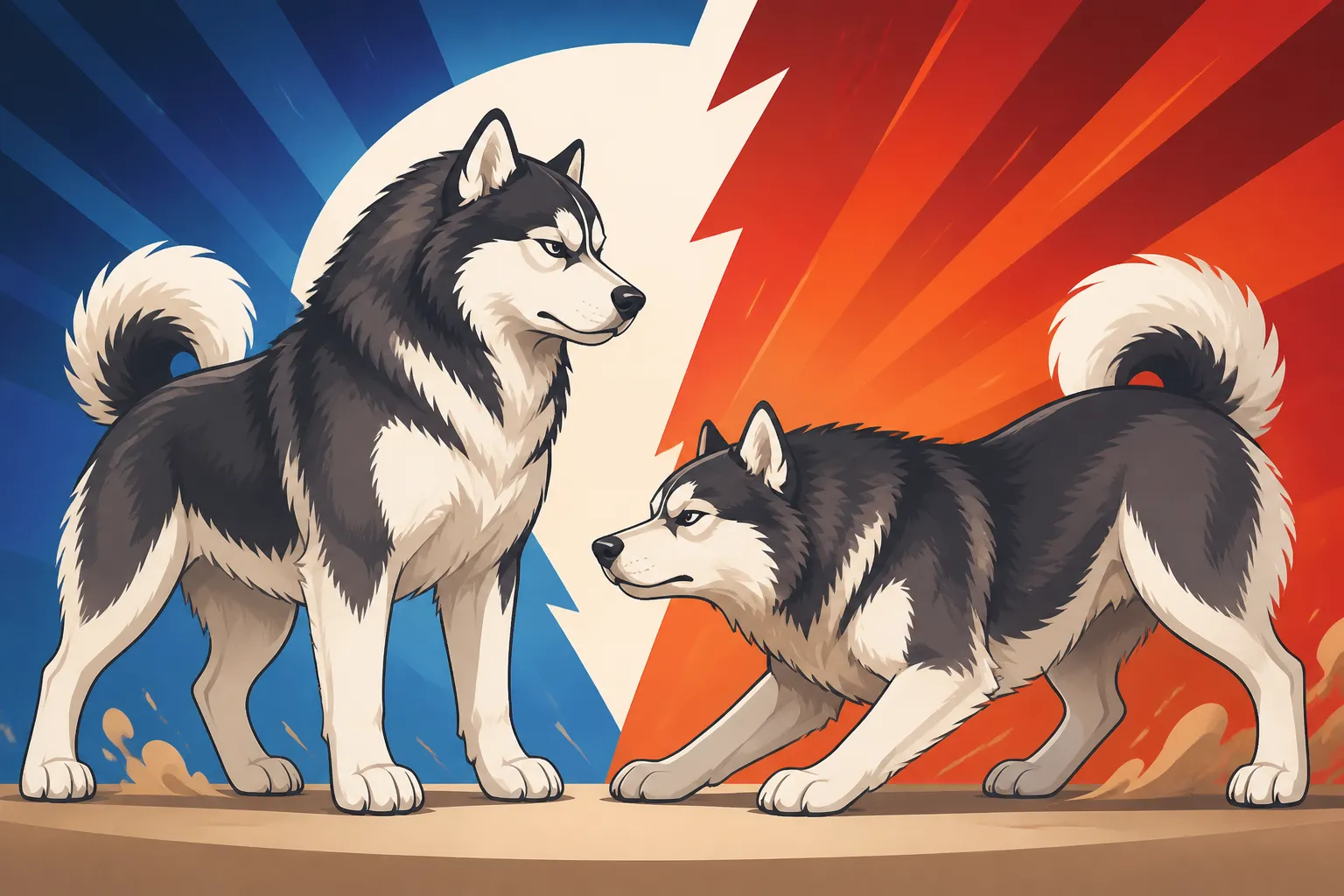
You might notice your male Malamutes engaging in behaviors that seem innocuous at first glance. Perhaps one dog will try to block the other from moving through a doorway, or they might engage in "staring contests" where one dog holds eye contact for just a moment too long. These are not necessarily acts of aggression, but rather tests of will and assertions of presence. A stiff body, a tail held high or low in a specific way, ears flattened or turned, or even a slow, deliberate approach can all be part of this silent negotiation.
One common scenario involves two males meeting in a narrow hallway. Instead of one politely backing up, they might both hold their ground, stiffen their bodies, and try to make themselves appear larger. Sometimes, one will simply sniff the other's rear end for an extended period, which can be a form of social pressure. These standoffs, if unresolved, can quickly escalate, so it's important to interrupt them with a cheerful distraction or by physically guiding one dog away. Early intervention here teaches them that you are the one who dictates movement and access.
Resource Guarding and Possession
Resource guarding is a very clear and common manifestation of rank testing, and it's something many Malamute owners grapple with. This isn't just about food bowls, although that's often the most obvious. It can extend to favorite toys, prime sleeping spots, a particular human's attention, or even a patch of sunny carpet. One male might growl or snap if the other approaches his cherished item, even if he wasn't actively using it. It's the principle of possession that matters.
For example, imagine one Malamute has a prized elk antler. Even if he’s done chewing, he might suddenly become possessive if the other male shows even a passing interest. This can look like a low growl, a stiffening of the body over the item, or even a quick snap in the air. Ignoring these signs can lead to more serious altercations. It's vital to teach both dogs that all resources ultimately belong to you, and you are the one who grants access. This might involve trading valuable items for treats or removing high-value items when both dogs are together. Products found on Amazon can be useful here, like multiple identical durable toys, to help reduce competition.
When Things Escalate: Confrontation and Conflict
Sometimes, despite your best efforts, the subtle cues are missed, or the dogs push past them into more overt displays of conflict. It's a terrifying experience for any owner to witness, and it's essential to understand the nuances between rough play and genuine aggression, and how to manage escalating situations safely.
The Line Between Play and Real Aggression
Malamutes are known for their rough-and-tumble play. They often body-slam, chase, mouth, and pin each other, accompanied by loud growls and barks that can sound quite aggressive to an outsider. This is normal and part of their breed nature. However, there's a critical difference between intense play and an actual fight for rank. In play, the dogs will often take turns being "on top," they'll pause frequently, their body language will remain fluid and relaxed (even if boisterous), and they typically disengage easily. Their mouths might be open, but their bites are inhibited.
True aggression or rank-based conflict, however, will show different signs. The body language becomes very stiff and rigid. Growls are deeper, more guttural, and sustained. Snaps are sharper and less inhibited. One dog might actively try to pin the other down and prevent him from getting up, or might stand over him for an extended period without the usual breaks in play. The fight feels less like a game and more like a focused struggle. If you see sustained attempts to injure, bites that break skin, or one dog refusing to back down despite clear signals of submission from the other, you're looking at something more serious. It's a good idea to understand How Common Dog Aggression Is in Alaskan Malamutes to better prepare yourself.
Managing Intense Interactions
If a confrontation starts, your immediate goal is to safely separate the dogs without getting hurt yourself. Never put your hands directly into a dog fight. Loud noises, a barrier like a piece of plywood, or even a strong stream of water from a hose can sometimes be enough to break it up. Once separated, keep them apart until everyone has calmed down. This might mean crating one dog in a separate room, or taking one outside. The key is to prevent repeated incidents.
Management is key, and it often means avoiding situations that trigger conflict. This might include feeding dogs in separate rooms, ensuring high-value treats or toys are only given when dogs are crated separately, and supervising all interactions, especially in tight spaces. Leashes and harnesses, even indoors, can be valuable tools for quick intervention. For managing training and behavior effectively, a program like BAXTER & Bella offers a wealth of resources that can help you with structured approaches to multi-dog households and impulse control.
The Role of Neutering in Male Malamute Dynamics
The question of whether to neuter male Malamutes, and at what age, often comes up when discussing inter-male aggression. For some breeds and individuals, neutering can reduce certain types of male-on-male aggression, particularly those driven by testosterone and competition over females (even when females aren't present). However, it's not a magic bullet, especially for aggression that's rooted in social learning, fear, or established rank dynamics.
In Malamutes, who are known for their strong pack instincts and potential for same-sex aggression, the impact of neutering can be variable. Some owners report a decrease in territorial marking and some forms of posturing, while others see no change in established aggressive behaviors. Neutering too early, before a dog has fully matured, can sometimes even lead to other behavioral issues. It's a decision best made in consultation with your veterinarian and an experienced Malamute breeder or behaviorist, weighing the pros and cons for your specific dogs and household dynamics. Understanding How a Malamute's Appetite Changes After Neutering is one aspect, but behavioral changes are far more complex.
Strategies for Peaceful Coexistence
Once you understand the underlying dynamics and recognize the signs, the next step is implementing effective strategies to encourage peace and prevent conflicts. It's about proactive management and clear, consistent leadership from you, the human.
Structured Routines and Clear Leadership
Dogs thrive on predictability, and Malamutes, with their intelligent and independent nature, particularly benefit from clear structure. Establishing a consistent daily routine can significantly reduce anxiety and competition. This means feeding at the same times, walking at the same times, and having designated areas for rest. When you provide structure, you are asserting yourself as the stable, reliable leader, which helps the dogs feel secure in their environment and reduces their perceived need to assert their own rank.
Beyond routine, consistent rules are paramount. Who goes through the door first? Who eats first? Who gets attention first? You decide, not them. By consistently enforcing these decisions, you teach them that you control resources and access, removing the need for them to fight over it. Training each dog individually, even if it's just for five minutes a day, reinforces your bond with them and their understanding of your expectations. Consider using a training program like BAXTER & Bella for consistent and positive reinforcement methods that build a strong foundation.
Separate Resources and Spaces
This is perhaps one of the most practical and effective strategies for managing two male Malamutes who are working out rank, or even those who generally get along but need their own space. Ensure each dog has his own set of resources: separate food bowls, water bowls, beds, crates, and a variety of toys. When feeding, feed them in separate rooms or crates to eliminate any potential for resource guarding. This removes the direct competition that often fuels rank disputes.
Creating separate spaces where each dog can retreat and feel safe is equally important. This could be individual crates, designated "chill out" rooms, or even simply ensuring that their preferred sleeping spots are not near each other. If one dog needs a break from the other, he should have a place to go without being followed or harassed. This allows them to decompress and prevents minor irritations from escalating into bigger issues. You might even consider having two separate, secure yards if space allows. This can greatly alleviate tension.
Professional Intervention and Management Tools
Sometimes, despite your best efforts, managing inter-male Malamute dynamics can feel overwhelming. This is where seeking professional help is not a sign of failure, but a wise decision. A certified professional dog trainer or a veterinary behaviorist specializing in large, strong-willed breeds like Malamutes can provide invaluable insights and tailored strategies. They can observe your dogs' interactions, identify triggers you might be missing, and help you implement a behavior modification plan.
In the interim, management tools can be lifesavers. Long lines or drag leashes (lightweight leashes left on the dog while supervised) can allow you to safely interrupt undesirable behaviors without direct physical intervention. Muzzles, especially basket muzzles, can be introduced as a safety measure during supervised interactions, allowing the dogs to communicate without the risk of injury. Ensure any muzzles are introduced positively and dogs are comfortable wearing them. Investing in high-quality, durable equipment through retailers like Amazon is always a good idea when dealing with powerful breeds. Remember, for breeds with strong instincts, sometimes Why Force Fails on an Alaskan Malamute is a critical lesson to learn, so positive, consistent training is paramount.
Long-Term Management and Realistic Expectations
Living with two male Alaskan Malamutes, especially those prone to same-sex aggression, requires a long-term commitment to management. It's not about "fixing" them, but about creating an environment where they can coexist safely and happily, even if that means they never become best friends.
Understanding the "New Normal"
It’s crucial to adjust your expectations. While some male Malamute pairs will truly bond and become inseparable, many will achieve a state of polite coexistence rather than deep friendship. This "new normal" might mean supervised interactions, separate feeding, or even never leaving them unsupervised when high-value items are present. It might also mean rotating which dog gets individual time with you. This isn't a failure on your part; it's recognizing and respecting the inherent nature of these powerful, independent dogs.
For instance, you might find that your two males can happily share a walk on a dual leash, but a game of tug-of-war in the living room is off-limits. Or perhaps they tolerate each other perfectly well in the yard, but resource guarding becomes an issue with a new chew toy. Understanding and accepting these boundaries for your specific dogs will reduce your stress and prevent potential conflicts. It's about finding the balance that works for your household and being vigilant. You might reflect on Why Malamutes Fight Dogs of the Same Sex to better frame your expectations.
When One Male Is Enough
There are times when, despite every effort, the conflict between two male Malamutes simply cannot be safely managed, or the stress on the dogs (and you) becomes too great. In such heartbreaking situations, the most responsible and humane decision might be to rehome one of the dogs. This is a difficult choice, but sometimes, for the well-being of all involved, it's necessary. It's never a reflection of your failure as an owner, but rather an acknowledgment that some personalities, especially within a breed with strong inherent traits, are just not compatible in the same home.
Before reaching this point, ensure you’ve exhausted all avenues, including professional behavioral consultation. But if you're constantly living in fear of a fight, if one or both dogs are perpetually stressed, or if their quality of life is severely impacted, it's time to consider the difficult reality. The goal is a peaceful home for everyone, canine and human alike. Whether an Alaskan Malamute Should Be an Only Dog is a valid question for many owners.
| Sign of Rank Testing | Subtle Cues | Overt Cues |
|---|---|---|
| Body Language | Stiff posture, raised hackles, direct stare, tail carried high/low | Hard stare, growling, snapping, baring teeth, rigid stance, lunging |
| Movement | Blocking doorways, cutting off pathways, leaning into the other dog | Actively pinning, chasing, preventing escape, initiating physical contact forcefully |
| Vocalizations | Low, rumbling growl (sometimes barely audible), soft grumble | Deep, sustained growling, barking (aggressive tone), snarling, yelping (from submission) |
| Resource Guarding | Freezing over object, hovering near food bowl, turning head away from approaching dog, subtle lip curl | Growling, snapping, standing over object, physically pushing other dog away, biting if challenged |
| Interaction Style | Avoiding eye contact after a challenge, exaggerated ignoring, mounting (as a test) | Escalated mounting with intent to dominate, prolonged standing over, intense stares without breaks |
Disclaimer
This article is for general informational purposes only and does not constitute professional advice. Laws, prices and regulations vary by location and change over time. Consult a qualified professional for guidance on your specific situation.