The Risk an Alaskan Malamute Poses to Cats
Bringing an Alaskan Malamute into a home that already cherishes a feline friend can stir up a lot of anxiety and genuine concern for any pet owner. You've heard the stories, you know the breed's history, and the fear that your powerful, prey-driven companion might see your beloved cat as just another woodland creature is a very real, very valid one. This comprehensive guide will deeply explore the inherent risks associated with Alaskan Malamutes and cats, dissecting the nuances of their interactions and providing realistic, actionable strategies to manage this often-challenging cohabitation.
Understanding the Malamute's Instinctual Prey Drive
The Alaskan Malamute is a magnificent breed, but to truly understand their potential interactions with smaller animals like cats, you must first grasp the depth of their ancestral heritage. These dogs weren't just bred to pull sleds; they were indispensable partners to the Mahlemut people of the Arctic, assisting in hunts for sustenance.
The Mahlemut's Hunting Heritage
Imagine the harsh, unforgiving Alaskan landscape. Survival depended on cunning, strength, and an unwavering drive. The Mahlemut people relied on their dogs, the ancestors of today's Alaskan Malamute, to help track and bring down everything from seals to even large game like bears. This wasn't a casual pastime; it was life or death. These dogs were selected for their incredible physical prowess, endurance, and, critically, their strong prey drive. They were built to pursue, catch, and hold. This deep-seated instinct isn't something that disappears with domestication or a comfortable suburban life. It's woven into the very fabric of their being, a genetic blueprint passed down through generations. You can learn more about this powerful history in A Malamute Was Bred to Hunt Bears and It Has Not Forgotten.
What "Prey Drive" Really Means for a Malamute
When we talk about prey drive in an Alaskan Malamute, we're not talking about aggression in the typical sense – an intent to harm out of malice or fear. Instead, it's a hardwired sequence of behaviors: searching, stalking, chasing, catching, and killing. For a Malamute, a cat's quick, darting movements, its size, its soft fur, and even its characteristic scurry can trigger this ancient sequence. It's an overwhelming, instinctual response, not a conscious choice. Picture a Malamute seeing a squirrel dart across the yard; that intense focus, the sudden burst of speed, the desire to follow and catch – that's prey drive in action. When that squirrel is replaced by a cat in a confined space, the stakes become incredibly high. How Strong a Malamute's Prey Drive Is provides further insight into the intensity of this instinct.
Why Cats Are a Unique Trigger
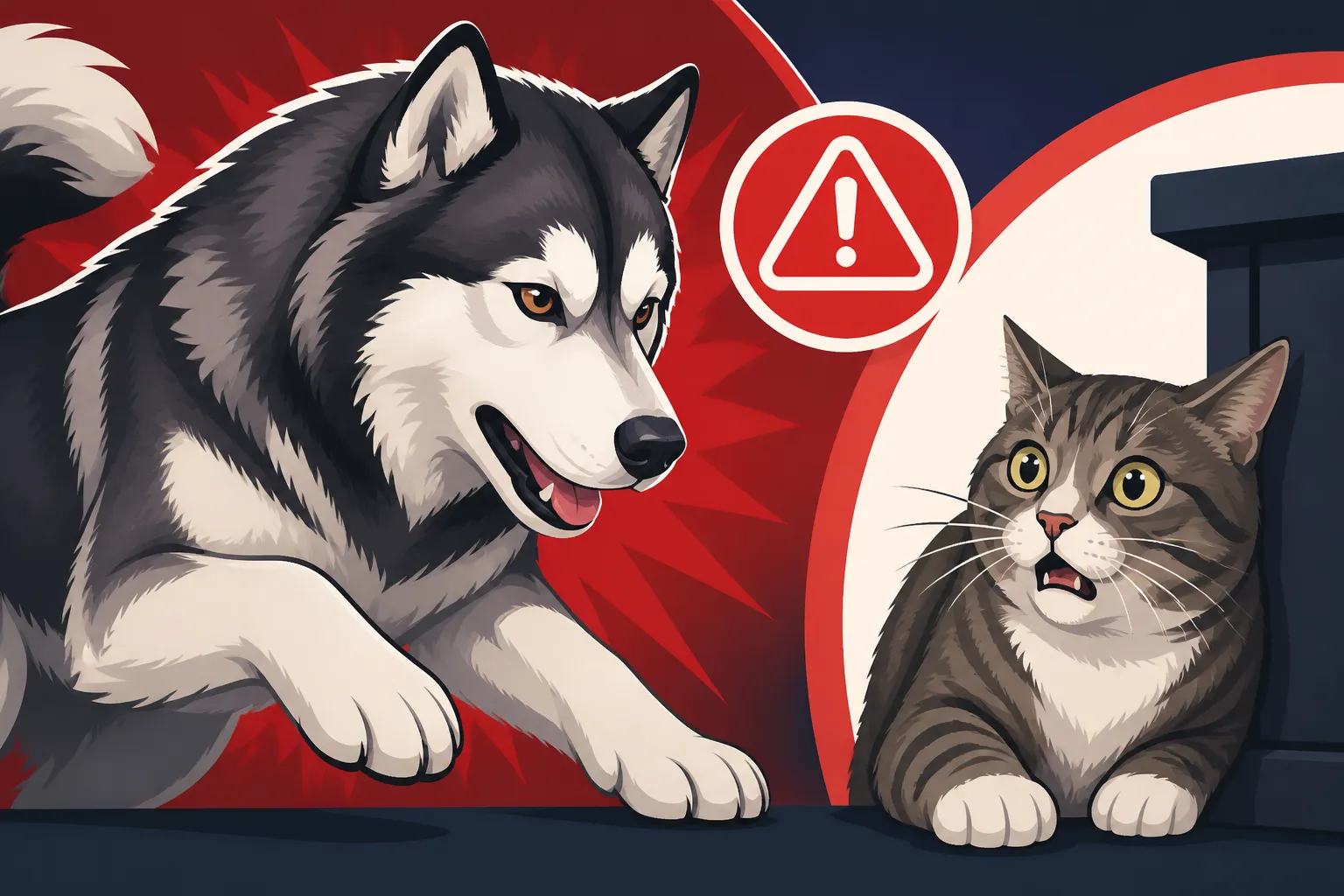
Cats, unfortunately, check almost every box on a Malamute's "prey" list. They are typically smaller than the dog, their movements are often quick and erratic, and their natural response to a perceived threat is to run or flee. This fleeing behavior, while completely natural for a cat, is precisely what ignites and fuels the chase aspect of a Malamute's prey drive. For a Malamute, a running cat isn't a beloved family member; it's a target, a game, an instinctual challenge. This isn't about the cat doing anything "wrong"; it's about the fundamental difference in species and the Malamute's powerful genetic programming. Understanding What an Alaskan Malamute Was Bred to Hunt truly highlights why this dynamic exists.
Assessing the Risk: Not All Malamutes Are Created Equal
While the inherent prey drive is a breed characteristic, the level of risk an individual Malamute poses to a cat can vary based on several factors. It's crucial not to generalize but to assess your specific dog, your specific cat, and your living situation with utmost honesty.
The "Raised with Cats" Myth: A Dangerous Assumption
Many owners hold onto the hope that if a Malamute puppy is raised with cats, it will automatically view them as family and never pose a threat. While early, positive exposure is undeniably beneficial for socialization, it's a dangerous myth to believe it completely overrides deep-seated instinct. A Malamute puppy might tolerate a cat, even play gently, because its prey drive hasn't fully matured, or because it's still learning social boundaries. However, as the Malamute enters adolescence (around 10-18 months) and reaches adulthood, those powerful instincts can kick in with full force. A cat that was once a playmate can suddenly become a target. How Safe a Malamute Raised With a Cat Is delves into the complexities of this relationship.
Individual Temperament and Training: Helpful, Not a Cure
Every Malamute is an individual. Some may naturally have a lower prey drive than others due to genetics or early life experiences. Some may be more amenable to training and management protocols. Owners with extensive experience in positive reinforcement and managing strong-willed, intelligent breeds might achieve a higher degree of control. However, it's vital to manage expectations. Training can provide impulse control and teach alternative behaviors (like looking at you instead of the cat), but it rarely, if ever, completely extinguishes the underlying prey drive. It's about diligent, consistent management for the dog's entire life, not a quick fix.
Introducing a Malamute Puppy vs. an Adult: A Window of Opportunity, Not a Guarantee
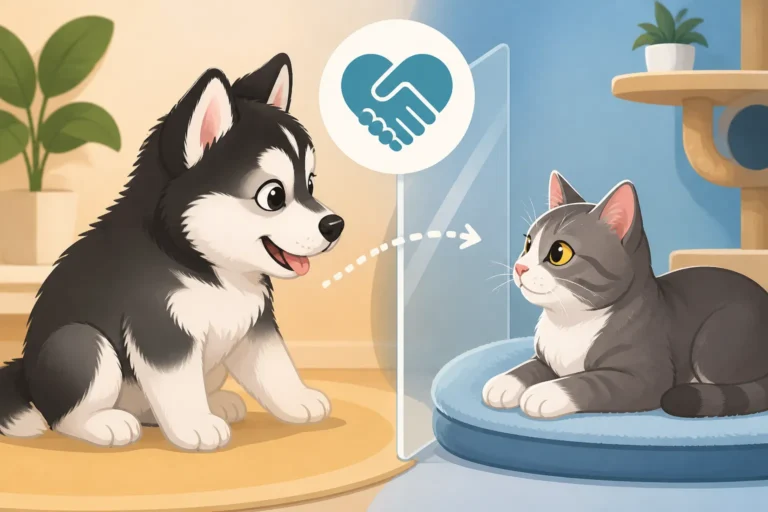
Introducing a Malamute puppy to an existing cat often presents a slightly easier scenario than bringing an adult Malamute into a multi-cat household. Puppies are generally more adaptable and impressionable. They're also less physically capable of causing serious harm. This "puppy phase" offers a crucial window for careful, highly supervised introductions where the cat can safely assert itself, and the puppy learns respectful boundaries. However, the caveat remains: the puppy will grow into a powerful adult. The foundation laid during puppyhood must be continuously reinforced with strict management and training. How to Introduce a Malamute Puppy to a Cat offers detailed steps for this delicate process.
| Factor | Lower Risk Scenario | Higher Risk Scenario |
|---|---|---|
| Malamute's Age | Puppy (under 6 months) with strict supervision | Adolescent or Adult Malamute |
| Malamute's History | Raised from birth with current cats, well-socialized | Unknown history, rescued adult, no cat exposure |
| Cat's Personality | Confident, assertive, stands its ground, used to dogs | Shy, skittish, prone to fleeing, elderly, or very young |
| Owner Experience | Experienced with large, high-prey-drive breeds, consistent | First-time large dog owner, inconsistent training |
| Home Environment | Large, multiple safe zones for cat, secure enclosures | Small space, open plan, no dedicated cat escape routes |
| Training/Management | Consistent positive reinforcement, excellent impulse control | Lacks impulse control, inconsistent supervision |
The Age Factor: Puppy vs. Adolescent Malamute
The change in a Malamute's behavior as it matures is profound. A cute, fluffy Malamute puppy might view a cat with curiosity, maybe even a bit of playful clumsiness. But around the 10-18 month mark, the "teenage" phase hits. This is often when a Malamute begins to test boundaries, exert its independence, and when its inherent drives, including prey drive, can fully manifest. What was once harmless swatting or sniffing might escalate to chasing with genuine intent. It's a critical time for continued vigilance and reinforcement of established rules. The Adolescent Malamute That Rewrites the Rules at Fourteen Months further explains this developmental stage. Even if a Malamute has grown up with cats, this adolescent period is often where problems truly begin, and owners can be caught off guard.
Strategies for Managing Malamutes and Cats
Given the Malamute's strong instincts, effective management isn't just about training; it's about creating an environment where both animals can live safely and without undue stress. This often means living with vigilance and strict protocols for their entire lives together.
Absolute Separation is Key: Crate and Rotate
The cornerstone of successful, safe cohabitation is absolute separation when you cannot actively supervise. This is not optional; it’s fundamental. Your Malamute should never be left alone with your cat, even for a few minutes. This applies whether you're stepping out for groceries, going to bed, or even just leaving the room for a quick errand.
This strategy often involves a "crate and rotate" system. When the Malamute is out and about in supervised areas, the cat has its own safe space, perhaps a cat-proof room with a tall baby gate it can jump over, or a cattery. When the Malamute needs to be contained – for sleeping, when you're out, or when the cat wants to roam freely – a sturdy, escape-proof crate is essential. For large, powerful dogs like Malamutes, look for heavy-duty metal crates, possibly even those designed for escape artists, which can be found on platforms like Amazon. Ensure the cat has plenty of vertical space—cat trees, shelves, and perches—where it can escape to safety and observe without feeling trapped or threatened. Physical barriers like baby gates (especially extra-tall ones) can help divide spaces, allowing cats to navigate freely while restricting the Malamute.
Management, Not Cure: Realistic Expectations
It's crucial to understand that with a Malamute, you are managing a powerful instinct, not curing a behavioral problem. Prey drive isn't "bad behavior" that can be trained out; it's a natural, deep-seated drive. This means your efforts will focus on:
- Prevention: Creating environments where the Malamute cannot act on its prey drive towards the cat.
- Redirection: Teaching your Malamute to focus on appropriate outlets for its energy and instincts (e.g., specific toys, training exercises) rather than the cat.
- Impulse Control: Building strong obedience cues that allow you to interrupt and redirect your Malamute's attention before it escalates towards the cat.
Accepting this reality will save you a lot of frustration and help you implement sustainable strategies. You are signing up for a lifetime of proactive management, not a short-term training course.
Leash and Muzzle Training: Essential Safety Tools
Even in a seemingly calm household, a Malamute with a known prey drive towards cats should always be on a leash when sharing space with the cat, even if you are present. This allows you to immediately interrupt any unwanted behavior and guide your Malamute away. A strong, non-retractable leash and a comfortable, secure harness (not just a collar) are vital.
Furthermore, muzzle training is not a punishment; it is a critical safety tool. A well-fitting basket muzzle allows your Malamute to pant, drink, and even take treats, but prevents bites. Every Malamute owner, especially those with multi-species households, should invest time in positive muzzle training. Introduce the muzzle gradually with high-value treats, making it a positive experience. This is especially true when introducing an adult Malamute to a cat. Consider products from Amazon that are well-reviewed for comfort and security. You'll find more information on this essential skill in Why Every Malamute Should Be Muzzle Trained.
High-Value Rewards and Counter-Conditioning
Positive reinforcement is the only effective way to train an Alaskan Malamute. They are intelligent but notoriously independent and will shut down if harsh methods are used. When working on impulse control around your cat, use the highest value treats imaginable – cooked chicken, cheese, hot dogs. The goal is to create a positive association: "When the cat is present, amazing things happen to me (treats!), so I should focus on my human, not the cat."
Counter-conditioning involves changing your Malamute's emotional response to the cat. Instead of the cat being a trigger for chase, you want the cat's presence to predict something good (like food or praise) from you. This needs to be done slowly, safely, and from a distance where your Malamute is under threshold (not overly excited). A positive reinforcement training program, like those offered by BAXTER & Bella, can provide structured guidance on these techniques, although specific cat-prey drive scenarios may require tailored advice from a professional behaviorist.
Providing Outlets for Prey Drive and Mental Enrichment
Since you can't eliminate prey drive, you must provide safe, appropriate outlets for it. This can actually lessen the drive directed at your cat because the Malamute's needs are being met elsewhere.
- Flirt Poles: These are fantastic for channeling chasing and catching instincts. A flirt pole is a long stick with a toy or lure attached to a string at the end. You can whip it around, encouraging your Malamute to chase and "catch" the toy, simulating a hunt.
- Interactive Toys: Durable puzzle toys, chew toys, and items like Kongs stuffed with frozen treats can keep their minds engaged. Again, Amazon offers a vast selection of sturdy, Malamute-proof toys.
- Scent Work and Tracking: Malamutes have excellent noses. Engaging them in scent games where they find hidden treats or track scents can be incredibly fulfilling and mentally tiring.
- Weight Pull or Sledding: This is what Malamutes were bred for! Giving them a job that involves pulling, even recreational, provides immense physical and mental satisfaction and fulfills their deep-seated desire to work. Pulling Is the Only Job an Alaskan Malamute Really Wants delves into this.
A tired Malamute, both physically and mentally, is generally a less problematic Malamute. Consistent, high-quality exercise and enrichment are non-negotiable for success in a multi-species home.
When Coexistence Isn't Possible
Despite your best efforts, sometimes the risk is simply too high, and acknowledging this difficult truth is essential for the safety and well-being of all animals involved.
Recognizing Unacceptable Risk
There are clear signs that coexistence, even with stringent management, might be untenable:
- Direct Bites or Attacks: Any instance where the Malamute actually bites or injures the cat, even if it seems "minor," is a huge red flag. This indicates the prey drive has overcome all inhibitions.
- Relentless Stalking and Obsession: If your Malamute is constantly staring at the cat, exhibiting intense stalking behaviors, and cannot be easily redirected, the risk is severe. This isn't just curiosity; it's predatory focus.
- Escalating Behavior: If the Malamute's behavior towards the cat is getting worse over time, despite your interventions, it indicates a deepening problem.
- Cat's Chronic Stress: Observe your cat. Is it constantly hiding, showing signs of stress like excessive grooming, loss of appetite, or inappropriate urination? A cat living in fear is not truly living. An Alaskan Malamute in a Home With Cats or Small Dogs discusses these dynamics further.
If these behaviors are present, you must be prepared to make incredibly difficult decisions.
The Hard Truth of Rehoming
No one wants to consider rehoming a beloved pet, but sometimes, for the safety of both animals, it is the only responsible choice. This is not a failure on your part, but a courageous act of prioritizing safety. If you cannot provide a secure environment where your cat is genuinely safe and your Malamute's instincts are safely managed, then rehoming one of the animals to a more suitable environment becomes a moral imperative. This might mean finding a cat-free home for your Malamute or finding a dog-free home for your cat. This decision weighs heavily on owners, but sometimes it's the kindest option for everyone. Considerations like Whether an Alaskan Malamute Should Be an Only Dog can guide this thought process.
Seeking Professional Help
If you're struggling to manage the relationship between your Malamute and cat, or if you're seeing concerning behaviors, do not hesitate to seek professional help immediately. Look for a certified professional dog trainer or, even better, a veterinary behaviorist who specializes in predatory behavior. These professionals can conduct an in-depth assessment of your specific situation, help you understand the nuances of your Malamute's behavior, and develop a tailored management and training plan. They can provide unbiased insights and equip you with the advanced skills needed to mitigate risk, or confirm when separation is the only truly safe path forward. Resources like BAXTER & Bella can offer foundational training knowledge, but severe prey drive issues often require in-person, specialized expertise.
Disclaimer
This article is for general informational purposes only and does not constitute professional advice. Laws, prices and regulations vary by location and change over time. Consult a qualified professional for guidance on your specific situation.