What a Malamute Does to Poultry
Bringing an Alaskan Malamute into a home with backyard chickens, ducks, or other poultry can feel like a constant battle against instinct, a frustrating dance between your beloved companion and your feathered friends. You want them all to coexist peacefully, but the reality is often far more complicated, and it’s heart-wrenching when a situation goes wrong. This guide aims to shed light on exactly what makes Malamutes so dangerous to poultry and offers realistic strategies for managing this deeply ingrained behavior.
Understanding the Malamute's Instinctual Drive
It's easy to look at your Malamute, curled up peacefully on the rug, and forget the millennia of selective breeding that went into making them. These aren't just big, fluffy dogs; they are powerful, ancient working animals whose very survival depended on their ability to hunt and provide. When you introduce small, fast-moving, and often noisy prey animals like poultry into their environment, you're tapping directly into that ancestral hardwiring.
The Ancient Hunter in Your Backyard
The Alaskan Malamute was developed by the Mahlemut people of Alaska's Kotzebue Sound for a singular purpose: to pull heavy loads over vast distances in extreme cold. But alongside their freighting duties, they were also formidable hunters. These dogs weren't just chasing squirrels; they were capable of hunting large game, acting as a crucial food source for their human companions. A Malamute Was Bred to Hunt Bears and It Has Not Forgotten. This background means their predatory instincts are incredibly strong, honed over generations to be effective and efficient. They had to be; survival depended on it.
Think about it from their perspective. A chicken scratching in the yard, a duck waddling by, or a turkey gobbling loudly isn't just a pet; it's a moving, scent-laden, sound-making creature that triggers a deeply primal response. It's not about malice or disobedience; it's about instinct. This isn't a behavior they can simply be trained out of in the same way you might teach them to sit or stay. The drive to pursue and catch is an integral part of who they are.
Why Poultry Are Irresistible Targets
Poultry possess a constellation of characteristics that act like a siren call to a Malamute's prey drive. First, their movement: chickens dart, flap, and run in often erratic patterns. Ducks waddle and then suddenly explode into flight or splash. These quick, unpredictable motions are classic triggers for a predator's chase instinct. Second, their sounds: the clucking, squawking, gobbling, and honking are all high-pitched and attention-grabbing. A startled chicken's alarm call is, to a Malamute, an invitation to investigate.
Third, their size: most poultry, even larger breeds, are still smaller than an adult Malamute, making them perceived as manageable prey. A Malamute's prey drive is incredibly strong, and unfortunately, chickens, ducks, and other backyard birds fit perfectly into the "small, chaseable, catchable animal" category that their instincts are programmed to hunt. How Strong a Malamute's Prey Drive Is. It's a combination that, for a Malamute, is almost impossible to ignore. Their senses are bombarded with cues that scream "prey," making resistance a monumental task for even the most well-behaved dog.
The Reality of a Malamute and Poultry Encounters
Many owners hope that their Malamute, if introduced carefully, will learn to tolerate or even ignore poultry. The harsh reality is that this rarely happens. Malamutes are not generally "mellow" when it comes to prey, and an encounter can escalate from curiosity to a kill in mere seconds. It's a sobering truth, but one that every Malamute owner with poultry must confront.
More Than Just "Chasing" – The Predatory Sequence
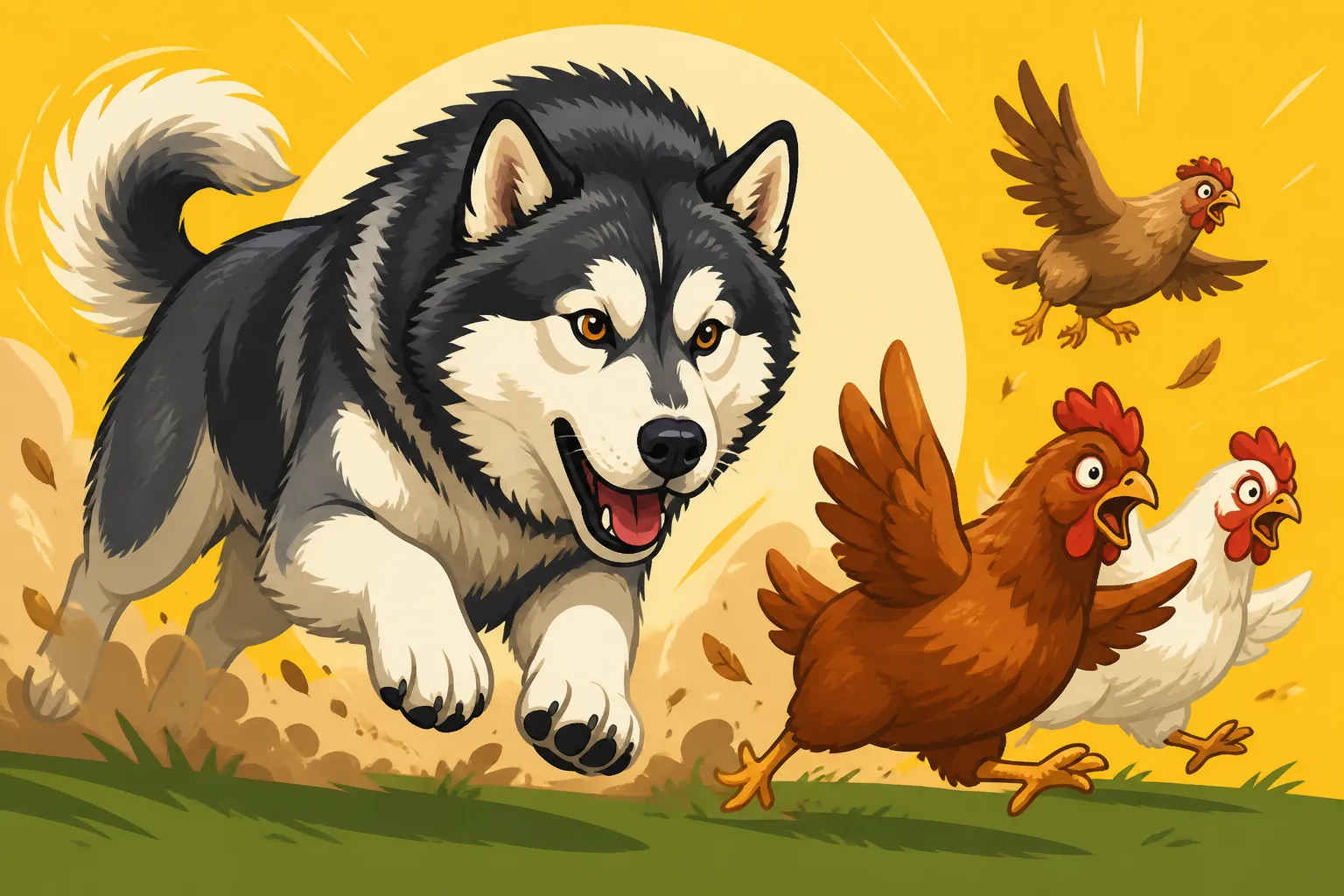
When a Malamute encounters poultry, they don't just "chase" in a playful way. They engage in what's known as the predatory sequence, which is a hardwired chain of behaviors that often culminates in a kill. This sequence typically involves: orienting (noticing the prey), eye (fixating), chase, grab-bite, kill-bite, and sometimes dissect and consume. For a Malamute, this sequence can unfold with terrifying speed and efficiency. They are incredibly powerful, and a single shake can be fatal for a small bird. It's not about aggression in the defensive sense; it's about a highly efficient hunting drive.
This isn't your Malamute trying to be "mean" or "dominant"; it's them acting precisely as they were bred to do. What an Alaskan Malamute Does to Small Animals. Understanding this is crucial, because it helps you realize that punishing them for fulfilling a deeply ingrained instinct is often ineffective and can damage your bond. Instead, the focus must shift entirely to prevention and management. The moment a Malamute grabs a bird, the outcome is almost invariably tragic.
The Speed and Efficiency of a Malamute Attack
A Malamute can cover ground incredibly fast when motivated by prey drive, despite their powerful, freight-pulling build. What might seem like a brief moment of inattention can lead to utter devastation. A chicken can be caught, killed, and even partially consumed before you can even shout a command, let alone physically intervene. Their strong jaws and neck muscles, designed for holding onto large game or pulling heavy loads, make quick work of a bird's fragile bones and feathers.
It’s not uncommon for a Malamute to kill multiple birds if given the opportunity. The adrenaline of the hunt can be intoxicating, and a single kill can reinforce the behavior, making them even more determined next time. Owners often report finding a scene of complete carnage, not just one or two lost birds, but an entire flock decimated in minutes. The aftermath is heartbreaking, and the feeling of helplessness can be overwhelming.
The Emotional and Financial Toll on Owners
Losing beloved poultry to a Malamute attack is emotionally devastating. Many backyard chicken keepers view their birds as pets, and their sudden, violent loss can feel like losing a family member. There's also the profound guilt of knowing your own dog caused the harm, leading to a complex mix of grief, anger, and frustration. This can strain the relationship between owner and dog, and even between family members if one person is more attached to the birds than the other.
Beyond the emotional impact, there's a significant financial cost. Replacing an entire flock of chickens, ducks, or turkeys, especially rare or heritage breeds, can be expensive. If any birds are only injured, there are veterinary costs to consider, though often the injuries are too severe for recovery. Furthermore, there's the ongoing stress and anxiety of living with the constant threat, always worrying if the security measures are enough, or if a lapse in vigilance will lead to another tragedy. It’s a heavy burden to carry, constantly managing two parts of your life that are inherently at odds.
Mitigation Strategies and Management
Given the Malamute's powerful instincts, mitigation strategies aren't about eliminating prey drive but about managing it through strict prevention. It's about accepting that your Malamute will always see poultry as prey and designing your environment and routines to ensure they never have the opportunity to act on that instinct.
Absolute Separation: The Only Surefire Solution
When it comes to Malamutes and poultry, absolute, physical separation is not just recommended; it's practically mandatory. There is no such thing as "trusting" your Malamute around poultry, no matter how much training they've had or how calm they seem at other times. The prey drive is too deeply ingrained and can surface in an instant. This means robust, inescapable barriers between your Malamute and your birds.
Your yard needs to be a fortress. For the Malamute, this means a fence that is not only tall enough to prevent jumping, but also buried deep enough to deter their innate digging tendencies. Fencing a Yard Against a Malamute That Was Bred to Dig. Malamutes are notorious escape artists; they will test every weakness in your perimeter. For the poultry, a secure coop and run are essential, complete with overhead netting to protect against aerial predators and a buried hardware cloth apron to prevent the Malamute from digging into the run. Remember, Malamutes will dig to stay cool, but they will also dig to get to something interesting on the other side. How Far Down a Malamute Will Dig. Never rely on an "invisible fence" or shock collar system, as these are wholly inadequate against the intense drive of a Malamute chasing prey.
Training for Management, Not Cure
While you can't erase a Malamute's prey drive, you can train them to be more responsive to commands in high-distraction environments. The goal isn't to make them friendly with poultry, but to teach them to disengage and return to you when instructed. Strong obedience cues like "leave it," "drop it," and a rock-solid recall are vital, though it's important to understand that a Malamute's recall can never be considered truly reliable off-leash, especially when prey is involved. Why a Malamute's Recall Cannot Be Trusted.
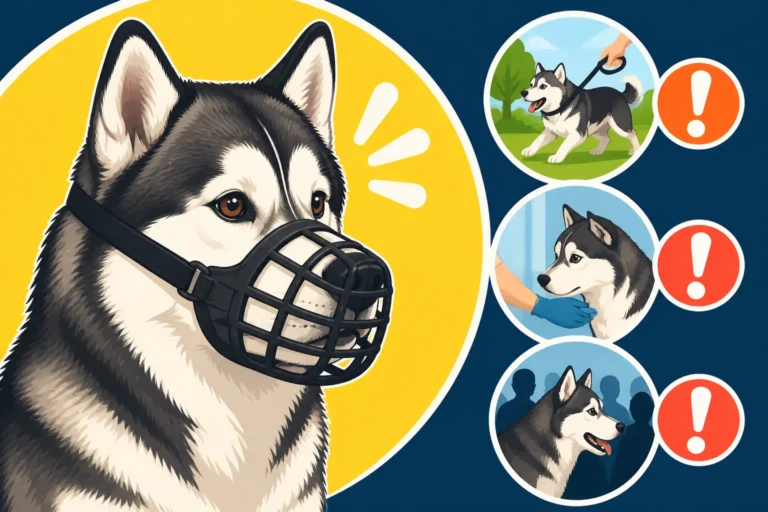
Muzzle training is also an incredibly valuable tool. A comfortable, well-fitting muzzle (not a restrictive basket muzzle, but one that allows panting and drinking) can provide an extra layer of safety during unavoidable supervised outdoor time or in situations where unexpected encounters might occur. Introducing a muzzle positively, perhaps with the help of online resources like BAXTER & Bella's training guides, can make it a neutral or even positive experience for your dog. This way, if your Malamute ever somehow breaches a barrier, the muzzle can buy you precious seconds to intervene and prevent a tragedy.
Creating a Predator-Proof Poultry Enclosure
Since absolute separation is key, designing a truly predator-proof enclosure for your poultry is paramount. This goes beyond just keeping your Malamute out; it's about safeguarding your flock from all potential threats.
Here's a breakdown of what a secure poultry setup might look like:
| Feature | Malamute Prevention | Other Predator Prevention (Bonus) | Materials to Consider (e.g. from Amazon) |
|---|---|---|---|
| Fencing | 6-8 feet tall, rigid, climb-proof. | Taller fencing for coyotes/dogs. | Heavy-gauge welded wire (not chicken wire), chain link. |
| Buried Apron | Hardware cloth or welded wire, 12-18 inches deep, bent outwards at bottom. | Prevents digging predators (foxes, badgers). | Hardware cloth, concrete blocks. |
| Roof/Overhead Cover | Prevents climbing over fence from Malamute's side. | Essential for hawks, owls, raccoons. | Welded wire, netting, solid roof over coop/run. |
| Coop Structure | Solid, locked doors, no Malamute access. | Secure latches, solid construction against raccoons. | Thick wood, heavy-duty latches. |
| Gates/Latches | Double-latching, Malamute-proof (no simple slide bolts). | Secure against intelligent predators. | Carabiners, barrel bolts with secondary clips. |
You might find durable hardware cloth, sturdy fencing panels, and secure latches on Amazon. Investing in high-quality materials from the outset will save you heartache and money in the long run. Remember, a determined Malamute will exploit any weakness.
Living with the Inevitable: Acceptance and Prevention
Ultimately, successfully having both an Alaskan Malamute and poultry in the same household requires a shift in perspective. It means accepting that these two species are fundamentally incompatible when unsupervised and that your role is to act as a diligent guardian, maintaining absolute separation.
The Unwavering Nature of Instinct
It cannot be stressed enough: your Malamute's prey drive is not a behavioral flaw to be corrected, but an intrinsic part of their breed heritage. They are doing exactly what they were designed to do, even if it brings them into conflict with your modern lifestyle. Trying to "cure" this instinct is like trying to train a bird not to fly; it's fighting against nature. Why a Malamute Cannot Be Broken of Chasing.
Embrace this understanding. It takes the pressure off you to make your Malamute into something they're not, and it helps you focus your energy on effective management strategies instead of futile attempts to change their core being. Your Malamute is a magnificent, powerful animal, and that power includes a strong drive to hunt.
Practical Tips for Coexistence (Separate but Equal)
If you are committed to having both a Malamute and poultry, your life will revolve around vigilance and strict routines. Here are some practical tips:
- Never, ever leave them unsupervised: Even for a second. Accidents happen in the blink of an eye.
- Establish separate zones: Your Malamute should have its own secure yard or run, entirely separate from the poultry's area. This means no shared fencing where a paw could reach through or a nose could sniff too closely.
- Rotate outdoor access: If possible, let your Malamute out at different times or in different areas than your poultry. This minimizes chances of them seeing or hearing each other.
- Leash walks only: When your Malamute is outside of its secure area, they should always be on a leash, even in your own fenced yard if poultry are present. This prevents them from making a dash for the coop.
- Muzzle Up: As mentioned, a muzzle can be a lifesaver. Consider it mandatory for any time your Malamute is in an area where poultry might even remotely be accessible, even if you think the barriers are secure. When a Malamute Should Wear a Muzzle.
- Check and Recheck Barriers Daily: Walk your property lines. Look for new dig spots, loose boards, or compromised fencing. Malamutes are constantly looking for escape routes or ways to access interesting things.
- Be Prepared for Accidents: Despite all precautions, accidents can happen. Have a plan for how you would respond if your Malamute got into the poultry run, including safe ways to separate them and steps to take for injured birds.
- Understand Legal Liability: It's important to be aware that as the owner of an animal with high prey drive, you could be liable for damages if your Malamute harms livestock, whether it's your own or a neighbor's. Whether a Malamute Owner Faces Livestock Claims. This extends beyond just your property, so if your Malamute escapes and attacks a neighbor's flock, you could face significant financial and legal consequences. This makes robust containment not just ethical, but legally prudent.
Managing an Alaskan Malamute around poultry is a serious undertaking that demands unwavering dedication to separation and prevention. It’s a challenge, but with proper understanding and rigorous management, it is possible to maintain both cherished pets and a thriving flock, albeit in completely separate worlds.
Disclaimer
This article is for general informational purposes only and does not constitute professional advice. Laws, prices and regulations vary by location and change over time. Consult a qualified professional for guidance on your specific situation.