Giving a Malamute Its Own Digging Pit
If you're an Alaskan Malamute owner, you know the struggle: you lovingly cultivate your yard, only to find it riddled with craters that look like lunar landscapes. It's incredibly frustrating to wake up to a freshly dug hole under your prize-winning rose bush or, worse, along your fence line, signaling a potential escape route. This guide is here to help you understand why your Malamute digs with such fervent dedication and, more importantly, how to channel that powerful instinct into a safe, designated "digging pit" that saves your landscaping and your sanity.
Understanding the Malamute's Innate Drive to Dig
Let's be real, your Malamute isn't digging out of spite. They're not doing it to personally offend your horticultural efforts. Their urge to dig is deeply ingrained, a primal instinct passed down through generations. To truly manage this behavior, we first need to appreciate its origins. A Malamute's Digging Is Not a Problem, It Is the Breed, it's simply who they are.
The Historical Roots of Malamute Digging
Imagine the ancient ancestors of your Alaskan Malamute, living in the harsh, unforgiving Arctic. Life was about survival. Digging was an essential skill, not a hobby. They needed to dig for warmth, creating sheltered dens in snowdrifts to escape blizzards and extreme cold. Conversely, in the slightly warmer months, a cool hollow dug into the earth provided relief from the sun and insulation from ground heat. They were also formidable hunters, and digging was crucial for unearthing rodents, voles, or other small prey hidden beneath snow or frozen soil. Their powerful shoulders and strong nails were perfectly evolved for this purpose. It's not just a cute quirk; it's a testament to their survival in a challenging environment.
Why a Modern Malamute Still Digs
Fast forward to today, and while your Malamute probably isn't hunting lemmings or building snow dens in your backyard, those instincts remain incredibly potent. The genetic blueprint is still there. Many Malamutes dig simply because it feels good – it's an incredibly satisfying physical activity for them. But beyond sheer enjoyment, there are several common triggers:
- Temperature Regulation: Just like their ancestors, Malamutes will dig to create a cool spot in the summer. Their dense double coats, while fantastic for winter, can lead to overheating on warm days. A fresh, cool patch of earth can feel like a godsend to them. Why a Malamute Digs to Stay Cool touches on this perfectly.
- Boredom and Lack of Stimulation: A bored Malamute is a destructive Malamute, and digging is a prime outlet for pent-up energy and mental frustration. If they're not getting enough physical exercise or mental enrichment, their intelligent minds will seek their own entertainment, and digging is often the chosen activity. Why a Bored Malamute Digs is something every owner needs to grasp.
- Prey Drive: Even if you don't see them, small critters like moles, voles, or even insects might be living under your lawn. A Malamute's keen sense of smell can detect these subterranean residents, triggering a hunting response that involves frantic digging.
- Escape Attempts: This is perhaps the most concerning form of digging. If your Malamute is lonely, under-exercised, or simply driven by their inherent wanderlust, they may dig under fences to explore the world beyond. This is why having a secure perimeter is so vital.
Why Traditional "Stop Digging" Methods Often Fail
If you've spent countless hours yelling, filling holes, or even trying various deterrents, you've likely discovered that these methods are often a losing battle. It's not because your Malamute is stubborn (though they certainly can be!); it's because you're fighting against their very nature. Why a Malamute Cannot Be Stopped From Digging is a harsh truth, but an important one.
The Futility of Punishment for Natural Instincts
Imagine trying to punish a bird for flying or a fish for swimming. It just doesn't make sense, and it certainly won't stop the behavior. When you punish a Malamute for digging, especially without offering an acceptable alternative, you're not teaching them not to dig. You're teaching them not to dig in front of you. This often leads to sneaky digging, where they wait until you're not looking, or they become anxious and fearful, which can manifest in other behavioral problems. They simply don't understand why this natural, fulfilling behavior is suddenly wrong. It's confusing and unfair to them. This is where positive reinforcement and redirection, often supported by resources from places like BAXTER & Bella, can make a huge difference, focusing on what you do want them to do.
The Problem with Denial and Frustration
Simply saying "no" to digging doesn't make the drive disappear. It only pushes it underground, sometimes literally. A Malamute with an unmet digging urge will often find less desirable outlets: tearing up carpet, chewing furniture, or even digging at door frames. The frustration builds for both you and your dog. You become angry at the destruction, and they become frustrated that they can't fulfill a fundamental need. This dynamic can erode the trust and bond you share, making other training endeavors more challenging. Instead of trying to eliminate the behavior, we need to manage and redirect it.
Designing and Building Your Malamute's Dedicated Digging Pit
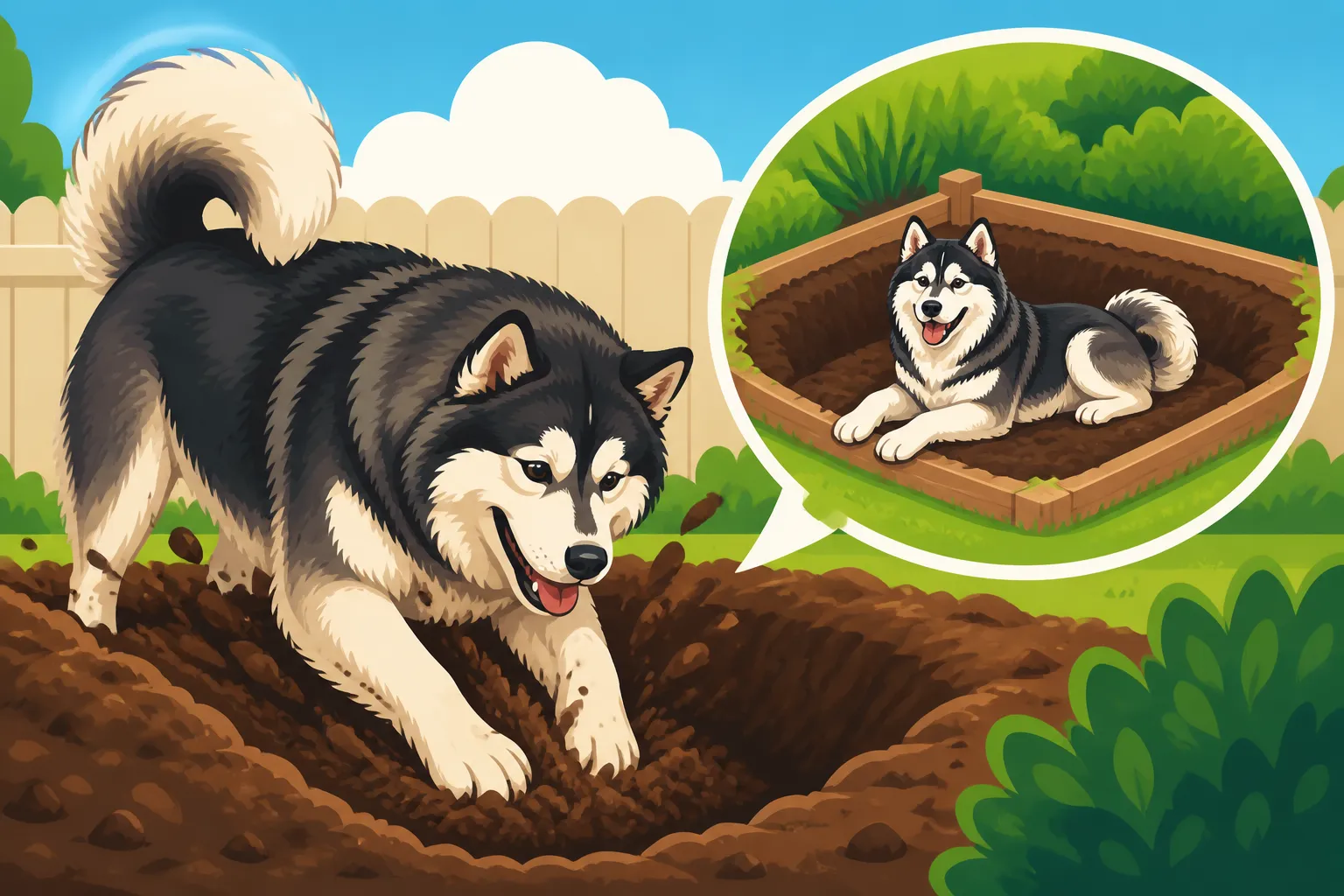
The solution isn't to stop the digging, but to provide a designated, acceptable place for it. This is where the digging pit becomes your best friend. It’s a win-win: your Malamute gets to indulge their natural instinct, and your garden (mostly) stays intact.
Choosing the Right Location and Materials
First things first, pick a spot. Think strategically. You want a location that's accessible to your Malamute but out of the way of your main foot traffic or prize-winning flower beds.
- Shade is Key: Especially if your Malamute digs for cooling, a spot that gets some shade during the hottest parts of the day is ideal. Under a mature tree (if its roots aren't too shallow) or near a fence line that provides afternoon shade can work well.
- Drainage: You don't want a stagnant mud pit. Choose an area that drains reasonably well. If your soil is heavy clay, you might need to add a layer of gravel at the bottom for better drainage.
- Size: This isn't a sandcastle bucket. Malamutes are big dogs with big digging ambitions. Aim for at least 4×4 feet, but larger is always better if you have the space. It should be deep enough for them to really get into it – at least 1-2 feet deep.
- Edging: To define the pit and prevent the contents from spreading too much, consider some sturdy edging. Landscaping timbers, railway sleepers, or large rocks work well. You could even use a child's plastic sandbox as a base if you remove the bottom and fill it appropriately.
- Filling Material: This is crucial. You want something safe and appealing to dig in.
- Sand: Play sand or builder's sand is a popular choice. It's soft, easy to dig, and doesn't get too muddy. It also feels cool. You can find large bags of play sand easily on platforms like Amazon.
- Loose Soil/Compost: A mix of loamy soil and compost can also work. Avoid anything with sharp rocks or chemicals.
- Mixed Materials: Some owners use a mix of sand and a softer soil.
- Avoid: Gravel or pea stone can be hard on their paws and isn't as satisfying to dig in. Fine mulch might contain splinters or dyes that aren't good for them if ingested.
Here's a quick comparison of common digging materials:
| Material | Pros | Cons |
|---|---|---|
| Play Sand | Soft on paws, easy to dig, stays cool | Can track into house, needs occasional topping up |
| Loamy Soil/Compost | Natural, good texture, holds shape | Can get very muddy, heavier to move, may contain critters |
| Mixed Sand & Soil | Combines benefits, good drainage | More effort to create the mix |
Introducing Your Malamute to Its New "Job Site"
Don't just build it and expect them to know what it's for. You need to actively teach them.
- Bury Treasure: This is the most effective trick. While your Malamute isn't watching, bury high-value treats, their favorite chew toy, or a robust tug toy (that they can dig out and play with) just beneath the surface of the sand or soil. Start shallow.
- Lead the Way: Bring your Malamute to the pit, and encourage them to "find it!" with enthusiastic language. You can even start digging with your hands to show them. When they unearth a treasure, praise them lavishly, throw a party! Make it the most exciting thing in the yard.
- Consistency is Key: Repeat this game daily for a few weeks. Every time you catch them digging somewhere they shouldn't, gently redirect them to the pit. Don't scold them, just cheerfully lead them over, and then bury a treat in the pit and encourage them. Remember, Why Force Fails on an Alaskan Malamute.
- Scheduled Digging Time: Consider setting aside specific times for "digging games." This reinforces the idea that this is the designated spot for that activity.
Maintaining the Digging Pit
A neglected digging pit will quickly lose its appeal. Keep it fresh and exciting!
- Replenish Contents: Over time, the sand or soil will get kicked out or settle. Top it up regularly.
- Cleanliness: Remove any waste or debris. While Malamutes are generally clean, you don't want it becoming a potty spot.
- Rotate Treasures: Keep burying new and different toys or treats to maintain novelty. Hide a tough Kong filled with peanut butter, or a durable chew toy that they can enjoy once unearthed.
- Cooling Element: In summer, you can lightly mist the sand with water to enhance its cooling properties, making it even more attractive.
Troubleshooting and Long-Term Success with the Digging Pit
Even with a perfect digging pit, you might find your Malamute occasionally backslides and targets your lawn or fence. This is normal, and it requires ongoing management and a holistic approach.
Redirecting Unwanted Digging
When you catch your Malamute digging where they shouldn't, avoid punishment. Remember, the goal is redirection, not suppression.
- Immediate Interruption (Gentle): A clap or a verbal "uh-oh!" is usually enough to break their concentration. Don't yell or startle them severely.
- Redirect to the Pit: Immediately take them to their digging pit. Have a treat or toy ready to bury, or point out one already hidden. Encourage them to dig there. When they do, praise them enthusiastically.
- Secure Problem Areas: For persistent digging in specific forbidden spots, you might need temporary deterrents. Lay chicken wire flat on the ground (secured so they can't get tangled), place large, heavy stones, or even temporary fencing. For fence-line digging, consider burying the bottom of your fence, as discussed in How Deep a Malamute Fence Must Be Buried, or adding a "L-footer" to prevent them from tunneling out.
- Increase Enrichment Elsewhere: If the unwanted digging persists, it's often a sign that your Malamute needs more mental and physical stimulation. Are they getting enough walks? Are you playing enough interactive games? Do they have enough puzzle toys?
Integrating the Pit into a Holistic Enrichment Plan
The digging pit is a fantastic tool, but it's not a magic bullet. It needs to be part of a broader strategy to meet your Malamute's needs.
- Adequate Exercise: Malamutes need significant daily exercise. Think long walks, jogs, hiking, or even canine sports like The Alaskan Malamute in Skijoring. A tired Malamute is less likely to be a destructive Malamute. What an Alaskan Malamute Needs Every Day delves into this.
- Mental Stimulation: Their intelligent minds need challenges. Incorporate training sessions (even short ones), puzzle toys, scent work, or obedience classes. Consider online resources like those from BAXTER & Bella, which often provide creative ideas for mental enrichment.
- Socialization: Malamutes are social creatures. While they can be particular with other dogs, regular positive interactions, if appropriate for your dog, contribute to overall well-being.
- Chew Opportunities: Provide plenty of appropriate chew toys. Sometimes, a Malamute digs out of an urge to gnaw and destroy, so having a suitable outlet for that can help. Look for durable, Malamute-proof chew toys on Amazon.
- Supervision: Especially during the initial stages or if your Malamute is prone to destructive behavior, supervision in the yard is crucial. Don't just let them out unsupervised for long periods.
- Understand Their "Adolescent Phase": Like human teenagers, young Malamutes (often between 14-24 months) can become particularly challenging. This is when they really start to test boundaries, and destructive behaviors like digging can intensify. Be patient and consistent. The Adolescent Malamute That Rewrites the Rules at Fourteen Months explains this period well.
By providing a designated digging pit and integrating it into a comprehensive plan that meets your Alaskan Malamute's physical and mental needs, you can significantly reduce unwanted digging and foster a happier, more harmonious relationship with your incredible companion.
Disclaimer
This article is for general informational purposes only and does not constitute professional advice. Laws, prices and regulations vary by location and change over time. Consult a qualified professional for guidance on your specific situation.