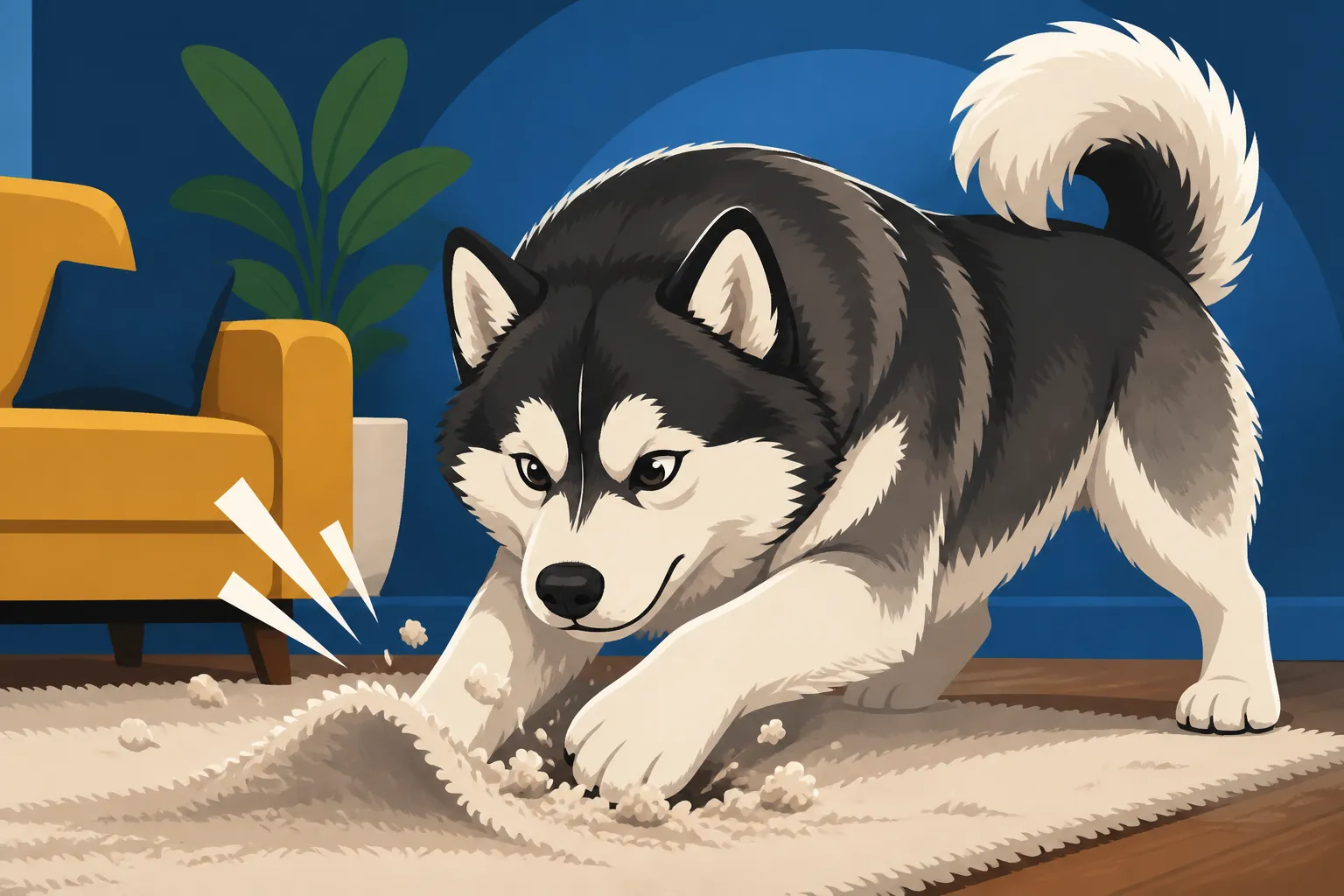
The Malamute That Digs at the Carpet
There’s little that’s quite as disheartening as walking into your living room to find your beautiful Alaskan Malamute, tail wagging innocently, standing triumphantly over a freshly shredded patch of your carpet. It's not just a minor annoyance; it’s a gaping hole in your flooring, a torn-up rug, or a frayed edge that costs real money to repair or replace. This isn't just "bad behavior" in a Malamute; it's a deep-seated instinct surfacing in a modern, often inappropriate, environment. This guide is going to delve into why your majestic northern dog insists on redecorating your home with its paws and teeth, and what realistic, empathetic steps you can take to redirect this powerful, inherent drive away from your beloved floor coverings.
Understanding the Malamute's Innate Drive to Dig
When you bring an Alaskan Malamute into your life, you’re not just getting a dog; you’re inheriting thousands of years of specialized breeding. These magnificent animals were crafted by the Mahlemut people for specific, essential tasks in harsh Arctic conditions. Digging wasn't a cute quirk; it was a matter of survival. Ignoring this foundational aspect of their being means you're setting both yourself and your Malamute up for frustration.
Why Digging is in Their DNA
Imagine living in a world where snow is your blanket, your refrigerator, and sometimes, your only shelter. For the ancestors of our modern Alaskan Malamutes, digging was paramount. They dug dens to escape brutal blizzards, creating insulated pockets to stay warm and safe. They dug to find cached food or to bury leftovers for a later date, a primal form of saving for a rainy (or snowy) day. And yes, they even dug to unearth rodents or other small prey that might be burrowing beneath the surface, satisfying their strong prey drive.
This isn't a behavior that can be "trained out" in the traditional sense, any more than you can train a bird not to fly. It's hardwired, a vestige of their very purpose. When your Malamute starts to dig at your carpet, they're not intentionally being destructive; they're simply responding to an instinctual call that tells them this is what they do. We often chuckle at the sight of a tiny terrier digging, but a powerful Malamute with its large paws and immense strength can utterly demolish a floor in minutes. It's a challenging reality to face when you love these dogs for all their other incredible qualities, but understanding its root is the first step toward managing it. You might want to read more about A Malamute's Digging Is Not a Problem, It Is the Breed.
The Specific Frustrations of Indoor Digging
While outdoor digging in a designated area can be managed, indoor carpet digging presents a unique set of challenges and frustrations. For starters, it's expensive. A few minutes of enthusiastic digging can ruin a carpet, pull up linoleum, or scratch hardwood floors. Then there's the aesthetic damage: ugly, frayed patches that scream "dog owner struggles." But beyond the material costs, there's the emotional toll. You might feel angry, helpless, or even resentful, especially after a long day when all you want is a peaceful home.
It's easy to project human intentions onto our dogs, thinking they're doing it "to spite us" or "because they know it's wrong." But this isn't the case. Your Malamute is likely either bored, stressed, or following a primal urge. They don't understand the monetary value of your Persian rug or the effort you put into maintaining your home. They just feel the urge to dig. This is particularly frustrating because traditional disciplinary methods often backfire with Malamutes, who are intelligent, independent thinkers. Harsh corrections can damage your bond and make the behavior worse, or simply shift it to when you're not around. This cycle of damage and frustration is why we need to approach this problem with patience, understanding, and consistent management strategies.
Common Triggers for Carpet Digging
Pinpointing why your Malamute is digging at the carpet is crucial for finding effective solutions. It's rarely random; there's usually an underlying trigger, even if it seems illogical to us. These triggers often stem from their breed-specific needs and tendencies.
Boredom and Lack of Stimulation
This is perhaps the most common culprit behind destructive behaviors in Alaskan Malamutes, and certainly for carpet digging. These are working dogs, bred for endurance and problem-solving, not for lounging on the couch all day. A Malamute who isn't mentally and physically stimulated will create their own "job," and for many, that job becomes tearing apart your house. If your Malamute isn't getting enough exercise – and we're talking about vigorous, engaging exercise, not just a quick stroll around the block – or mental challenges, that pent-up energy and intelligence needs an outlet.
Think about it: they might pace, whine, or simply start to dig. The act of digging itself is satisfying, engaging their natural instincts and expending energy. It's a physical task that provides mental stimulation, too. They're not being malicious; they're just trying to fulfill a deep-seated need. If your Malamute is left alone for long periods without appropriate enrichment, or if their daily routine lacks variety and challenge, then the carpet becomes an irresistible project. This is especially true for younger Malamutes, who are brimming with energy and curiosity. Considering How Many Hours an Alaskan Malamute Can Be Left can highlight how crucial proper management is.
Anxiety and Stress
Just like humans, dogs can experience anxiety and stress, and these emotions often manifest in destructive ways. For a Malamute, digging can be a self-soothing behavior, a way to cope with uncomfortable feelings. This isn't always obvious to us. It could be separation anxiety when you leave the house, where the digging becomes a frantic attempt to escape or a way to channel their distress. Maybe a new pet or a change in household routine has disrupted their sense of security. Loud noises, unfamiliar visitors, or even just feeling overwhelmed by too much activity can trigger stress.
When a Malamute is anxious, they might also exhibit other behaviors like excessive panting, drooling, pacing, or vocalization. The digging isn't about destroying your home; it's an outward sign of an internal struggle. They might be trying to "burrow" into a safe spot, even if that spot is your living room floor. Understanding these subtle cues is vital, because addressing the underlying anxiety is the only way to truly stop the digging in these cases. Sometimes, even the smallest changes in their environment can trigger a response, so observing when the digging happens can give you clues.
Seeking Comfort or Hiding Treasures
Sometimes, the digging is a more benign, albeit still destructive, behavior rooted in comfort or resource guarding. Malamutes, like many dogs, might "nest" before lying down, pawing at their bedding or the floor to create a more comfortable spot. When this instinct is transferred to the carpet, it can quickly lead to damage. They might be trying to fluff it up, or flatten it out, or simply get comfortable.
Another common reason is the instinct to "cache" valuable items. If your Malamute has a favorite toy, a special treat, or even a bone, they might try to "bury" it for safekeeping. On soft surfaces like carpet, this translates to pawing and pushing, often leading to tears and fraying. They're not trying to ruin your carpet; they're merely attempting to protect their perceived treasures from perceived threats (even if that threat is just you walking by). This behavior is deeply ingrained, recalling their ancestors burying food in the permafrost. Providing appropriate, safe places for them to "bury" or hide their things can sometimes redirect this instinct, but if they are constantly trying to re-bury items in the house, it's a sign that their instincts are overwhelming their environment. For more insights, refer to Whether a Malamute Destroys Carpet.
Practical Strategies to Mitigate Carpet Digging
Dealing with a Malamute that digs at the carpet requires a multi-pronged approach combining environmental management, consistent training, and addressing their fundamental needs. You can't just tell a Malamute "no" and expect it to stop; you have to offer a better alternative.
Environmental Management and Enrichment
The first line of defense is to make digging the carpet less appealing and less possible, while simultaneously providing appropriate outlets for their energy and instincts. This means being proactive about your home environment.
- Restrict Access: If certain rooms or areas are consistently targeted, consider restricting your Malamute's access when unsupervised. Baby gates, closed doors, or even crating for appropriate periods can prevent destructive digging. A crate, when introduced positively, becomes a safe den for your Malamute, preventing them from developing bad habits when you can't watch them.
- Provide Designated Digging Areas: Since you can't eliminate the digging instinct, you must redirect it. An outdoor digging pit, filled with sand or loose soil, is a fantastic solution. Bury toys or treats in it to make it exciting. Your Malamute will learn that this is their place to dig. You can find excellent guides on creating one, for instance, by searching on Amazon for "dog digging pit supplies." Check out Giving an Alaskan Malamute Its Own Digging Pit for more details.
- Increase Mental Stimulation: Malamutes need their brains exercised as much as their bodies. Puzzle toys, interactive feeders, and scent work games can provide hours of engaging activity. Consider durable enrichment toys that require them to think to get a treat, rather than just chewing. Brands like KONG offer robust options that can stand up to a Malamute’s strength. Even short, consistent training sessions using positive reinforcement can make a huge difference in mental fatigue. Think about Whether a Malamute Needs a Job Every Day and how you can apply those principles in your home.
- Boost Physical Exercise: This goes without saying, but an exhausted Malamute is less likely to destroy your home. Ensure they get ample daily exercise, tailored to their age and health. This means long walks, hikes, runs, or even dog sports like carting or sledding if you're inclined. A tired Malamute will be more inclined to sleep peacefully than to excavate your living room floor.
| Strategy | Description | Benefits |
|---|---|---|
| Designated Dig Pit | An outdoor area (sandbox, raised bed) filled with loose soil/sand for digging. | Redirects natural instinct, saves indoor damage, provides entertainment. |
| Puzzle Toys/Interactive Feeders | Toys that dispense food/treats as the dog manipulates them. | Mental stimulation, slows eating, reduces boredom, channels energy positively. |
| Secure Crating/Containment | Using a dog crate or baby gates to limit access to certain areas when unsupervised. | Prevents destructive behavior, provides a safe den, aids in house-training. |
| Increased Exercise | Longer walks, runs, hikes, or engaging dog sports. | Burns physical energy, reduces restlessness, improves overall health and well-being. |
| Durable Chew Toys | High-quality, long-lasting chew toys. | Satisfies chewing instincts, promotes dental health, offers appropriate outlet for oral fixation. |
Training and Redirection Techniques
Once you've managed the environment, the next step is to actively train your Malamute and redirect their inappropriate digging to acceptable behaviors. Positive reinforcement is key here; punishment is rarely effective and can be detrimental.
- "Leave It" and "Drop It" Commands: These commands are invaluable. Teach your Malamute to disengage from something inappropriate ("leave it") and to release an item they're holding ("drop it"). Practice these consistently. If you catch them sniffing or pawing at the carpet, a firm but calm "leave it" followed by an immediate redirection to a more appropriate activity (like a puzzle toy or their digging pit) can be very effective. Reward heavily for success.
- Redirect to Appropriate Chews/Toys: If your Malamute is digging out of boredom or a need for oral stimulation, ensure they have plenty of appropriate chew toys. Offer a variety of textures and challenges. When you see them starting to dig at the carpet, immediately offer a high-value chew toy or a stuffed KONG. Praise them lavishly when they engage with the correct item. For younger pups or those prone to severe destruction, finding a What a Chew Proof Bed for a Malamute Costs might be a consideration to prevent them from destroying bedding first.
- Interruption and Redirection: This isn't punishment, but rather an immediate cessation of the unwanted behavior followed by an offering of a better one. If you see your Malamute digging at the carpet, clap your hands loudly or make a sharp, neutral sound to get their attention. The moment they stop, even for a second, praise them and immediately redirect them to their digging pit, a favorite toy, or an outdoor activity. The goal is to associate stopping the carpet digging with a positive alternative. Remember, Why a Malamute Cannot Be Stopped From Digging means you need to manage and redirect, not eliminate, the instinct.
- Positive Reinforcement for Calm Behavior: Don't just pay attention when your Malamute is doing something wrong. Reward them for being calm and settled on their own bed or in their designated safe space. A simple "good dog" and a treat for lying quietly can go a long way in reinforcing desired behaviors.
Addressing Underlying Issues
Sometimes, carpet digging is a symptom of a deeper problem that needs to be addressed before true progress can be made.
- Rule Out Medical Issues: While less common for digging, any sudden behavioral change warrants a vet check. Pain, discomfort, or even certain deficiencies could manifest in unusual behaviors. A healthy dog is a happy dog, and health issues can certainly contribute to anxiety or restlessness.
- Manage Anxiety: If you suspect anxiety, it’s important to identify the triggers. Is it separation anxiety? Fear of thunderstorms? Social anxiety? For mild cases, increased exercise, mental stimulation, and creating a safe, predictable routine can help. Products like thunder shirts, calming pheromones, or even background noise (music, TV) can sometimes provide comfort. For more severe cases, professional help might be needed, which we'll discuss shortly. Addressing Whether an Alaskan Malamute Gets Separation Anxiety can be a major step in reducing destructive behaviors.
- Structured Training Programs: Sometimes, a lack of clear rules or leadership can contribute to a Malamute feeling insecure or acting out. A structured training program, perhaps even online courses like those offered by BAXTER & Bella, can help establish clear communication and build your dog's confidence. These programs often emphasize positive, force-free methods that work well with independent breeds like Malamutes, helping you build a stronger bond and address behavioral challenges proactively.
When to Seek Professional Help
While many digging behaviors can be managed with consistent effort at home, there are times when seeking professional guidance is not just helpful, but essential. Don't feel like a failure if you need to call in the experts; it shows you're committed to your Malamute's well-being and your own sanity.
Recognizing Persistent or Escalating Behavior
You've tried everything. You've installed a digging pit, invested in a mountain of puzzle toys, ramped up the exercise, and are a master of redirection. Yet, the carpet continues to suffer. This is a clear sign that the issue might be more deeply rooted or complex than typical boredom or simple instinct. If the digging is:
- Intense and Obsessive: Your Malamute seems fixated on digging, to the exclusion of other activities, or when clearly exhausted.
- Self-injurious: They are digging so furiously that their paws are raw or bleeding.
- Accompanied by other severe symptoms: Alongside the digging, you notice extreme anxiety, aggression, house-soiling, or incessant vocalization that doesn't respond to your efforts.
- Causing significant damage despite your best efforts: The financial and emotional toll on you is becoming overwhelming.
- Escalating: The frequency, intensity, or destructiveness of the digging is getting worse over time, not better.
These are all indicators that the problem has moved beyond simple management and into the realm of a true behavioral disorder or a deeply ingrained coping mechanism that you, as a loving owner, might not have the tools to address alone.
Consulting a Professional Trainer or Behaviorist
This is where the experts come in. A qualified professional can offer a fresh perspective and tailored strategies.
- Certified Professional Dog Trainers (CPDT-KA): A good trainer can observe your Malamute's behavior, assess your home environment, and help you implement effective training and management techniques. They can teach you how to refine your communication, make enrichment more engaging, and build a stronger foundation of obedience. Many trainers offer virtual consultations or in-home visits, which can be incredibly beneficial for addressing specific household issues. They can also guide you on What Actually Stops a Malamute Digging by providing specific, actionable steps.
- Veterinary Behaviorists (DACVB): For more severe or complex cases, especially if anxiety or compulsive behaviors are suspected, a veterinary behaviorist is the ultimate resource. These are veterinarians who have specialized in animal behavior, meaning they can diagnose underlying medical conditions that might contribute to the behavior and prescribe medication if necessary. They often work in conjunction with a professional trainer to provide a holistic treatment plan. While the cost for a behaviorist can be significant, considering What a Behaviorist Costs a Malamute Owner, the investment in your Malamute's well-being and your peace of mind is often priceless.
- Online Resources and Communities: While not a substitute for professional help, many reputable online platforms and communities, including those associated with groups like the Alaskan Malamute Club of America, offer forums and resources where you can connect with experienced owners and trainers. Some online training programs, such as those from BAXTER & Bella, also offer one-on-one coaching that can provide targeted support for specific behavioral challenges like digging. These can be a great first step or a supplemental resource to in-person training.
Remember, seeking help isn't a sign of failure; it's a sign of a responsible and dedicated Malamute owner. These dogs are incredible, but they come with unique needs. Sometimes, we all need a little help to meet them effectively.
Disclaimer
This article is for general informational purposes only and does not constitute professional advice. Laws, prices and regulations vary by location and change over time. Consult a qualified professional for guidance on your specific situation.