The Alaskan Malamute in Skijoring
Finding a truly fulfilling activity for your Alaskan Malamute can feel like a constant quest, especially when you live in an area without vast expanses of snow or a full team of dogs for traditional sledding. Many owners struggle to channel their Malamute's incredible strength and innate desire to pull in a way that’s both safe and exciting, often leading to bored dogs and frustrated humans. This guide will walk you through skijoring, an exhilarating winter sport that lets you and your Malamute work as a team, providing an ideal outlet for their energy and intelligence without needing a large sledding setup.
What is Skijoring and Why is it Perfect for Your Alaskan Malamute?
Skijoring is more than just cross-country skiing with your dog; it's a dynamic partnership where your Malamute provides the power, and you provide the steering and balance on skis. It taps directly into the heart of what an Alaskan Malamute was bred to do – pull. If you’ve ever felt your Malamute surge forward on a leash, imagining them pulling a sled, then skijoring offers a fantastic, accessible way to turn that dream into reality.
The Basics of Skijoring: What You Need to Know
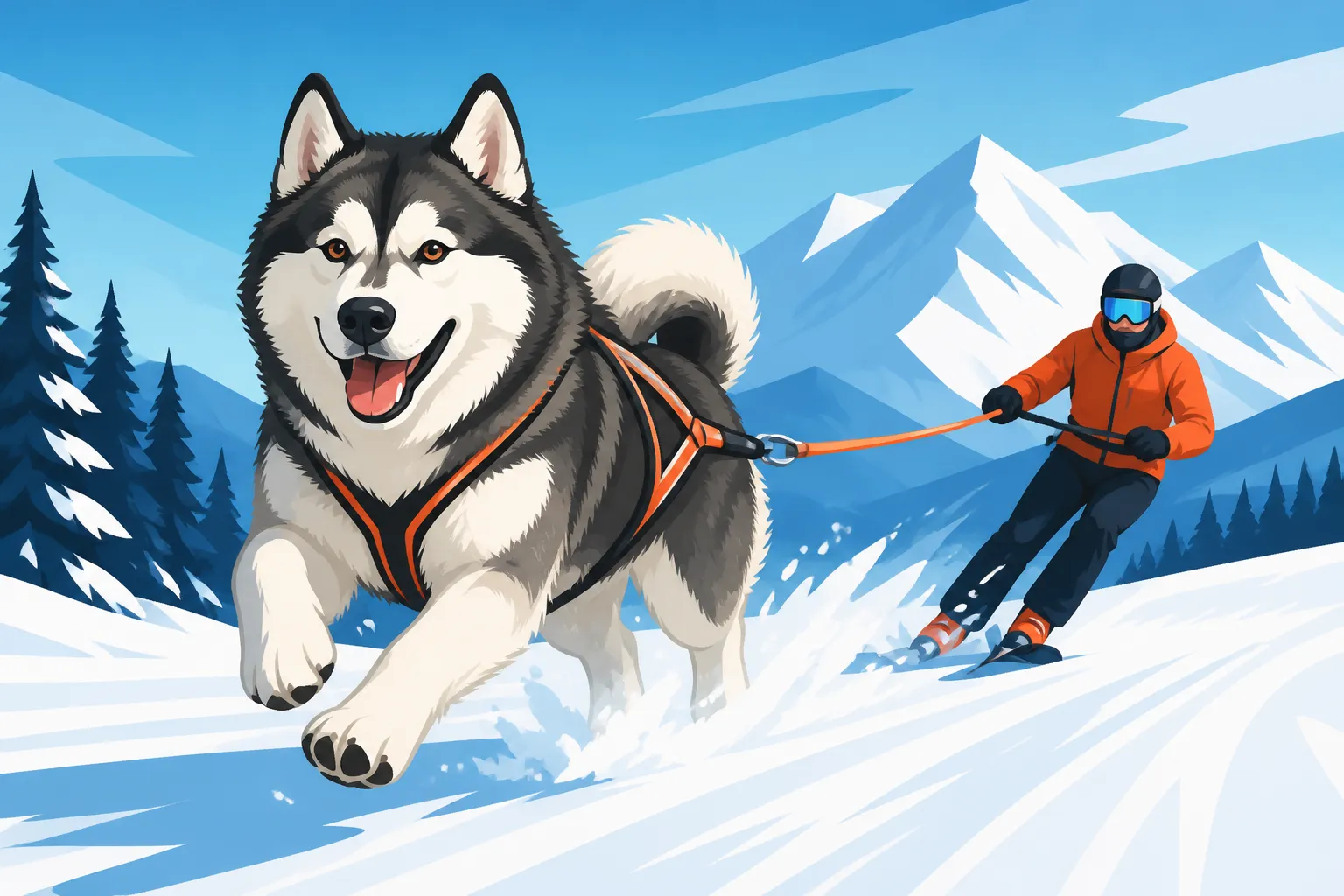
At its core, skijoring involves one to two dogs (though usually one for beginners) pulling a skier. The dog wears a specialized pulling harness, which is then connected by a bungee line to a skijoring belt worn by the human. The human provides propulsion with skis and poles, adding to the dog's pull, and steers the team with vocal commands. This isn't about breakneck speeds like some sprint mushing disciplines; instead, it emphasizes steady, powerful forward momentum, which is precisely where the Alaskan Malamute shines. They are built for endurance and freighting, not necessarily speed, making them exceptionally well-suited for the sustained effort required in skijoring. It's a fantastic way to enjoy the winter landscape, get a strenuous workout, and deepen the bond with your powerful canine companion.
Unlike traditional sledding, which often requires multiple dogs, a heavy sled, and dedicated trails, skijoring is much more minimalist. You need your skis, poles, a proper belt, and your dog's harness and line. This lower barrier to entry means more Malamute owners can experience the joy of working with their dog in a pulling sport. It allows you to transform a regular cross-country ski trail into a fun, engaging workout for both of you.
Unleashing the Malamute's Natural Drive
There's an undeniable joy in watching an Alaskan Malamute truly come alive when given a job they were born to do. For so many Malamute owners, the daily walk, even a long one, simply doesn't fully satisfy their dog's deep-seated instinct to pull and travel. This breed’s history is steeped in freighting and arduous journeys across frozen landscapes, and that genetic blueprint for work is still very much present in our modern companions.
Skijoring offers a magnificent outlet for this intrinsic drive. When your Malamute leans into their harness, muscles rippling, and pulls you effortlessly across the snow, you’re not just exercising; you’re tapping into centuries of selective breeding. It's truly a sight to behold, and a feeling of connection that's hard to replicate with any other activity. Many owners express a profound sense of satisfaction knowing they are providing an activity that allows their dog to be their most authentic, happiest self. This engagement can significantly reduce boredom-induced behaviors, because a tired Malamute is often a happy, well-behaved Malamute. Pulling Is the Only Job an Alaskan Malamute Really Wants is not just a saying, it's a fundamental truth for this magnificent breed.
Essential Gear for Skijoring with Your Malamute
Having the right equipment is crucial for both safety and enjoyment in skijoring. Skimping on gear can lead to discomfort for you or your dog, and even injuries. Investing in quality, purpose-built equipment will make your skijoring experience much more rewarding and allow you to focus on the fun rather than worrying about chafing or breaking gear.
The Human Equipment: Skis, Poles, and Harness
For the human component of skijoring, you’ll primarily be using cross-country (Nordic) skis. The type of skis can vary depending on your preference and the terrain. Classic touring skis are excellent for groomed trails and provide good stability, while wider backcountry skis are better for ungroomed snow or deeper powder. Telemark skis can also be used, especially if you plan to tackle more varied terrain with downhill sections. Whichever you choose, ensure they are comfortable and suited to your skill level. Don't forget your poles for added propulsion and balance, and comfortable, warm boots that are compatible with your ski bindings.
The most critical piece of human-specific skijoring gear is your skijoring belt. This isn't just a regular fanny pack. A proper skijoring belt is wide, padded, and designed to distribute the dog's pulling force evenly across your hips and lower back, rather than concentrating it on your waist. It should have a quick-release buckle, which is a vital safety feature allowing you to instantly detach from your dog if needed (for example, if they get tangled or you lose control). Many excellent belts are available, often through specialized dog sport retailers or even on platforms like Amazon, where you can read reviews to find one that fits comfortably.
The Dog's Equipment: Harness, Line, and Booties
Your Malamute's comfort and safety hinge on a properly fitted pulling harness. Avoid walking harnesses or collars, as these can cause injury and will not allow your dog to pull efficiently. An X-back or H-back style sled dog harness is ideal, as they are designed to distribute the pulling load evenly across the dog’s chest and shoulders, allowing for full range of motion. The harness should fit snugly but not restrict breathing or movement, especially around the neck and legs. A local sled dog club or an experienced skijoring mentor can be invaluable for helping you find the right fit, as sizing can be a bit tricky.
The pulling line, often called a gangline or towline, connects the dog's harness to your skijoring belt. It should be made of a strong, durable material and incorporate a bungee section. This bungee acts as a shock absorber, cushioning sudden jerks and making the experience smoother and more comfortable for both you and your Malamute. Lines typically range from 6 to 12 feet, with the exact length depending on your preference and local regulations. A shorter line gives you more control, while a longer line offers more space between you and your dog.
Finally, consider investing in paw booties. While Malamutes have tough paws, skijoring on abrasive snow, ice, or even just long distances can cause irritation or cracks. Booties protect their pads from cuts, ice balls forming between their toes, and the cold. There are various types available, from simple fleece booties to more durable Cordura options. Having a few sets on hand, perhaps purchased from Amazon or a specialty pet store, is always a good idea, as they can wear out or get lost on the trail.
Training Your Alaskan Malamute for Skijoring Success
Training is where the real partnership forms in skijoring. It's not just about teaching your Malamute to pull; it's about teaching them to respond to your commands, to work with you, and to enjoy the experience safely. Malamutes are intelligent, but also notoriously independent, so patience and consistent positive reinforcement are your best friends here.
Building Foundational Skills and Commands
Before you even think about putting on skis, your Malamute needs to master some basic directional and stopping commands on dry land. The traditional sled dog commands are "Gee" (turn right), "Haw" (turn left), "Whoa" (stop), and "Hike" or "Mush" (go forward). Start practicing these in a low-distraction environment with your Malamute on a leash, walking beside you. Use treats, praise, and a consistent tone of voice. Reward immediately when they make the correct movement or even just offer to turn in the right direction. It takes time, so don't get discouraged if it doesn't click instantly.
Once they understand the basics on a leash, move to a practice harness and a short pulling line, perhaps attached to a tire or a small log on a grassy area. This helps them get used to the feel of pulling and the slight resistance. Keep sessions short, fun, and always end on a positive note. Remember, Malamutes are smart and can get bored with endless repetition, so vary your training and make it engaging. They excel when they feel like part of a team, making the choices with you, not just blindly obeying.
Gradual Progression and Conditioning
The key to successful skijoring is a slow, steady progression for both you and your Malamute. Don't expect to hit the trails and go for miles on your first outing. Begin with very short distances on flat, groomed snow, ideally without too many distractions. This allows your Malamute to get used to the harness, the feeling of pulling, and the sounds and movements of the skis behind them. For you, it's a chance to get comfortable with the dynamic of being pulled while skiing.
Physical conditioning is vital for both partners. Your Malamute needs to build stamina and muscle to pull safely and effectively. Start with regular walks and runs, gradually increasing duration and intensity. For yourself, ensure you have a decent level of cross-country skiing fitness. Skijoring is a full-body workout! Over time, you can increase the distance and introduce gentle inclines. Always be mindful of your Malamute's energy levels and any signs of fatigue. It's better to end a session early than to push them too far. Remember, The Age a Malamute Can Start Pulling is typically around 18 months to two years, when their growth plates have closed and their bodies are mature enough for strenuous work.
Overcoming Common Skijoring Challenges
Even with the best training, you'll encounter challenges. Malamutes are not automatons; they have personalities, and sometimes, those personalities involve chasing squirrels or simply deciding the trail to the left looks more interesting than the one you've chosen. Distractions are a big one, especially in new environments. Consistent practice of your commands, paired with positive reinforcement, will help. If your Malamute gets distracted, stop, regain their attention, give the command again, and reward the correct response.
Inconsistent pulling can also be frustrating. Some Malamutes might surge then slacken. This often improves with conditioning and experience, but you can also use verbal cues like "Hike!" to encourage consistent effort. Tangles in the line are inevitable, especially when dogs decide to relieve themselves or investigate something off-trail. Practice quickly untangling the line while on skis, and consider a shorter line if tangles are a persistent problem. Remember, your Malamute is not a machine, and their independent nature means you'll need patience and a good sense of humor. Services like BAXTER & Bella offer online training resources that focus on positive reinforcement and building a strong foundation, which can be a valuable tool for tackling these specific challenges with a Malamute.
Safety First: Keeping Your Malamute Healthy on the Trail
The allure of flying across snowy trails with your Malamute is powerful, but safety should always be your top priority. These magnificent dogs are built for cold, but that doesn't mean they're impervious to all risks. Being prepared and vigilant is key to ensuring many happy skijoring adventures.
Weather Considerations and Overheating Risks
One of the most critical safety aspects for an Alaskan Malamute is managing their temperature. While they thrive in cold weather, they are highly susceptible to overheating, even in winter, especially during strenuous activity. Ideal skijoring temperatures are typically below freezing, ranging from 0°F to 20°F (-18°C to -7°C). Even on a cool, sunny day, the combination of exercise and their dense double coat can lead to dangerous overheating.
Always check the temperature, humidity, and sun exposure before heading out. Pay close attention to your Malamute for signs of overheating: excessive panting, bright red gums, slowing down, stumbling, or seeking shade/snow to lie in. If you see any of these signs, stop immediately, get your dog into the shade if possible, and cool them down with snow or cool water. Never push an overheated Malamute. Summer Is the Season That Kills Alaskan Malamutes, but even winter exercise needs careful monitoring. It’s always better to cut a session short than risk heatstroke.
Hydration, Nutrition, and Joint Health
Proper hydration is paramount for any working dog. Always carry plenty of fresh water for both yourself and your Malamute, and offer frequent water breaks, even in cold weather. Dehydration can happen quickly and impact performance and health. Consider bringing a collapsible bowl and a thermos of lukewarm water to prevent it from freezing.
The caloric needs of a skijoring Malamute will be higher than a sedentary pet. Feeding a Working Malamute Against a Pet One requires careful consideration of their diet. They will need a high-quality, calorie-dense food to fuel their activity. Consult with your veterinarian to ensure their diet is appropriate for their energy output. Additionally, for active, large breeds like Malamutes, supporting their joint health is important. Many owners choose to provide joint supplements containing ingredients like glucosamine, chondroitin, and MSM to help maintain cartilage and joint fluid. Joint Supplements for an Alaskan Malamute can be a proactive measure to support their long-term mobility, especially if they are regularly engaged in demanding activities like skijoring.
Trail Etiquette and Encountering Wildlife
Skijoring means sharing trails, so good trail etiquette is crucial. Always keep your Malamute under control and ensure they respond reliably to your commands. Alert other trail users to your presence well in advance, especially when approaching from behind. If you encounter other dogs, slow down, shorten your line, and be prepared to step off the trail if necessary. Remember, not everyone is comfortable with large, pulling dogs, and not all dogs are friendly. Your Malamute should always be on a line while skijoring; Why an Alaskan Malamute Will Never Have a Reliable Recall makes off-leash work risky, especially around other trail users or wildlife.
Wildlife encounters are also a possibility, particularly in more remote areas. Malamutes have a strong prey drive, and seeing a deer, rabbit, or squirrel can trigger an intense chase response. Consistent training of "Whoa" and "Leave It" commands is vital. If your Malamute does spot something and tries to bolt, hold firm, use your safety quick-release if you feel you might be pulled into danger, and then work to regain control. Prevention is the best strategy here: choose trails where wildlife sightings are less common until your Malamute is very reliable, and always be aware of your surroundings.
| Skijoring Safety Checklist | Action Items |
|---|---|
| Weather | Check temperature (ideally 0-20°F), humidity, sun. Avoid warm days. |
| Hydration | Carry ample water for both, offer frequent breaks, use insulated bottle/bowl. |
| Nutrition | Ensure high-quality, calorie-dense diet for activity levels. Consult vet. |
| Gear Check | Inspect harnesses, lines, quick-release for wear and tear before each outing. |
| Paws | Apply paw balm or use booties, especially on rough/icy snow. Check pads after each session. |
| Commands | Practice "Whoa," "Gee," "Haw," "Hike," "Leave It" regularly. |
| Trail Etiquette | Yield to others, announce presence, control your dog around other people/dogs. |
| Malamute Health | Monitor for signs of overheating, fatigue, lameness. Never push a tired or unwilling dog. |
| First Aid | Carry a small human/dog first aid kit (bandages, antiseptic wipes, vet contact info). |
| Identification | Ensure your Malamute has ID tags and microchip. Consider a GPS collar for added security. |
The Joys and Benefits of Skijoring with Your Malamute
Beyond the immediate thrill of gliding across the snow, skijoring offers a wealth of benefits that can profoundly impact your Malamute's overall well-being and strengthen the unique bond you share. It's a holistic activity that addresses their physical, mental, and emotional needs in a way few other sports can.
Physical and Mental Enrichment for Your Dog
Alaskan Malamutes are not meant to be couch potatoes. Their impressive strength, endurance, and intelligence demand an outlet. Skijoring provides intense physical exercise that burns off excess energy, which, if left untapped, can lead to destructive behaviors around the house. A Malamute that’s physically and mentally satisfied from a good skijoring session is far less likely to turn its attention to chewing furniture, digging up the yard, or incessant howling. A Malamute's Digging Is Not a Problem, It Is the Breed, but it certainly doesn't help when they're bored!
The mental stimulation involved is just as important. Your Malamute isn't just running; they are listening to commands, making decisions about the trail, and working as part of a team. This problem-solving and engagement with their human partner is incredibly enriching. It taps into their natural instincts for collaboration and purpose, providing a level of satisfaction that a simple walk, even a long one, often cannot. This focused work helps prevent boredom and the associated behaviors that often lead owners to wonder Whether a Bored Malamute Destroys the House. Skijoring offers a fantastic alternative.
Strengthening the Bond Between You and Your Malamute
There's something truly special about the partnership forged during a skijoring adventure. You are not just a handler; you are a teammate. The reliance on clear communication, mutual trust, and shared effort creates a profound connection. As you navigate the trails together, responding to each other's cues, you develop a deeper understanding of your Malamute's capabilities and personality.
This shared experience builds immense trust. Your Malamute learns to rely on your commands for direction, and you learn to trust their strength and instincts. The moments of triumph – successfully navigating a tricky turn, reaching the top of a hill, or simply enjoying the silent rhythm of gliding through snow – become cherished memories that reinforce your bond. It's an active demonstration of your commitment to providing them with a fulfilling life, and they respond with loyalty and enthusiasm. What an Alaskan Malamute Needs Every Day goes beyond food and shelter; it includes purpose and partnership.
Finding Community and Competitive Opportunities
While many enjoy skijoring as a personal pursuit, it also offers a fantastic entry point into a vibrant community of dog sport enthusiasts. Local sled dog clubs often welcome skijorers and can be an invaluable resource for advice, training tips, and finding suitable trails. Meeting other Malamute owners who share your passion for working dogs can provide a much-needed support system and opportunities for shared adventures. These groups often organize clinics, training runs, and social events.
For those with a competitive spirit, skijoring races and events are held throughout snowy regions. These can range from fun, casual gatherings to more serious competitions sanctioned by organizations. Participating in these events, whether for fun or to test your team's mettle, adds another layer of excitement and goal-setting to your skijoring journey. It’s a chance to see how your Malamute stacks up, learn from experienced skijorers, and celebrate the incredible capabilities of these dogs. While not as heavily regulated or as widespread as traditional sled dog races, skijoring is growing in popularity, and these events provide a wonderful way to engage with the sport. It's a different kind of challenge compared to What Weight Pull and Sledding Cost a Malamute Owner, but equally rewarding in its own right.
Disclaimer
This article is for general informational purposes only and does not constitute professional advice. Laws, prices and regulations vary by location and change over time. Consult a qualified professional for guidance on your specific situation.