Whether an Alaskan Malamute Ignores a Cue It Knows
It's one of the most frustrating things, isn't it? You spend hours, days, weeks teaching your Alaskan Malamute a perfectly good "sit" or "come" cue, and then, in that crucial moment, they act like they've never heard it in their lives. You know they know it, and it feels like they're just plain ignoring you, making you wonder if all that effort was for nothing. This guide is here to shed some light on why your Malamute might be giving you the cold shoulder when it comes to commands and what you can do to bring back that enthusiastic response.
Understanding the Malamute Mindset: Why "Ignoring" Isn't Always Defiance
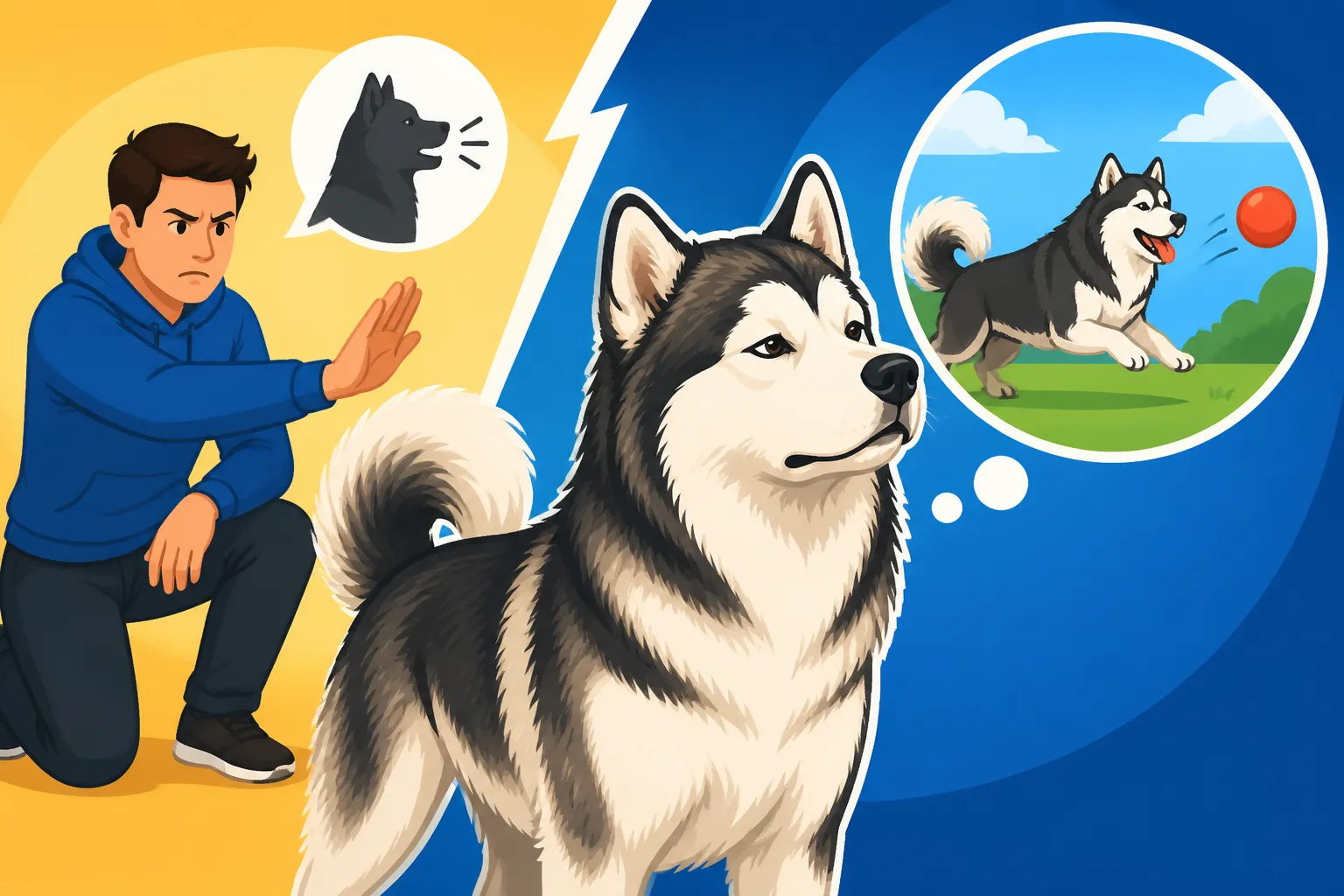
When your Malamute looks at you, then slowly turns their head away as if pondering the meaning of life instead of sitting when you ask, it’s easy to feel personally slighted. But with an Alaskan Malamute, what looks like defiance is often rooted in their unique heritage and inherent personality traits. They aren't trying to be rude; they're just being Malamutes.
The Independent Thinker vs. The Stubborn Mule
Let's be real: Malamutes were bred for a job that required immense independence. They weren't meant to sit by a campfire waiting for orders; they were out there in the vast, unforgiving Arctic, making life-or-death decisions with their human partners. This meant they had to be thinkers, not just followers. If a Malamute on a freighting team thought a certain patch of ice was unsafe, they'd dig in their heels and refuse to move, even if the musher insisted. That wasn't stubbornness in a negative sense; it was self-preservation and intelligence.
Today, this translates into a dog that processes information and makes choices. When you give a cue, your Malamute isn't necessarily thinking, "I don't want to do that." Instead, their brain might be weighing options: "Is doing this cue more rewarding than sniffing that interesting patch of grass? Is the tone of voice strong enough? Do I really need to do it right now?" This is why it's so important to understand that Telling a Stubborn Malamute From an Independent One is crucial for effective training. They're not being stubborn in the way a small child might throw a tantrum; they're exercising their ancestral right to assess the situation.
The Allure of Distraction: More Interesting Things to Do
Another huge factor in why your Malamute might "ignore" a known cue is simply that the world offers so many more exciting things than you do in that exact moment. Picture this: you're walking your Malamute on a leash, you see another dog approaching, and you ask for a "sit" to prevent pulling. Your Malamute, however, is laser-focused on the new canine friend, or perhaps a tantalizing scent trail of a rabbit just moments old. The world is a symphony of smells, sights, and sounds that can easily override your voice.
Their highly developed prey drive, which allowed them to hunt alongside their Mahlemut companions for food, means that a squirrel darting across the yard or a bird taking flight instantly becomes the most compelling thing in their universe. Your "come" cue, even if they know it perfectly in the living room, simply can't compete with the primal urge to chase. This is a big part of why How Strong a Malamute's Prey Drive Is can make reliable recall incredibly challenging, if not impossible, in distracting environments. It's not personal; it's instinct.
Common Reasons a Malamute "Forgets" Its Training
It's not always about outright defiance or overwhelming distraction. Sometimes, the way we've trained, or the context we're training in, can inadvertently lead our Malamutes to appear as if they've forgotten everything they ever learned.
Lack of Motivation or Insufficient Reward Value
We all work for incentives, and Malamutes are no different. If you've been using the same dry kibble piece for "sit" for months, and then you ask for "sit" when a particularly interesting dog walks by, that kibble might suddenly seem like a terrible deal. Malamutes are incredibly intelligent and they quickly learn to value rewards. If the reward isn't high enough for the effort, or for competing with the current distraction, they'll simply opt out.
Think about it: would you go above and beyond at your job for the same pay every year, especially if another job offered more for the same effort? Probably not. Your Malamute is constantly assessing the cost-benefit analysis. A lukewarm "good boy" or a low-value treat might cut it in the quiet confines of your living room, but outdoors, with a hundred fascinating smells and sights, you need to up your game considerably. This is why understanding What an Alaskan Malamute Will Work For is absolutely essential. You need variety, novelty, and value in your rewards to keep them engaged, especially if you're asking them to ignore something highly stimulating.
| Behavior Requested (Difficulty/Distraction Level) | Example Reward Type (Low Value) | Example Reward Type (High Value) |
|---|---|---|
| Simple, low distraction (e.g., Sit in kitchen) | Kibble, quick pet | Small training treat, cheerful praise |
| Moderate distraction (e.g., Down in backyard) | Training treat, enthusiastic praise | Freeze-dried meat, favorite toy fetch |
| High distraction (e.g., Come at dog park) | Freeze-dried meat, enthusiastic praise | Cooked chicken/cheese, vigorous play session, jackpot of treats |
| Urgent, critical (e.g., Drop it from something dangerous) | Cooked meat/cheese, favorite toy | Steak, full body massage, access to a prized activity (e.g., car ride) |
Inconsistent Training and Unclear Expectations
Another silent killer of responsiveness is inconsistency. Imagine if sometimes "sit" meant put your butt on the floor, and other times it meant "stand up, look cute." Or if one family member let them get away with not sitting, but another insisted on it. Malamutes thrive on clear, consistent communication. If the rules keep changing, or if the consequences for not performing a cue aren't always the same, they'll quickly learn that sometimes they can just blow you off.
This is especially true in multi-person households. Everyone needs to be on the same page with the cues, hand signals, and expectations. If your partner allows the Malamute to drag them to greet a person, but you try to enforce a "wait," your Malamute learns that the cue isn't consistently applied. They might even decide that Whether a Malamute Respects One Person Only is true because that's the only person who consistently follows through. This isn't about dominance; it's about reliable communication and understanding what works. If a cue is given and then ignored without follow-through, you're inadvertently teaching your Malamute that the cue is optional.
Environmental Factors and Overwhelm
A cue learned in your quiet living room isn't automatically understood in a bustling park. This concept is called "generalization," and it's something many dog owners forget. Your Malamute might perform a perfect "down-stay" in your home, but ask for it at a farmer's market with hundreds of people, barking dogs, and strange smells, and they might look utterly blank. Their brain is simply overloaded, making it impossible to process your request.
It’s not that they don't know the cue, it's that they don't know it applies here, in this radically different environment. Or, the level of stimulation is so high that they literally cannot focus. This is a common challenge, especially with a breed as attuned to their surroundings as a Malamute. If you consistently push them in environments where they are overwhelmed, you risk poisoning the cue, meaning they start associating the cue with stress or failure. Furthermore, consider the age of your Malamute. An The Adolescent Malamute That Rewrites the Rules at Fourteen Months might suddenly "forget" cues they knew perfectly as a puppy, as their hormones surge and their world perspective shifts.
Strategies to Reignite Your Malamute's Responsiveness
So, what can you do when your Malamute decides they're suddenly a master of selective hearing? It’s not about fighting fire with fire, but rather understanding their intrinsic motivations and making you the most compelling thing in their world.
Boosting Motivation: Making You More Interesting
The key to a responsive Malamute is ensuring that interacting with you and performing cues is consistently more rewarding than whatever else is vying for their attention. This means diversifying and elevating your reward system.
First, identify what truly makes your Malamute tick. Is it a squeaky toy? A piece of cooked chicken? A game of tug? For some Malamutes, even getting to chase a thrown snowball is a high-value reward. Always have a variety of high-value treats and toys on hand, especially for training sessions in new or distracting environments. Think beyond standard kibble. Freeze-dried treats, small pieces of cheese, or cooked meat can be game-changers. I often find great options on Amazon that I can't easily find in my local pet store, allowing me to stock up on high-value, novel treats.
Secondly, make yourself exciting! Mal’s are smart, and they bore easily if the interaction is monotonous. Use an excited, happy tone of voice. Incorporate play into your training. If your Malamute enjoys a quick game of tug, use that as a reward for a speedy "come." Keep training sessions short, upbeat, and fun. Remember, Whether Short Sessions Suit an Alaskan Malamute is a resounding yes! Five minutes of enthusiastic, high-value training is far more effective than 20 minutes of repetitive, boring drills.
Rebuilding Foundation and Generalization
If your Malamute is consistently ignoring a cue in certain situations, it's time to go back to basics. This doesn't mean your dog is "broken," it just means you need to solidify their understanding in a more structured way.
Start by practicing the problematic cue in a completely distraction-free environment, like your living room. Use your highest value rewards, and celebrate enthusiastically when they get it right. Once they are consistently performing the cue with enthusiasm in this easy setting, gradually introduce mild distractions. Perhaps a family member walks by, or a favorite toy is placed nearby. Increase the distractions slowly, only moving to the next level when your Malamute is successful at the current one.
This process helps your Malamute generalize the cue, understanding that "sit" means "sit" regardless of whether you're in the kitchen, the backyard, or a busy park. Always set your Malamute up for success; don't ask for a "stay" for five minutes in a high-traffic area if they haven't mastered it for 30 seconds in a quiet spot. This methodical approach is key to building reliable behavior.
Positive Reinforcement and Avoiding Aversives
Malamutes are incredibly sensitive and will shut down or become resistant if trained using harsh or aversive methods. Yelling, leash corrections, or physical punishment might get a momentary reaction, but it damages your relationship and teaches your Malamute to avoid you, not to respond. This is precisely Why Force Fails on an Alaskan Malamute. They are partners, not subordinates, and they respond best to leadership built on trust and respect, not fear.
Focus solely on positive reinforcement: rewarding the behaviors you want to see. If your Malamute doesn't respond to a cue, it's a signal to you, the trainer, that something needs to change – either the reward isn't high enough, the distraction is too great, or the cue isn't clear. Never punish for "ignoring." Simply reassess the situation, make it easier, and try again with a better reward. Building a strong, positive bond where your Malamute wants to work with you is far more effective than trying to force compliance. Resources like BAXTER & Bella often offer positive-reinforcement based online training programs that can be incredibly helpful for owners looking for guidance on this approach.
When to Seek Professional Help
While a certain level of independent thinking is characteristic of the breed, consistent "ignoring" can sometimes be a sign of deeper issues, or simply that you need a bit of expert guidance to navigate your Malamute's unique personality.
Identifying Escalating Behavioral Issues
Most of the time, a Malamute ignoring a cue is due to the factors discussed above: motivation, distraction, or inconsistent training. However, sometimes it can be a symptom of something more. If the "ignoring" is accompanied by other concerning behaviors, such as:
- Sudden onset aggression towards other dogs or people.
- Increased anxiety or fear in situations where they were previously comfortable.
- Resource guarding (of food, toys, or even you).
- Destructive behaviors that are new or escalated.
- Changes in eating habits or lethargy.
These could indicate a medical issue, pain, or a significant behavioral problem that goes beyond simple selective hearing. In such cases, a visit to your veterinarian for a thorough check-up is always the first step. Rule out any underlying health concerns before attributing it solely to behavior.
Finding the Right Trainer for Your Malamute
If you've tried the above strategies and are still struggling, or if you feel overwhelmed, don't hesitate to seek professional help. However, it's crucial to find a trainer who understands northern breeds like the Malamute and utilizes positive, force-free methods. A trainer who tries to "dominate" or "break" your Malamute will likely do more harm than good.
Look for trainers certified by reputable organizations and ask about their experience with independent working breeds. A good trainer will help you identify the root cause of your Malamute's behavior, teach you effective communication strategies, and help you build a stronger, more rewarding relationship with your dog. They can provide tailored guidance on issues like Why an Alaskan Malamute Will Never Have a Reliable Recall or Whether a Malamute Owner Needs a Professional Trainer, giving you the tools to succeed. Sometimes, an objective eye can spot things you might be missing, transforming your training struggles into triumphs.
Disclaimer
This article is for general informational purposes only and does not constitute professional advice. Laws, prices and regulations vary by location and change over time. Consult a qualified professional for guidance on your specific situation.