Whether M’Loot Malamutes Are Taller
A tall Alaskan Malamute may fit the description people associate with the historic M’Loot line, but height alone can’t confirm a dog’s ancestry. The old line labels are useful background, not a dependable way to predict an individual dog’s size. This guide explains the M’Loot reputation, how it compares with other Malamutes, and how to measure your own dog fairly.
Why M’Loot Malamutes Have a Taller Reputation
What the M’Loot label describes
M’Loot refers to one of the historical lines that contributed to the modern Alaskan Malamute. The dogs associated with that line are often described as taller or larger-framed than dogs from the Kotzebue line. That general contrast is why people may expect an M’Loot Malamute to stand higher at the shoulder.
The label is about lineage, not a separate modern breed with its own universally enforced height rules. A dog described as M’Loot may have ancestors from other lines, and dogs from the same historical line can still vary. So the reputation is best understood as a tendency people discuss in breed history—not a guarantee that every M’Loot dog will be tall.
If you’re trying to understand where the term comes from, What the M'Loot Malamute Line Is explains the historical line in more detail. It also helps to read What the Kotzebue Malamute Line Is, since the familiar comparison between the two is often what fuels the height question.
How the M’Loot and Kotzebue descriptions differ
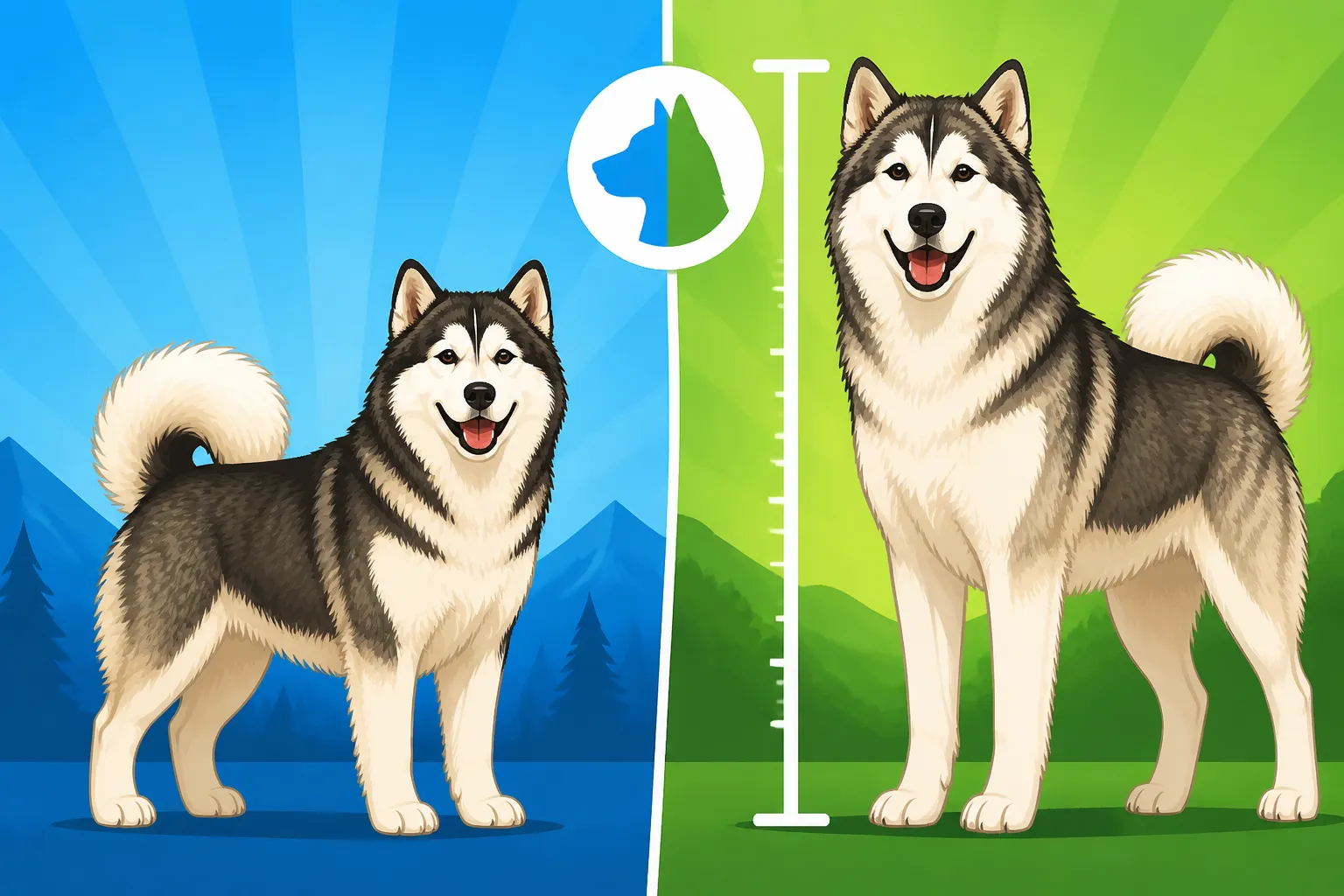
M’Loot dogs are commonly characterized as taller and rangier, while Kotzebue dogs are often described as more compact and stocky. Those descriptions can be useful when learning about the breed’s history, but they shouldn’t be treated like a measuring chart. “Taller” is a broad comparison, and it does not mean every M’Loot dog will stand above every Kotzebue dog.
People can also use line names loosely. One owner may be talking about a documented pedigree, while another may be repeating a description from a breeder or an online listing. Without reliable pedigree information, a dog’s appearance by itself cannot establish which line it belongs to.
The lines have also influenced one another over time. Whether the Two Malamute Lines Were Ever Merged and The Kotzebue and M'Loot Lines Behind Every Modern Malamute offer helpful context for why a modern dog may not fit a neat, old-fashioned description. Even with a pedigree, height is only one part of the dog’s build and history.
Does “M’Loot” mean a Malamute will be taller?
No. The line’s reputation gives a reason someone might expect a taller build, but it cannot predict an individual dog’s adult height with certainty. A dog’s height is shaped by its particular ancestry and development, and the broad line label does not replace those details.
That distinction matters when you’re choosing a puppy or trying to make sense of an adult dog. A seller calling a puppy “M’Loot” may be describing ancestry, appearance, or a family story. Ask what the label is based on and whether the breeder can explain the pedigree, rather than assuming the puppy will grow to a specific height.
It’s also easy to confuse height with overall size. A Malamute can look enormous because of its coat, bone, weight, or stance while being within a typical height range. Conversely, a leaner dog may look less imposing even if it measures taller. Height is only one measurement, not a summary of a dog’s size or line.
How Tall an Alaskan Malamute Usually Is
Breed height is a more useful starting point
For a general reference, the commonly cited ideal shoulder height for Alaskan Malamutes is about 25 inches for males and 23 inches for females. These figures describe an ideal range used in the breed standard, not a promise about every individual dog. A particular Malamute may be a little taller or shorter and still be a healthy, well-built dog.
The figures are measured at the withers—the highest point of the shoulders—not from the floor to the top of the head. That difference catches people out, especially when they compare a dog’s height with a person, a door frame, or a standing photo. Ears, head position, thick fur, and a proud posture can all make a dog seem taller than its shoulder measurement.
For more detail on measurements and typical proportions, see How Tall an Alaskan Malamute Stands. If you’re comparing a male and female, Whether a Female Malamute Is Much Smaller can help put sex-related size differences in perspective. Neither reference should be used to predict a specific dog’s adult height from its line label alone.
Height is not the same as weight or bulk
A tall Malamute is not automatically heavier than a shorter one. Frame, muscle, body condition, and coat can all affect how large a dog appears. A thick double coat can make even a lean dog look broad, while a fit, athletic Malamute may seem less massive than its actual weight suggests.
This is why photos are unreliable for comparing line or size. A low camera angle, a dog standing closer to the lens, or a full winter coat can distort the impression. Even comparing two dogs side by side may not tell you much if one is standing squarely and the other is crouched or shifting its weight.
When evaluating a dog, look at the whole picture: height at the shoulder, body proportions, weight, movement, and condition. If you’re worried your dog is growing unusually fast or becoming heavy for its frame, a veterinarian can assess growth and body condition. A tall dog does not need to be overweight to look imposing.
Why online claims about giant Malamutes can confuse things
Height discussions often get tangled up with “giant” Malamute claims. Some people use “giant” to describe especially large individuals, while others use it as a marketing label. Neither the word “giant” nor the M’Loot label guarantees a particular adult height, and a very large dog is not automatically healthier or more authentically bred.
A dog’s size should be considered alongside sound movement and overall health. Breeding for extreme size may raise reasonable questions about structure and joint strain, so it’s worth asking how a breeder evaluates health and function rather than choosing based on a promised height. Whether a Giant Alaskan Malamute Is a Real Type explores the difference between a recognized breed type and an informal size description.
If a listing promises an unusually tall adult dog, ask what evidence supports the estimate. A puppy’s current height and a parent’s size can offer clues, but neither makes the prediction certain. Responsible conversations focus on the dog’s health, temperament, and build—not just a headline-grabbing measurement.
How to Measure a Malamute’s Height at Home
Measure at the shoulder, not the head
You’ll need a flat surface, a wall or door frame, and a rigid ruler or carpenter’s level. A second person makes the process easier, especially if your dog is excited or tends to lean against you. Have the dog stand naturally on all four feet with its legs straight and its head in a comfortable position.
The withers are at the top of the shoulder area, just where the neck meets the back. Place the level across that point and check that it is parallel to the floor. Mark where the level meets the wall, then measure from the floor to the mark. Avoid measuring to the ears or the top of the skull; those are not the standard shoulder-height points.
If you need a flexible tape for other body measurements, one from a sewing kit will usually do. If you shop through Chewy, check the product description to make sure it is a standard flexible tape rather than relying on a photo or package name. For shoulder height, though, a straight level and ruler are generally easier to use accurately.
Make the measurement repeatable
A single quick measurement can be off if your Malamute is sitting, stretching, standing on an uneven floor, or shifting its weight. Take a couple of readings while the dog is standing squarely, then compare them. If they differ noticeably, let the dog settle and try again instead of choosing the number that seems most plausible.
Keep the same method each time you measure. Write down the date, your dog’s age, and the measurement, and note anything that might have affected the result. A growth record is more useful than a one-time number, especially for a young dog whose body is still developing.
For an easy record-keeping setup, use a notebook or a simple phone note. If you’re already picking up routine supplies through Chewy, a flexible tape may be convenient to add to your dog-care kit, but it isn’t essential. A consistent method matters much more than the brand of measuring tool.
What to do if the result seems unusual
If your dog measures outside the typical ideal height, that number alone doesn’t diagnose a problem or confirm a particular ancestry. Check your technique first: make sure the dog is standing on a level surface and that you measured to the shoulder rather than the head. Then repeat the measurement on another calm day.
For a puppy, avoid treating a current measurement as a final adult prediction. Growth happens unevenly, and a puppy’s legs and body may not develop in lockstep. Your veterinarian can track growth over time and discuss whether your puppy’s body condition and development appear appropriate.
A clinic may also be able to measure your dog during a routine visit if you’re unsure about your technique. If you’re using a home scale or other tracking equipment, Chewy product listings can help you check basic product details before buying, but a vet’s assessment is more useful for interpreting what the measurements mean for your dog.
What to Ask a Breeder or Owner About Lineage
Ask what the line claim is based on
If a breeder describes a puppy or adult as M’Loot, ask whether that means the pedigree traces to M’Loot dogs, whether it refers to a general appearance, or whether it is a family description. Those are different claims. A clear explanation is more meaningful than the label alone.
You can also ask whether the breeder keeps pedigree records and how they describe the dog’s overall structure. A responsible answer should leave room for individual variation rather than promise that a puppy will reach a particular height just because of a line name. If you’re buying a puppy, ask about the parents’ size and health as part of a wider conversation—not as a guarantee of the puppy’s future.
If a seller can’t explain the claim, that doesn’t automatically mean the dog is unhealthy or that someone is being dishonest. It does mean you should treat the label as uncertain rather than as proof. A dog’s care needs and suitability as a companion don’t depend on whether its lineage can be neatly assigned to a historical line.
Ask whether breeders still use the old line names
Some breeders and breed enthusiasts may discuss Kotzebue and M’Loot ancestry, while others focus on pedigrees, health, temperament, and the goals of their breeding program. Usage varies. Whether Breeders Still Distinguish the Two Malamute Lines offers more background on how these labels are discussed today.
When a line name is part of a puppy listing, ask how it connects to the actual pedigree and why the breeder thinks it matters. Questions about health testing, stable temperament, sound movement, and appropriate growth are usually more useful than a simple promise of extra height.
A useful comparison is:
| What you want to know | What the information can tell you | What it cannot guarantee |
|---|---|---|
| M’Loot ancestry in a pedigree | Whether the breeder reports descent from dogs associated with that line | A specific adult height |
| Parents’ shoulder measurements | The parents’ approximate height and build | That a puppy will match either parent |
| A dog’s measured height | Its shoulder height at that time | Its historical line or overall health |
| A “giant” or “tall” label | How someone is describing the dog | That the label is an official type or reliable prediction |
Focus on the dog in front of you
If you already have a Malamute, the most practical questions are whether your dog is moving comfortably, maintaining a healthy body condition, and receiving routine veterinary care. Lineage can be interesting, but it should not overshadow the needs you can observe directly. A taller dog may need the same thoughtful attention to exercise, nutrition, and joint health as any other Malamute.
If you’re comparing puppies, look beyond the tallest parent or the most dramatic claim. Ask about health and temperament, meet the dogs if possible, and consider whether the breeder is open about what they know and what they don’t. A realistic discussion of variation is more reassuring than a guaranteed height.
So, are M’Loot Malamutes taller? They have a historical reputation for being taller or larger-framed than Kotzebue Malamutes, but the line label does not reliably predict an individual dog’s height. Measure the dog at the shoulder, use pedigree information carefully, and treat height as one feature among many.
Disclaimer
This article is for general informational purposes only and does not constitute professional advice. Laws, prices and regulations vary by location and change over time. Consult a qualified professional for guidance on your specific situation.