Whether an Alaskan Malamute’s Water Bucket Freezes
The biting chill of winter brings with it a unique set of challenges for those of us who share our lives with magnificent Alaskan Malamutes. One common frustration that quickly turns into a daily battle is keeping your Malamute's outdoor water from turning into a solid block of ice. This guide will walk you through the realities of providing consistent hydration in freezing temperatures and offer practical, effective solutions to ensure your beloved Malamute always has access to fresh, unfrozen water, no matter how low the mercury drops.
The Malamute's Natural Resilience: Why Water Still Matters in the Cold
It’s a common misconception that because Alaskan Malamutes are built for the cold, they somehow need less water or are immune to the issues that arise when their water freezes. While it’s true that your Malamute might choose to curl up in a snowdrift for a nap, their internal needs for hydration remain just as vital, if not more so, than in warmer months.
Understanding the Malamute's Double Coat: A Winter Wonderland, Not a Water Source
Our Malamutes are truly marvels of natural engineering, aren't they? That incredibly dense, plush double coat isn't just for show; it's a meticulously designed insulation system. The soft, woolly undercoat traps warm air close to their body, while the longer, coarser guard hairs form a protective, water-resistant outer layer that sheds snow and ice. This allows them to thrive and genuinely enjoy temperatures that would send most other breeds scurrying for shelter. They're often at their happiest when the world is covered in a pristine blanket of white, eager to embrace the season when Winter Is When an Alaskan Malamute Comes Alive.
This incredible coat means they lose body heat much slower than other dogs, making them incredibly efficient in cold environments. Many Malamute owners have observed their dogs choosing to sleep outside, even when temperatures are well below freezing, preferring the crisp air to a stuffy indoor bed. However, this remarkable cold tolerance applies to their body temperature regulation, not their hydration needs. No matter how well insulated they are, their bodies still require a consistent intake of water to function properly, just like ours do.
Why Constant Access to Water Is Non-Negotiable, Even in the Cold
Even with their efficient metabolisms, Malamutes need steady hydration. Water plays a crucial role in almost every bodily function, from regulating body temperature (yes, even in the cold, their bodies need to balance internal heat), to lubricating joints, aiding digestion, and flushing out toxins through the kidneys. Dehydration can creep up silently, even in the winter, and can lead to a host of problems. Imagine going for hours without a drink because your glass kept turning to ice – it's uncomfortable and, over time, unhealthy.
For active Malamutes, especially those that engage in pulling sports or extended outdoor play, their caloric expenditure increases, and with it, their need for water. Their bodies are working hard, and adequate hydration is key to supporting that effort. A Malamute who is working or playing vigorously in the snow will actually expend a lot of energy and can become dehydrated faster than you might think. We always strive to provide What an Alaskan Malamute Needs Every Day, and unfrozen water is definitely at the top of that list. If you have an older Malamute, consistent water access is even more vital for maintaining kidney function and overall comfort; you can learn more about this in Caring for an Old Alaskan Malamute.
Common Challenges with Outdoor Water in Winter
Anyone who’s tried to keep a Malamute hydrated in a real winter knows the struggle. It’s not just an inconvenience; it can be a genuine source of worry and a constant chore.
The Frustration of Manual Ice Breaking: A Daily, Freezing Chore
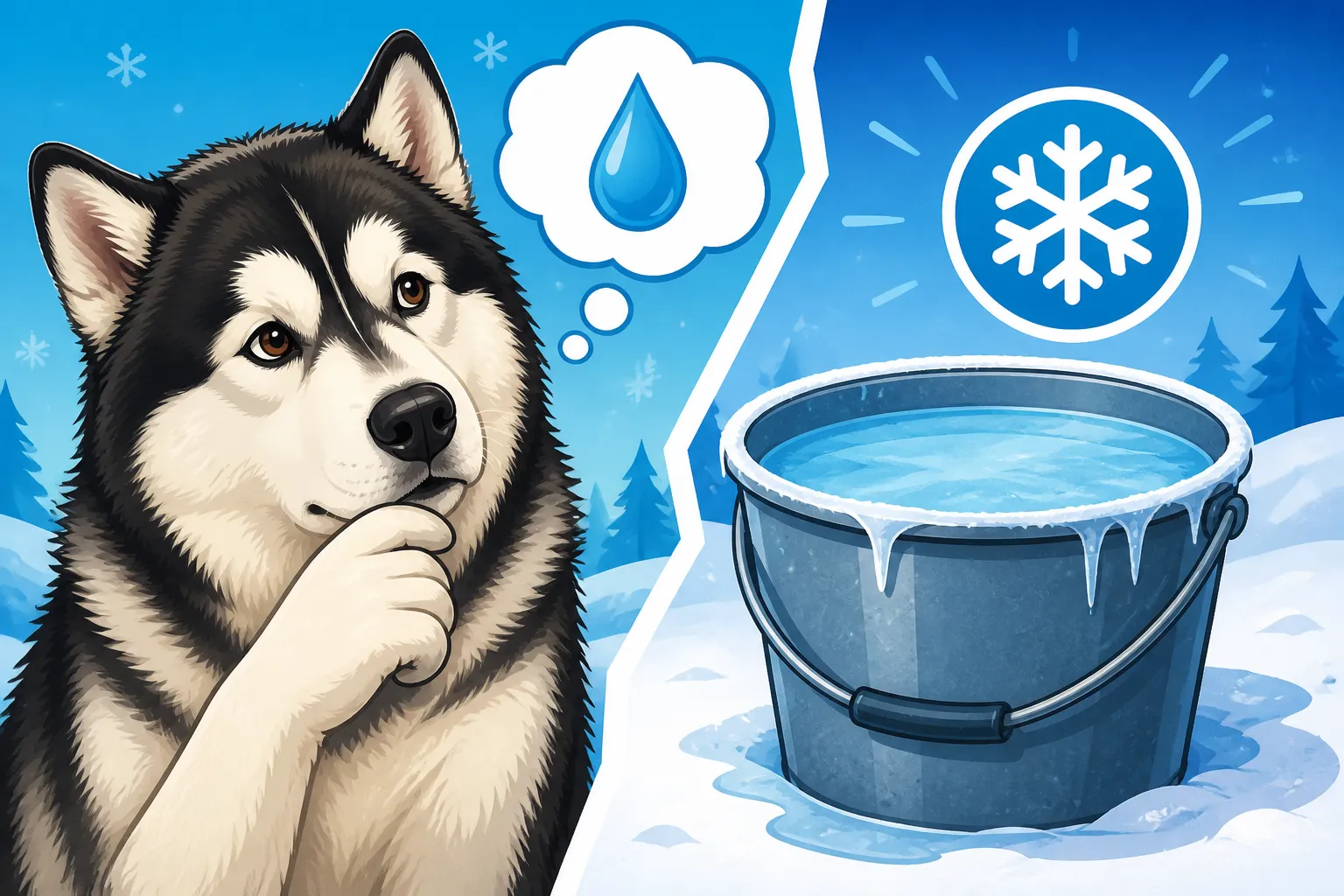
Oh, the familiar sound of a metal scoop scraping against frozen water, or the dull thud of a rubber mallet trying to free a block of ice from a bucket. For many of us, this is a daily ritual during the colder months. You head out, chip away the ice, refill the bowl with fresh water, and within what feels like minutes, a thin film of ice is already forming again. It's a never-ending cycle, especially if you have to leave for work for several hours. You worry, picturing your Malamute nudging a solid block, unable to get a drink.
This isn't just about cold hands or repeated trips outside; it's about the genuine concern that your Malamute might be going without water for extended periods. If you have multiple dogs or a large yard, the task multiplies, eating into your time and energy. It's truly one of those moments where you think, "There has to be a better way!"
Risks of Dehydration from Frozen Sources: More Than Just Thirst
While a Malamute can withstand incredible cold, their need for water is fundamentally no different from any other mammal. A lack of consistent, unfrozen water can lead to serious health issues, not just temporary thirst. Dehydration stresses the kidneys, making them work harder to filter waste. Over time, this can contribute to kidney problems. It can also lead to constipation, as water is vital for healthy digestion and bowel movements.
Furthermore, a dehydrated dog may appear lethargic or even act a little "off," which can be confusing since we expect them to be robust in winter. Their skin elasticity can decrease, and their gums might feel tacky rather than moist. These are subtle signs that your Malamute isn't getting enough fluids. Remember, our Malamutes are pretty stoic; they often won't show obvious signs of discomfort until an issue is quite advanced, which is a common characteristic discussed in Why a Malamute Shows Nothing Until It Cannot Work. Therefore, ensuring their water supply is constant and accessible is a proactive step in preventing these issues.
Inadequate Solutions and Why They Fail: Lessons Learned the Hard Way
Many of us have tried various "hacks" over the years, only to find them fall short in truly freezing conditions.
- Adding warm water: This merely delays the inevitable. The water will cool to ambient temperature and freeze, often within an hour or two on truly bitter days.
- Placing bowls in sheltered spots: Tucking a bowl under an overhang or in a dog house might offer a few degrees of protection, but it won't prevent freezing when temperatures are consistently below zero.
- Using larger containers: While a larger volume of water takes longer to freeze solid, it will still eventually turn into ice. Plus, a huge frozen block is even harder to break up and remove.
- Placing a ball in the water: The idea is that the ball's movement prevents freezing. In slight chills, maybe. In real winter? Nope, the water will freeze around the ball, trapping it.
And please, never add antifreeze or salt to your dog's water. Antifreeze is highly toxic, and even a small amount can be fatal. Salt, in amounts that would even slightly deter freezing, would be incredibly detrimental to your Malamute's health, leading to salt poisoning and severe dehydration. It's a dangerous myth that should be completely avoided.
Effective Solutions for Preventing Frozen Water Buckets
The good news is that we don't have to endure the daily ice-breaking struggle anymore. Several excellent products and practices can ensure your Malamute has fresh water around the clock.
Heated Water Bowls and Buckets: The Winter Game Changer
For most Malamute owners in cold climates, a heated water bowl or bucket is the absolute hero of winter hydration. These devices are designed with integrated heating elements that keep the water just above freezing point, providing a continuous, accessible water source for your dog. They come in various sizes and materials, typically plastic or metal, and are thermostatically controlled, meaning they only activate the heating element when the temperature drops, making them energy efficient.
When choosing one, look for features like:
- Durable construction: Malamutes are strong dogs, so a sturdy design that can withstand accidental bumps or playful nudges is important.
- Chew-resistant cord: Safety is paramount. A protected cord is essential to prevent your Malamute from gnawing through it.
- Capacity: Consider how much water your Malamute drinks in a day and choose a size that minimizes refills while ensuring constant availability. A larger bucket might be ideal for a particularly thirsty Malamute or multiple dogs.
- Outdoor rating: Ensure the product is specifically rated for outdoor use, meaning its electrical components are sealed against moisture and the cold.
You can find a wide array of options at pet supply retailers like Chewy, or browse a selection of styles and brands on Amazon. These bowls are a true investment in your Malamute's health and your own peace of mind.
Insulated Waterers: A Non-Electric Alternative
If you don't have easy access to an outdoor electrical outlet, or if you prefer a non-electric solution, insulated waterers can be a viable option, though they do have limitations. These typically feature double-wall insulation, much like a thermos, to help retain the water's natural temperature for longer. Some advanced designs include a float ball system that only exposes a small amount of water at a time, reducing the surface area available to freeze.
While insulated waterers can significantly delay freezing compared to a standard bowl, it's important to understand they are not freeze-proof in extremely harsh, prolonged cold. In sub-zero temperatures, they will eventually succumb to the cold, especially if the water isn't refreshed regularly. They're best suited for milder winter climates or as a supplementary option for a few hours. They still require more frequent checking than heated bowls.
DIY Tricks and Regular Maintenance: Simple Steps for Better Hydration
Even with the best equipment, some basic practices can make a big difference:
- Regular checking and refreshing: No matter what system you use, make it a habit to check your Malamute's water multiple times a day. Break up any thin ice film, and replace old water with fresh, cool water. Even warm water will eventually freeze, but fresh water is always best.
- Rubber buckets: If you’re sticking with traditional buckets for any reason, choose heavy-duty rubber ones. When water freezes solid, you can often invert the rubber bucket and flex it to pop out the block of ice, rather than chipping away at it in a metal or plastic one.
- Multiple bowls: Have a backup! Keep a spare bowl indoors ready to swap out with a frozen one. This allows you to bring the icy bowl inside to thaw while immediately providing fresh water outside.
- Dark-colored bowls in sunlight: A dark-colored bowl placed in direct sunlight can absorb a little more solar radiation, which might slightly delay freezing on a sunny winter day. This is a minimal effect, but every little bit helps.
Here's a quick comparison of common winter water solutions:
| Method | Effectiveness in Extreme Cold | Power Required | Initial Cost | Daily Maintenance | Best For |
|---|---|---|---|---|---|
| Heated Bowl/Bucket | High (prevents freezing) | Yes | Moderate to High | Low (check/refill) | All cold climates, busy owners, consistent access |
| Insulated Waterer | Moderate (delays freezing) | No | Moderate | Moderate (check/refill frequently) | Milder winters, no power access, short periods |
| Rubber Bucket | Low (freezes quickly) | No | Low | High (frequent ice removal/refill) | As a temporary measure, easier ice removal |
| Stainless Steel Bowl | Very Low (freezes very quickly) | No | Low | Very High (constant attention) | Not recommended for outdoor winter use |
Integrating Winter Water Solutions into Daily Malamute Care
Ensuring your Malamute has access to unfrozen water isn't just about battling ice; it's about integrating this crucial element into their overall winter care routine to support their long-term health and happiness.
Safety Considerations for Heated Bowls: Peace of Mind Through Prevention
While heated bowls are fantastic, they do involve electricity and require a few safety precautions, especially with a curious and powerful breed like the Malamute.
- Chew-Proof Cords: Always opt for models with armored or chew-resistant cords. Even then, supervise your Malamute initially to ensure they don't try to chew it. If the cord is exposed, consider running it through a PVC pipe or secure conduit to prevent access.
- Outdoor-Rated Outlets and Extension Cords: Use only outdoor-rated, ground-fault circuit interrupter (GFCI) protected outlets. If you need an extension cord, ensure it's also rated for outdoor use and heavy-duty, capable of handling the wattage of the heated bowl, and kept out of your Malamute's reach.
- Placement: Position the bowl in a stable location where it won't be easily tipped over. If possible, place it on a solid, non-combustible surface, away from anything that could melt or catch fire, though modern heated bowls are designed to be very safe.
- Regular Inspection: Periodically check the bowl and cord for any signs of damage, wear, or fraying. If you notice anything, discontinue use and replace the item immediately.
These simple steps ensure that your chosen solution remains safe for your Malamute and your home.
Monitoring Hydration Levels in Cold Weather: Beyond Just the Bowl
It’s easy to assume that because it’s cold, your Malamute might need less water, but that's not always the case, especially if they are highly active outdoors. Their efficient metabolism, discussed further in The Efficient Metabolism That Surprises Every New Malamute Owner, still requires ample water for all bodily processes.
Here’s how you can monitor their hydration:
- Gum Check: Gently lift your Malamute's lip and touch their gums. They should feel moist and slick, not dry or tacky. When you press a finger against them, the color should return almost instantly after you remove it.
- Urine Color: Clear to light yellow urine typically indicates good hydration. Darker urine can be a sign of dehydration.
- Energy Levels: While Malamutes are generally energetic, particularly in winter, unusual lethargy could be a sign of dehydration, among other things.
- Food Intake: If you feed a fresh food diet like what some brands like Ollie provide, your dog might get some moisture from their food. However, this is never a substitute for fresh, accessible drinking water. For those feeding kibble, ensuring water access is even more paramount as kibble contains very little moisture.
Always remember that for Malamutes that are actively working or exercising, like those discussed in Feeding a Working Malamute Against a Pet One, their water needs can increase significantly due to exertion, even if the air is cold. Don’t let the winter chill fool you into thinking they don’t need a constant supply of fresh water.
The Long-Term Benefits for Your Malamute's Health: A Worthwhile Investment
Investing in reliable solutions for unfrozen water isn't just about convenience; it's about making a proactive choice for your Malamute's long-term health and well-being. Consistent hydration supports kidney health, reduces the risk of urinary tract infections, aids in proper digestion, and helps maintain the health of their joints and connective tissues. It ensures their robust immune system can function optimally, and contributes to their overall vitality.
Knowing that your Malamute always has access to fresh water, even on the coldest, darkest winter days, provides immense peace of mind. It allows them to continue enjoying their favorite season to the fullest, whether they're pulling a sled, romping in the snow, or simply lounging in the backyard. It's a fundamental part of providing them with a happy, healthy life, potentially extending The Ten to Fourteen Years an Alaskan Malamute Lives by preventing preventable health issues related to chronic dehydration.
Disclaimer
This article is for general informational purposes only and does not constitute professional advice. Laws, prices and regulations vary by location and change over time. Consult a qualified professional for guidance on your specific situation.