Whether the Two Malamute Lines Were Ever Merged
For anyone delving into the rich history of the Alaskan Malamute, the names "Kotzebue" and "M'Loot" are bound to surface. These two foundational lines represent a fascinating fork in the breed's early development, often leaving new enthusiasts wondering if these distinct paths ever converged into the single, magnificent breed we know today. This guide will explore the evolution of these lines and whether they eventually merged to form the modern Alaskan Malamute.
Understanding the Historical Divide: Kotzebue and M'Loot
The early 20th century was a critical time for the Alaskan Malamute. As interest in sled dogs grew beyond their native Arctic home, efforts began to formalize the breed. However, the dogs themselves came from different geographical areas and had been selectively bred by various groups of people for specific tasks, leading to distinct physical and temperamental traits. This is where the Kotzebue and M'Loot lines emerge, creating a foundational divide that shaped the breed's future. It wasn't a matter of two completely separate breeds, but rather two dominant strains within the developing Alaskan Malamute.
The Origins of the Kotzebue Line
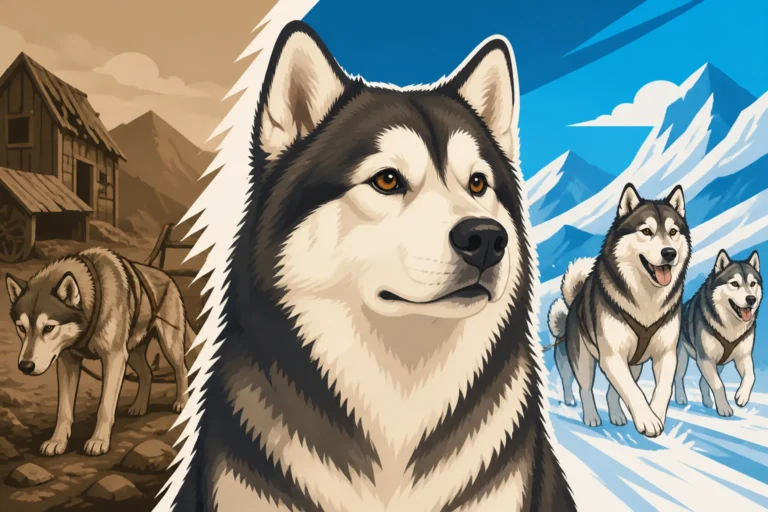
The Kotzebue strain, often associated with Arthur Walden and later, significantly, with Milton and Eva B. Seeley of Chinook Kennels, represented what many considered the "original" type of Alaskan Malamute. These dogs were said to descend directly from the dogs of the Mahlemut people of the Kotzebue Sound region, an indigenous group renowned for their powerful freighting dogs. The Mahlemut of Kotzebue Sound Bred the Alaskan Malamute The Mahlemut relied on these dogs for survival, using them to haul heavy loads over long distances, demanding immense strength, endurance, and a calm, reliable temperament.
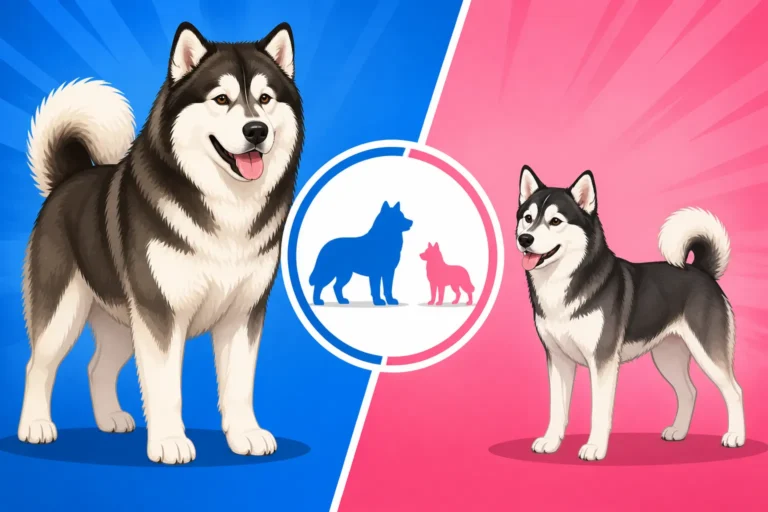
The Kotzebue Malamutes were generally described as being more uniform in type, typically smaller and more compactly built than their M'Loot counterparts, with a consistent wolf-grey coloring. They possessed a deep, powerful chest, often a rounder, broader skull, and a characteristic "closed" facial expression. Their temperament was typically described as stable, reserved, and incredibly hardy, reflecting generations of breeding for survival and utility in the harsh Arctic environment. These dogs were the epitome of a steady, unwavering freighting animal, built for consistent, heavy work rather than speed. What the Kotzebue Malamute Line Is
The Distinct Characteristics of the M'Loot Line
In contrast to the Kotzebue line, the M'Loot dogs, largely championed by Paul Voelker, were a more diverse group, originating from various sources around Alaska, not just one specific indigenous group. The term "M'Loot" itself is often considered a phonetic interpretation of "Malamute" and encompassed a broader range of dogs that still fit the general Malamute type but perhaps lacked the specific Kotzebue lineage. These dogs were often found in mining camps and other areas where mixed sled dog populations were common, and their breeding was less rigidly controlled in the early days.
M'Loot Malamutes were typically larger, taller, and often heavier-boned than the Kotzebues. They exhibited a wider variety of coat colors and markings, including reds, sables, and piebalds, and sometimes had longer coats. Their heads were often described as more wedge-shaped, and their expressions could be more open and "foxy" compared to the stoic Kotzebues. Temperamentally, while still strong and independent, the M'Loots were sometimes perceived as having a more assertive or "dominant" streak, reflecting their more varied genetic background and the less consistent selective pressures they faced. These physical and temperamental differences were quite noticeable, causing passionate debates among early enthusiasts about which represented the "true" Malamute. What the M'Loot Malamute Line Is
Early Attempts at Unification and Registry Challenges
The existence of these two distinct lines presented a challenge for those aiming to establish the Alaskan Malamute as a recognized purebred dog. The goal of any breed registry is to create a consistent breed standard, a written description that all dogs of the breed should ideally conform to. How could one standard encompass two visibly different types of dogs? This led to initial conflicts and a slow, often contentious, journey toward official recognition and, eventually, consolidation.
The Initial Vision for a Unified Breed Standard
The early advocates for the Alaskan Malamute recognized the need for a single, unified breed. To gain recognition from major kennel clubs, like the American Kennel Club (AKC), a breed needed a clear standard and a consistent gene pool. This meant reconciling the differences between the Kotzebue and M'Loot types. Proponents of each line naturally believed their dogs were the superior representation of the breed, leading to a period of intense discussion, lobbying, and sometimes, outright rivalry.
The challenge wasn't just about appearance; it was about defining the essence of the Malamute. Was it the compact, freighting machine of the Kotzebues, or the perhaps more imposing, diverse M'Loots? The goal was to write a standard that would be inclusive enough to prevent the loss of valuable genetics from either line, yet specific enough to define a distinct breed. This was no small feat, considering the passionate dedication of breeders on both sides. The early vision was clear: to move beyond regional variations and establish a universally accepted Alaskan Malamute, but the path to get there was anything but smooth.
The Role of Early Registries and Kennel Clubs
The journey towards breed recognition often involves significant interaction with established kennel clubs. For the Alaskan Malamute, the AKC was the primary target for recognition in the United States. In the early days, before official recognition, independent clubs and individuals often kept their own records, but these were fragmented. The AKC's initial stance was to acknowledge a "Northern Sled Dog" type, but specific breeds needed more defined parameters. The Year the AKC Recognized the Alaskan Malamute
Eva B. Seeley, a pivotal figure in the breed's history, played a crucial role. Her Chinook Kennels primarily focused on the Kotzebue line, and it was largely through her tireless efforts and meticulous record-keeping that the Alaskan Malamute gained AKC recognition in 1935. However, the initial AKC studbook was primarily populated by Kotzebue dogs. This left many M'Loot breeders feeling excluded, fearing their valuable dogs and their distinct characteristics would be lost from the official breed. The registry's initial leanings towards one line highlighted the deep chasm that still existed and necessitated further action to truly merge the foundational genetics.
The Influence of Eva B. Seeley and the Blending Period
While the AKC initially recognized the Malamute based largely on the Kotzebue line, the story doesn't end there. The gene pool was considered too small, and the exclusion of the M'Loot dogs posed a risk to the breed's future health and vitality. This realization, coupled with the continued advocacy of M'Loot owners, paved the way for a crucial period of blending, heavily influenced by Eva B. Seeley, despite her initial focus on Kotzebues.
Seeley's Contribution to the Breed's Future
Eva B. Seeley, often regarded as the "Mother of the Alaskan Malamute," realized the critical importance of broadening the genetic base. The Second World War had a devastating impact on many breeds, and the Malamute was no exception, with many dogs lost or used in military service. Post-war, the breed's numbers were dangerously low, and the gene pool, especially within the official AKC registry, was extremely narrow. This raised serious concerns about inbreeding and the potential for genetic health problems. Whether the Malamute Gene Pool Is Narrow
Seeley, along with other far-sighted breeders, understood that for the breed to thrive, the M'Loot lines could not be ignored. Their diversity and distinct traits offered a vital infusion of new genetics. She recognized that a responsible approach meant allowing suitable M'Loot dogs to be integrated into the AKC studbook. This wasn't about abandoning the Kotzebue ideal, but about strengthening the entire breed by drawing on all available quality stock. This period of re-evaluation and inclusion was fundamental to the Malamute's survival and subsequent growth. Whether Eva Seeley Rebuilt the Malamute Breed
The Practicalities of Cross-Line Breeding
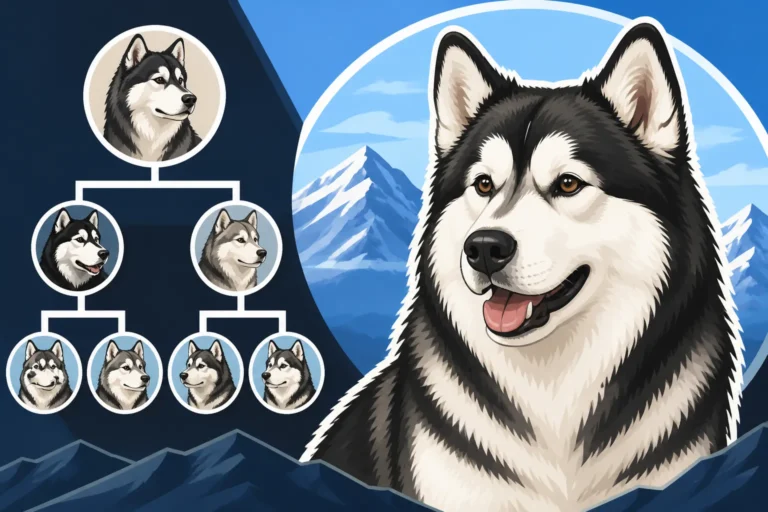
The merging of the lines wasn't a sudden event but a gradual process of careful cross-breeding. Breeders strategically paired dogs from the Kotzebue and M'Loot lines, aiming to combine the best attributes of both. This meant looking for the Kotzebue's consistent type and stable temperament, while also incorporating the M'Loot's size, bone, and sometimes, a broader range of useful working traits. The goal was to produce offspring that retained the essence of the Alaskan Malamute – its power, endurance, and friendly nature – while creating a more robust and genetically diverse population.
This blending wasn't without its challenges. There was a learning curve in how different traits manifested in the offspring, and breeders had to carefully select for desirable characteristics while trying to avoid exaggerating less desirable ones. The process involved a lot of patience, careful record-keeping, and a deep understanding of canine genetics. Many of the dogs that contributed to this blending period became influential foundation stock, their names appearing in the pedigrees of countless modern Malamutes. This deliberate effort to broaden the gene pool ultimately secured the breed's future and ensured it could survive and flourish. It was through these conscious breeding choices that the two distinct streams began to flow into one river.
The Modern Alaskan Malamute: A Blended Heritage
Fast forward to today, and the Alaskan Malamute stands as a testament to these blending efforts. The distinct lines, while still subjects of historical interest and discussion among enthusiasts, have largely integrated into a unified breed. The Malamute you see at a dog show, in a sledding competition, or simply enjoying a good chew toy from Chewy in someone's backyard, carries the genetic legacy of both Kotzebue and M'Loot.
How the Lines Converged Over Time
Over several decades, the strategic breeding between Kotzebue and M'Loot dogs, along with careful selection by dedicated breeders, led to a gradual convergence. The extreme differences that once characterized the two lines became less pronounced. Breeders worked towards a consistent ideal that incorporated the desired traits from both. For example, while the earliest Kotzebues might have been on the smaller side, modern Malamutes tend to fall within a more unified size range, often reflecting the robust bone and structure that was more characteristic of the M'Loot lines, combined with the classic Kotzebue type and expression.
The influence of show ring standards also played a role. As the breed matured and became more established in conformation events, breeders naturally gravitated towards producing dogs that fit the written standard. Since the standard itself was eventually designed to encompass traits from both original lines, breeding choices began to homogenize the overall appearance and temperament. The distinctions became less about "this is a Kotzebue" or "this is an M'Loot" and more about individual dogs and their adherence to the evolving breed ideal. This convergence means that almost every modern Alaskan Malamute carries a blend of both historical lineages in its ancestry, creating a stronger, more adaptable, and healthier breed overall. How the Malamute Was Rebuilt After the Gold Rush
The Current State of the Breed Standard
Today's official Alaskan Malamute breed standard, recognized by kennel clubs worldwide, reflects this blended heritage. It describes a powerful, substantially built dog, with a deep chest, well-muscled body, and a strong, alert, yet friendly expression. The standard specifies a desired size range, coat characteristics, and temperament traits that are broad enough to accommodate the acceptable variations that arose from the merging of the lines. There is no longer a separate "Kotzebue standard" or "M'Loot standard"; there is only the Alaskan Malamute standard.
While the history is rich with the distinct origins, the standard focuses on the present and future ideal of the breed. It emphasizes a dog capable of performing its original function as a heavy-duty freighting animal, but also highlights its loyal and affectionate nature as a companion. For example, the standard describes the ideal Malamute as "a heavy-boned, well-muscled, Arctic sled dog," which could apply to elements once attributed to both lines. Breeders now strive to produce dogs that embody this comprehensive description, selecting for health, temperament, and conformity to this unified vision. What an Alaskan Malamute Actually Weighs
The Enduring Legacy and Importance for Breeders
Even though the two lines have merged, their historical significance is not lost. For dedicated breeders and serious enthusiasts, understanding the origins of the Kotzebue and M'Loot lines remains vital. It's not about trying to resurrect pure lines, but about appreciating the genetic contributions that shaped the breed and using that knowledge to make informed decisions for its future.
Why Knowledge of Lineage Still Matters
For breeders, knowledge of a dog's pedigree and the historical lines it traces back to can offer valuable insights. While a dog is no longer purely "Kotzebue" or "M'Loot," some families of Malamutes may still carry a stronger influence from one side of the original divide. For instance, a breeder might notice that certain lines consistently produce dogs with a slightly heavier bone or a particular head shape, traits that might historically be associated with the M'Loot influence. Conversely, other lines might be known for their exceptional consistency in type and a particularly stoic temperament, reminiscent of the Kotzebue ideal.
This understanding allows breeders to make more informed pairing decisions. If a breeder is trying to improve bone structure or increase genetic diversity, they might look to a dog whose lineage historically brought those traits to the forefront. If they want to reinforce classic type and temperament, they might focus on lines known for those qualities. It's a subtle art of balancing characteristics within the unified breed standard, rather than trying to recreate the past. It's about respecting the entire journey of the Malamute. Whether Breeders Still Distinguish the Two Malamute Lines
Ensuring Genetic Diversity and Health
The merging of the Kotzebue and M'Loot lines was fundamentally about ensuring genetic diversity, and this remains a paramount concern for responsible breeders today. A broader gene pool helps to guard against the proliferation of inherited health issues that can arise from excessive inbreeding. By drawing upon a wide array of ancestors from both original lines, breeders have a larger palette of genetic material to work with.
Modern breeders carefully study pedigrees, utilize available DNA tests, and collaborate with other ethical breeders to ensure they are contributing to the health and longevity of the breed. They understand that while a beautiful dog is desirable, a healthy dog is essential. This ongoing commitment to genetic diversity, which began with the conscious merging of the Kotzebue and M'Loot lines, is critical for the long-term well-being of the Alaskan Malamute. When sourcing high-quality supplements or specialized food to support overall health, many owners turn to reliable retailers like Chewy, knowing that good nutrition is a cornerstone of a healthy Malamute, regardless of its ancestral line. The Health Tests Both Alaskan Malamute Parents Should Have
Here's a quick comparison of the original perceived characteristics:
| Characteristic | Original Kotzebue Line | Original M'Loot Line |
|---|---|---|
| Size | Generally smaller, more compact | Generally larger, taller, heavier-boned |
| Color | More uniform, often wolf-grey | Wider variety: reds, sables, piebalds, various markings |
| Coat | Typically dense, double coat, medium length | Sometimes longer, "woolly" coats were seen |
| Head Shape | Rounder, broader skull, "closed" expression | More wedge-shaped, sometimes "foxy" expression |
| Temperament | Stable, reserved, consistent freighting temperament | More assertive, sometimes perceived as dominant |
| Primary Advocate | Eva B. Seeley, Arthur Walden (Chinook Kennels) | Paul Voelker |
| Initial AKC Standing | Primarily formed the initial AKC studbook | Later integrated into the AKC studbook |
In conclusion, the question of whether the two Malamute lines were ever merged can be answered with a resounding yes. Through the dedicated efforts of foundational breeders like Eva B. Seeley, the M'Loot and Kotzebue lines were carefully and intentionally blended to create the unified, magnificent Alaskan Malamute we cherish today. This historical merging wasn't just a fascinating chapter in breed development; it was a crucial step that ensured the genetic health, vitality, and continued existence of one of the Arctic's most iconic and beloved dogs. Every time you pick up a bag of kibble or a new toy for your furry companion, perhaps from Chewy, remember the rich history of resilience and careful breeding that brought this incredible animal to us.
Disclaimer
This article is for general informational purposes only and does not constitute professional advice. Laws, prices and regulations vary by location and change over time. Consult a qualified professional for guidance on your specific situation.