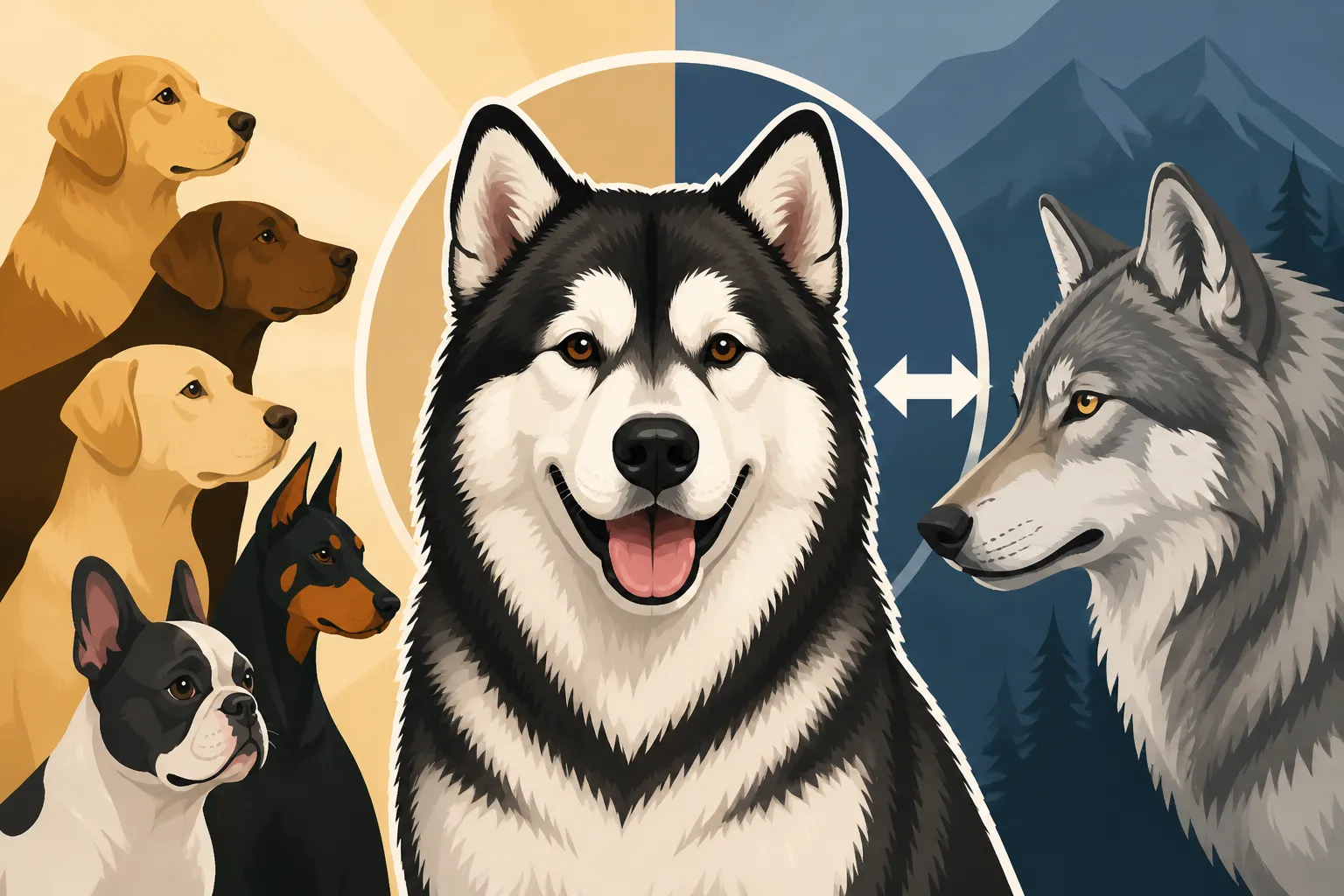
Whether the Malamute Is Closer to the Wolf Than Other Breeds
It’s a question that echoes through every dog park and hiking trail where an Alaskan Malamute roams: "Is that a wolf?" Or perhaps, "Is it part wolf?" It's a natural assumption, given their striking appearance – those thick coats, proud stances, and often piercing gaze can certainly evoke images of their wild cousins. But for us Malamute lovers, we know there’s a world of difference between sharing a distant ancestry and being an actual wolf. This guide is here to shed light on just how close (or not!) the Alaskan Malamute truly is to the wolf and why understanding this distinction is crucial for anyone captivated by this magnificent breed.
The Enduring Wildness: Why Malamutes Look So Wolf-Like
Let's be honest, it's not hard to see why people often mistake an Alaskan Malamute for a wolf or a wolfdog hybrid. They carry themselves with an undeniable dignity and an almost primal aura that can be quite intimidating if you're not familiar with the breed. These aren't your average fluffy lapdogs, and their appearance is a huge part of their allure, but also a source of much misunderstanding.
Physical Traits That Spark Comparison
When you look at a Malamute, many of their physical characteristics seem to scream "wolf." Their dense double coat, often in shades of gray, black, or red with white markings, mimics the natural camouflage of wolves. They have powerful, muscular builds, broad heads, and erect, triangular ears that are perfectly attuned to their surroundings. Their almond-shaped eyes, always brown (blue eyes are a disqualifying fault in the breed standard and are often a sign of mixed breeding, perhaps with a Siberian Husky), hold a depth that can certainly feel ancient. This isn't just a coincidence; it’s a testament to their heritage as one of the oldest Arctic breeds, developed to survive and thrive in harsh, unforgiving environments, much like their wild relatives.
Their posture, especially when they're alert, can also be quite wolf-like. They often carry their tails in a plume over their backs, but when concentrating or uneasy, that tail might drop, giving them an even more stoic, wild appearance. It’s no wonder tourists in places like Alaska might pause, wondering if they’ve stumbled upon something truly untamed when they see one of these majestic dogs.
Behaviors That Echo Their Ancestors
Beyond their looks, Malamutes exhibit certain behaviors that might make you think of wolves. One of the most prominent is their vocalization. While they are famously not big barkers – you won't hear much high-pitched yapping from a Malamute – they are champions of the "woo-woo" and the deep, resonant howl. This unique form of communication, often described as "talking," is strikingly similar to wolf howls and can certainly carry through a neighborhood, sometimes eliciting howls from other dogs (and occasionally, surprised neighbors!). If you've ever heard a Malamute "singing" along to a siren, you know what I mean. If you want to dive deeper into their unique forms of vocalization, you might be interested in Why a Malamute Wooes Instead of Barking or How Little an Alaskan Malamute Barks.
Then there's the independence. Malamutes are intelligent, but they are also problem-solvers who were bred to work cooperatively with humans, not simply obey blindly. They have a mind of their own, a strong will, and a high prey drive honed over centuries of survival and working alongside the Mahlemut people. This inherent independence can be a challenge for owners used to more biddable breeds, leading to traits like a notoriously unreliable recall. A loose Malamute will often follow its nose or its instincts rather than a command, a behavior that closely mirrors the self-reliance of a wolf tracking game. Understanding this deep-seated instinct is key to managing them; in fact, it's why Why a Malamute's Recall Cannot Be Trusted is such a critical topic for prospective owners.
Decoding the DNA: What Science Actually Says
While the visual and behavioral similarities are compelling, it's important to differentiate between shared ancestry and being genetically closer to wolves than other dogs. All dogs, from the tiniest Chihuahua to the largest Great Dane, share a common ancestor: the wolf. The question isn't if they're related, but how recently their lineage diverged.
The Genetic Family Tree of All Dogs
Let's clear something up right away: every single domestic dog on the planet, including your beloved Malamute, descends from the grey wolf (Canis lupus). This domestication event happened tens of thousands of years ago, a truly remarkable journey of partnership and co-evolution. Over millennia, humans selectively bred wolves for traits that made them better companions, hunters, guardians, and workers. This process led to the incredible diversity of dog breeds we see today.
So, when we talk about a Malamute being "closer" to a wolf, we're really talking about where they sit on that ancient family tree. Some breeds have undergone more extensive selective breeding for very specific, often aesthetic or highly specialized working traits, causing them to diverge significantly in appearance and temperament from their wild forebears. Others, like the Malamute, have maintained more of those "primitive" characteristics.
The "Ancient Breed" Classification
Genetic studies, specifically those examining dog DNA, have identified certain breeds as "ancient breeds." These are breeds whose genetic markers show they diverged very early from the ancestral wolf population, before many of the more modern breeds began to emerge. The Alaskan Malamute is consistently found within this group, alongside other northern breeds like the Siberian Husky, Akita, and Samoyed, as well as some non-northern breeds like the Basenji.
What does this mean? It means their genetic blueprint is slightly less "diluted" by the selective breeding that created countless other breeds. They carry more of the original genetic material that was present in the earliest domesticated dogs. This isn't to say they are wolves, but rather that their genetic lineage is closer to the root of the domestic dog family tree. They represent a more direct link to that initial domestication event, which is truly fascinating when you consider the journey of dogs. For more on this, check out Whether Malamute DNA Shows Ancient Arctic Ancestry.
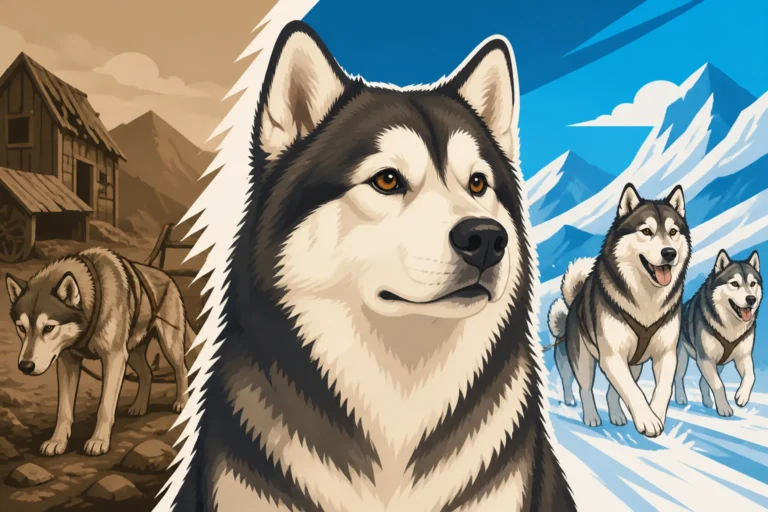
This "ancient breed" status often correlates with a certain independence, intelligence, and physical hardiness that were crucial for survival in partnership with humans in challenging environments. The Mahlemut people, who developed the breed in the Kotzebue Sound region of Alaska, bred them for freighting heavy loads and assisting with hunting, not for show or simple companionship. This demanding work ensured that many of their primitive traits, essential for survival and effective working, were maintained. Learning about The Mahlemut of Kotzebue Sound Bred the Alaskan Malamute offers great insight into their origins.
Malamutes vs. Wolfdogs
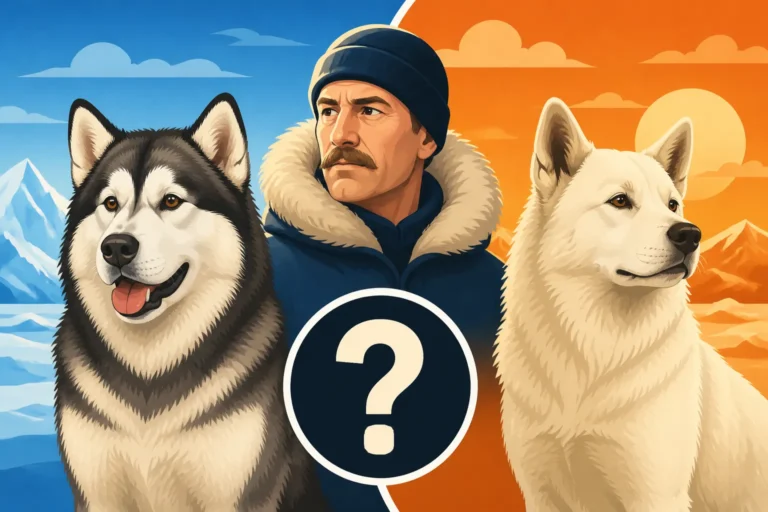
Here's where it's absolutely crucial to draw a clear line: an Alaskan Malamute is a purebred dog, fully domesticated. A wolfdog, or wolf hybrid, is a cross between a domestic dog and a wolf. While a Malamute might look like a wolf, it is not one, nor is it a hybrid. This distinction is paramount, not just for understanding the animal, but for legal and safety reasons too.
Wolfdogs are a completely different proposition. Their behavior can be highly unpredictable, retaining strong wild instincts that make them unsuitable for most typical household environments. They often have very strong flight responses, are difficult to train, and can pose significant challenges that purebred dogs, even independent ones like Malamutes, generally do not. Owning a wolfdog often comes with strict regulations, and in many places, it's outright illegal. If you're curious about the legalities, a good resource is Whether a Malamute Wolf Cross Is Legal.
The confusion often arises because some unscrupulous breeders might try to market large, wolf-like dogs as "wolfdogs" for novelty, or even worse, market actual wolfdogs as purebred Malamutes. It's vital to do your research, work with reputable breeders who perform DNA testing, and understand the definitive differences. A Malamute's primary goal is to partner with humans, even if it's on their terms sometimes. A wolf's primary goal is survival in the wild.
Beyond Genetics: The Impact of Breeding and Environment
While genetics provide a snapshot of their lineage, the millennia of selective breeding and the environment in which Malamutes developed have shaped them into the wonderful, albeit challenging, companions we know today. They are dogs first and foremost, deeply intertwined with human history.
Purpose-Bred for Human Partnership
The Mahlemut people didn't just let their dogs wander and breed randomly. They carefully selected for traits that made their dogs exceptional freighting animals. This meant dogs that were strong, enduring, intelligent, and, critically, cooperative enough to work in teams and take direction from humans. A true wolf, while intelligent, operates on its own set of rules, driven by wild instincts for hunting, pack survival, and territory.
Malamutes were bred to haul heavy loads over long distances, often in extreme cold. This required immense strength, stamina, and a certain amount of self-preservation, but always within the context of a working relationship with their human handlers. They needed to trust their human partners, and vice versa. This is a far cry from the life of a wild wolf, whose interactions with humans are typically limited to avoidance or conflict.
Consider how much weight a Malamute was expected to pull. How Much Weight a Malamute Can Pull gives you an idea of the physical demands and selection pressures on the breed. This isn't just about raw power; it's about a dog that can focus that power in a directed way, alongside other dogs, under human guidance. Their original purpose also speaks to their hardiness and resilience. You'll often find that a quality performance dog food, like some of the high-protein, high-fat options available on Chewy, helps maintain the physique and energy levels reminiscent of their working ancestors.
Trainability and Adaptability
Despite their independent streak, Malamutes are highly trainable. They respond incredibly well to positive reinforcement and consistent, fair leadership. Forceful methods tend to backfire spectacularly with these intelligent, sensitive dogs. They might not be as eager to please as a Golden Retriever, but they are perfectly capable of learning complex commands and excelling in activities like obedience, agility, and of course, weight pull and sledding.
Their adaptability to living in human homes, albeit with some adjustments for their specific needs, is another strong indicator of their domesticated nature. They thrive on companionship, becoming deeply bonded to their families. While they might still dig a crater in your backyard if left to their own devices (a trait they developed for shelter and hunting small prey, truly A Malamute's Digging Is Not a Problem, It Is the Breed), or challenge your authority during adolescence (The Adolescent Malamute That Rewrites the Rules at Fourteen Months), these are still behaviors within the spectrum of domestic dog challenges, not wild animal survival. Providing them with appropriate outlets, like sturdy chew toys and mental enrichment found on Chewy, can help manage these natural tendencies.
| Feature | Alaskan Malamute | Domestic Dog (General) | Grey Wolf |
|---|---|---|---|
| Ancestry | Ancient lineage, early divergence from wolf | All descend from wolves | Wild ancestor of all dogs |
| Domestication | Fully domesticated | Fully domesticated | Wild, undomesticated |
| Purpose | Bred for freighting and human partnership | Varies widely by breed | Survival, hunting, pack dynamics |
| Temperament | Independent, intelligent, loyal, can be stubborn | Varies widely, generally eager to please | Highly cautious, territorial, elusive |
| Trainability | Highly trainable with positive methods | Varies widely, generally high | Extremely difficult, if not impossible |
| Vocalization | Howls, "woos," rarely barks | Barks, whimpers, growls (varies) | Howls, growls, whimpers |
| Human Bonding | Forms deep bonds with family | Forms deep bonds with family | Avoids humans, forms pack bonds only |
| Pack Structure | Hierarchical within household | Varies, often adapts to human family | Strict, complex wild pack hierarchy |
| Prey Drive | High | Varies widely | Extremely high, essential for survival |
| Social Needs | Requires companionship, family-oriented | Requires companionship | Requires only pack members |
| Legal Status | Regarded as a domestic dog | Regarded as a domestic dog | Regulated as wildlife, often illegal to own |
So, while the Alaskan Malamute certainly carries a strong genetic connection and an awe-inspiring resemblance to its wolf ancestors, it is definitively a dog. It's a testament to thousands of years of human-animal partnership, evolving into a loyal, capable, and profoundly enriching companion for those who truly understand and respect its unique heritage. They aren't trying to be wolves; they are simply magnificent Malamutes, a breed with its own distinct identity and charm that demands understanding and appreciation. Before bringing one home, it’s always wise to research The Household an Alaskan Malamute Was Built For to ensure it's the right fit for your lifestyle.
Disclaimer
This article is for general informational purposes only and does not constitute professional advice. Laws, prices and regulations vary by location and change over time. Consult a qualified professional for guidance on your specific situation.