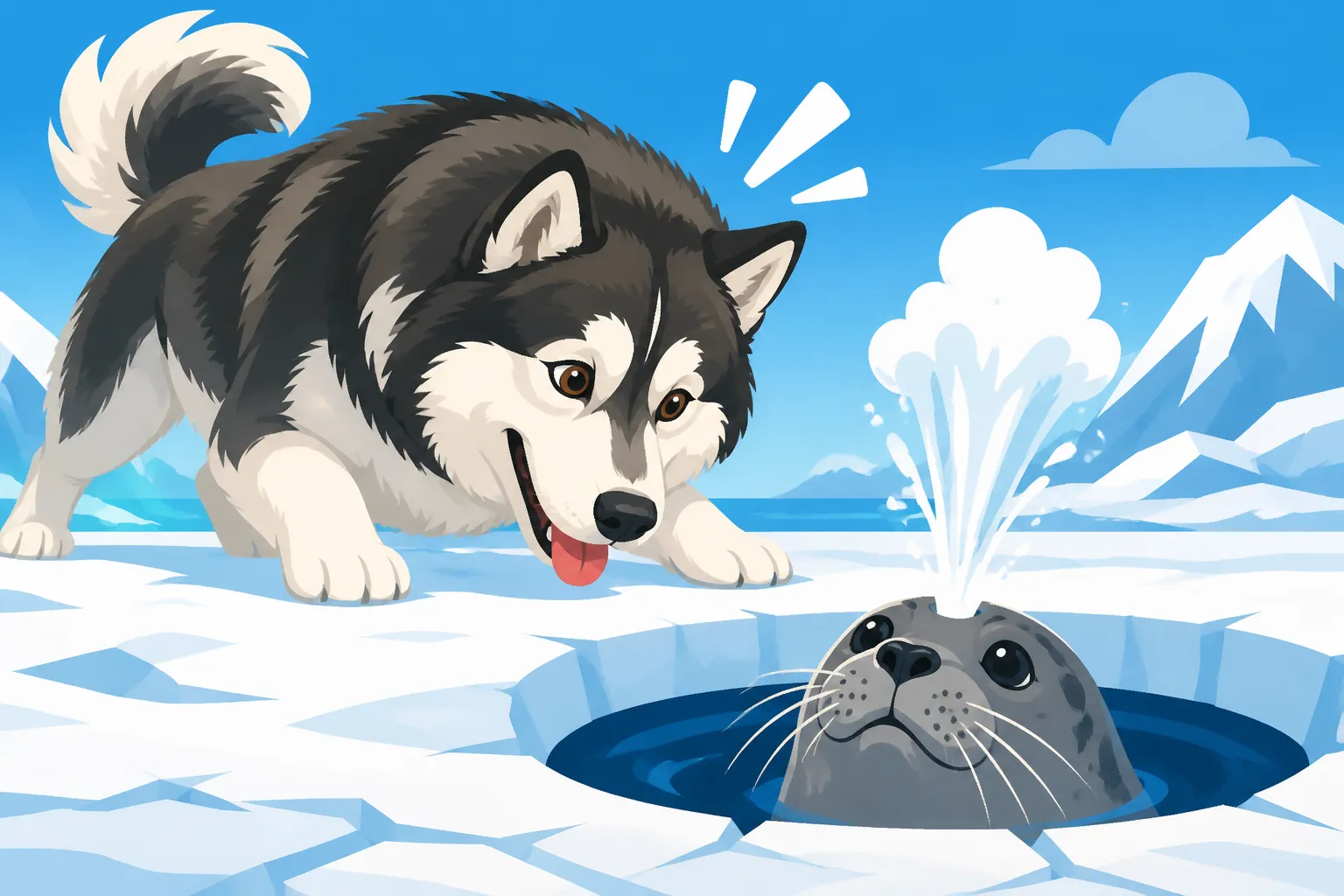
Whether Malamutes Found Seal Blowholes
It’s a romantic image, isn’t it? You picture an Alaskan Malamute, that magnificent, powerful dog, standing on a vast expanse of Arctic ice, nose to the wind, suddenly digging furiously to reveal a hidden seal blowhole for its human companion. This idea is so evocative, hinting at a deep, almost mystical connection between these dogs and their Mahlemut people, but the reality of how these incredible animals helped their human partners survive the harsh Arctic was a bit different from this popular notion.
The Mahlemut People and Their Dogs
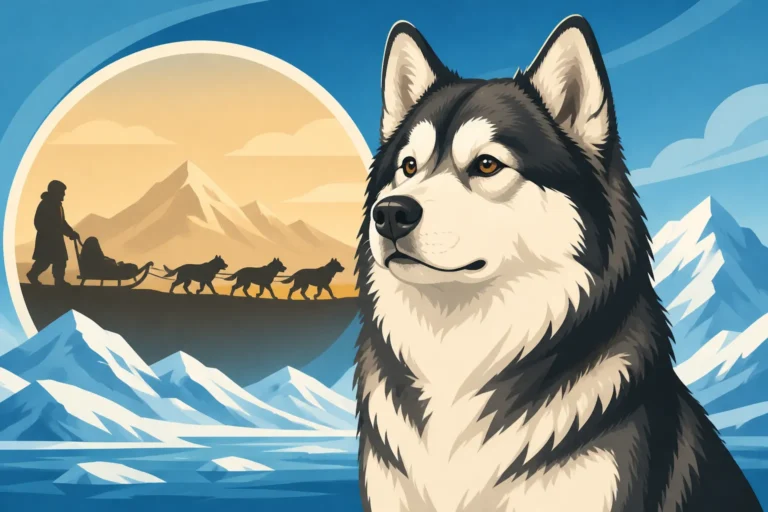
To truly understand the Alaskan Malamute's historical role, we need to go back to its origins with the Mahlemut people of the Kotzebue Sound region in Alaska. These were a resourceful and resilient indigenous group, and their way of life shaped every aspect of their dogs. The Malamute wasn't just a pet; it was a partner in survival, intricately woven into the fabric of daily life and sustenance.
Who Were the Mahlemut?
The Mahlemut were Inuit people living in one of the most challenging environments on Earth. Their survival depended on hunting, fishing, and efficient transportation across vast, unforgiving landscapes of ice and snow. They developed a deep understanding of their environment, their prey, and their tools – which absolutely included their dogs. Their lives were about practical solutions to immediate, life-or-death problems. When we think about The Mahlemut of Kotzebue Sound Bred the Alaskan Malamute, we understand that this wasn't just about selecting for pretty coats, but for hardiness, strength, and an ability to contribute meaningfully to the community's survival. They needed dogs that could handle extreme cold, work tirelessly, and possess an inherent toughness.
Life was a constant negotiation with nature, and every animal, every resource, had to serve a purpose. The Mahlemut were expert hunters, using various strategies to secure food, and their dogs played a critical, though specific, part in these endeavors. Understanding their environment and their tools helps us see why the dogs were used in the ways they were, and perhaps, why some modern myths about their roles don't quite align with historical reality.
The Primary Role of the Alaskan Malamute
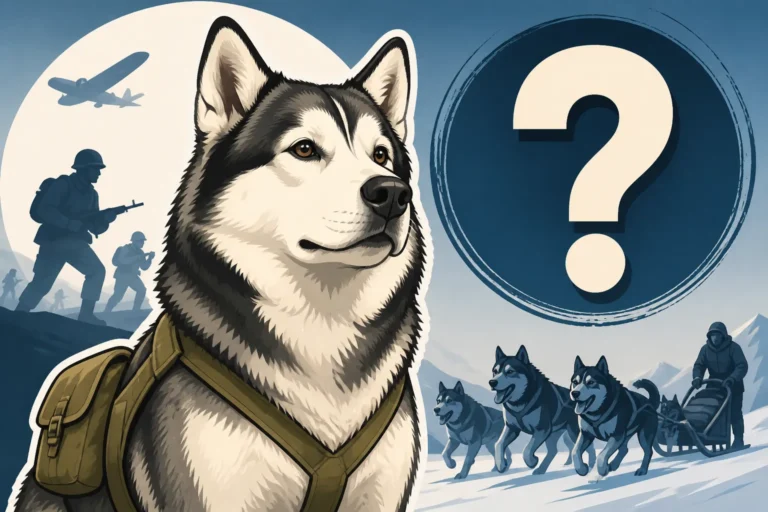
While the image of a Malamute finding seal blowholes is compelling, the breed's primary historical role was unequivocally freighting. These dogs were literally built for hauling heavy loads over long distances, slowly but steadily. They were the engine that moved entire communities, carrying supplies, food, and shelter across the frozen tundra. Imagine expeditions lasting days or weeks, where every ounce of gear had to be transported – this was the Malamute's ultimate job. Freight, Not Speed: What Separates a Malamute From a Racing Dog highlights this perfectly; they weren't about speed, but about endurance and brute strength.
Beyond freighting, these dogs also played a significant role in hunting large game, such as polar bears and caribou. Here, their job was not to find the prey in the intricate, hidden ways some might imagine for seals, but rather to track, hold, or corner larger animals, allowing the human hunters to make the kill. This required incredible courage, strength, and a close working relationship with their human counterparts. It was a symbiotic relationship where the dogs contributed immense physical power and a keen sense of awareness, but always under the direction and skill of their human partners. The idea that What the Mahlemut Used Their Malamutes For revolved heavily around transportation and the confronting of large, dangerous game, rather than the delicate act of sniffing out a tiny, hidden breathing hole on ice.
Hunting Practices in the Arctic
Arctic hunting was, and remains, a highly specialized skill set honed over generations. Hunters developed techniques perfectly adapted to the environment and the behavior of their prey. Understanding these methods gives us crucial insight into whether a dog's natural abilities would have been practically applied to a task like finding seal blowholes.
Methods for Seal Hunting
Seal hunting in the Arctic was a varied and sophisticated endeavor, often dictated by the season and type of ice. One common method, especially for ringed seals, involved waiting patiently at breathing holes, often for hours in freezing temperatures. Hunters would learn to identify these subtle holes in the ice, sometimes using specialized tools or simply their profound knowledge of seal behavior and ice patterns. The process required immense patience, acute observation skills, and precise timing to spear a seal as it came up for air. It wasn't about blindly searching; it was about understanding the environment deeply.
Another method involved stalking seals basking on the ice, often employing camouflage and slow, deliberate movements. Nets and traps were also used in open water during certain times of the year. In all these scenarios, the human hunter's intimate knowledge of the environment, combined with silent, stealthy approaches or strategic waiting, was paramount. A dog, even one as naturally gifted as a Malamute, would likely have been a hindrance to such a quiet, patient approach, as its presence could easily spook the cautious seals.
The Dog's Role in Arctic Hunting
While Malamutes were indeed used in hunting, their role was typically more direct and less about delicate detection. When it came to large game like polar bears, the dogs would track and bay the animal, distracting it and holding its attention while the human hunter approached for the kill. How a Malamute Helped Hunt a Bear is a testament to their bravery and strength in such dangerous situations. They were a force multiplier, not a subtle detector. Their robust build, thick coats, and independent nature made them ideal for confronting formidable foes.
For seal hunting, the idea of a Malamute finding seals might have referred to broader activities, such as alerting hunters to the general presence of seals in an area, or perhaps assisting in the retrieval of a killed seal. This is very different from the specific, almost surgical, act of locating a tiny, often snow-covered, blowhole. The Mahlemut would have relied on their own generations-old knowledge and keen eyesight to identify those vital breathing holes. To suggest that How a Malamute Found Seals for the Mahlemut implies a precise blowhole detection method would be a misinterpretation of their more generalized and powerful assistance.
Malamute's Specialized Skills vs. Seal Blowholes
When we consider the actual physical and sensory capabilities of an Alaskan Malamute, it becomes clear that while they are supremely adapted to the Arctic, their specific skills were not geared towards the subtle detection of seal blowholes in the ice. Their strengths lie elsewhere.
Scent and Detection Abilities
Alaskan Malamutes certainly possess a powerful sense of smell, like all dogs. They can track game, detect changes in weather, and navigate by scent. However, detecting a seal blowhole through thick layers of snow and ice is an entirely different challenge. The odor emitted by a seal's breath would be minimal, diffused, and likely masked by the overwhelming scent of the Arctic environment itself. Seals spend most of their time in the water, only surfacing briefly. The blowholes themselves are often covered by snow, ice, or even a thin layer of slush.
Contrast this with the detection of a land animal, where scent trails are left on vegetation, snow, and ground. The complex, three-dimensional nature of ice, snow, and frozen air makes precise scenting of a tiny, temporary opening incredibly difficult, even for a dog. It's not that a Malamute couldn't smell a seal if it was right there, but the environmental factors make the consistent, reliable detection of a blowhole a highly improbable task for any dog, regardless of breed. The Mahlemut people had their own methods for this, relying on their profound knowledge of ice and animal behavior.
Working on Ice and Snow
Malamutes are unparalleled masters of ice and snow travel. Their thick double coats provide incredible insulation, their strong, well-padded feet offer excellent traction, and their powerful bodies are built for moving through deep snow and over treacherous ice. They are completely at home in temperatures that would fell most other animals. This physical prowess is what made them such exceptional freighting dogs and invaluable companions for long journeys across frozen landscapes. Their entire physique, from their strong legs to their bushy tails used for warmth, is designed for surviving and thriving in the polar regions.
However, moving swiftly and efficiently across ice is one thing; carefully and precisely probing for hidden breathing holes is another. The weight of a Malamute, even if it could somehow detect a blowhole, might be counterproductive to a hunter trying to keep a low profile or identify a fragile spot on the ice. The dogs were essential for transportation and protection, for moving the hunter to the hunting ground and moving the harvest back home, but not for the intricate, stealthy work of finding the breathing holes themselves.
The Nature of Seal Blowholes
Seal blowholes are subtle, often barely visible openings in the ice created by seals to access air. They can be small, covered by fresh snow, or even camouflaged by frost. Their locations can vary, and they are not always a constant feature, sometimes being abandoned or new ones created. A seal’s presence at a blowhole is fleeting, making it a difficult target for detection.
The Mahlemut people developed incredibly precise techniques for finding these holes, often involving observing the subtle patterns in the ice, looking for signs of recent activity, or using specialized tools to test the ice. It was a skill passed down through generations, relying on human intelligence, observation, and an intimate understanding of the unique Arctic environment. Expecting a dog, even one as smart and adaptable as a Malamute, to reliably outperform human hunters in this specific, nuanced task isn't supported by historical accounts or the practical realities of Arctic hunting.
Distinguishing Fact from Fiction in Breed History
It’s easy for romanticized notions to creep into the stories we tell about ancient breeds, especially ones as majestic and tied to a unique environment as the Alaskan Malamute. Separating these compelling narratives from the actual, documented history is crucial for understanding the breed properly.
Romanticized Narratives vs. Reality
The image of a Malamute locating a hidden seal blowhole is certainly captivating. It fits neatly into a broader narrative of the "noble Arctic dog" possessing almost supernatural instincts for survival and partnership. We love stories where animals possess abilities that transcend our own, and the vast, mysterious Arctic is the perfect backdrop for such tales. This romanticism often comes from popular culture, literature, and even casual conversations that build upon an initial kernel of truth – that Malamutes are Arctic dogs and were involved in hunting. However, the details get embellished, often without malicious intent, simply because the idea is so appealing. It's a bit like how some people might imagine a modern service dog knowing exactly what's wrong with its owner without any training, just pure instinct. The reality, while still amazing, is often more grounded in trained behaviors and specific roles.
It's a testament to the Malamute's incredible reputation that such a detailed and specialized task would be attributed to them. However, it's vital to remember that the Mahlemut people themselves were the ultimate experts in seal hunting, and their methods relied heavily on their own intricate knowledge of the environment and their prey, not solely on a dog's nose.
Documented Historical Roles
When we look at documented historical accounts and the practices of the Mahlemut people, a very clear picture emerges of the Malamute's primary roles. These dogs were the ultimate powerhouses of the North. Their main jobs were:
- Freighting: Hauling incredible weights of supplies, food, and people across vast distances. This was their defining characteristic and what they were primarily bred for. Think of them as the Arctic's original tractor-trailer.
- Hunting large game: Assisting in the pursuit and holding of animals like polar bears, caribou, and moose. They provided the strength, courage, and tracking ability to corner or distract dangerous prey, enabling hunters to make the kill.
- Protection: Guarding camps and families against wild animals. While they might not be traditional "guard dogs" in the sense of aggressively protecting property from humans, their imposing presence and natural wariness certainly deterred predators.
Their contributions were undeniably massive and indispensable to the Mahlemut's way of life. They were partners in every sense of the word, critical to survival. But the highly specialized, stealthy, and delicate task of locating seal blowholes consistently and reliably simply does not align with their documented history or the known hunting strategies of the Mahlemut people. Their value was in their power, endurance, and general awareness, not in pinpoint olfactory detection of hidden breathing holes.
Why the Misconception Persists
It's natural for certain ideas to take hold and become part of a breed's lore, even if they aren't entirely accurate. For the Alaskan Malamute, several factors contribute to the enduring belief that they actively found seal blowholes.
Association with Arctic Life
The Alaskan Malamute is, above all, an icon of the Arctic. Their very appearance—the thick coat, powerful build, and wolf-like features—conjures images of snow, ice, and polar expeditions. When you envision such a dog, your mind automatically connects it to all aspects of Arctic survival, including hunting. It’s a powerful association, almost a brand identity for the breed. If a dog is so perfectly suited to the Arctic, it seems logical that it would assist its human companions in every possible way to secure food, and seals are a quintessential Arctic food source. This broad association leads to the assumption that if seals were hunted, the Malamute must have played a direct role in their capture, including finding their breathing holes.
Furthermore, the general understanding that The Alaskan Malamute Is One of the Oldest Breeds and that Whether Malamute DNA Shows Ancient Arctic Ancestry further cements their image as deeply intertwined with the ancient ways of life in the north. This deep historical connection sometimes leads people to fill in the gaps with plausible, albeit unconfirmed, roles.
The "Arctic Dog" Stereotype
The "Arctic dog" is a powerful stereotype that lumps together several breeds, including Siberian Huskies, Greenland Dogs, and Samoyeds, into one generalized category. This stereotype often includes assumptions about their abilities: they are tough, intelligent, loyal, and possess an inherent knack for survival in extreme cold. While many of these traits are true for Malamutes, the stereotype can also lead to misattributions of specific skills. For instance, some Arctic dog breeds were known for different types of hunting or working roles. The fine distinctions between these roles can get lost in the broader "Arctic dog" narrative.
For example, while some smaller northern breeds might have been used in more active hunting roles where detection was key, the Malamute's massive size and power lent itself more to heavy pulling and confronting large game. The Alaskan Malamute Against the Siberian Husky article often explores these differences, showing how even within the Arctic dog family, their purposes and specialties varied. The Malamute was the freighter, the heavy hauler, the one who could stand its ground against a polar bear – an absolutely critical role, but one that didn't typically involve the delicate task of detecting hidden seal blowholes.
| Malamute's Primary Historical Roles | Common Misconception | Why It's Different |
|---|---|---|
| Freighting/Hauling | Sprint racing | Bred for endurance, not speed; moves heavy loads slowly. |
| Large Game Hunting (e.g., bear) | Pinpoint detection | Tracks, bays, and holds prey for hunter; relies on strength and courage. |
| Camp Protection | Guard dog (human aggression) | Deters wild animals and strangers by presence; not typically aggressive towards humans. |
| General Companion/Work Partner | Solo hunter | Works in close partnership with humans, following commands and contributing physical power. |
It's important to appreciate the Malamute for the truly incredible work they did do, rather than attributing roles that, while romantic, don't align with their genuine history. Their strength, resilience, and unwavering partnership with the Mahlemut people are more than enough to earn our respect and admiration. If you're looking for dog supplies for your own amazing Malamute, whether it's a durable leash for those long walks or a comfy bed for after a day of "pulling" toys around, Chewy offers a vast selection tailored to their needs. They might not be sniffing out seal blowholes, but they certainly still need quality gear to support their active lives!
The Lasting Legacy of the Working Malamute
Even if the specific tale of finding seal blowholes isn't part of their true history, the Alaskan Malamute's legacy as a working dog is undeniable and deeply impressive. The physical and mental traits cultivated by the Mahlemut people for survival continue to define the breed today, making them unique and cherished companions.
Traits Developed for Survival
The environment of the Arctic, and the demands of the Mahlemut way of life, forged a dog with an incredible suite of characteristics perfectly suited for survival. These aren't just superficial traits; they are deeply ingrained instincts and physical adaptations. Their dense, insulating double coat, for instance, isn't just fluffy; it's a marvel of natural engineering that allows them to withstand extreme cold. Their large, strong bones and powerful musculature are the bedrock of their ability to haul heavy freight for hours on end, without complaint. This enduring physical capability meant they were the primary mode of transport for How Far a Malamute Freight Team Traveled in a Day.
Beyond the physical, the Malamutes developed a remarkable independence coupled with a deep desire to work alongside humans. They had to be smart enough to make decisions in treacherous terrain, but also willing to cooperate within a team. Their natural curiosity and problem-solving skills, sometimes mistaken for stubbornness by modern owners, were essential for navigating a challenging world. These aren't traits for delicately sniffing out holes; they are traits for moving mountains, literally and figuratively, and for protecting their human companions.
Modern Interpretations of Their Ancestral Roles
Today, our Alaskan Malamutes might not be hauling whale blubber across frozen fjords, but their ancestral traits still manifest in their behavior and needs. That powerful urge to pull is often channeled into dog sports like weight pull, sledding, or even just pulling a cart in the park. The Age a Malamute Can Start Pulling is a common question because modern owners want to engage these natural instincts safely. This is why a sturdy harness, often available from retailers like Chewy, is an essential piece of equipment for almost every Malamute owner.
Their hunting instincts, though no longer aimed at polar bears, might express as a strong prey drive towards squirrels, rabbits, or even the neighbor's cat – a trait modern owners often grapple with, as discussed in An Alaskan Malamute in a Home With Cats or Small Dogs. The independence that served them well in the Arctic means they require consistent, positive training and an owner who understands how to motivate such an intelligent and strong-willed animal. We see these ancient adaptations in every wag of their plume tail and every soulful glance.
It’s a testament to the Mahlemut people's breeding prowess that these dogs, shaped by generations of necessity, continue to thrive and impress us with their capabilities and their deep connection to a world that most of us can only imagine.
Disclaimer
This article is for general informational purposes only and does not constitute professional advice. Laws, prices and regulations vary by location and change over time. Consult a qualified professional for guidance on your specific situation.