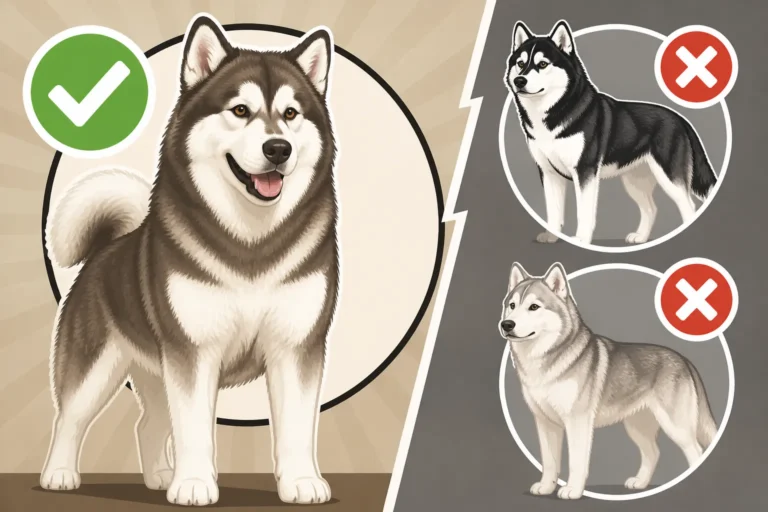
How the Word Malamute Is Spelled and Why
It’s a common frustration, isn't it? You love your big, fluffy Alaskan Malamute, you talk about them constantly, but when it comes to writing their breed name down, you suddenly freeze. Is it "Malemute"? "Malamoot"? "Mallymute"? Getting it right feels important, and this guide is here to unravel the history and practicalities behind the correct spelling of "Malamute" once and for all.
The Origin of the Name: A Glimpse into History
To truly understand why "Malamute" is spelled the way it is, we have to travel back in time to the majestic, ice-covered lands of Alaska, specifically to the Kotzebue Sound region. This isn't just a random name; it's a direct homage to the indigenous people who first developed this incredible dog breed.
The Mahlemut People and Their Dogs
The word "Malamute" is derived directly from the name of an Inuit tribe, the Mahlemut (also sometimes spelled Malimiut or Mahlemiut). These resourceful people lived in the harsh Arctic environment, relying heavily on their powerful, resilient dogs for survival. These aren't just any dogs; they were bred for a very specific purpose: freighting. Imagine trying to transport heavy loads of supplies, food, and even entire households across vast, unforgiving frozen landscapes without modern machinery. That's where the Mahlemut dogs came in. They were the original workhorses, pulling sleds with incredible strength and endurance, not for speed, but for sustained, heavy hauling. The Mahlemut of Kotzebue Sound Bred the Alaskan Malamute delves deeper into their fascinating history.
This deep connection to the Mahlemut people explains the "Mal" prefix. It's not a descriptive word for the dog's characteristics; it's a tribal identifier, much like a brand name for a particular type of working dog developed by a specific group of people. When dog fanciers and early breeders began to standardize the breed in the early 20th century, they sought to honor this heritage. The spelling we use today is a direct reflection of this ancestral link, even if the pronunciation might not be immediately obvious to those unfamiliar with the historical context.
Evolution of the Spelling and Standardisation
Over time, as Westerners encountered these dogs and their people, there were various attempts to spell and record the name phonetically. You can imagine the challenges of translating an oral language into a written one, especially with different accents and interpretations. This led to a period where spellings might have been inconsistent, much like how many surnames evolved. However, when the Alaskan Malamute was formally recognized by organizations like the American Kennel Club (AKC), a standardized spelling became crucial. This allowed for consistent record-keeping, pedigree tracking, and a unified identity for the breed.
The adoption of "Malamute" solidified this particular spelling, becoming the official and universally accepted form. It served as a way to both preserve the historical lineage from the Mahlemut people and provide clarity within the burgeoning world of dog breeding and showing. It's a spelling that carries a legacy, signifying not just a breed of dog, but a partnership between humans and canines that endured for centuries in one of the most challenging environments on Earth. Understanding this historical root helps us appreciate why that seemingly unusual combination of letters is actually quite perfect and meaningful.
Common Spelling Pitfalls and Why They Happen
It's completely understandable why "Malamute" can be a tricky word to spell. English itself is a wonderfully eccentric language with inconsistent rules, and when you add in a word derived from another language, it's a recipe for confusion. Many people stumble over certain letter combinations, and often, it's due to logical assumptions that just don't apply here.
Phonetic Misinterpretations
One of the biggest culprits behind misspellings is trying to spell the word exactly as it sounds to the ear. The "a" in "Malamute" is often pronounced more like an "ah" sound, leading people to think there might be an "e" in there, perhaps a double "a," or even a silent "e" at the end affecting a previous vowel. We're used to words like "mute" having that "u-t-e" ending, but the preceding "lama" isn't a common English word part. This can lead to variations like "Malemute" or "Malamoot," attempting to capture the vocalizations that don't quite translate to the official written form.
Consider how we pronounce the 'u' in 'mute' versus the 'u' in 'umbrella.' English is full of these phonetic inconsistencies. For "Malamute," the 'a's have a fairly open sound, almost like the 'a' in 'father,' while the 'u' is indeed long, as in 'flute.' It's this combination, and the slight variation in emphasis depending on regional accents, that can throw people off. When you're trying to quickly type something about your dog, it's easy for muscle memory to kick in and opt for a more common English sound pattern, even if it's incorrect.
Overlapping with Other Breeds and Similar-Sounding Words
Another common reason for misspellings comes from the sheer number of Arctic breeds, and the slight overlaps in their names or appearances. People might confuse "Malamute" with "Husky," or even "Samoyed," leading to a mental jumble. Sometimes, the brain tries to find patterns from other words, not necessarily dog breeds, that sound vaguely similar. This cognitive shortcut can lead to "Malamute" becoming "Malimute" or even adding unnecessary letters.
| Common Misspelling | Correct Spelling | Why it happens (Likely Reason) |
|---|---|---|
| Malemute | Malamute | Phonetic spelling, assuming 'e' sound for 'a' |
| Mallamute | Malamute | Doubling 'l' for emphasis or common English spelling patterns |
| Malamoot | Malamute | Phonetic spelling of the 'u' sound |
| Malumute | Malamute | Mishearing or mistyping of the vowel sound |
| Mallumute | Malamute | Combination of doubling 'l' and vowel mistake |
It's also interesting how the familiarity with a word can decrease when you're forced to write it down. You might say "Malamute" a hundred times a day, but ask you to spell it, and suddenly it looks alien. This phenomenon affects many words, but particularly those with unique origins that don't follow typical English orthography. We can also see this in other breed names, like "Chihuahua" or "Dachshund," which also pose their own challenges for spelling to those not accustomed to them.
Why Correct Spelling Matters
While it might seem like a minor detail, getting the spelling of "Malamute" right holds more significance than you might initially think. It's not just about grammatical correctness; it touches upon respect, clear communication, and finding accurate information about your beloved companion.
Respect for Heritage and Breed Integrity
Spelling "Malamute" correctly is, in essence, a nod of respect to the Mahlemut people who cultivated this magnificent breed. It acknowledges their contribution to canine history and their deep connection with these working dogs. Using the correct spelling helps maintain the integrity of the breed's identity, ensuring that its heritage isn't diluted or misrepresented through casual misspellings. It’s a small but powerful way to honor the legacy of those who first bred these incredible animals for specific purposes in the Arctic. Whether the Alaskan Malamute Is One of the Oldest Breeds explores more about their ancient lineage.
When you correctly spell out "Alaskan Malamute," you're participating in a tradition of accuracy and honoring a lineage that stretches back centuries. This isn't a fluffy designer dog; it's a piece of living history, and acknowledging that history starts with getting its name right. It also shows a level of dedication and care as an owner, signifying that you've taken the time to learn about the finer details of the breed you've chosen to welcome into your home. This respect extends beyond just the name; it’s about understanding the entire tapestry of the breed, from its powerful drive to its unique physical characteristics.
Clear Communication and Information Retrieval
In a world driven by search engines and online communities, accurate spelling is paramount for effective communication and finding reliable information. If you're searching for specific health concerns like Zinc Responsive Dermatosis in an Alaskan Malamute or trying to find a reputable breeder, using the correct spelling will yield far better and more relevant results. Imagine typing "Malemute puppies for sale" into your search bar—you might get fewer, or even incorrect, listings compared to using the proper "Alaskan Malamute puppies."
When you're discussing your dog's needs with a vet, a trainer, or fellow enthusiasts, using the correct terminology ensures everyone is on the same page. Misspellings can create confusion, leading to misunderstandings, especially when dealing with breed-specific issues that require precise identification. For example, if you're looking for specialized gear, like a freight harness for your Malamute, you'll want to ensure you're searching for the right breed to get appropriate recommendations, perhaps even from pet supply sites like Chewy that categorize products by breed. Clear, accurate language is the foundation for getting the right care, the right products, and the right advice for your dog.
Professionalism in Breeding and Registry
For breeders, professional organizations, and show circuits, correct spelling is non-negotiable. Registries like the AKC require precise naming conventions for pedigrees and official documentation. A misspelled name could cause issues with registration, transfer of ownership, and participation in events. It's a fundamental part of maintaining the integrity of the breed standard and the historical records of each individual dog.
Furthermore, a breeder who consistently uses the correct spelling demonstrates professionalism and attention to detail, which are qualities buyers look for. It signals that they are knowledgeable about the breed's history, standards, and nuances. Conversely, a breeder consistently misspelling the breed name might unintentionally raise red flags for potential buyers, suggesting a lack of thoroughness or understanding. Ultimately, while it might seem like a small grammatical point, the correct spelling of "Malamute" is intertwined with the breed's history, its community, and the practicalities of dog ownership in the modern world.
Resources for Accurate Malamute Information
Navigating the vast ocean of dog information online can be overwhelming, especially when you're trying to ensure you're getting reliable facts about your specific breed. Fortunately, there are several excellent resources available that consistently use and reinforce the correct spelling of "Alaskan Malamute" while providing a wealth of valuable knowledge.
Breed Club Websites and Registries
The absolute gold standard for accurate breed information is typically the official national breed club. For the Alaskan Malamute, this would be organizations like the Alaskan Malamute Club of America (AMCA). These clubs are run by dedicated enthusiasts, breeders, and experts who are committed to preserving the breed standard, promoting responsible ownership, and providing accurate historical and health information. Their websites are meticulously maintained, featuring correct spellings, historical accounts, breed standards, and often lists of reputable breeders.
Similarly, major kennel clubs like the American Kennel Club (AKC) or the Canadian Kennel Club (CKC) are excellent resources. They publish official breed standards, provide guidance on health testing (like for The Health Tests Both Alaskan Malamute Parents Should Have), and maintain vast databases of registered dogs. These institutions are sticklers for accuracy, including the correct spelling of all recognized breeds. If you're ever in doubt about a specific piece of information or how to spell a breed name, starting with these official sources is always your best bet.
Reputable Pet Information Sites and Online Retailers
Beyond breed clubs, many well-established pet information websites and online retailers maintain high standards of accuracy, especially when discussing specific breeds. Sites that feature comprehensive breed profiles often cross-reference their information with official breed clubs. While the internet is rife with misinformation, sites known for their veterinary-backed content or strong editorial teams are generally trustworthy.
Even large online retailers, such as Chewy, often have extensive breed profiles within their informational sections. When you're browsing for breed-specific food, toys, or training tools, you'll find that these platforms use the correct "Alaskan Malamute" spelling consistently. This isn't just for correctness; it's essential for their internal search functions and product categorization to ensure customers find what they need. If you're looking for articles on topics like What an Alaskan Malamute Actually Weighs or How Alaskan Malamute Is Pronounced, cross-referencing with these reputable sources can quickly confirm the correct spelling and provide deeper insights.
By leaning on these reliable sources, you not only ensure you're getting the best information for your Alaskan Malamute but also reinforce the correct spelling within your own knowledge base. It's a small detail, but one that connects you more deeply to the history and community surrounding this magnificent breed.
Disclaimer
This article is for general informational purposes only and does not constitute professional advice. Laws, prices and regulations vary by location and change over time. Consult a qualified professional for guidance on your specific situation.