How Alaskan Malamute Is Pronounced
It’s a common scenario, isn't it? You’re proudly telling someone about your amazing Alaskan Malamute, and then you hit that word: "Malamute." Suddenly, you feel a tiny hesitation, wondering if you’re saying it just right, or if you’re making the same little slip many others do. This guide is here to wipe away that uncertainty, giving you the confidence to pronounce your beloved breed’s name accurately, every single time.
Decoding "Malamute": The Correct Pronunciation
Let's cut right to the chase, because this is often the biggest sticking point for new and even seasoned Malamute owners. The name isn't quite as straightforward as it looks on paper, and that's perfectly okay! We're here to break it down syllable by syllable, making it easy to grasp.
Breaking Down the Syllables
The key to correctly pronouncing "Malamute" lies in understanding its three distinct syllables and where the emphasis falls. It's not "Mal-uh-moot" or "Mal-a-mute" like you might hear some folks say. The true pronunciation leans into its historical roots, which we'll get into shortly.
The most accurate phonetic breakdown is Mal-uh-myoot.
- Mal-: This first syllable is pronounced just like the beginning of "mallet" or "malice." It's a short 'a' sound.
- -uh-: The middle syllable is a soft, unstressed 'uh' sound, similar to the 'a' in "sofa" or the 'u' in "umbrella."
- -myoot: This is where most people tend to get a little tangled up. The final syllable is pronounced exactly like the word "mute" (as in quiet, or to silence something), but with a very subtle 'y' sound preceding it, making it "myoot." Think of the sound you make when you say "music" or "huge."
So, when you put it all together, it flows as Mal-uh-myoot. The emphasis, or stress, is typically placed on the first syllable, "Mal-". So it's MAL-uh-myoot, not mal-UH-myoot or mal-uh-MYOOT. Saying it out loud a few times, emphasizing that first part, will help it roll off the tongue more naturally.
Common Mispronunciations and Why They Happen
It’s easy to stumble over a word, especially one that isn't immediately intuitive. Many people, when first encountering "Malamute," tend to fall into a couple of common traps. Understanding these can help you recognize and correct them, both in yourself and gently for others if the opportunity arises.
One of the most frequent mispronunciations is "Mal-uh-moot." Here, the 'u' is given the long 'oo' sound, like in "moon" or "food." This often happens because English spelling can be tricky, and the 'u-t-e' combination doesn't always guarantee the "yoot" sound. Think of words like "brute" or "flute"—they use the 'oo' sound, but "Malamute" is an exception in that phonetic pattern. Another common variant might be "Mal-a-mutt," where the 'u' is short, like in "mutt" or "cut." This completely misses the longer 'u' sound altogether.
These missteps are usually due to the visual interpretation of the word without prior knowledge of its specific phonetic rules. Our brains try to match new words to familiar patterns, and sometimes those patterns lead us astray. It’s a natural process, but with a little awareness, we can get it right. If you're ever looking up products for your furry friend, even on popular sites like Chewy, sometimes knowing the exact pronunciation can even help if you're using voice search!
More Than Just a Sound: The History Behind the Name
Understanding the origin of the name "Alaskan Malamute" is more than just a trivia point; it's a profound connection to the breed's heritage and the people who developed these magnificent dogs. The pronunciation itself is a nod to this deep history.
The Mahlemut People: The Breed's Namesake
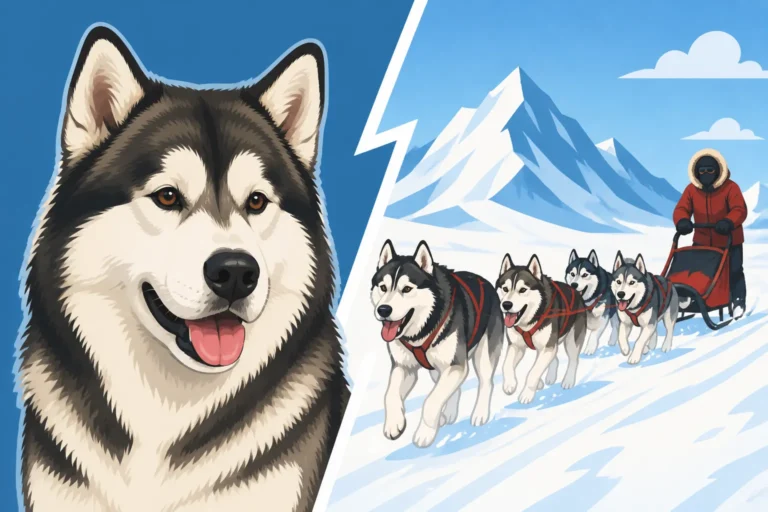
The Alaskan Malamute owes its very name to the Mahlemut (also spelled Mahlemiut or Mahlemuit) Inupiaq people, who lived in the Kotzebue Sound region of northwestern Alaska. These indigenous people relied heavily on their powerful, resilient dogs for survival in the harsh Arctic environment. These dogs were their partners in hunting, pulling heavy loads of meat back to camp, and essentially sustaining their way of life. The bond between the Mahlemut people and their dogs was not merely one of ownership but of mutual survival and respect.
The dogs were not just "dogs"; they were an integral part of the Mahlemut community, known for their strength, endurance, and friendly disposition. When explorers and traders encountered these dogs, they naturally named them after the people with whom they were so closely associated. Hence, "Malamute" became the shortened form of "Mahlemut dog." You can dive deeper into this fascinating history by reading The Mahlemut of Kotzebue Sound Bred the Alaskan Malamute.
How the Mahlemut Language Influenced Pronunciation
The "Mal-uh-myoot" pronunciation is a direct echo of how the Mahlemut people's language likely sounded, particularly in the suffix. While their language, Inupiaq, has its own complex phonology, the Anglicized version of their name, when applied to their dogs, maintained a phonetic flavor that distinguishes it. The softer 'yoot' sound, rather than a hard 'oot' or 'utt', is believed to be closer to the original intonation.
This connection isn't just academic; it gives depth to the name itself. It reminds us that these aren't just any dogs; they are a living legacy of a specific culture and their incredible relationship with the Arctic. Knowing this can help solidify the correct pronunciation in your mind, turning a simple word into a tribute to their heritage. This shared history also explains why purity of breed standards, including distinguishing them from other Nordic breeds like the Siberian Husky, is so important to enthusiasts. You can learn more about these distinctions in The Alaskan Malamute Against the Siberian Husky.
Navigating Common Pitfalls and Building Confidence
Even with the phonetic breakdown and a grasp of the history, sometimes old habits die hard. Or, perhaps, you're interacting with others who use a different pronunciation. It's all part of the journey of being a Malamute owner!
What to Do When Others Say It Differently
Let's be realistic: you're going to encounter people who pronounce "Malamute" differently. It might be a new acquaintance at the dog park, a vet tech, or even someone who's had dogs for years. It's easy to feel a bit awkward or unsure how to react. My advice? Don't stress! The most important thing is that you know your dog and you love them.
Often, people aren't even aware they're saying it "incorrectly." They've just heard it one way and adopted it. You have a few options:
- Let it slide: For casual interactions, sometimes it's simply not worth correcting. Your primary goal is to enjoy your dog's company and the conversation.
- Subtly model the correct pronunciation: When you respond, just use the correct "Mal-uh-myoot" yourself. Often, people will subconsciously pick up on it without any direct correction. For example, if someone says "Your mal-uh-moot is so fluffy!" you can reply, "Yes, my Mal-uh-myoot loves to roll in the snow!"
- Offer a gentle, educational tidbit: If you feel the situation allows for it, and the person seems open to learning, you can offer a brief, friendly explanation. Something like, "It's actually pronounced 'Mal-uh-myoot,' named after the Mahlemut people of Alaska!" This usually comes across as informative rather than condescending. You might even mention searching for specialized gear on Chewy, where clear communication, even by voice, can be helpful.
Remember, the goal isn't to be a pronunciation police officer but to share knowledge and foster a greater appreciation for this wonderful breed. Understanding How the Word Malamute Is Spelled and Why can also help in these discussions.
The Value of Consistency
Once you've internalized the correct pronunciation, consistency is your friend. The more you use "Mal-uh-myoot" in your everyday conversations, the more natural it will become. This confidence will shine through, and others might even pick up on your accurate usage.
Consider it part of the journey of truly understanding your Malamute, from their unique personality, their tendency to Why a Malamute Wooes Instead of Barking, to the origins of their very name. It shows respect for the breed's history and for the people who first partnered with these magnificent animals.
Making the Pronunciation Stick: Tips for Everyday Use
Learning a new pronunciation is like any other habit: it takes a little practice. But with a few simple techniques, you'll be saying "Alaskan Malamute" like a seasoned pro in no time.
Practice Aloud and With Purpose
The best way to solidify the correct pronunciation is to actively practice it. Don't just read it in your head; say it out loud.
- Repeat the breakdown: Start with "Mal," then add "uh," then "myoot." Gradually string them together: "Mal-uh-myoot."
- Use it in sentences: Integrate the word into typical conversations you might have about your dog. "My Alaskan Malamute loves to go on long walks." "We got this new chew toy for our Malamute from Chewy." "My Malamute has such a thick coat."
- Record yourself: If you're really committed, record yourself saying it and play it back. You might be surprised by what you hear, and it can help you fine-tune your delivery.
This active practice builds muscle memory in your mouth and brain, making the correct pronunciation feel much more natural over time. It's a bit like training your dog for a new command—repetition is key! Just as you might teach your Malamute to understand commands, you're teaching yourself this specific pronunciation.
Leveraging Resources and Community
You're not alone in wanting to get this right. The Malamute community is full of passionate owners, and many are keen to preserve the integrity of the breed, including its name.
- Listen to others: Seek out videos of experienced breeders, handlers, or commentators from dog shows. Listen carefully to how they pronounce "Alaskan Malamute." You'll find a consistent "Mal-uh-myoot" among those who truly know the breed.
- Engage with local clubs: If there's an Alaskan Malamute club in your area, attend a meeting or an event. This is a fantastic opportunity to hear the name spoken in context and to learn more about these incredible dogs, from their care requirements to What an Alaskan Malamute Needs Every Day.
- Online communities: Join online forums or social media groups dedicated to Alaskan Malamutes. While you'll hear all sorts of pronunciations, you can also ask for audio examples or clarification from experienced members.
Using these resources can not only help you perfect your pronunciation but also connect you with a wider network of Malamute enthusiasts. It's a wonderful way to deepen your understanding and appreciation for this magnificent breed, which is recognized as The Alaskan Malamute Is Alaska's State Dog.
| Common Pronunciation Errors | Incorrect Pronunciation | Phonetic Representation | Correct Pronunciation | Phonetic Representation | Key Difference |
|---|---|---|---|---|---|
| Misreading the 'u' as 'oo' | Mal-uh-moot | /mæləˈmuːt/ | Mal-uh-myoot | /mæləˈmjuːt/ | The 'y' sound before 'oot' |
| Shortening the 'u' | Mal-a-mutt | /mæləmʌt/ | Mal-uh-myoot | /mæləˈmjuːt/ | The long 'yoot' sound vs. short 'utt' |
| Incorrect stress | mal-uh-MYOOT | /mæləmjuːt/ | MAL-uh-myoot | /ˈmæləmjuːt/ | Stress on the first syllable ('Mal') |
Ultimately, knowing how to correctly pronounce "Alaskan Malamute" is a small but meaningful way to honor the breed’s rich history and the Mahlemut people who shaped it. It's a small detail that speaks volumes about your connection to these incredible dogs.
Disclaimer
This article is for general informational purposes only and does not constitute professional advice. Laws, prices and regulations vary by location and change over time. Consult a qualified professional for guidance on your specific situation.