Whether Peary Reached the Pole With Malamutes
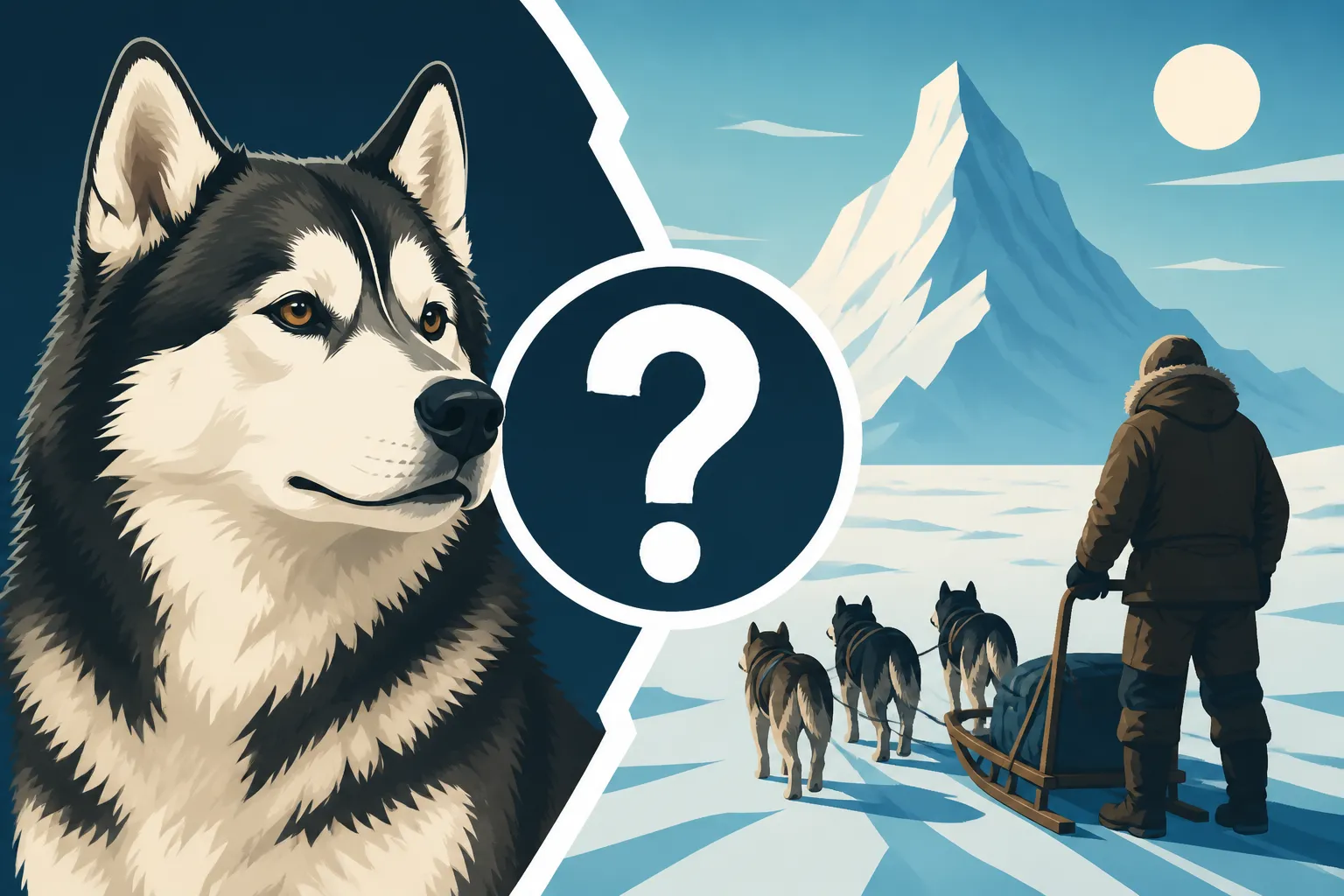
Peary’s 1909 North Pole expedition depended on dog teams, but that does not mean the dogs were Alaskan Malamutes. The sled dogs associated with the journey were Greenland dogs, a distinct Arctic type. The answer also has a wrinkle: Peary’s claim to have reached the Pole is widely recognized in historical accounts, yet has long been disputed.
Did Peary reach the North Pole with Malamutes
The short answer separates two different questions
Robert Peary claimed that he reached the North Pole on April 6, 1909. His expedition traveled by dogsled, and dogs were essential to hauling supplies across Arctic ice. But the dogs used on Peary’s route were generally identified as Greenland dogs, not Alaskan Malamutes.
That distinction matters because “sled dog” describes a job, not a single breed. Many northern communities developed dogs suited to pulling, carrying, and surviving in harsh conditions. Their appearances and abilities could overlap, but that does not make them the same breed. Calling every strong Arctic sled dog a Malamute blurs a complicated history.
There is a second distinction, too: whether Peary’s party used dogs is not the same as whether Peary reached the Pole. His claim became famous, but the exact route and navigation have been debated. A careful answer keeps the dogs’ identity and the expedition’s disputed achievement separate.
Why Peary’s achievement remains debated
Peary said he reached the Pole with a small party that included Matthew Henson and Inuit companions. The group had traveled over a vast, shifting surface where conditions could change quickly. Establishing a precise location in such a remote place was difficult, and the expedition did not have an independent witness at the Pole who could verify Peary’s navigation.
Some historians accept Peary’s claim; others question whether the party reached the exact geographic point. The debate involves the expedition’s records, the speed of the final journey, and the limits of the navigational evidence available at the time. It is more accurate to describe the Pole as Peary’s claimed destination than to present the matter as universally settled.
This uncertainty does not erase the role of the dogs. Whether or not Peary reached the exact point, his expedition relied on dogs to move people and equipment through Arctic terrain. For a broader look at the dogs used on other journeys, see Which Expeditions Used Alaskan Malamutes.
What kind of dogs did Peary’s expedition use
Greenland dogs, not a modern Alaskan Malamute team
Peary’s expeditions operated around Greenland and Ellesmere Island, regions where Inuit communities kept dogs adapted to Arctic work. These dogs are usually described as Greenland dogs or Greenland sled dogs. They were working animals shaped by their environment and purpose, rather than members of a neatly documented modern breed category.
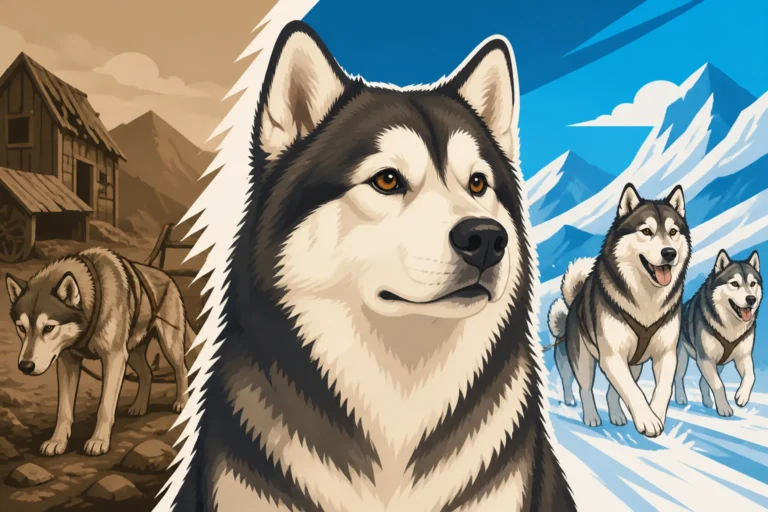
The Alaskan Malamute, by contrast, is associated with Alaska and the Mahlemut people of the Kotzebue Sound region. The breed’s history is tied to freight hauling and life in that part of the Arctic. The two kinds of dogs shared a broad northern working context, but geography and community history distinguish them. For more background, read Who the Mahlemut Who Bred the Malamute Were and The Kotzebue and M'Loot Lines Behind Every Modern Malamute.
It can be tempting to use “Malamute” as shorthand for any large, powerful sled dog. That shortcut is understandable, especially in popular retellings, but it is not precise. Peary’s dogs should not be relabeled as Alaskan Malamutes simply because they pulled sledges in polar conditions.
Why old expedition accounts can be confusing
Breed names and records were not always used consistently in the way people expect today. Expedition accounts might describe dogs by where they came from, how they were used, or what they looked like. Modern readers may then apply a familiar breed name to animals that were never identified that way by the people who worked with them.
The word “Malamute” is also sometimes used loosely in later writing about Arctic travel. That can make it seem as though the breed was present on every famous polar expedition. In reality, dogs from different Arctic communities had their own histories, and a shared role does not prove shared breed identity.
| Question | Best-supported answer | Important qualification |
|---|---|---|
| Did Peary’s expedition use dogs? | Yes. Dogs hauled people and supplies over Arctic terrain. | Their work does not identify them as Alaskan Malamutes. |
| What dogs are associated with Peary’s expedition? | Greenland dogs or Greenland sled dogs. | Historical naming may vary between accounts. |
| Were they Alaskan Malamutes? | They are generally not identified as such. | “Sled dog” is a job description, not a breed name. |
| Did Peary reach the Pole? | He claimed that he did, and many accounts credit him. | The claim has been disputed because the evidence is contested. |
The distinction also helps avoid confusing Peary with later expeditions that did use Alaskan Malamutes. If you are comparing famous journeys, Whether Amundsen Used Malamutes or Greenland Dogs is a useful companion topic. The dog teams used in polar exploration varied by expedition, location, and available working dogs.
How dogs made Arctic travel possible
Sled dogs carried more than passengers
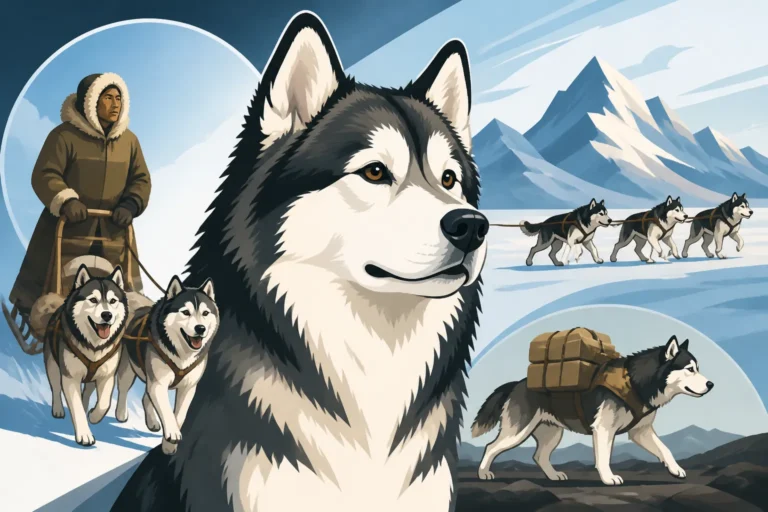
On an expedition, dogs were not decorative companions traveling alongside a team. They were part of the transport system. A dog team could pull a loaded sledge over snow and ice, helping move food, clothing, tools, tents, and other necessary supplies. The people depended on that movement to keep traveling and to carry what they could not take on foot.
The work demanded more than raw strength. Dogs needed to travel as a coordinated team, respond to handling, and keep moving through difficult conditions. A sledge could bog down, weather could turn, and the surface could shift underfoot. Every animal’s contribution mattered, and experienced handlers had to understand both the dogs and the terrain.
That working role is central to the Alaskan Malamute’s own history. Malamutes were bred for hauling freight, not simply for racing at high speed. The difference between endurance and speed is explored in Freight, Not Speed: What Separates a Malamute From a Racing Dog. A heavy freight team and a fast racing team may both use sledges, but they are not necessarily built or managed for the same task.
Inuit knowledge was essential to the journey
Stories of polar exploration can focus heavily on the expedition leader, but Arctic travel depended on knowledge held by the people who lived in the region. Inuit companions contributed practical understanding of local conditions, travel, and survival. Dogs and sledges were part of a broader system of skills, not a machine that worked independently of its handlers.
That point matters when retelling Peary’s expedition. A dog team’s performance cannot be separated from the people who selected, fed, managed, and drove it. Nor can a journey across Arctic territory be understood without attention to the knowledge of local communities. Describing the animals as “Malamutes” when the evidence points to Greenland dogs can flatten both the dogs’ history and the people connected to them.
It is also why the history of a breed should not be treated as a list of famous appearances. The Alaskan Malamute has its own connection to Alaska and the Mahlemut people. To learn more about the breed’s roots and working role, see The Mahlemut of Kotzebue Sound Bred the Alaskan Malamute and What the Mahlemut Used Their Malamutes For.
Where Malamutes fit into polar exploration history
Malamutes were used on other expeditions
Alaskan Malamutes did take part in polar and Arctic exploration, but that fact should not be automatically transferred to Peary’s 1909 journey. Different expeditions used dogs from different regions, and later accounts can sometimes blend the stories together. A statement such as “Malamutes helped explorers reach the Pole” may refer to dogs on other journeys, rather than Peary’s team specifically.
The breed is particularly associated with hauling heavy loads over distance. That makes it easy to understand why Malamutes became linked to exploration: their strength and endurance suited demanding freight work. But a dog’s suitability for a task is not proof that it took part in every expedition where that task was performed.
For a related example from another polar journey, see Whether Byrd Took Malamutes to Antarctica. Comparing expeditions is more informative than grouping all their dogs under one familiar label. It also reveals how local dog populations, handlers, routes, and expedition goals shaped the teams.
A useful way to remember the distinction
A simple way to keep the story straight is to remember three points: Peary claimed to reach the North Pole in 1909; his expedition relied on dogs; and those dogs are generally identified as Greenland dogs rather than Alaskan Malamutes. The first point is historically disputed, while the second and third concern the expedition’s transport and the dogs’ identity.
This wording may feel less dramatic than saying “Malamutes carried Peary to the Pole,” but it is more careful. It recognizes the dogs’ central role without assigning them a breed identity that the historical record does not clearly support. It also avoids treating the North Pole claim as beyond question.
The Alaskan Malamute deserves recognition for its own working history, rather than being folded into every Arctic story. Its freight-hauling background is part of what makes the breed distinctive. For more on the scale of that work, see How Much Weight a Malamute Freight Team Hauled. And for a separate question about the scale of a team’s loads, read Whether Malamute Team Hauled a Thousand Pounds.
Disclaimer
This article is for general informational purposes only and does not constitute professional advice. Laws, prices and regulations vary by location and change over time. Consult a qualified professional for guidance on your specific situation.