Whether an Alaskan Malamute Suits a Rural Property
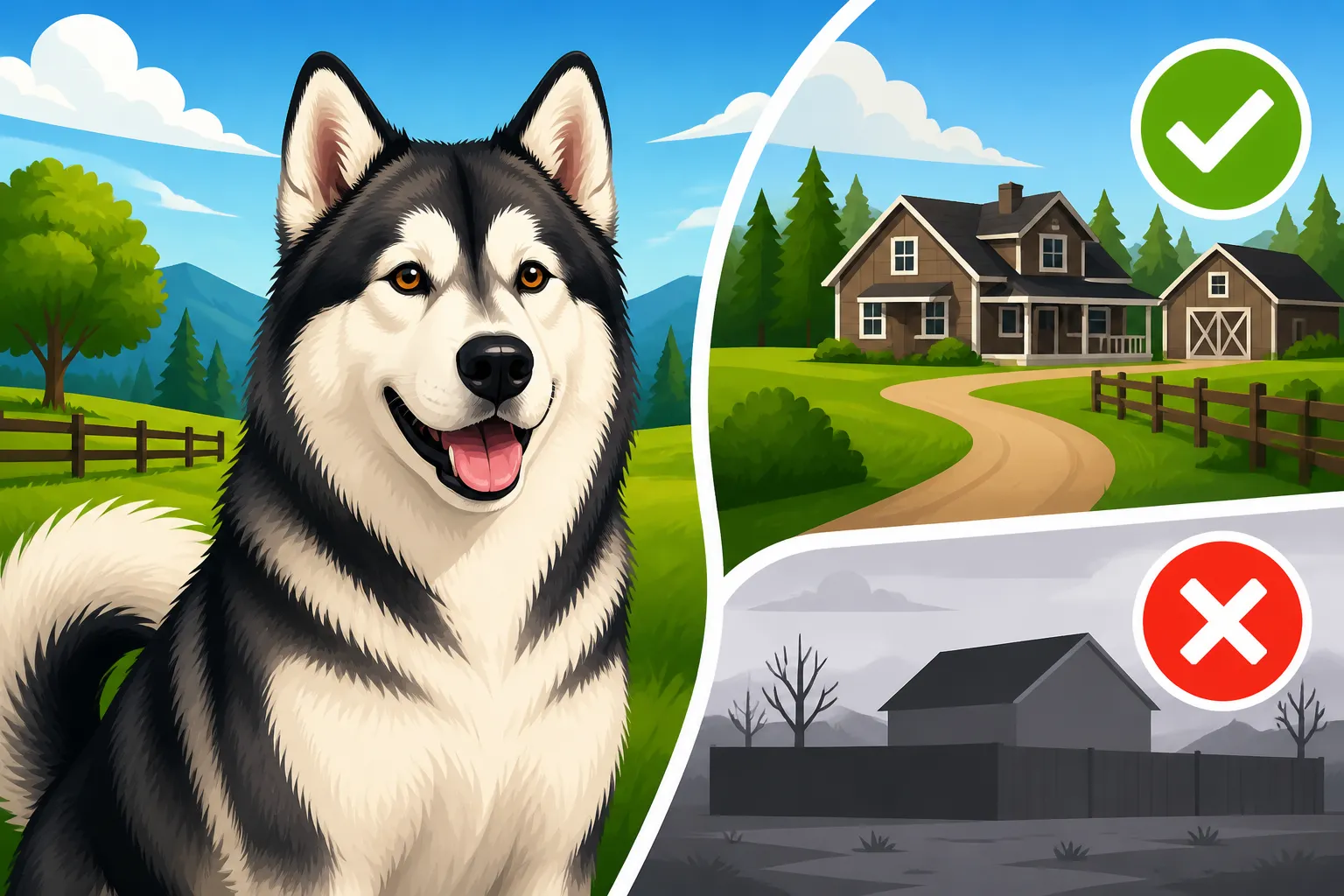
A rural address can look like a Malamute’s dream: open space, quiet roads, and room to roam. But acreage alone does not make life safe or satisfying for this powerful, independent breed. A Malamute may thrive on a rural property if you can provide secure containment, daily work, careful livestock management, and protection from heat and other hazards.
What a rural property can and cannot offer a Malamute
Space is not a substitute for exercise
A large yard gives a Malamute room to move, sniff, and explore, but it does not automatically meet the breed’s exercise and mental needs. A dog left alone in several acres may still become bored, dig, howl, patrol the fence line, or invent its own entertainment. Many owners find that supervised walks, training, and purposeful activities matter more than the size of the parcel.
Think about a typical weekday. You may have a few acres, but if your Malamute spends most of the day alone while you work, the open land may not prevent frustration. Build a routine that includes attention and activity, rather than relying on the property to exercise the dog for you. For ideas on appropriate outlets, see Whether a Malamute Needs a Job Every Day.
Rural does not mean safe to roam
A Malamute should not be allowed to wander simply because nearby houses are far apart. Rural roads can still carry fast-moving vehicles, and fields, woods, and waterways bring risks that are easy to underestimate. A dog following a scent or chasing an animal may travel much farther than you expect, while a reliable recall can be difficult to depend on around strong distractions.
Supervision matters even on familiar land. A loose dog could reach a neighboring farm, encounter wildlife, or disappear into brush where you cannot see or hear it. A fenced, dog-safe area lets your Malamute spend time outdoors without turning every open door into a potential search. For the breed’s tendency to follow its own interests, read Why an Alaskan Malamute Can Never Be Off Leash.
The best fit depends on how you use the land
A rural property can be a strong match when people are present, the dog has a secure place to exercise, and daily life includes activities beyond being outdoors. It is a less comfortable fit when the plan is to leave the dog outside for long stretches, let it roam, or assume it will guard the property. Malamutes are not dependable livestock guardians, and their size can make an impulsive chase or rough greeting consequential.
Consider your actual routine rather than the ideal version of it. If you spend time hiking, gardening, or doing outdoor chores with the dog safely managed, rural living can create shared activities. If you are away most of the day and expect the dog to entertain itself, a big property may magnify, rather than solve, the problem.
Fencing, digging, and the practical work of containment
A fence needs to stop climbing and digging
Malamutes are strong, curious dogs. A fence that contains an average pet may not be enough for one determined to get to a scent, animal, or person on the other side. Inspect the whole boundary, including gates, corners, loose boards, and areas where ground dips. A secure latch matters too; a gate left slightly open can undo an otherwise solid setup.
Digging is another common challenge. Some dogs dig for entertainment, to follow an odor, or to find a cooler place to rest. Fence design should account for the possibility of digging under the boundary, not just jumping over it. Learn more about How a Malamute Climbs a Fence and How Far Under Concrete a Malamute Will Dig before deciding that an existing rural fence is adequate.
A secure enclosure does not mean leaving the dog outside unattended for hours. It is a layer of protection, not a replacement for company, exercise, shelter, or supervision. Walk the perimeter regularly and check for fresh holes, storm damage, or changes such as equipment or stacked materials that could help a dog get over the fence.
Manage the yard as a dog area
Malamute digging can turn a tidy lawn into a patchwork of holes, especially if the dog has no permitted place to dig. Some owners set aside a designated digging area and reward the dog for using it. This may help redirect the behavior, though it will not make every dog stop digging elsewhere. More tips are in Giving a Malamute Its Own Digging Pit.
Look for hazards around sheds, barns, workshops, and gardens. Secure chemicals, fuels, tools, compost, and food waste. Keep gates between the dog and machinery or work zones, and avoid leaving tempting items where a dog can chew or swallow them. If a Malamute is helping you outdoors, keep it close enough to supervise rather than assuming it will stay clear of trouble.
Choose containment for the whole property, not only the house
Some households need more than one secure area. For example, a fenced run close to the home can provide a safe place to toilet or relax, while a larger enclosed yard can be used for supervised play. If you have livestock or poultry, separate fencing may be needed so the dog cannot reach them even when people are working elsewhere.
| Rural property feature | Potential benefit | What to plan for |
|---|---|---|
| Large open acreage | Room for supervised walks and outdoor activities | Acreage does not prevent boredom or roaming |
| Existing farm fencing | May mark property boundaries | Check gaps, gate security, digging points, and climbable sections |
| Separate dog enclosure | Creates a contained outdoor area | Needs supervision, shelter, water, and routine inspection |
| Livestock or poultry | Can be part of a working rural household | Keep animals securely separated and introductions carefully managed |
| Nearby woods or fields | Opportunities for walks and scent exploration | Use a leash or secure enclosure; wildlife and prey drive can complicate outings |
Livestock, wildlife, and neighbors
Do not assume a Malamute will leave animals alone
Malamutes have a history as working dogs, but that does not mean they naturally know how to live safely with every animal on a rural property. Their interest in movement and chase can make poultry, cats, rabbits, and other small animals vulnerable. A dog may behave calmly around an animal it knows and still react differently when it sees an unfamiliar one running. Read What a Malamute Does to Small Animals before assuming that a quiet first meeting proves lasting safety.
Livestock require particular care. A large dog can frighten or injure animals even without intending to attack them, and a chase can cause harm. Keep the Malamute physically separated unless you are actively supervising a carefully managed interaction. The practical question is not simply whether the dog has met sheep, goats, or horses; it is whether you can prevent access whenever you are not there to intervene. See How a Malamute Behaves Around Livestock for more on this challenge.
Build routines around separation and supervision
If you keep animals, use barriers that are appropriate for both the Malamute and the species you are protecting. A gate between the house and barnyard, a secure poultry run, and a leash during chores can reduce opportunities for a chase. Teach basic skills such as waiting at gates, settling while you work, and coming away from distractions, but do not treat training as a guarantee that the dog will ignore prey.
For example, if you collect eggs or move feed, do not leave the dog loose nearby because it has behaved well on previous days. A chicken that suddenly flutters or a small animal darting across the yard can change the situation quickly. Until you have reliable management in place, use a leash, closed door, or secure enclosure.
Rural neighbors still hear and see your dog
A dog that howls, barks, or patrols the fence can disturb neighbors even when houses are far apart. Sound carries across open land, especially at night, and a roaming Malamute can cross property lines or approach people who are not expecting a large dog. Make sure your dog has identification and that visitors, delivery drivers, and service workers can approach the property without encountering an unsecured animal.
If supplies are difficult to pick up locally, delivery services can be one practical part of planning. Some owners use Chewy for routine pet essentials so they can keep food and other supplies on hand instead of making frequent trips. Delivery does not replace planning for emergencies, seasonal supply needs, or veterinary care, but it may make day-to-day rural logistics easier.
Daily care, climate, and the rural owner’s routine
Give the dog purposeful activity
A Malamute may enjoy hiking, pulling activities, training, or accompanying you on suitable outdoor tasks, but exercise should match the dog’s age, conditioning, health, and the weather. Avoid turning every walk into a high-intensity workout, particularly for a puppy or a dog returning to activity after a break. A steady schedule of movement, sniffing, and short training sessions is often more sustainable than occasional exhausting outings.
A rural setting can offer good opportunities, but you still need to decide what the dog is doing. A supervised walk on a leash, a safe pulling activity, or a short practice session gives structure; simply opening the door and hoping the dog burns energy may not. The breed’s working background is part of why routine matters. For more on fitting activity to the dog, see Whether an Alaskan Malamute Can Hike All Day.
Plan for heat even if the property feels open
A thick-coated Malamute can overheat, and a rural yard does not protect it from hot weather. Shade and water are important, but they are not enough if the dog is exercising in unsuitable conditions or cannot come indoors. Watch for unusual or heavy panting, weakness, confusion, or collapse, and treat suspected heat illness as an emergency requiring veterinary attention.
During warm weather, schedule outdoor activity for cooler parts of the day, keep outings flexible, and provide a cool indoor place to rest. If you live in a hot region, your ability to manage indoor temperatures may be more important than the amount of land available. See Whether an Alaskan Malamute Suits a Hot Climate for the climate question in more detail.
Make a realistic plan for food, supplies, and veterinary access
Rural ownership can mean longer drives to a veterinarian, fewer nearby boarding options, or limited access to specialty care. Before bringing a Malamute home, identify a regular veterinary clinic and an emergency option, and think through how you would transport a large dog in bad weather or at night. A secure vehicle setup is part of responsible planning, not an afterthought.
Keep routine supplies organized, including food, grooming tools, waste bags, and any items recommended for your dog by a veterinarian. Chewy may be useful for replenishing ordinary pet supplies when local shops are far away, but compare delivery access for your address and keep a buffer so you are not relying on a last-minute shipment. The same practical approach applies to medication: discuss ongoing prescriptions and refill timing with your veterinary clinic.
The day-to-day commitment also matters. A Malamute is a substantial, independent dog, and rural space does not erase the need for training, grooming, interaction, and ongoing care. If this would be your first large working breed, consider whether you have access to a qualified trainer and the time to practice consistently. Whether an Alaskan Malamute Needs an Experienced Owner can help you assess that side of the decision.
A useful rural-property readiness check
Before bringing a Malamute home, be honest about the following:
- Containment: Can you provide a secure area that addresses both climbing and digging?
- Supervision: Can you prevent unsupervised access to roads, wildlife, livestock, and small animals?
- Daily routine: Will the dog get exercise, interaction, and mental activity every day?
- Climate: Can the dog come inside to a cool, comfortable space when conditions are too warm?
- Neighbors and visitors: Can you manage noise, gates, deliveries, and people entering the property?
- Care access: Do you have a realistic plan for routine veterinary visits and emergencies?
- Long-term fit: Are you prepared for a strong, energetic dog whose needs will continue after the novelty of rural life wears off?
A rural property can suit an Alaskan Malamute when it supports safe, engaged living—not when it is treated as a substitute for supervision or companionship. If fencing, animal separation, climate management, and a steady daily routine are in place, country life may be a good fit. If the plan depends on letting the dog roam or leaving it to occupy itself, reconsider the setup before committing.
Disclaimer
This article is for general informational purposes only and does not constitute professional advice. Laws, prices and regulations vary by location and change over time. Consult a qualified professional for guidance on your specific situation.