Whether Group Classes Are Wasted on a Malamute
It’s a common scenario: you’ve got this magnificent, intelligent Alaskan Malamute, and you want to do right by them with training. You see all the recommendations for group puppy classes or basic obedience, and you wonder, "Will my Malamute actually benefit from that, or will it just be a chaotic waste of time and money?" This guide is here to help you navigate whether group classes are a good fit for your independent, often strong-willed Malamute, and what to consider for their success.
Understanding the Malamute Mindset in a Group Setting
Let's be real, Malamutes aren't your typical golden retriever. They have a unique history and personality that shapes how they interact with the world, especially in a busy, stimulating environment like a group class. It's not about them being "dumb" or "untrainable" – quite the opposite – it's about understanding their inherent drives.
Their Independent Nature and "What's in it for me?"
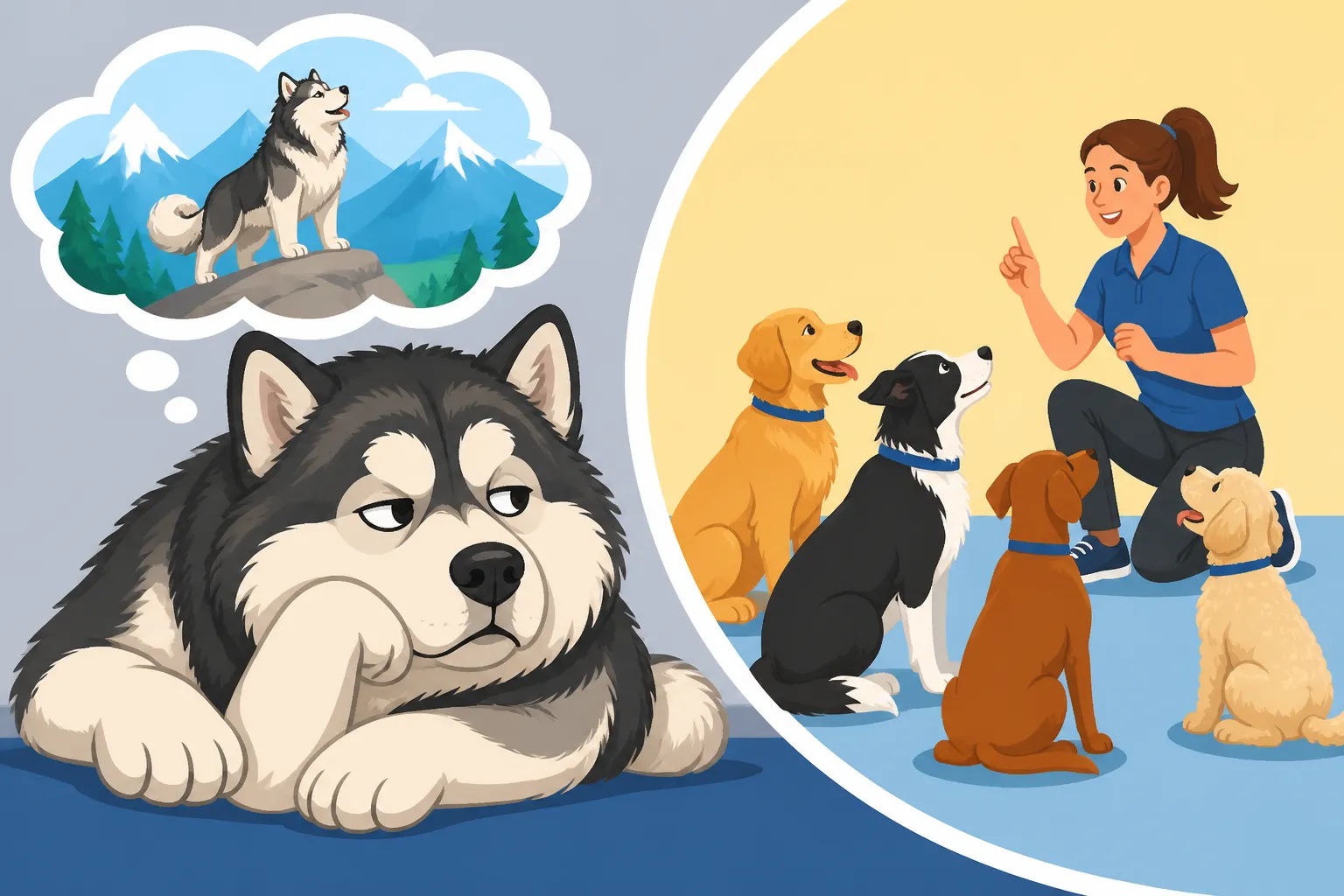
Alaskan Malamutes were bred to be partners, not servants. They were essential for survival in harsh arctic conditions, making their own decisions when necessary, relying on their intelligence and instincts. This means they often have a "what's in it for me?" attitude when it comes to training. If the reward isn't compelling enough, or if they don't see the immediate purpose, you'll find yourself talking to a very polite but utterly uninterested woolly wall.
In a group class setting, where there are other dogs, new smells, and lots of human activity, your Malamute's independent streak can really shine. They might decide that investigating the interesting smell in the corner is far more rewarding than perfecting their "sit" for the tenth time. This isn't stubbornness in a malicious sense; it's deeply ingrained independence. Many owners find that traditional repetitive drills don't hold their Malamute's attention for long. How Many Repetitions a Malamute Needs is often far fewer than other breeds before they get bored.
Distractions Galore: Prey Drive and Other Dogs
One of the biggest hurdles in any group setting for a Malamute is the sheer number of distractions. These dogs possess a strong prey drive, bred into them over centuries to hunt and survive alongside humans. That squirrel-like toy across the room, the small dog zipping by, or even just a falling leaf outside the window can become the absolute focal point of their attention, making it incredibly difficult to engage them in formal training. What an Alaskan Malamute Was Bred to Hunt reveals just how deep this instinct runs.
Beyond prey drive, the presence of other dogs can be a double-edged sword. While some Malamutes are social butterflies, many prefer the company of their chosen few or can exhibit same-sex aggression, especially as they mature. A bustling class with dogs of all shapes, sizes, and temperaments can be overwhelming or even trigger reactive behaviors, making learning impossible for both your dog and you. It’s crucial to gauge your Malamute's comfort level with other dogs before plunging them into such an environment.
The Woes of Same-Sex Aggression
It's a tough truth that many Malamute owners face: same-sex aggression can be a very real trait in the breed, particularly as they mature into adolescence and adulthood. This isn't always about outright fighting, but can manifest as intense staring, posturing, or a general discomfort that makes focused training impossible. If your Malamute starts displaying these tendencies in a group class, it can quickly escalate from an educational experience to a stressful and potentially dangerous one.
Imagine trying to teach your Malamute a "stay" while another dog of the same sex is constantly in their line of sight, perhaps even making subtle challenging gestures. Your Malamute's focus will be entirely on that other dog, not on you or the task at hand. This is not only frustrating but can also reinforce unwanted behaviors if your dog learns that ignoring you to focus on the other dog leads to them getting what they want (like distance from the other dog, or the chance to stare them down). The Age Same Sex Aggression Appears in a Malamute can be a real eye-opener for many owners.
What Group Classes Can Offer a Malamute (and You)
Despite the unique challenges, group classes aren't entirely useless for Malamutes. In fact, for the right dog and under the right circumstances, they can offer significant benefits. It's about being strategic and understanding what you're truly hoping to achieve.
Structured Socialization Under Guidance
One of the primary benefits often cited for group classes is socialization. For a Malamute puppy or a well-adjusted adult, this controlled exposure to different breeds, people, and environments can be invaluable. Unlike a chaotic dog park, a good group class offers structured interactions, with a trainer present to monitor and guide appropriate behavior. This isn't just about playing; it's about teaching your Malamute to exist calmly and respectfully in the presence of other dogs without needing to constantly engage.
A puppy class, in particular, can be excellent for early exposure, helping your young Malamute learn polite greetings and build confidence around novel stimuli. As long as the class size is manageable and the trainer is experienced, it can be a safe space to teach your Malamute that other dogs aren't always a threat or an invitation to chase. This structured environment can be a stark contrast to casual encounters, which may not offer the same level of safety or learning opportunity.
Building Focus in a Busy Environment
Let's face it, your Malamute probably behaves beautifully when it's just you and them in your quiet backyard. The real test comes when distractions are plentiful. Group classes, by their very nature, are distraction-rich environments. This can be a huge advantage if approached correctly. The goal isn't necessarily perfection in this setting, but rather teaching your Malamute to focus on you despite all the tempting things happening around them.
A good trainer will help you break down exercises into manageable steps, gradually increasing the level of distraction. This teaches your Malamute impulse control and strengthens your bond as they learn that you are the most rewarding thing in the room, even when another dog is doing zoomies. It builds a foundation for real-world scenarios, like staying calm during a walk past a barking dog or remaining attentive when you're out in a busy park. This kind of mental exercise is just as important as physical exercise for a Malamute. How Much Exercise an Alaskan Malamute Needs includes mental stimulation as a key component.
Empowering the Human Half of the Team
Perhaps one of the most underrated benefits of group classes isn't for the dog, but for the human. As a Malamute owner, you're dealing with a powerful, intelligent, and often independent animal. Learning how to effectively communicate, motivate, and manage your Malamute in a challenging environment is crucial. A good trainer provides you with tools, techniques, and confidence. You learn how to read your dog's body language, how to apply positive reinforcement effectively, and how to troubleshoot common issues.
Group classes allow you to practice handling skills, like leash work and preventing jumping, with real-time feedback. You might observe other owners and their dogs, gaining insights into different training styles or solutions for similar problems. This shared experience can also be incredibly validating; you realize you're not alone in the struggles you face with your Malamute's unique quirks. Being part of a community, even for a short while, can make a huge difference in your confidence as an owner. Whether a Malamute Needs a Professional Trainer is a question many ponder, and group classes can be a good entry point to professional guidance.
When Group Classes Might Not Be the Best Fit
While group classes can be beneficial, they're definitely not a universal solution for every Malamute or every owner. Sometimes, the environment itself can be counterproductive, leading to more frustration than progress.
Overwhelm and Shut Down
For some Malamutes, especially those who are naturally more sensitive, anxious, or have pre-existing issues with other dogs, a busy group class can be incredibly overwhelming. Instead of learning to focus, they might shut down completely, becoming unresponsive to cues, hiding behind your legs, or simply scanning the room anxiously. When a dog is in this state of stress, very little actual learning can occur. Their brains are too busy trying to cope with the environment to absorb new information or respond to commands.
This can be particularly true for Malamutes who are already prone to guarding resources (like their space) or those who are fearful. Pushing them into a situation where they feel constantly threatened or uncomfortable can exacerbate these behaviors, making them more reactive outside of class rather than less. It’s vital to be attuned to your Malamute's comfort level and pull them out if they are consistently showing signs of stress.
Reinforcing Unwanted Behaviors
Ironically, a poorly managed or unsuitable group class can inadvertently reinforce the very behaviors you're trying to extinguish. If your Malamute is leash-reactive, for example, and constantly barks and lunges at other dogs in class, and you repeatedly have to pull them away, they might learn that this behavior gets them what they want (distance from the other dog). Without the right intervention and management from the trainer, these behaviors can become ingrained.
Similarly, if your Malamute is easily distracted by other dogs, and you consistently struggle to get their attention, they might learn that ignoring you is often more rewarding or that your cues are optional. This can erode your authority and make future training even harder. It's not the class's fault per se, but rather a mismatch between your dog's current behavioral needs and the structure of the class.
The "One Size Fits All" Problem
Many basic obedience classes are designed for a wide variety of breeds and temperaments. While this can work for some, it rarely accounts for the specific nuances of a breed like the Alaskan Malamute. A trainer might not understand the deep-seated independence, the strong prey drive, or the potential for same-sex aggression that is common in Malamutes. They might offer advice that works for a Labrador but falls flat with your woolly companion.
This "one size fits all" approach can leave Malamute owners feeling frustrated and unsupported. You might find yourself constantly apologizing for your dog's "stubbornness" or "distractibility," when in reality, the methods being taught simply aren't tailored to their breed-specific traits. It's not always about your Malamute being difficult; it's often about the approach not matching their inherent nature. For some owners, a general class offers too little practical help for their particular dog.
Maximizing Success: Strategies for Malamutes in Group Classes (or Alternatives)
So, what's a Malamute owner to do? If you're considering group classes, or if you've tried them before with limited success, there are ways to set both you and your Malamute up for a better experience.
Finding the Right Class and Instructor
This is probably the single most important factor. Not all trainers or classes are created equal, especially when it comes to strong-willed, high-drive breeds. Look for instructors who:
- Emphasize positive reinforcement: Force-based methods rarely work with Malamutes and can damage your relationship. Why Force Fails on an Alaskan Malamute is a concept every owner should understand.
- Have experience with Nordic breeds or independent working dogs: Ask about their experience with Malamutes, Huskies, or similar breeds. A trainer who understands the "Malamute brain" will be far more effective.
- Focus on management and appropriate socialization: The class should prioritize creating a safe, controlled environment where dogs learn to coexist, not just run wild.
- Offer smaller class sizes: Fewer dogs mean less distraction and more individual attention from the instructor.
- Are open to adaptations: A good trainer will be willing to modify exercises or offer alternative strategies if your Malamute is struggling.
Don't hesitate to observe a class before signing up, or even talk to current students. It's okay to be picky! A good investment in the right trainer saves money and heartache in the long run. Many reputable pet supply retailers, like Chewy, offer online resources or partnerships with local trainers you can research.
Preparation is Key: Homework Before Class
Success in a group class often begins before you even step through the door. Think of it as a pre-game warm-up for your Malamute.
- Exercise them beforehand: A physically and mentally tired Malamute is a much better student. Take them for a brisk walk, a run, or engage them in some vigorous play before class. This helps burn off excess energy that might otherwise manifest as restlessness or distraction.
- Bring high-value treats: Kibble often won't cut it when competing with a room full of dogs. Think chicken, cheese, hot dogs, or specialized training treats. Brands like Ollie offer human-grade food that can be fantastic high-value motivators. The more desirable the reward, the more likely your Malamute will pay attention.
- Practice at home: Introduce new commands in a low-distraction environment first. Make sure your Malamute has a solid understanding of basic cues like "sit," "stay," and "watch me" before expecting them to perform under pressure.
- Manage their environment: Consider using a gentle leader or front-clip harness to give you better control without resorting to harsh methods. Why Every Malamute Should Be Muzzle Trained for safety, especially if you anticipate any dog-dog issues.
Considering Private Training or Specialized Classes
If group classes prove too challenging, or if your Malamute has specific behavioral issues like significant reactivity or same-sex aggression, private training might be a more effective path. A one-on-one session allows a trainer to fully focus on your dog's individual needs, tailoring the curriculum and environment specifically for them. This personalized attention can yield much faster and more impactful results.
Alternatively, look for specialized classes designed for reactive dogs, urban canines, or even specific breeds if available in your area. These classes often have smaller numbers, more experienced instructors in behavior modification, and a deeper understanding of the challenges faced by unique breeds. They prioritize creating a safe and controlled environment where every dog can succeed. And remember, investing in proper training is an investment in your Malamute's well-being and your peace of mind, potentially saving you from future vet bills for injuries or stress-related illnesses, which insurance providers like Healthy Paws can help cover, but prevention is always best.
Here’s a quick overview of when group classes might or might not be a good fit:
| Factor | Good Fit for Group Class | Better Suited for Private Training / Specialized Class |
|---|---|---|
| Malamute Temperament | Social, confident, curious, relatively low reactivity. | Anxious, fearful, highly reactive, prone to aggression. |
| Age | Puppy (early socialization), young adult (basic manners). | Adolescent/Adult with ingrained behavioral issues. |
| Focus Level | Generally attentive, good food/toy drive, can recover from distraction. | Easily overwhelmed, shuts down, struggles to focus on owner in presence of distractions. |
| Owner Goals | Basic obedience, structured socialization, personal handling skills. | Addressing specific behavioral problems (reactivity, aggression, separation anxiety), advanced training. |
| Class Environment | Small class size, experienced trainer with breed knowledge, positive methods. | Large, chaotic classes, inexperienced trainer, force-based methods. |
| Dog-Dog Interaction | Tolerant, polite, enjoys other dogs in controlled settings. | Displays same-sex aggression, intense prey drive towards small dogs, fearful of other dogs. |
Ultimately, whether group classes are "wasted" on a Malamute depends entirely on the individual dog, the quality of the class, and your commitment to making it work. With careful selection and realistic expectations, group classes can be a valuable part of your Malamute's training journey, but always be prepared to seek out more tailored solutions if needed.
Disclaimer
This article is for general informational purposes only and does not constitute professional advice. Laws, prices and regulations vary by location and change over time. Consult a qualified professional for guidance on your specific situation.