What an Alaskan Malamute Was Bred to Hunt
Many Alaskan Malamute owners find themselves bewildered, and sometimes heartbroken, by their otherwise loving companion's sudden, intense focus on a squirrel, a neighbor's cat, or even a smaller dog. This isn't a lapse in training or a sign of defiance; it's a deep-seated instinct, a primal echo of what their ancestors were bred to do. Understanding the Alaskan Malamute's original hunting role is absolutely crucial to managing their behavior in a modern home, and this guide will delve into the historical context and practical implications of their powerful prey drive.
The Mahlemut and Their Northern Hunters
To truly grasp the Alaskan Malamute's inherent drive, we must travel back in time to the Iñupiat people of northwestern Alaska, specifically the Mahlemut, who lived along the Kotzebue Sound. Their existence was intrinsically linked to the land and its resources, and their dogs were not just companions, but indispensable partners in survival. These were not pampered pets; they were working animals, bred for purpose, and their very lives, and the lives of their human families, depended on their capabilities.
Origins in a Harsh Arctic Landscape
The environment of the Arctic Circle is relentlessly harsh. Resources are scarce, and survival demands immense strength, resilience, and ingenuity – both from humans and their canine companions. The Mahlemut people developed a unique relationship with their dogs, selectively breeding them for traits that ensured their survival in this unforgiving landscape. These traits included incredible endurance for hauling heavy loads over vast distances, a thick double coat to withstand extreme cold, and, critically, a keen intelligence and strong prey drive that made them effective hunters and hunting aids. Their very lineage is tied to their working ability, far more than any aesthetic quality.
The dogs that would become the Alaskan Malamute were integral to daily life. They hauled sleds laden with food, supplies, and families, performing duties that would otherwise be impossible. This wasn't merely about convenience; it was about moving from one hunting ground to another, transporting essential game back to camp, and navigating the treacherous, frozen expanse. Without these powerful dogs, the Mahlemut people would not have thrived, or perhaps even survived, in their chosen territory.
The Original Purpose: Sustenance and Survival
The primary purpose of the Mahlemut's dogs was sustenance. While they are famously known for their incredible freighting ability – moving tons of cargo across icy terrain – their role extended far beyond just pulling. These dogs were also instrumental in hunting, providing food and furs for their human families. Their senses were incredibly sharp, their stamina unmatched, and their instincts perfectly honed for tracking and engaging with wildlife. They were not typically independent hunters in the sense of going out alone and bringing back prey, but rather worked in concert with their human partners, driving game or locating it in conditions where human senses might fail.
This collaborative hunting style forged a deep bond between human and dog, but it also reinforced the very instincts that many modern Malamute owners struggle with today. The drive to detect, pursue, and engage prey was not merely encouraged; it was a fundamental aspect of their genetic makeup, essential for the survival of both dog and human. Every success in the hunt meant another meal, another fur, another winter survived. This isn't merely historical trivia; it's the bedrock of understanding why your Malamute reacts the way it does to a rabbit streaking across the yard or a squirrel chattering from a tree.
More Than a Sled Dog: The Malamute's Prey Drive
While the image of a Malamute usually involves a sled and snow, their historical utility wasn't limited to transport. The very instincts that made them excellent freighting dogs also made them formidable hunting partners. They possess a prey drive that is exceptionally strong, often a surprise to those unfamiliar with the breed's deep history. This isn't just a fleeting interest; it's an ingrained behavioral sequence that involves searching, stalking, chasing, grabbing, killing, and often dissecting or consuming.
Hunting Small Game for Survival
In their ancestral lands, small game like arctic hares, lemmings, and ptarmigan would have been opportunistic targets. A Mahlemut dog, while perhaps primarily a sled puller, wouldn't ignore a chance to secure a meal, especially when food resources were scarce. This meant a strong desire to flush out, chase down, and capture smaller animals. This instinct was a survival mechanism; a dog that could supplement its diet or contribute to the community's food supply was a valuable asset. The ability to spot a flicker of movement, gauge the direction of flight, and accelerate with surprising speed, despite their size, was vital.
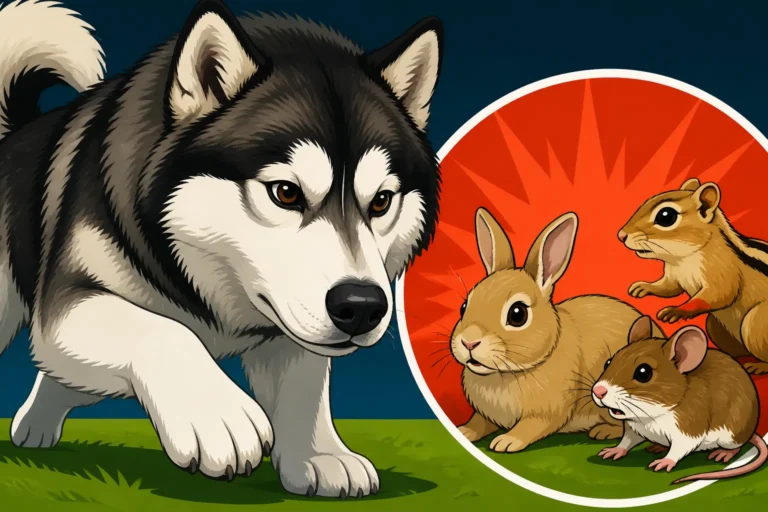
This is why, even today, many Malamutes will become intensely focused on small animals in their environment. A bird in the yard, a rabbit glimpsed through a fence, or even a remote-controlled car can ignite this primal chase sequence. For them, it's not a game; it's a deeply satisfying fulfillment of an ancient programming. Owners often notice this sharp shift in focus – from a relaxed companion to a coiled spring, eyes locked, ears forward, body language screaming "hunt!" It's a powerful reminder that beneath the fluffy exterior lies a capable predator.
The Instinct to Chase and Capture
The chase is often the most visible manifestation of a Malamute's prey drive. Their powerful legs are built for endurance, but they can also burst into impressive speeds over short distances. This combination makes them highly effective at pursuing animals. Once the pursuit begins, the urge to capture is almost overwhelming. This isn't something that can typically be "trained out" of them in the conventional sense, as it's a fundamental part of their genetic makeup. You can, however, manage it through consistent training, management, and understanding.
Think of it like this: for a retriever, retrieving is a strong instinct. For a Malamute, the full predatory sequence, from spotting to grabbing, is the instinct. This is why Why a Malamute Cannot Be Broken of Chasing is such a critical concept for owners to understand. You can teach a "leave it," you can work on focus, but the desire to chase will likely always be there, simmering beneath the surface. It's not about being disobedient; it's about being true to their nature. This inherent drive means that off-leash excursions are almost always a risk, as even the most well-trained Malamute can be overcome by the sudden appearance of prey. This leads us to the crucial understanding of Why an Alaskan Malamute Will Never Have a Reliable Recall.
The Danger to Neighborhood Wildlife
This potent prey drive, while vital for survival in the Arctic, poses significant challenges in a modern suburban or rural environment. Small neighborhood animals, from squirrels and rabbits to cats and even small dogs, can easily become targets. A Malamute doesn't differentiate between a wild rabbit and a beloved pet cat; to its instinct, they are all potential prey. This is a tough reality for many owners, especially those who come from breeds with lower prey drives. The consequences can range from a traumatized neighbor to serious injury or death for the smaller animal.
The physical capabilities of an Alaskan Malamute, combined with this instinct, mean they are incredibly effective hunters. They are strong, persistent, and often surprisingly stealthy for their size. This places a huge responsibility on owners to ensure their Malamute is never in a position to act on this instinct unsupervised. This is a major reason why The Risk an Alaskan Malamute Poses to Cats is a serious concern, and why meticulous management strategies are non-negotiable for coexistence, especially if you have other, smaller pets in your home or neighborhood.
Larger Prey: Bears and Seals
While chasing small game might seem evident for any canine, the Alaskan Malamute's ancestral hunting role included assisting in the pursuit and location of much larger, more dangerous animals. These were not solo endeavors for the dogs, but collaborative efforts with their Mahlemut human companions, demonstrating their courage, intelligence, and crucial partnership in the hunt for significant food sources.
Assisting in the Hunt for Great Bears
One of the most awe-inspiring aspects of the Malamute's historical role was their participation in hunting large predators like bears. This wasn't about the dog single-handedly taking down a bear, which would be suicidal. Instead, the Malamute's role was strategic: locating the bear, harassing it to keep it occupied, and driving it towards the human hunters, who were armed with spears or bows. A Malamute Was Bred to Hunt Bears and It Has Not Forgotten highlights this incredible partnership. Their agility, speed, and booming vocalizations (their characteristic "woo-woo" can sound quite intimidating when directed at something much larger) made them effective at distracting and maneuvering such formidable prey.
This required immense bravery and an uncanny ability to read and react to a powerful, dangerous animal without getting killed. The dogs learned to work as a team, using their instincts to corner or divert the bear, allowing the human hunters to deliver a decisive blow. This deep-rooted instinct for managing large, potentially dangerous animals in a hunting scenario is a testament to their intelligence and the Mahlemut's skillful breeding. It’s a far cry from simply chasing a squirrel, requiring a whole other level of nerve and strategic thinking that is still present in the breed's modern psyche. To understand this in more detail, you might want to read How a Malamute Hunted Bears Alongside the Mahlemut.
Locating Seals Under the Ice
Beyond land-based hunting, the Mahlemut and their dogs also relied on seals for food, blubber (for fuel), and skins. In the vast, frozen expanse of the Arctic, locating seals could be incredibly challenging. This is where the Malamutes proved invaluable, using their superior sense of smell and hearing to detect seal breathing holes (aglus) under thick layers of snow and ice. These holes were often hidden, making them nearly impossible for humans to find without canine assistance.
The dogs would signal the presence of a breathing hole, often by pawing at the snow or alerting their handler with a specific bark or body posture. Once a hole was identified, human hunters could then set up to wait for the seal to surface for air. This specialized hunting role required a unique combination of senses and the ability to work closely with humans in a very specific, quiet manner. It showcases the versatility of the breed and how deeply integrated they were into the Mahlemut's hunting practices, ensuring survival through harsh winters. This incredible feat is explored further in How a Malamute Found Seals for the Mahlemut.
Why This Ancient Instinct Matters Today
Fast forward to the modern world, and the Alaskan Malamute's powerful hunting instincts, honed over centuries, are still very much alive. This isn't a flaw in their character; it's simply who they are, a testament to their incredible history. However, for a Malamute living in a human-centric society, these instincts can become significant challenges if not properly understood and managed. Ignoring them doesn't make them go away; it often leads to frustration for both dog and owner, and potentially dangerous situations.
Understanding Modern Malamute Behavior
When a modern Malamute fixates on a fleeing cat or lunges towards a rustling bush, they aren't being disobedient or malicious. They are simply responding to a primal urge that has been hardwired into their DNA. This genetic predisposition means that their reactions can be incredibly intense and difficult to interrupt once the chase sequence has begun. Owners often describe a "switch" flipping, where their normally attentive dog becomes singularly focused on the perceived prey, seemingly deaf to commands.
This behavior isn't about dominance or a lack of respect; it's about instinct overriding learned behaviors. Understanding this distinction is crucial for approaching training and management with empathy and effectiveness. It means that traditional obedience methods, without a strong emphasis on impulse control and proactive management, may not be enough to override such a powerful drive. It's a constant effort to channel and redirect rather than eliminate.
Managing an Untamed Predatory Drive
Managing a Malamute's prey drive requires a multi-faceted approach, recognizing that you are working with, rather than against, a powerful natural inclination. It means being perpetually vigilant and proactive in preventing opportunities for the drive to manifest in undesirable or dangerous ways. This includes, first and foremost, strict leash protocols. A Malamute should rarely, if ever, be off-leash in an unfenced or uncontrolled environment. Even a perfectly fenced yard needs to be Malamute-proofed, as they are expert diggers and climbers. Fencing a Yard Against a Malamute That Was Bred to Dig offers valuable insights into securing your property.
Beyond physical containment, it involves providing appropriate outlets for their energy and instincts. This can include activities like weight pull, sledding (even dryland mushing), or hiking with a backpack, which allow them to use their strength and endurance in a safe, directed manner. Mental enrichment, such as puzzle toys or scent work, can also help engage their keen senses and intelligent minds. The goal is to give them appropriate "jobs" that satisfy their inherent needs without risking harm to other animals or themselves.
Living with Other Pets: A Constant Vigilance
Introducing a Malamute into a home with existing small pets, such as cats, rabbits, or even small dog breeds, requires extreme caution and, often, a commitment to permanent management. While some Malamutes can learn to coexist with a resident cat if introduced very carefully as a puppy, this is never a guarantee, and vigilance remains paramount. The instinct to prey on small, fast-moving creatures is incredibly strong. What a Loose Malamute Hunts further illustrates the wide range of targets they might pursue.
For homes with smaller resident pets, a "crate and rotate" system, secure barriers, and constant supervision are often necessary. Even a dog that has lived peacefully with a cat for years can have a lapse in judgment, especially if the cat suddenly bolts or makes a high-pitched noise. It's not a matter of malice, but of instinct. This is why many experienced Malamute owners will advise against homes with small animals unless the owner is prepared for a lifetime of diligent management and separation. The safety of all animals in the household must always be the top priority.
| Prey Type | Historical Role | Modern Risk Level | Management Strategy |
|---|---|---|---|
| Small Mammals (Rabbit, Squirrel) | Opportunistic hunting for sustenance | High | Strict leash control, secure fencing, positive reinforcement, "leave it" training, high-value redirection, supervised play. |
| Birds | Opportunistic hunting for sustenance | Medium-High | Same as small mammals, often triggered by movement. Keep windows/doors secure during bird activity. |
| Bears / Large Game | Assist human hunters, distract, herd | Low (direct hunting) | Potential for aggressive confrontation with large wildlife if encountered off-leash. |
| Seals | Locate breathing holes under ice | Very Low (modern) | No direct modern application, but highlights sensory acuity. |
| Small Domestic Pets | None (historically), perceived as prey | High | Permanent separation or strict, constant supervision, crate-and-rotate, muzzle training, professional guidance. |
Training and Management Strategies for Prey Drive
Successfully living with an Alaskan Malamute and their inherent prey drive isn't about breaking their spirit or trying to erase their instincts. It's about understanding those instincts and implementing smart, consistent strategies to ensure everyone's safety and well-being. This requires dedication, patience, and a realistic approach to what you can and cannot change.
Foundation Training and Impulse Control
Before addressing prey drive directly, a solid foundation of obedience is essential. A reliable "sit," "stay," and "come" in low-distraction environments are the building blocks. However, for a Malamute, these commands need to be proofed extensively in increasingly distracting situations. Impulse control exercises are paramount. This involves teaching your Malamute to delay gratification, such as waiting for a release cue before eating a treat or going out a door. Programs like those offered by BAXTER & Bella can be incredibly helpful for establishing this foundational obedience and building a strong relationship, focusing on positive reinforcement methods that Malamutes respond well to.
Additionally, teaching a strong "leave it" and "look at me" command is crucial. The "leave it" command must be rock-solid, practiced with various distractions, from dropped food to moving toys, before ever attempting it with actual prey. The "look at me" command helps you redirect your Malamute's attention back to you, breaking their focus on a potential target. Consistent repetition, using high-value rewards (think delicious bits of chicken or cheese, not just kibble), is key to making these commands reliable even when that tempting squirrel zips by. This isn't just about control; it's about building a language of understanding and trust with your powerful companion.
Secure Containment is Non-Negotiable
Given the Malamute's strong prey drive and their intelligence, secure containment is not merely recommended; it is an absolute necessity. An Alaskan Malamute should never be left unsupervised in an unfenced yard, and even a standard fence is often insufficient. These dogs are master escape artists – they can climb, jump, and, most famously, dig under fences with astonishing efficiency. Many Malamute owners find that a six-foot fence isn't enough, and concrete footings or L-footings buried underground are needed to prevent digging escapes. You can find many robust outdoor kennel options and secure fencing supplies on platforms like Amazon.
When out on walks, a strong, secure leash and harness are paramount. Many owners opt for a front-clip harness or a head halter for better control, especially if their Malamute has a tendency to pull when they spot something interesting. Dual leashing – attaching two leashes to two different points on the dog – offers an extra layer of security. Furthermore, When a Malamute Should Wear a Muzzle is an important consideration, not as a punishment, but as a safety tool, especially in areas where wildlife or other small dogs might be present. Muzzle training should be introduced positively, making it a comfortable and normal part of their gear. For indoor containment, especially for puppies or when unsupervised, a heavy-duty crate (one a Malamute "cannot break") is often essential, as discussed in What a Crate a Malamute Cannot Break Costs.
Enrichment That Satisfies Instincts Safely
Since you cannot eliminate the prey drive, the goal is to provide safe and appropriate outlets for it. This means engaging their minds and bodies in ways that mimic the satisfaction of hunting without the actual danger. Scent work, for example, allows them to use their incredible noses to track and "find" hidden treats or toys, fulfilling the "search" aspect of the predatory sequence. Puzzle toys that require manipulation to get a reward can satisfy their intelligence and persistence.
For physical exertion, activities like weight pulling, bikejoring, or dog scootering allow them to use their strength, endurance, and love for pulling in a controlled environment. Even long, structured hikes with a backpack (once they are fully grown and conditioned) can provide a sense of purpose and physical challenge. Regular, vigorous exercise is critical to keeping a Malamute mentally and physically content, reducing the likelihood of boredom-driven destructive behaviors or pent-up energy manifesting as an uncontrolled chase. Remembering What an Alaskan Malamute Needs Every Day is key to their overall well-being, including managing their powerful instincts.
Disclaimer
This article is for general informational purposes only and does not constitute professional advice. Laws, prices and regulations vary by location and change over time. Consult a qualified professional for guidance on your specific situation.