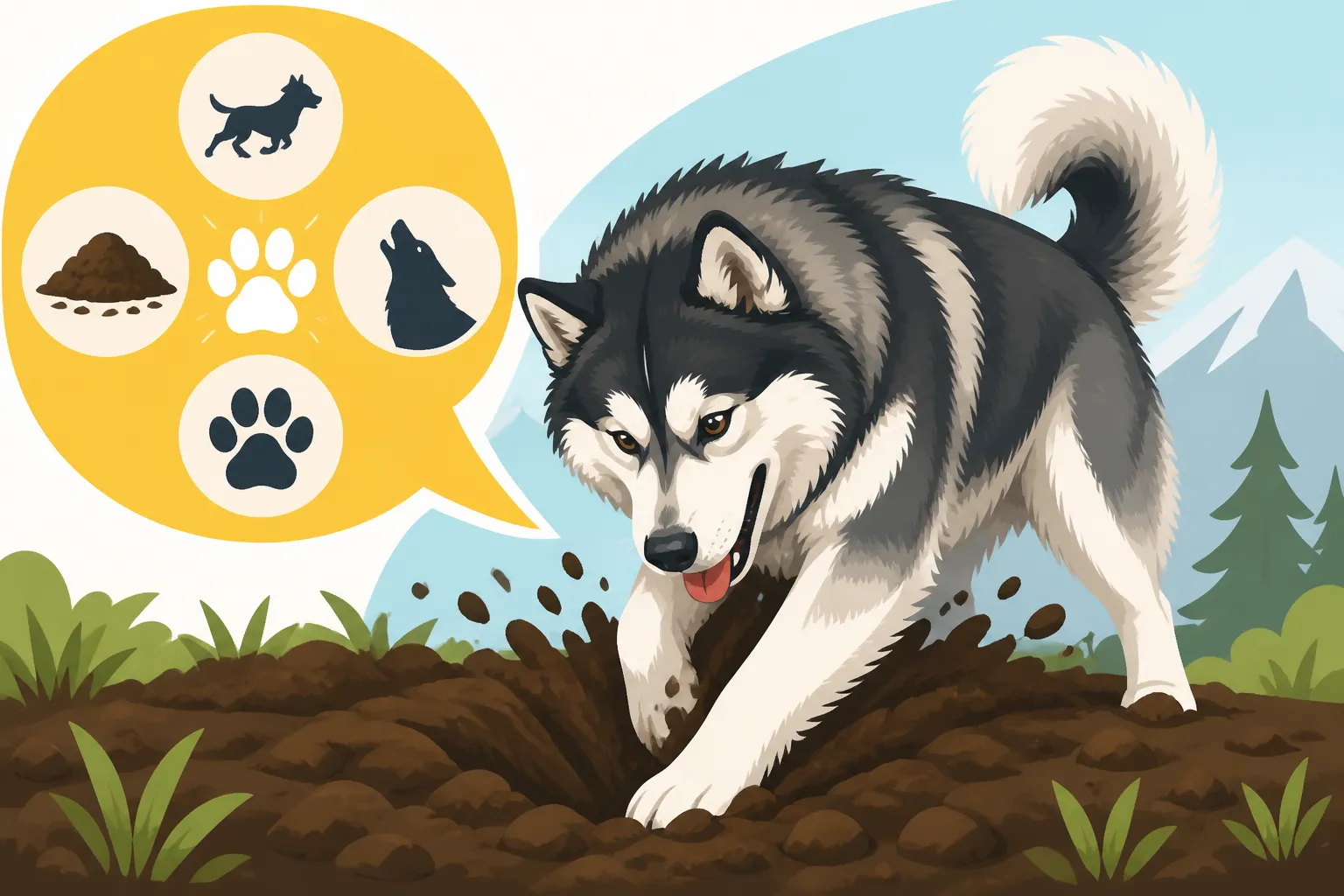
Why an Alaskan Malamute Digs
There's nothing quite like walking out into your beautifully kept yard only to find it riddled with craters, tunnels, and divots, looking less like a garden and more like a lunar landscape. If you're an Alaskan Malamute owner, you know this struggle all too well. Your magnificent, fluffy companion, seemingly so regal and calm indoors, transforms into an earth-moving machine the moment they step outside. This guide is here to unravel the mysteries behind your Malamute's incessant digging, offering insights into their ancestral instincts and practical, empathetic strategies to manage this deeply ingrained behavior.
The Ancestral Drive to Dig
Before we can even begin to think about managing or redirecting your Malamute's digging, we have to understand that this isn't just a random act of mischief. It's woven into the very fabric of their being, a skill honed over centuries by their ancestors in the harsh Arctic environment. You see, your Malamute isn't digging to annoy you; they're simply being a Malamute.
A Deep-Rooted Instinct from the Arctic
Imagine the extreme conditions the Mahlemut people and their dogs faced in the Alaskan wilderness. Temperatures plummeted, resources were scarce, and survival was a daily challenge. The Alaskan Malamute, developed by these indigenous people of Kotzebue Sound, was an indispensable partner in this struggle. They were bred for strength, endurance, and an incredible ability to adapt to their environment. This often meant relying on their natural instincts to find or create shelter, hunt for food, and protect themselves from the elements. Digging was not a pastime; it was a fundamental survival tool.
Consider a Malamute's dense double coat. While magnificent for insulation against the cold, it can become a burden in warmer weather or when they're exerting themselves. Digging down to cooler earth was a natural way for them to regulate their body temperature, creating a rudimentary, self-made air-conditioned space. This instinct persists in our modern Malamutes, even if their "threat" is merely a sunny afternoon in a suburban backyard. Understanding A Malamute's Digging Is Not a Problem, It Is the Breed is the first step toward a more harmonious relationship with your furry excavator.
Digging for Survival: Shelter and Food
Beyond temperature regulation, digging served multiple critical survival functions for ancestral Malamutes. One primary purpose was creating shelter. A simple depression in the snow or soil could offer protection from biting winds, blizzards, or even predators. A pregnant female might dig a den to birth and raise her pups, providing them with a safe, hidden nursery. This denning instinct is still very much alive, which is why some Malamutes might dig elaborate holes even in the comfort of a fenced yard.
Furthermore, digging was a crucial method for hunting and caching food. Small rodents, voles, and other burrowing creatures were fair game, and a Malamute with a keen nose would dig relentlessly to unearth them. If they caught more than they could eat, they might bury the excess, instinctively protecting their future meals from scavengers. This behavior is incredibly efficient in the wild, but in your backyard, it often translates to unearthing your prize-winning rose bushes or burying their favorite squeaky toy deep under the lawn. Their powerful shoulders and strong claws are perfectly adapted for this task, making them incredibly effective at reshaping your landscape.
Common Reasons Your Malamute Becomes a "Landscaper"
Now that we've touched on the historical roots, let's break down the most common practical reasons your modern Alaskan Malamute might be turning your yard into a construction site. It's often a combination of factors, and observing when and how they dig can give you clues.
Temperature Regulation: Seeking Cooler Earth
As mentioned, Malamutes are built for cold. Their thick double coat, while a marvel of natural engineering, can lead to overheating in warmer climates or during hot spells. When your Malamute feels too warm, their first instinct might be to seek out cooler ground. They'll often dig down to the moist, cooler earth, creating a shallow pit to lie in. You might notice them doing this under trees, next to the house's foundation, or in shady spots where the ground is naturally cooler.
This isn't just about comfort; it's about their well-being. Overheating can be dangerous for Malamutes, so their drive to cool down is strong. While you might see a mess, your Malamute sees a vital cooling station. Understanding this need is crucial. If you live in a warmer climate, or if it’s a particularly hot day, consider their access to shade and cool surfaces. A kiddie pool with a few inches of water or a cooling mat can offer alternatives to digging. Remember that Whether an Alaskan Malamute Digs a Cool Hollow is a natural response to their environment. If you notice this pattern, it's a clear sign your Malamute is trying to manage their body temperature.
Hunting and Prey Drive
That powerful nose and inherent hunting instinct we discussed? It's still very much active. Alaskan Malamutes have a strong prey drive, and if they catch the scent or sound of a critter underground – a mole, a gopher, a vol, or even a tempting earthworm – they will go after it with remarkable determination. This isn't just casual scratching; it's focused, intense excavation. You might see them pause, nose to the ground, before suddenly plunging their head into a spot and digging furiously.
This type of digging is often deep and targeted, sometimes following a tunnel system. It’s hard to discourage because the reward (the potential capture of prey) is so intrinsically motivating. Even if they don't catch anything, the act of hunting is its own reward. This instinct is part of How Strong a Malamute's Prey Drive Is, and it means that a completely "critter-free" yard might be difficult to achieve. Regular pest control might help, but a Malamute's nose is highly sensitive, picking up scents we can't even imagine.
Boredom and Lack of Stimulation
One of the most common culprits behind destructive digging is simply boredom. Alaskan Malamutes are intelligent, high-energy dogs that were bred for a purpose – to work. When they don't have enough physical exercise or mental stimulation, they will find their own "jobs," and digging is a highly satisfying one. It's physically demanding, mentally engaging (trying to figure out how to get through that root!), and often provides sensory feedback with the smells and textures of the soil.
A Malamute left alone in a yard for hours with nothing to do is a prime candidate for starting an archaeological dig. They might be trying to entertain themselves, release pent-up energy, or cope with frustration. This form of digging often appears less targeted than prey digging and more expansive, covering larger areas. If you've ever thought, "My Malamute just loves to dig," it might actually be a sign they're telling you, "I'm bored, please give me something to do!" This is precisely Why a Bored Malamute Digs. They need an outlet, and if you don't provide one, they'll create their own.
Escapism and Wanderlust
Malamutes are natural explorers, possessing a strong desire to roam and a remarkable ability to navigate vast territories. This wanderlust is deeply ingrained. If they perceive an opportunity to get out of the yard, or if they're simply driven by the urge to explore what's beyond their fence line, digging becomes a strategic escape route. They might dig right along the fence, trying to create an opening underneath.
This type of digging is often focused on the perimeter of the yard, sometimes creating long trenches. It's driven by a powerful instinct to cover ground and investigate new scents and sights. A Malamute who feels confined or under-exercised is more likely to attempt escape. Their tenacity is incredible; they won't give up easily once they've decided they want to get out. For this reason, Fencing a Yard Against a Malamute That Was Bred to Dig requires special consideration and often goes beyond standard fencing solutions. You might think your fence is secure, but a determined Malamute sees it as a puzzle to be solved.
Understanding the Malamute's Digging Language
Just like a wagging tail or a mournful howl, digging can be a form of communication from your Malamute. Learning to interpret why they're digging can help you address the root cause more effectively. It's not just a nuisance; it's a message.
When Digging Becomes a Communication
Think of digging as a symptom rather than the primary problem itself. Your Malamute isn't trying to be defiant when they dig; they're expressing a need or an emotion. Are they hot? They dig for cool earth. Are they lonely or under-stimulated? They dig to occupy themselves. Do they smell a tempting critter? They dig to hunt. Are they feeling restless or anxious about being confined? They dig to escape.
Observing the context is key. Does it happen only on hot days? Is it worse when you've been busy and haven't had a long walk? Is it concentrated along a specific fence line or in random spots throughout the yard? These details provide valuable clues. For example, if your Malamute is digging consistently at one spot under the fence, that's likely an escape attempt driven by wanderlust or boredom. If they're creating shallow craters all over on a sunny day, they're probably trying to cool down. It's their way of telling you, "I need something, and I'm finding a way to get it." This highlights that What a Malamute Does to a Yard is often a reflection of their unmet needs.
Distinguishing Boredom Digging from Escape Digging
While both boredom and escape can lead to digging, recognizing the subtle differences can guide your intervention.
Boredom Digging:
- Appearance: Often more widespread, with multiple holes in various locations throughout the yard, not always near the fence. The holes might be shallow or of varying depths.
- Motivation: Lack of physical exercise, mental stimulation, or social interaction. The act of digging itself is the reward.
- Context: Happens when left alone for long periods, after short walks, or when toys are ignored.
- Solution Focus: Increase exercise, provide puzzle toys, offer training sessions, ensure ample companionship. Why a Bored Malamute Digs stresses the need for engagement.
Escape Digging:
- Appearance: Concentrated along fence lines, gates, or corners, often deep and purposeful, aiming to create a tunnel under the barrier.
- Motivation: Strong desire to explore, find mates (if intact), or simply "see what's out there." Fear or anxiety about confinement can also contribute.
- Context: May occur when there's an enticing scent outside the fence, or if the Malamute hears or sees other dogs/people on the other side.
- Solution Focus: Fortify the fence line, increase supervision, ensure the Malamute is well-exercised and mentally satisfied before being left alone. Consider How Far Down a Malamute Will Dig when reinforcing your fence.
Understanding these distinctions helps you move beyond frustration and toward practical solutions tailored to your Malamute's specific needs.
Managing and Redirecting Malamute Digging
Since digging is such an inherent part of being an Alaskan Malamute, the goal isn't usually to stop it entirely (which is often futile and can lead to other, more undesirable behaviors), but rather to redirect it to appropriate places or reduce the underlying motivation.
Creating a Designated Digging Zone
One of the most effective strategies is to give your Malamute a sanctioned place to dig. This is their "Malamute-approved" construction zone, where they can excavate to their heart's content without destroying your prize petunias.
How to set it up:
- Choose a spot: Select an area of your yard that's out of the way, perhaps a corner or a section that isn't central to your landscaping.
- Define the boundaries: Use railroad ties, large rocks, or landscape timber to create a clear border for the digging pit.
- Fill it: Dig out the area to a good depth (Malamutes can dig impressively deep, so aim for at least 2-3 feet) and fill it with a mixture of sand and topsoil. This makes it appealing and easy to dig in.
- Make it enticing: Bury some high-value treats or favorite toys in the pit when you first introduce it. This teaches them, "This is where the treasures are!"
- Encourage its use: When you see them starting to dig elsewhere, gently redirect them to their pit. Praise them enthusiastically when they dig in the designated spot. You might even join them for a bit of "digging playtime" initially.
- Maintain its appeal: Periodically re-bury treats or new toys to keep it interesting. Keep the soil loose. This is the essence of Giving an Alaskan Malamute Its Own Digging Pit.
Enriching Their Environment
Addressing boredom and lack of stimulation is paramount. A tired, mentally engaged Malamute is much less likely to resort to destructive digging.
Physical Exercise:
- Daily long walks/hikes: Malamutes need significant exercise. Aim for at least 1-2 hours of vigorous activity daily. This could be a long walk, a jog, or a hike.
- Structured pulling activities: Remember, Malamutes were bred to pull. Engaging in activities like cani-cross, bikejoring, skijoring, or even recreational weight pull can provide an incredible outlet for their energy and instincts. These activities are mentally and physically draining in the best way.
- Off-leash (in secure areas): If you have access to a safely fenced area, allow them to run and explore. However, always remember Why an Alaskan Malamute Will Never Have a Reliable Recall and exercise extreme caution in unsecured areas.
Mental Stimulation:
- Training sessions: Even 10-15 minutes of positive reinforcement training multiple times a day can tire out a Malamute's brain. Work on basic obedience, new tricks, or even advanced skills.
- Puzzle toys and treat dispensers: These can keep them occupied and thinking. Kongs stuffed with frozen treats, snuffle mats, or interactive feeder toys require them to work for their food, mimicking natural foraging behavior. You can find a wide variety of these on platforms like Amazon.
- Rotation of toys: Keep toys fresh and exciting by rotating them regularly.
- Socialization: Regular, positive interactions with other well-behaved dogs can help, but always be mindful of Same Sex Aggression in a Pack Bred Alaskan Malamute.
Fortifying Your Perimeter
If escape digging is the primary concern, your fence needs to be Malamute-proofed. Standard fences are rarely enough for a determined Malamute.
- Bury wire or concrete: Extend your fence underground by burying heavy-gauge wire mesh (like hardware cloth or chain link) horizontally for at least 18-24 inches, L-shaped inwards. Alternatively, pour a concrete footing along the entire fence line. This prevents them from digging directly under.
- Apron fencing: Install an "apron" of fencing material (again, heavy-gauge wire) that extends outward from the bottom of your fence, lying flat on the ground. Secure it with landscaping staples. While not pretty, it deters digging right at the fence line.
- Solid barriers: Consider solid barriers like a privacy fence rather than chain link. Out of sight, out of mind can sometimes help reduce the motivation to escape, though a scent can still trigger exploration.
- Check gates: Ensure gates are flush with the ground and have no gaps underneath. Add concrete or buried wire there too. What Concrete Footings for a Malamute Fence Cost might be an initial investment, but it pales in comparison to the stress and potential danger of a loose Malamute. And speaking of containment, you might also want to read up on Whether a Malamute Needs a Roofed Run if you're considering a more robust outdoor enclosure.
Strategic Supervision and Training
While redirection and environmental changes are key, your active involvement through supervision and training is also vital.
- Constant vigilance: When your Malamute is in the yard, especially unsupervised, they are more likely to dig. Try to be outside with them, actively engaging, or at least observing.
- "Leave It" cue: Teach a strong "leave it" cue. This can be used to interrupt digging in unwanted areas. Once they "leave it," redirect them to their designated digging pit or another appropriate activity.
- Positive reinforcement: Praise and reward desired behaviors. When they choose to lie down calmly instead of digging, or when they use their digging pit, heap on the praise and treats.
- Professional help: If digging is severe or accompanied by other destructive behaviors, don't hesitate to consult a professional positive reinforcement dog trainer or a veterinary behaviorist. They can offer tailored strategies and help identify underlying issues. BAXTER & Bella offers online training programs that could be a great resource for working on cues and managing challenging behaviors.
| Type of Digging | Primary Motivation | Key Indicators | Effective Management Strategies | Less Effective / Harmful Strategies |
|---|---|---|---|---|
| Cooling Digging | Temperature Regulation | Shallow, wide pits; often in shade; on hot days | Provide shade, water, cooling mats, kiddie pools | Punishment; yelling |
| Prey Digging | Hunting Instinct | Deep, focused holes; near fences/bushes; intense | Pest control, secure fencing, designated digging pit (with buried toys) | Ignoring; inconsistent redirection |
| Boredom Digging | Lack of Stimulation/Energy | Multiple, scattered holes; after being left alone | Increase exercise & mental enrichment, puzzle toys, training | Punishment; leaving alone for extended periods |
| Escape Digging | Wanderlust/Anxiety/Fear | Along fence lines; deep tunnels; persistent | Fortify fence (buried wire/concrete), increase exercise, supervision | Invisible fences; harsh corrections; not addressing anxiety |
Dispelling Myths About Stopping Malamute Digging
There are many misconceptions about how to deal with a digging Malamute. Unfortunately, some common approaches are not only ineffective but can also damage your relationship with your dog.
Why Punishment Fails
It's natural to feel frustrated when your Malamute digs up your yard. You might be tempted to yell, scold, or use physical punishment. However, these methods are almost always counterproductive for a Malamute.
Firstly, Malamutes are incredibly sensitive to harsh treatment and can become shut down or fearful. This will erode trust, making them less likely to listen to you in the future. Secondly, punishment doesn't teach them what you want them to do; it only teaches them to fear your presence while digging. This means they'll likely just learn to dig when you're not around, or when your back is turned. They'll become sneakier, not reformed. Why Force Fails on an Alaskan Malamute is a crucial concept for any Malamute owner to understand. These dogs thrive on partnership and positive reinforcement, not dominance or intimidation.
Furthermore, if the digging is driven by an underlying need (like cooling down or a strong prey drive), punishment does nothing to address that need. It just suppresses the behavior temporarily, often leading to redirected frustration or anxiety, which can manifest in other unwanted ways like chewing, excessive barking, or even aggression. Instead of punishing the act, focus on understanding the "why" and providing appropriate outlets.
Understanding Breed-Specific Traits vs. Behavioral Issues
It's important to differentiate between a natural, breed-specific trait and a true behavioral issue that might require more intensive intervention. Digging, for an Alaskan Malamute, is largely the former. It's not a "bad behavior" in the same way aggression or severe anxiety might be; it's an expression of their heritage and instincts.
Trying to "cure" a Malamute of digging is like trying to "cure" a retriever of retrieving. You're fighting against centuries of selective breeding. The focus should always be on management, redirection, and meeting their innate needs. When a Malamute is provided with sufficient exercise, mental stimulation, a suitable environment, and an acceptable outlet for their digging, the "problem" digging often reduces significantly.
If, however, the digging is obsessive, self-harming, or accompanied by other concerning behaviors that suggest extreme anxiety (like frantic pacing, excessive drooling, or severe destructiveness indoors), then it might be tipping into a behavioral issue. In these cases, seeking guidance from a certified professional dog trainer or veterinary behaviorist is highly recommended. They can help you implement a comprehensive behavior modification plan. Remember, while the instinct to dig is powerful, consistent training and a deep understanding of your Malamute's needs can turn a yard-wrecking habit into a manageable, even enjoyable, part of your life together.
Disclaimer
This article is for general informational purposes only and does not constitute professional advice. Laws, prices and regulations vary by location and change over time. Consult a qualified professional for guidance on your specific situation.