What Neutering Does to Malamute Dog Aggression
One of the most heart-wrenching situations many Alaskan Malamute owners face is dealing with dog aggression, especially when it targets other dogs in the household or out on walks. It's common to hope that a simple surgical procedure like neutering will be the magic bullet to dissolve these challenging behaviors. However, the reality of Malamute aggression is far more complex than just hormones, and understanding its nuances is key to truly helping your magnificent companion. This guide will explore the multifaceted nature of Malamute dog aggression and what role, if any, neutering truly plays in its management.
Understanding Alaskan Malamute Dog Aggression
Before we even begin to discuss neutering, it's crucial to grasp the inherent tendencies and historical roles that have shaped the Alaskan Malamute's behavior. These dogs were not bred to be solitary house pets, but rather working animals in a pack structure, often in demanding environments. Their instincts run deep, and what might seem like "aggression" to us is often a perfectly natural, albeit inconvenient, Malamute behavior.
The Roots of Malamute Aggression
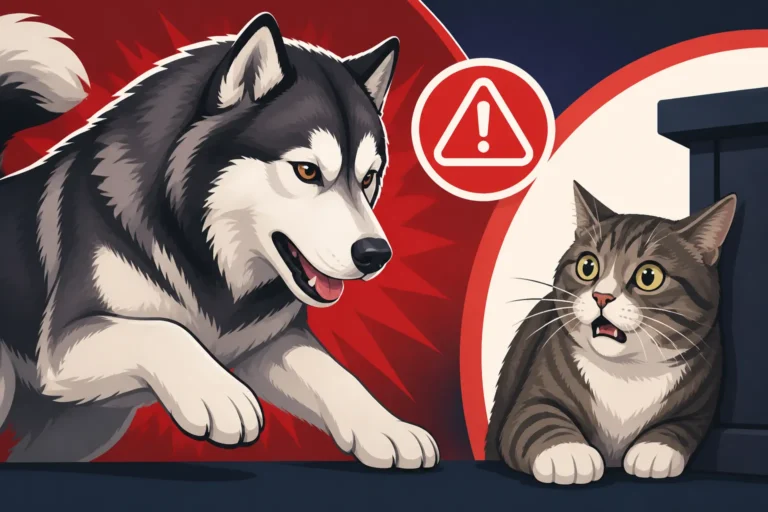
Alaskan Malamutes possess a strong prey drive, a natural instinct honed over centuries of working alongside the Mahlemut people to hunt and survive. This isn't aggression towards other dogs per se, but it can certainly look that way if a small dog or another animal triggers that chase response. Owners often discover this drive when their Malamute shows intense interest in squirrels, cats, or even small, fast-moving dogs, sometimes with devastating consequences. It's not about malice; it's about hardwired survival instincts. What an Alaskan Malamute Was Bred to Hunt gives more insight into these historical roles.
Beyond prey drive, Malamutes are notorious for same-sex aggression. This isn't a flaw; it's a characteristic deeply embedded in their pack heritage. In a pack environment, maintaining a clear hierarchy is vital for survival and cooperation, and sometimes that involves confronting perceived rivals, especially those of the same gender. Two intact male Malamutes, or even two intact females, can find themselves in serious disagreements over status, resources, or even just personal space. This is a common and often difficult reality for Malamute owners, and it's something many discover after bringing a second dog into the home. Same Sex Aggression in a Pack Bred Alaskan Malamute delves into this in detail.
Common Manifestations of Aggression
Malamute aggression can manifest in various ways, making it hard for owners to pinpoint the exact cause or solution. One of the most common forms is leash reactivity. Your Malamute might be perfectly well-behaved at home but transform into a barking, lunging beast the moment another dog appears on the leash. This isn't always true aggression; it can be frustration, over-excitement, fear, or a combination of these. The leash restricts their natural greeting behaviors and can heighten tension. It's a hugely frustrating experience for owners who just want to enjoy a peaceful walk with their companion.
In multi-Malamute households, owners often grapple with in-house squabbles. These might start as seemingly harmless disagreements over toys or sleeping spots, but they can quickly escalate into serious fights, particularly between dogs of the same sex. It's exhausting to live in a constant state of vigilance, trying to prevent confrontations. The expectation that dogs will naturally "work it out" often leads to more severe incidents, proving that management and understanding of their pack dynamics are paramount. Why Malamutes Fight Dogs of the Same Sex and How Two Male Malamutes Work Out Rank offer crucial context for these internal dynamics.
The Hormonal Aspect of Aggression
It’s completely understandable why many owners pin their hopes on neutering to solve aggression issues. Hormones, particularly testosterone in males, are often associated with assertive, dominant, or aggressive behaviors. The idea is simple: remove the source of these hormones, and the problematic behaviors will subside. But, as with most things canine, the science and the reality are a bit more nuanced than that.
How Hormones Influence Behavior
In male dogs, testosterone certainly plays a role in behaviors such as marking, roaming, and sometimes, competitive aggression, particularly towards other males. It can fuel a dog's drive to establish dominance and respond intensely to challenges. For female dogs, estrogen and progesterone, cycling through heats, can also influence temperament, leading to irritability, possessiveness, or anxiety during certain phases. An intact female might become more protective of her space or even her owner when she's in heat or experiencing a false pregnancy.
These hormones are powerful chemical messengers that affect the brain and body. They can amplify certain instincts and make a dog more reactive in situations where an altered dog might be less so. It’s not just about direct aggression; it’s about the underlying drives that can lead to aggressive displays. Understanding this hormonal influence is a valid part of the equation, but it’s rarely the whole picture, especially with a breed as complex as the Alaskan Malamute.
What Neutering Actually Changes
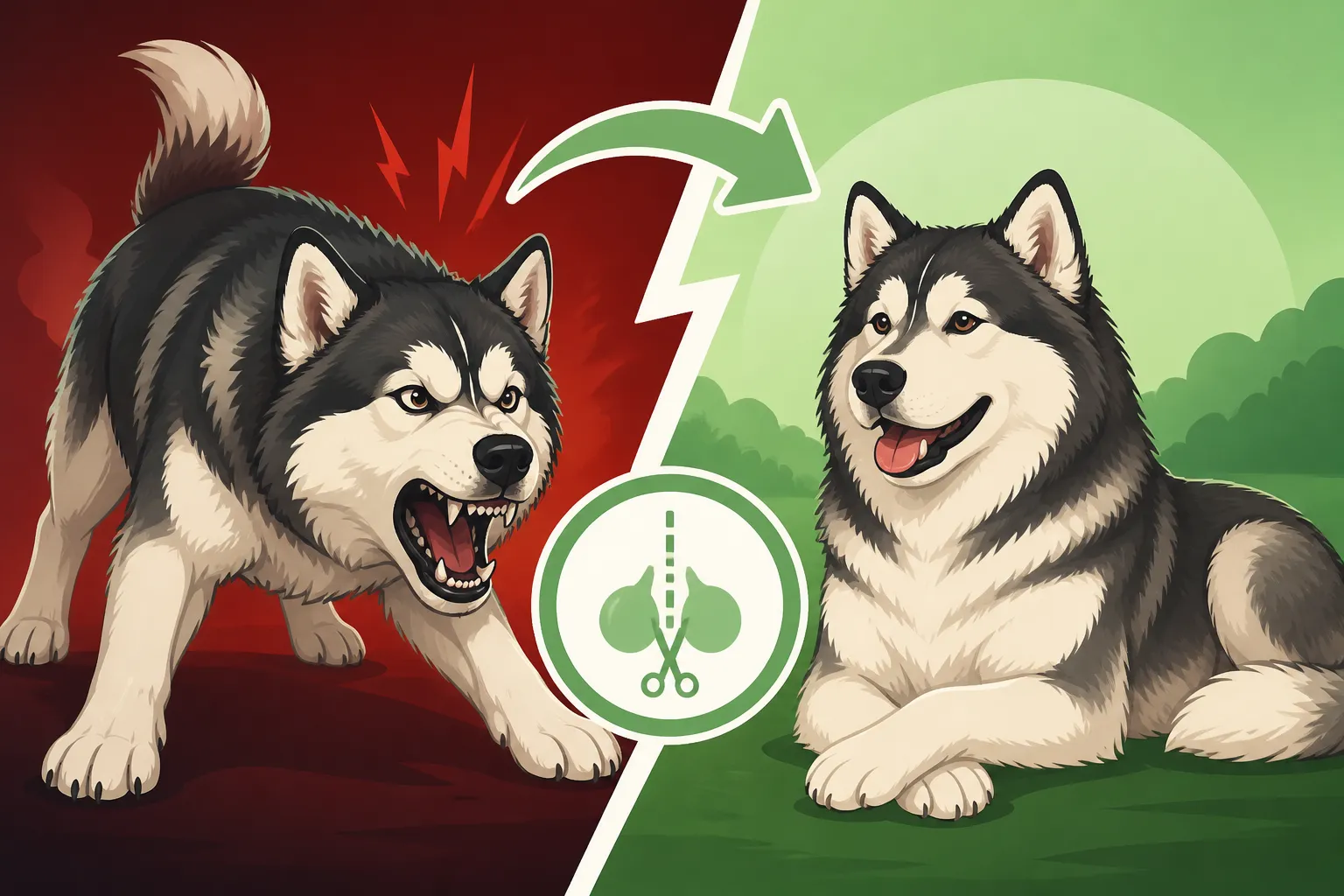
When a male dog is neutered, his testes are removed, which means the primary source of testosterone is gone. This leads to a significant reduction in circulating testosterone, which can absolutely have an impact on certain behaviors. You might see a decrease in urine marking, a reduced urge to roam in search of a mate, and sometimes, a lessening of male-on-male competitive behaviors if they were driven purely by hormonal rivalry.
However, neutering is not a behavior cure-all. Aggression is rarely just about hormones. It's a complex interplay of genetics, early socialization, learned experiences, fear, anxiety, and training (or lack thereof). While testosterone influences behavior, it doesn't dictate it entirely. Think of it this way: a driver might speed because they have a powerful engine (hormones), but they also speed because they learned it was effective (learned behavior) or they're anxious about being late (fear/anxiety). Removing the powerful engine (neutering) might reduce the potential for speeding, but it won't erase the learned habit or the underlying anxiety without further intervention. This is a critical distinction, especially for a breed with such strong innate drives.
Realistic Expectations After Neutering
It's common for owners to hold onto the hope that neutering will be the definitive solution to their Malamute's aggression. While some changes might occur, it's essential to set realistic expectations to avoid disappointment and ensure you pursue appropriate behavioral strategies. Neutering is a medical procedure with physical impacts, but its behavioral effects, especially on aggression, are often less dramatic than owners anticipate.
Changes You Might See
For some Malamutes, especially those whose aggression is heavily tied to reproductive hormones, you might observe subtle shifts. An intact male, previously obsessed with marking every bush on a walk and trying to escape to find females, might calm down a bit in those specific areas. His drive to roam could lessen, making him slightly less prone to trying to bolt through an open door or dig under a fence. This can bring a measure of relief to owners constantly worried about escapes and unwanted pregnancies. The Malamute That Bolts Through an Open Door discusses this common Malamute escape artist behavior.
However, these changes are often subtle, not miraculous. If your Malamute's aggression is primarily directed at other male dogs, you might notice a slight decrease in the intensity of their initial reactions, but it's unlikely to eliminate it entirely, particularly if the aggression has a strong learned or territorial component. Neutering might take the "edge" off, making training interventions slightly more effective, but it won't erase ingrained behavioral patterns overnight. It's more about reducing the hormonal fuel than dismantling the behavioral engine itself.
Aggression Types Least Affected by Neutering
Here's where setting realistic expectations becomes crucial. Many forms of Malamute aggression are simply not driven solely by reproductive hormones, and therefore, neutering has little to no impact on them. For instance, aggression stemming from fear – a dog that lashes out because it feels threatened or overwhelmed – is often entirely unrelated to its intact status. In fact, some studies suggest that early neutering in fearful dogs can even exacerbate anxiety-related behaviors.
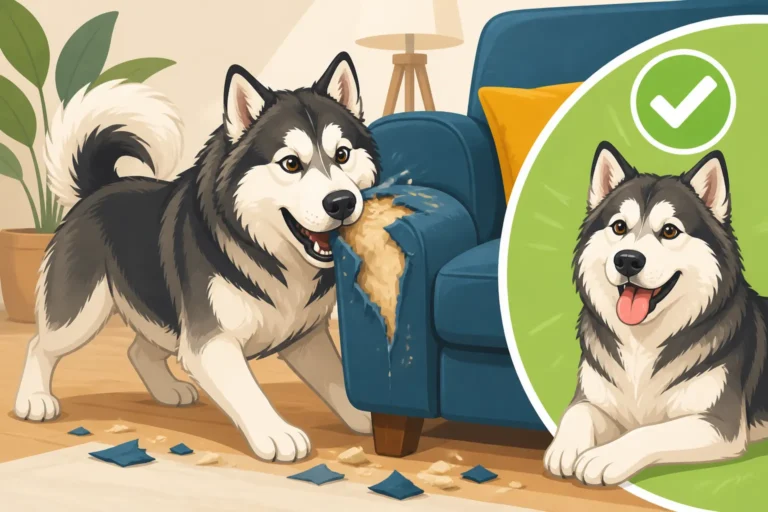
Similarly, aggression that is a learned behavior, perhaps from a past negative experience with another dog or from ineffective training, will persist after neutering. A Malamute that has learned to lunge and bark on the leash to create distance from other dogs will continue to do so because the behavior has been reinforced, not because of its testosterone levels. Resource guarding, territorial aggression, or even many instances of same-sex aggression, particularly if they've been present for a while, often have roots far deeper than hormones. How Common Dog Aggression Is in Alaskan Malamutes highlights the prevalence of these issues.
It's also important to consider the age at which aggression first appears. If your Malamute developed aggression as a young adult, after their hormones had already impacted their social learning and established behavioral patterns, neutering might have less effect. The behavioral pathways are already well-trodden.
| Aggression Type | Likely Impact of Neutering | Why (Malamute Context) |
|---|---|---|
| Hormonally Driven | High | Roaming, marking, inter-male competition for mates. Often reduced. |
| Fear-Based | Low to None | Stemming from anxiety, past trauma, or poor socialization. May even worsen if confidence is further eroded. |
| Learned Behavior | Low to None | Reinforced reactions (e.g., leash reactivity, barking at specific triggers). Requires re-training, not surgery. |
| Resource Guarding | Low to None | Possession of food, toys, space. Rooted in perceived scarcity/control, not primarily hormones. |
| Territorial | Low to None | Protecting home or yard from perceived intruders. Strong instinct, often independent of hormones after establishment. |
| Same-Sex Aggression | Moderate to Low | Can reduce intensity if purely competitive, but often deeply ingrained social hierarchy. Why Malamutes Fight Dogs of the Same Sex |
| Prey Drive | None | Hardwired hunting instinct towards smaller animals. Not impacted by reproductive hormones. |
When Neutering Might Help with Aggression
While neutering isn't a silver bullet, there are specific scenarios where it can be a valuable part of a broader behavioral modification plan. Understanding these specific contexts can help owners make informed decisions alongside their vet and a qualified behavior professional.
Aggression Tied to Reproductive Hormones
The most straightforward cases where neutering can offer a benefit are those directly linked to a male Malamute's reproductive drive. If you have an intact male who is constantly straining on the leash to get to intact female dogs, displaying intense marking behaviors, or consistently trying to escape to find a mate, reducing testosterone can lessen these specific drives. His focus might shift, making him slightly more amenable to training because he's less distracted by the primal urge to reproduce. This can make him a more pleasant companion overall, even if his other forms of aggression persist.
Similarly, an intact male who exhibits intense, competitive aggression purely with other intact males might see some reduction in this specific behavior post-neutering. This isn't a guarantee, especially if the behavior has been allowed to escalate over time and become a learned response, but the hormonal fuel for that particular type of rivalry will be diminished. It's often about managing the intensity and frequency, rather than eradicating the behavior entirely.
Timing Is Everything
The age at which a Malamute is neutered can also play a role in its impact on aggression. Generally, if aggression is hormonal, neutering before the aggressive behaviors become deeply ingrained or habitual might offer a better chance of seeing a positive shift. If a male Malamute is neutered as a young adolescent, before significant testosterone surges have solidified aggressive responses as learned patterns, there's a higher likelihood of mitigating some hormone-driven issues.
However, waiting until aggression is a well-established pattern, or until a dog is older, means the behavior is far more likely to be a result of learned responses, fear, anxiety, or established social dynamics rather than just circulating hormones. At that point, neutering often has a minimal direct effect on the aggressive behavior itself, although it might help in other areas like reducing marking or roaming. This is why discussions around early versus late neutering are so prevalent; there's no one-size-fits-all answer, especially for a breed with such strong, natural predispositions. Whether Neutering Calms an Alaskan Malamute offers further context on this topic.
The Comprehensive Approach to Malamute Aggression
Since neutering often isn't the magic fix for Malamute aggression, a multi-faceted approach focusing heavily on training, management, and professional guidance is almost always necessary. These dogs are powerful, intelligent, and often stubborn, meaning their behavioral challenges require consistent, informed effort from their human companions.
The Crucial Role of Training and Management
Effective training is non-negotiable for an Alaskan Malamute, particularly one with aggressive tendencies. This isn't just about teaching basic commands; it's about building a strong bond based on trust and clear communication, and providing consistent structure. Positive reinforcement methods are incredibly effective with Malamutes, as they respond poorly to harsh corrections or force. They're independent thinkers, and force often backfires, making them shut down or become more resistant. A system like the one offered by BAXTER & Bella can provide structured online training resources that focus on positive methods, which can be invaluable for owners navigating these challenges.
Management is equally critical. For a Malamute prone to same-sex aggression, this might mean a strict "crate and rotate" schedule, ensuring dogs are never unsupervised together. High, secure fencing is vital for preventing escapes driven by prey drive or the urge to roam, as is keeping your Malamute on a leash at all times in unsecured areas. How Far Down a Malamute Will Dig and Fencing a Yard Against a Malamute That Was Bred to Dig illustrate just how serious Malamute containment needs are. Muzzle training is another essential tool; a well-conditioned muzzle can prevent bites during unexpected encounters or when introducing a dog to new situations, allowing for safer training and management. Many excellent muzzles can be found on Amazon, and getting your Malamute comfortable wearing one long before it's ever needed for an emergency is a huge step in responsible ownership. Why Every Malamute Should Be Muzzle Trained provides detailed reasoning for this.
Professional Guidance and Support
Dealing with an aggressive Malamute can be overwhelming, even for experienced owners. This is not a journey you should embark on alone. Seeking help from a qualified professional is not a sign of failure but a mark of responsible ownership. A certified professional dog trainer specializing in large, strong breeds or aggression can provide tailored strategies, hands-on guidance, and support. They can help you identify the specific triggers for your Malamute's aggression and develop a systematic plan to address them.
For more severe or complex cases, a veterinary behaviorist might be the most appropriate choice. These professionals are veterinarians who have specialized in animal behavior, allowing them to assess both the medical and behavioral components of aggression. They can prescribe medication if necessary to help manage anxiety or reactivity, creating a window of opportunity for behavioral modification to be more effective. Finding the right professional to support you and your Malamute is crucial for long-term success and peace of mind. What a Behaviorist Costs a Malamute Owner can give you an idea of the investment involved.
Considering Alternatives to Neutering or Delaying It
The decision to neuter, especially in relation to aggression, is complex and has long-term implications. It's not a decision to be made lightly, and it's always worth exploring all options, including medical alternatives or delaying the procedure, in consultation with your veterinarian.
Medical Alternatives for Hormone Management
For male Malamutes, if the concern is primarily about testosterone-driven behaviors like roaming, marking, or specific types of inter-male aggression, but you're not ready for permanent neutering or want to see if hormone reduction helps before committing, there are temporary chemical alternatives. These are typically implants that release a GnRH (Gonadotropin-Releasing Hormone) agonist, temporarily suppressing testosterone production, essentially mimicking the effects of neutering without surgery.
This can be an excellent diagnostic tool. If you see a significant reduction in the target aggressive behaviors while your Malamute has the implant, it suggests a strong hormonal component, making surgical neutering a more viable option. If there's no change, it indicates the aggression is likely rooted in learned behaviors, fear, or genetics, and further training and management are needed. These temporary solutions allow owners to assess the potential impact of hormone reduction without irreversible surgery.
Behavioral Modifications for Intact Males/Females
Whether you choose to delay neutering, opt for a temporary alternative, or decide to keep your Malamute intact, a robust behavioral modification plan is essential. For intact males, this means meticulous management to prevent unwanted breedings and limit opportunities for same-sex aggression, especially in situations with other intact males. Consistent training, focusing on impulse control, reliable recall (though always use a leash with a Malamute due to their strong prey drive!), and appropriate socialization are vital. Why an Alaskan Malamute Will Never Have a Reliable Recall is a must-read on this topic.
For intact females, understanding their heat cycles and the behavioral changes that accompany them is crucial. They can become more irritable, restless, or anxious during these times, and careful management to prevent unwanted pregnancies and potential altercations with other dogs is paramount. Training, enrichment, and avoiding stressful situations during heat can help. Ultimately, responsible intact ownership of a Malamute demands an even higher level of commitment to training, management, and vigilance than is already required for this magnificent, challenging breed.
Disclaimer
This article is for general informational purposes only and does not constitute professional advice. Laws, prices and regulations vary by location and change over time. Consult a qualified professional for guidance on your specific situation.