What an E-Collar Does and Does Not Fix in a Malamute
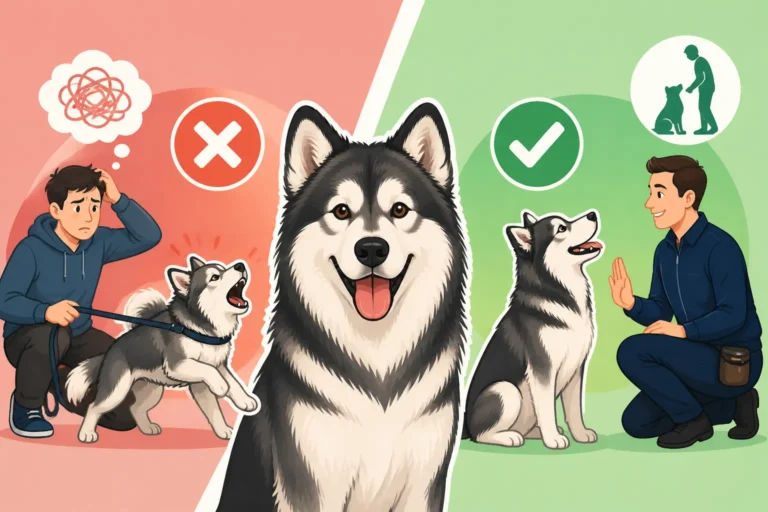
It’s a common scenario for many Alaskan Malamute owners: you’ve tried everything, or so it feels. Your intelligent, independent, and sometimes incredibly stubborn Malamute seems to have a selective hearing problem, especially when that squirrel darts across the yard. Frustration mounts, and someone suggests an e-collar, promising a quick fix for everything from runaway recall to incessant digging. But what exactly can an e-collar really fix in a Malamute, and more importantly, what can it not, and perhaps should not, be used for? This guide aims to clear up the confusion and offer a realistic perspective on this often-misunderstood training tool for our beloved northern breeds.
The Allure of the Quick Fix and the Malamute Mindset
Let’s be honest, living with an Alaskan Malamute is an adventure, but it’s not always easy. Their incredible intelligence, coupled with a deep-seated independence born from thousands of years of working autonomously in harsh environments, can make traditional training feel like an uphill battle. You’ve probably experienced that moment when your Malamute looks at you, clearly understands what you want, and then deliberately chooses not to do it. It’s not malice; it’s simply their nature.
This unique Malamute mindset is precisely why many owners, exhausted by endless pulling on the leash, the constant escapes, or the crater-sized holes appearing in the yard, start looking for solutions that promise swift, undeniable results. The idea that a remote-controlled device could instantly get their Malamute's attention and enforce commands can be incredibly appealing. It taps into that very human desire for a magic bullet, especially when dealing with a dog as formidable and strong-willed as a Malamute. However, understanding the root of Malamute behavior – their strong prey drive, their innate desire to roam, and their exceptional problem-solving skills – is crucial before considering any training tool. Why an Alaskan Malamute Will Never Have a Reliable Recall is something many owners grapple with, and it's often the first thing people hope an e-collar can "fix."
The Independent Spirit vs. Obedience Training
Alaskan Malamutes weren't bred to be biddable, heel-at-your-side companions like a Border Collie. They were bred to think for themselves, to make decisions on the trail, and to persevere through incredibly difficult conditions, often without direct human instruction for every single step. This independence is a hallmark of the breed, a trait that makes them resilient and magnificent, but also challenging in a modern domestic setting. When we ask a Malamute to instantly drop a scent trail, ignore a squirrel, or stay within an invisible boundary, we're asking them to override instincts that are deeply ingrained in their DNA.
The frustration is real when you feel like your Malamute is ignoring you. You might wonder if they even care about pleasing you. They do, in their own way, but their priorities often differ from ours. Their powerful sense of smell and their inherent curiosity about the world around them can easily override a "come" command, especially if the reward isn't compelling enough in that exact moment. This isn't a sign of a "bad" dog, but a dog acting on centuries of genetic programming. Owners frequently feel they've exhausted all options, and the idea of a tool that provides an undeniable 'correction' seems like the only path left.
Why Force Fails on an Alaskan Malamute
It’s important to acknowledge that Malamutes are incredibly sensitive, despite their tough exterior. While they might seem to shrug off a stern word, they are incredibly attuned to emotional nuance and respond poorly to harsh or heavy-handed methods. Attempting to force a Malamute into compliance through fear or pain often backfires spectacularly. Why Force Fails on an Alaskan Malamute is a concept every owner needs to understand deeply. It doesn't build trust; it erodes it, leading to a dog that might shut down, become fearful, or even lash out defensively.
An e-collar, which delivers a static stimulation (often incorrectly called a "shock"), is inherently a tool of aversive control. While proponents argue that modern e-collars use low levels that are merely "taps" or "nudges," the dog's perception is key. If a dog experiences discomfort or fear when they associate an e-collar stimulation with a specific action or even just your presence, it can create a host of unintended negative consequences. Instead of learning what to do, they learn what to avoid, and often, that avoidance includes their owner or the training scenario itself.
What an E-Collar Can Potentially Address in a Malamute
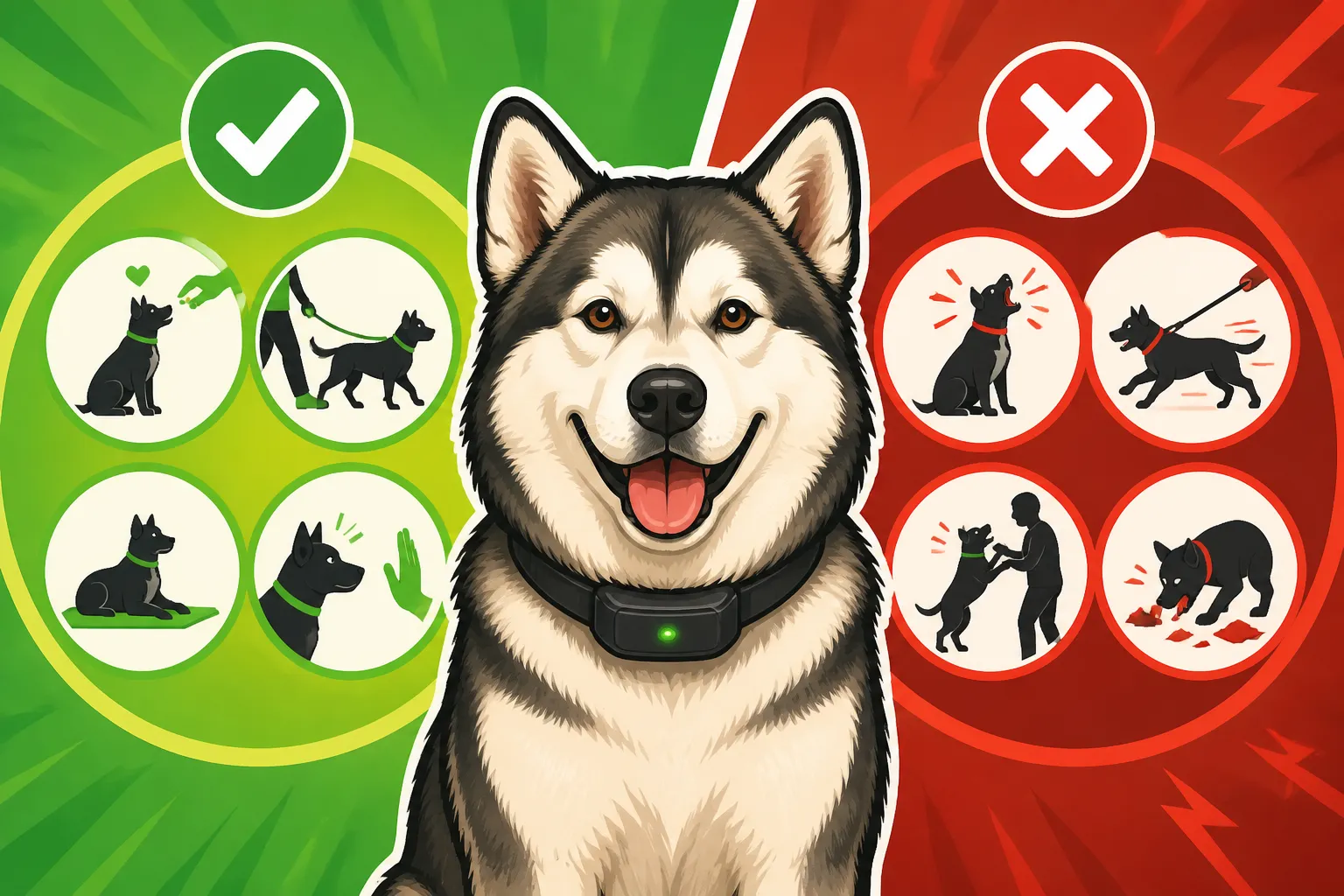
When used by a highly skilled, experienced, and ethical trainer who understands Malamute behavior, e-collars can be used to address very specific, isolated behavioral issues under tightly controlled conditions. However, it's crucial to stress that this is a nuanced discussion, and the potential benefits are often outweighed by the risks, especially for the average owner.
Off-Leash Safety in Very Specific Scenarios
For a Malamute, off-leash reliability is almost mythical. Their prey drive and wanderlust are legendary. Why a Loose Malamute Runs Toward Traffic is a terrifying reality many owners face. In situations where a Malamute absolutely must be off-leash for a specific, controlled activity (like certain working trials or specialized training in a vast, secure area), an e-collar might be used as a last-resort, interruptive tool. The idea here is to get the dog's attention away from a highly motivating distraction, not to punish.
For example, a working Malamute might be trained to ignore deer during a controlled sledding run in a remote, fenced-off area. The e-collar might be used at a very low level as a tap to redirect attention when the dog begins to fixate, immediately followed by a strong, positive recall cue and reward. This requires immense timing and understanding of canine learning theory, far beyond what most pet owners possess. For general walks or dog parks, where safety is paramount, relying on an e-collar is highly risky due to their potent instincts. This is why a secure physical fence and a Why a GPS Collar Is Essential for a Malamute are far more reliable safety measures.
Addressing Nuisance Barking or Howling
Malamutes are known for their "woo-wooing" and howling, rather than incessant barking. However, some individual Malamutes might develop nuisance barking habits due to boredom, anxiety, or territoriality. In some very specific, rare instances, an e-collar (often with a bark-activated function) might be considered to interrupt nuisance barking. The theory is that the dog associates its bark with the uncomfortable sensation, leading to a reduction in barking.
However, this approach is fraught with peril. It only suppresses the symptom (barking) without addressing the underlying cause (boredom, anxiety, fear). If a Malamute is barking because it's genuinely distressed, punishing the bark can lead to increased anxiety, fear-based aggression, or the development of new, more problematic behaviors. A much better approach is to understand What Sounds an Alaskan Malamute Makes and why, then addressing the root cause through environmental enrichment, counter-conditioning, and positive reinforcement. Many Malamute owners find puzzle toys, interactive feeders, and chew items from retailers like Amazon invaluable for boredom-related vocalizations.
Training for Specific Working Commands
For highly specialized working Malalmutes, particularly those involved in demanding freighting or search and rescue work where lives might depend on precise cues over long distances, some trainers might incorporate e-collars as a communication tool for advanced commands. This is not about basic obedience, but about adding another layer of remote cueing for dogs already deeply conditioned to respond.
Even in these contexts, the e-collar is typically introduced after the dog fully understands the command with positive reinforcement and is used as a highly consistent, low-level signal, rather than a punishment. The goal is clarity and reliability, not correction. It's a method reserved for expert handlers and dogs with extensive foundational training. For the average pet Malamute owner, a strong foundation in positive reinforcement and leash work is far more beneficial and builds a stronger bond.
What an E-Collar Cannot and Should Not Fix in a Malamute
While e-collars might have niche applications, there are far more situations where they are ineffective, counterproductive, or downright harmful for an Alaskan Malamute. They are not a shortcut for proper training, understanding breed traits, or building a trusting relationship.
Addressing Core Breed Traits Like Prey Drive and Digging
Your Malamute's intense prey drive? That instinct to chase anything small and furry? An e-collar isn't going to "fix" that. At best, it might temporarily suppress the expression of that drive in specific situations, but the underlying instinct remains. If you "correct" your Malamute for chasing a squirrel with an e-collar, you risk creating a dog that associates the painful sensation with the squirrel, the park, or even you, rather than truly understanding why chasing is unacceptable. This can lead to redirected aggression, fear of the outdoors, or a dog that simply learns to sneak off and chase when the e-collar isn't on or you're not looking. What an Alaskan Malamute Was Bred to Hunt explains just how deeply ingrained this behavior is.
The same goes for digging. Malamutes dig. It's part of who they are. They dig to cool down, to explore, to bury treasures, and yes, sometimes just for the sheer joy of it. Why an Alaskan Malamute Digs is a question with a complex answer rooted in their history. An e-collar might stop them from digging at that exact moment when you deliver the stimulation, but it won't change their intrinsic motivation. Instead, you'll likely create a fearful digger who digs when you're not around or develops anxiety around the yard. A better solution involves providing a designated digging pit and ample mental and physical enrichment.
Fixing "Stubbornness" or Lack of Motivation
Many Malamute owners describe their dogs as stubborn. They’ll tell you their Malamute "ignores a cue it knows" when something more interesting comes along. While it feels like stubbornness, it's actually their independent decision-making and prioritizing instinct over immediate human command. Whether an Alaskan Malamute Ignores a Cue It Knows speaks to this common frustration. An e-collar might compel a Malamute to respond in that moment, but it doesn't teach them to want to listen or build intrinsic motivation.
Using an e-collar to "force" a Malamute to comply can easily break their spirit and damage the bond of trust you've painstakingly built. Malamutes thrive on positive reinforcement, clear communication, and a strong, fair leadership based on respect, not coercion. They respond to what's in it for them – tasty treats, exciting toys, enthusiastic praise. If the reward isn't good enough, they'll weigh their options, and an e-collar simply adds a negative consequence without teaching the value of compliance.
Addressing Fear, Anxiety, or Aggression
This is where e-collars become particularly dangerous. If your Malamute is showing signs of fear, anxiety, or aggression – whether towards other dogs, strangers, or specific situations – an e-collar can exacerbate these issues dramatically. A fearful dog who is "corrected" with an e-collar for reacting to a trigger (like another dog) will often become more fearful and potentially more aggressive because they associate the discomfort with the trigger. They might lash out without warning, or develop learned helplessness.
For example, if you use an e-collar on a Malamute that growls at another dog out of fear, the dog learns that other dogs predict pain. Instead of learning to cope with other dogs, it might suppress the growl (a warning signal) and go straight to a bite. This is a recipe for disaster. Complex behavioral issues like aggression require the guidance of a certified professional animal behaviorist and a comprehensive plan rooted in positive reinforcement, counter-conditioning, and desensitization.
Replacing Foundation Training and Socialization
An e-collar is not a substitute for proper socialization, consistent positive reinforcement training, and a clear understanding of canine body language. It cannot replace the essential work of teaching a Malamute appropriate manners, house rules, or how to interact calmly with the world. There’s no e-collar setting for "be polite to guests" or "don't jump on grandma."
Foundational training using positive methods, like those advocated by resources such as BAXTER & Bella, focuses on building a strong, positive relationship and teaching your dog what to do, rather than punishing what not to do. It's about setting your Malamute up for success, rewarding good choices, and gently guiding them away from undesirable behaviors. This builds confidence, trust, and a dog who chooses to cooperate because it's rewarding, not because it fears a correction.
Comparing E-Collar Potential vs. Malamute Reality
To help clarify, here’s a quick overview of what e-collars might claim to address versus what they realistically achieve with a Malamute, especially when considering their inherent breed traits and sensitivities.
| Behavior Goal | E-Collar Potential (with expert use, high risk) | Malamute Reality (Better Approach) |
|---|---|---|
| Reliable Off-Leash Recall | Could enforce a recall in controlled settings | Deeply ingrained prey drive; Why an Alaskan Malamute Will Never Have a Reliable Recall means physical containment (leash, secure fence) is always safer. Use long lines and high-value rewards to build recall as much as possible. |
| Stopping Digging | Can interrupt current digging | Malamutes dig instinctively; punishment creates fear, not understanding. Provide a designated Giving an Alaskan Malamute Its Own Digging Pit and ample enrichment. |
| Reducing Nuisance Vocalization | Can suppress barking/howling | Only addresses symptom; root cause (boredom, anxiety) remains. Address with enrichment, exercise, and counter-conditioning. |
| Preventing Counter Surfing | Can interrupt access to counters | Suppresses behavior; does not teach impulse control. Manage environment, teach "leave it" with positive reinforcement. |
| Addressing Dog Aggression | Can suppress outward aggression | Extremely risky; will exacerbate underlying fear/anxiety, leading to dangerous suppression or redirected aggression. Requires professional positive behavior modification. |
| Fixing "Stubbornness" | Can compel immediate compliance | Destroys trust, fosters resentment. Focus on building strong positive motivation, varying rewards, and understanding the Malamute's independent nature. |
| Teaching Basic Obedience | Can add "punishment" for non-compliance | Completely unnecessary and detrimental. Positive reinforcement builds a strong foundation, trust, and a joyful learner. Whether Positive Training Alone Works on a Malamute is a resounding yes. |
Alternative and Ethical Training Approaches for Your Malamute
So, if e-collars aren't the answer for most Malamute challenges, what is? The answer lies in understanding your Malamute, embracing positive reinforcement, and often, enlisting professional help.
Embrace Positive Reinforcement
This is the cornerstone of successful Malamute training. Positive reinforcement means rewarding behaviors you want to see, making them more likely to happen again. For a Malamute, this means high-value treats (think cooked chicken, cheese, or even salmon), favorite toys, and enthusiastic praise. They are smart, and they will absolutely work for what motivates them.
Instead of focusing on what your Malamute shouldn't do, focus on teaching them what they should do. For example, if they jump, teach them to sit for attention. If they chew furniture, provide appropriate chew toys found on Amazon and reward them heavily for using those. The more you reward the right behaviors, the more those behaviors become their default choice. Resources like BAXTER & Bella offer excellent, comprehensive programs rooted entirely in positive reinforcement, which are ideal for building a solid foundation with your Malamute puppy or even an adult rescue.
Consistent Management and Environmental Control
For a breed with such powerful instincts, management is not a failure of training; it's a responsible part of ownership. This means:
- Secure Fencing: A Malamute-proof fence is non-negotiable. We're talking 6-foot-tall, with dig guards or buried wire to prevent tunneling. Whether a Malamute Owner Should Budget for a Second Fence is a valid consideration.
- Leash Walking: Until you are in a securely fenced area, your Malamute should always be on a leash. A well-fitting harness (front-clip can help with pulling) and a sturdy leash are your best friends.
- Chew-Proofing: Provide plenty of appropriate, durable chew toys to satisfy their strong need to chew. Rotate them to keep things interesting.
- Enrichment: A bored Malamute is a destructive or problematic Malamute. Puzzle feeders, snuffle mats, training sessions, long walks, and supervised playdates are all essential for their mental and physical well-being.
Channel Their Instincts Appropriately
Malamutes were bred to work, and they thrive when given a job. Instead of fighting their instincts, find constructive ways to channel them:
- Weight Pulling and Sledding: These activities tap into their inherent desire to pull and work as a team. Many communities have clubs dedicated to these sports.
- Canicross or Bikejoring: For a modern twist on pulling, these sports involve your Malamute pulling you as you run or bike. It's an excellent way to burn off energy.
- Hiking and Backpacking: Malamutes love to explore and carry a pack. Start with short hikes and light loads, gradually increasing as they build strength and endurance.
- Scent Work: Their powerful noses can be put to good use in scent detection games or classes. This provides immense mental stimulation.
When to Seek Professional Guidance
Sometimes, even with the best intentions and consistent positive reinforcement, you might hit a wall. This is when a qualified professional trainer or a certified animal behaviorist is invaluable. Look for trainers who are certified through reputable organizations and who use only positive, force-free methods. They can offer tailored strategies for your specific Malamute's challenges, help you understand their unique communication, and guide you through complex behavioral issues.
Don’t be afraid to seek help. A good trainer can teach you new communication techniques, help you understand The Adolescent Malamute That Rewrites the Rules at Fourteen Months, and refine your training skills. They can be a lifeline when you feel overwhelmed, ensuring that you and your Malamute can continue to build a strong, trusting, and joyful relationship without resorting to harsh methods that often do more harm than good. Whether a Malamute Needs a Professional Trainer is often a yes, especially for first-time owners or those struggling with specific challenges.
Disclaimer
This article is for general informational purposes only and does not constitute professional advice. Laws, prices and regulations vary by location and change over time. Consult a qualified professional for guidance on your specific situation.