Teaching an Alaskan Malamute to Wait at a Threshold
One of the most hair-raising moments for any Alaskan Malamute owner is that split second when the front door swings open, and your powerful, independent dog decides "now's my chance!" The sheer speed and determination with which they can bolt through a perceived opening, whether it's the front door, the car door, or a kennel gate, can lead to absolute panic. This guide is here to walk you through how to teach your beloved Malamute the crucial "wait" command at every threshold, turning those moments of potential chaos into calm, controlled exits and entries.
Understanding the Malamute Mindset at a Threshold
It's not just about being disobedient; when a Malamute sees an open door, a window of opportunity, their instincts kick in. We're talking about a breed hardwired for exploration, for covering vast distances, and possessing a keen prey drive. That open door isn't just an inconvenience; it's a call to adventure, a potential chase, a chance to be free.
The Call of the Wild and Prey Drive
Imagine your Malamute, even if it's lived its entire life in a suburban home. Deep down, genetically, they carry the spirit of their ancestors, the incredible sled dogs of the Arctic. When that door opens, the outside world represents a smorgasbord of scents, sounds, and potential "prey"—a squirrel darting across the lawn, a neighbor's cat, or even just the thrilling prospect of a wide-open space to run. Their highly developed senses are constantly on alert. A sudden crack in the door, a glimpse of the street, and their brains quickly process it as an invitation to engage with that stimulating environment. It's a primal urge, not a malicious act of defiance. This is why Why an Alaskan Malamute Will Never Have a Reliable Recall is such an important read, as it underlines the inherent difficulty in getting a Malamute to come back once those instincts take over.
Independence and the Drive to Explore
Alaskan Malamutes are intelligent, but they are also incredibly independent thinkers. They were bred to work with humans, but also to make their own decisions in challenging environments. This isn't a Golden Retriever's eager-to-please mentality. A Malamute might understand a command perfectly well, but if it clashes with their immediate desire, they might just decide to prioritize their own agenda. The open threshold is a direct challenge to human authority, and they are masters at testing boundaries. They're weighing the instantaneous gratification of a dash for freedom against a delayed treat or praise. For many Malamutes, the unknown adventure beyond the door wins out almost every time if they haven't been meticulously trained. The Age an Alaskan Malamute Tests Its Owner often coincides with these boundary-pushing behaviors.
Energy Levels and Boredom as Contributors
A bored or under-exercised Malamute is a destructive and escape-prone Malamute. These dogs need a significant outlet for their physical and mental energy. If they haven't had enough exercise, that pent-up energy will find an escape route, and an open door is the easiest one. They might not be trying to run away from you; they're simply trying to run. Period. A quick burst through the door can feel like a relief from boredom. Think of it from their perspective: they’ve been inside, perhaps napping, perhaps observing. Then, a sudden flash of light, a gust of wind, a new smell, and their body is screaming to move. If they're not tired and stimulated, that impulse is incredibly hard for them to resist. This is why understanding How Much Exercise an Alaskan Malamute Needs is paramount.
Laying the Foundation: Basic Obedience and Impulse Control
Before you even think about tackling the front door, your Malamute needs a solid understanding of basic commands and, more importantly, impulse control in less stimulating environments. Trying to teach "wait" at a high-value threshold without these prerequisites is like trying to build a house without a foundation.
"Sit" and "Stay" – Your Core Building Blocks
These aren't just parlor tricks; "sit" and "stay" are critical for safety and control. Your Malamute needs to be able to hold a solid "sit" or "down" for increasing durations, even with mild distractions. Practice in various locations – inside, in the yard, near other family members. The key is consistency and making these commands absolutely reliable. Use high-value treats to make these commands rewarding. For a Malamute, motivation is everything, and they need to know there's a good reason to obey. Some owners find What an Alaskan Malamute Will Work For can be a surprising mix of things, from food to praise to a favorite toy.
A common frustration is when your Malamute acts like they don't even hear you. You know they know "sit," but at that moment, it's as if the word has no meaning. This is where patience and consistency come in. Don't repeat the command endlessly. If they don't respond, guide them gently back into position, re-issue the command once, and then reward them when they comply. Make it clear that the reward only comes after the correct action. If you've ever felt like Whether an Alaskan Malamute Ignores a Cue It Knows, remember that it's often a test of your resolve, not a lapse in their memory.
Attention and Focus in Distracting Environments
Beyond "sit" and "stay," your Malamute needs to be able to offer you their attention even when exciting things are happening around them. Start indoors, asking for eye contact or a check-in while family members are moving around. Gradually increase the distractions: a toy on the floor, another pet in the room, then move to the backyard with distant noises. The goal is for your Malamute to look to you for direction, rather than immediately reacting to external stimuli.
One fantastic way to build this is with a consistent "look at me" or "focus" cue. Hold a treat near your eye, say "look at me," and when they make eye contact, mark the behavior (with a clicker or a verbal "yes!") and reward. Slowly increase the time they hold eye contact before the reward. This teaches them that you are the source of good things, and paying attention to you pays off. This focus is what will eventually empower you to say "wait" at a doorway and know they're listening to you, not just the squirrel outside. Many online resources, like those offered by BAXTER & Bella, provide structured lessons that systematically build these foundational skills.
Impulse Control Games
Games are a Malamute's favorite way to learn, and they are excellent for building impulse control. Play "leave it" with food or toys, asking them to ignore something tempting until you give the release cue. Practice waiting for their food bowl to be set down, only eating when you say "okay." Work on dropping toys on command. These exercises teach them that holding back, waiting for your instruction, leads to a greater reward.
Another great impulse control game is the "door game," even before you get to the actual threshold training. Simply approach a closed door with your Malamute on a leash. Ask for a "sit" or "down." If they remain, reward them. If they jump up or lunge, calmly move away from the door and try again. This teaches them that calm behavior near the door gets them closer to what they want, while excitable behavior gets them further away. It's about building a positive association with patience around doors.
Step-by-Step: Teaching the "Wait" Command at Various Thresholds
Once your Malamute has a solid grasp of "sit," "stay," and attention, you can begin to apply the "wait" command specifically to thresholds. Remember, consistency and repetition are your best friends here.
The Front Door: Your Primary Battleground
This is often the most challenging threshold, as it leads to the biggest adventure.
- Start on Leash, Low Distraction: With your Malamute on a leash (even inside, to provide immediate control), approach the front door. Ask for a "sit" or "down" a few feet away from it.
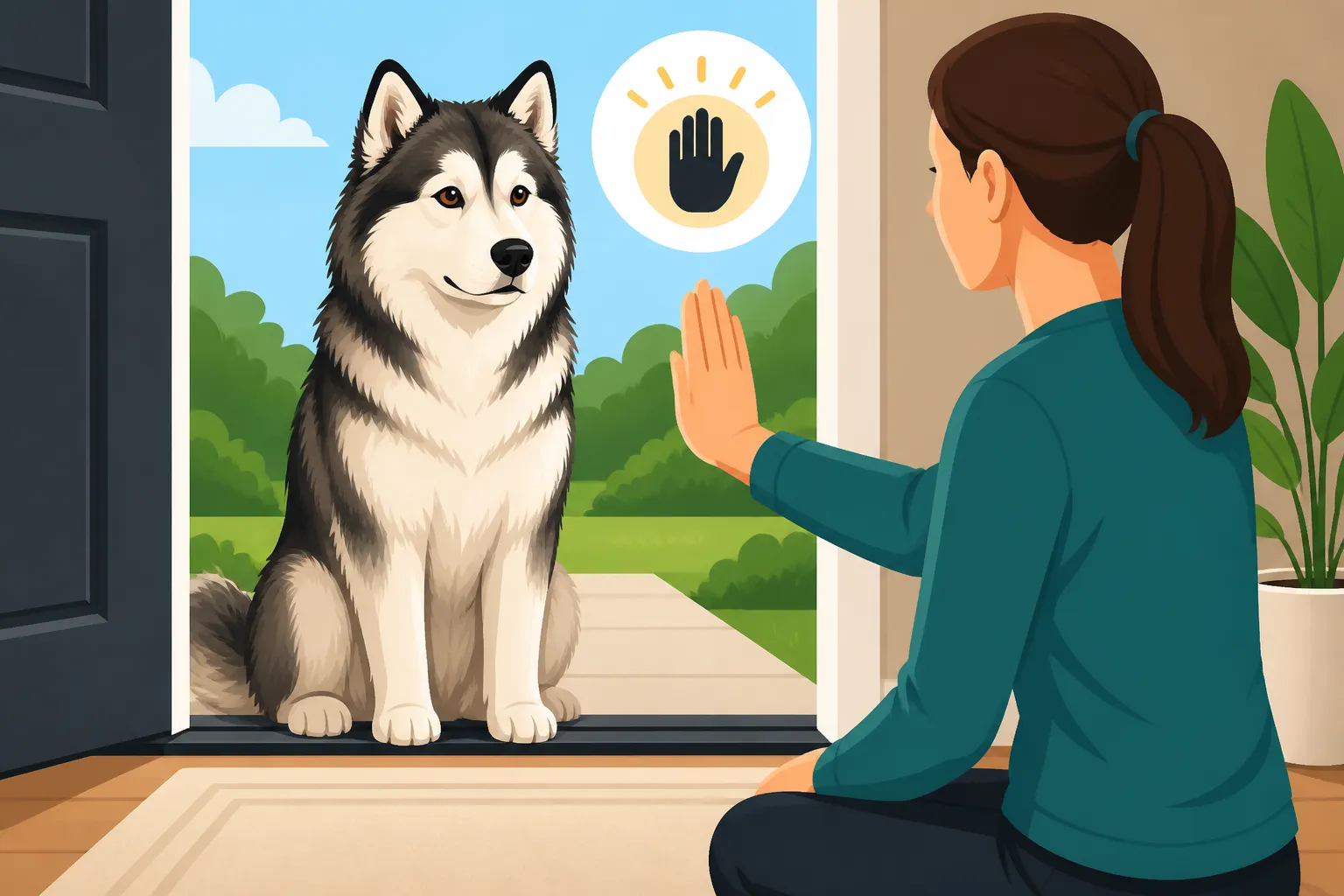
- Introduce the "Wait" Cue: Reach for the doorknob. If your Malamute remains sitting, say "wait" and immediately reward them before they can even think about moving. Repeat this several times. The goal is to associate the sound of "wait" with staying put.
- The Door Crack: Once they're reliably waiting when you touch the knob, try opening the door just a crack. If they hold their "sit/down," say "wait," reward, and immediately close the door. Practice this until they can hold their position for a brief moment with the door slightly ajar.
- Widen the Opening: Gradually increase how wide you open the door, always closing it if they move, or rewarding and closing if they hold. The goal is to get to a point where the door can be fully open for a few seconds while they remain in place.
- Adding the Release: Once they are waiting reliably with the door open, introduce a release cue like "okay" or "free." This tells them they are allowed to move. Never let them bolt out; always ask them to wait, then release them in a controlled manner. It's crucial that The Malamute That Bolts Through an Open Door becomes a memory, not a recurring nightmare.
Remember, if they break position, calmly reset. No yelling, no frustration. Just put them back in position and try again. This is a game of patience, and Malamutes will test yours.
Gates and Fences: Securing the Yard Perimeter
The principles are the same, but the distractions in the yard can be even higher. Many Malamutes view fences as a minor suggestion, especially if they have a strong prey drive or are bored.
- Leash Control is Key: Always start gate training with your Malamute on a leash, even in a securely fenced yard. This gives you immediate physical control if they try to dart.
- Practice "Wait" at the Gate: Approach the gate, ask for a "sit" or "down" a few steps away. Touch the latch, open the gate slightly, give the "wait" cue. Reward for holding position.
- Gate Fully Open: Work up to being able to open the gate fully, step through it yourself, and have your Malamute remain on the other side. You might need to use a longer lead initially, like a 10 or 15-foot training leash you can find on Amazon, to prevent them from slipping past you.
- Controlled Exits and Entries: Once they reliably wait with the gate open, practice walking them through on your release cue, always calmly and on leash. This reinforces that you control when and how they pass through. It's a critical safety measure, especially since How Far a Loose Alaskan Malamute Travels can be significant, putting them at great risk.
Car Doors: Safety on the Go
An excited Malamute leaping out of a car can be extremely dangerous, especially in a parking lot or near traffic.
- Start in a Stationary Car: With your Malamute secured in the car (either crated or with a safety harness/seatbelt), practice the "wait" command before opening the door.
- Open Door, Stay Put: Command "wait" as you open the car door. If they try to move, gently close the door and wait for them to settle. Reward generously when they stay.
- Step Out First: Always step out of the car first, then give your release cue ("okay!") for them to exit. This establishes you as the leader of the exit. This also prevents them from dragging you out of the car.
- Crate Doors: If your Malamute is crated in the car, apply the same "wait" command before unlatching and opening the crate door. This prevents a sudden explosion of fur and paws into the car interior, or worse, directly out an open car door.
Common Challenges and Troubleshooting for Malamute Owners
Training a Malamute is not for the faint of heart. They are smart, but they are also masters of persistence and will exploit any inconsistency.
Inconsistency is Your Enemy
Malamutes thrive on routine and clear boundaries. If one day you let them dash out, and the next you demand a "wait," they will quickly learn that the rule is optional. Every single time you approach a threshold with your Malamute, you must enforce the "wait" command. This means even when you're in a hurry, even when it's raining, even when you're tired. It takes immense dedication, but it's the only way they will truly internalize the rule. If a Malamute ignoring a cue it knows (Whether an Alaskan Malamute Ignores a Cue It Knows) resonates with you, it's often a sign that consistency might be lacking, and they're testing to see if you really mean it this time.
High-Value Distractions and Setbacks
A squirrel darting past, another dog, or a friendly person calling their name can completely derail even a well-trained Malamute. These are high-value distractions.
- Go Back to Basics: If your Malamute breaks command due to a distraction, don't get frustrated. Go back to a less distracting environment and slowly reintroduce the challenge.
- Increase Value of Reward: Ensure your rewards are extremely high-value in these situations. Bits of cooked chicken, cheese, or even a favored squeaky toy can be more motivating than a standard kibble treat.
- Proofing: This is the term for practicing a command in every conceivable environment, with every possible distraction. It takes time and patience. Start with minor distractions, then slowly build up to more significant ones. This might mean practicing at the park entrance while leashed, or near a quiet street before moving to a busy one.
The Adolescent Malamute "Testing" Phase
Around 10-18 months, many Malamutes enter an adolescent phase where they seem to forget everything they've learned and start pushing boundaries. This is normal, but it can be incredibly frustrating. They're like canine teenagers. The Age an Alaskan Malamute Tests Its Owner is often when these door-dashing behaviors really ramp up.
- Don't Give Up: It's tempting to think your training has failed, but this is precisely when you need to double down on consistency.
- Revisit Fundamentals: Go back to the very first steps of training, even if it feels like you're going backward. Strengthen those basic "sit" and "stay" commands in controlled environments.
- Seek Professional Help: If you're struggling, don't hesitate to reach out to a professional dog trainer who has experience with northern breeds. Sometimes a fresh pair of eyes and tailored advice can make all the difference. Whether a Malamute Needs a Professional Trainer is a legitimate question, and for many Malamute owners, the answer is "yes."
Tools and Resources to Aid Your Training Journey
While consistency and patience are your primary tools, certain equipment and educational resources can significantly help in teaching your Malamute to wait at thresholds.
Reliable Leashes and Harnesses
A strong, well-fitting harness (front-clip often helps with pulling) and a sturdy leash are non-negotiable for a Malamute. Never use a retractable leash for threshold training; they offer zero control when your dog bolts. A standard 6-foot nylon or leather leash is perfect for most situations. For practicing in the yard or less constrained spaces, a long line (15-30 feet) can offer a safety net while still allowing some freedom. You can find a wide variety of these on Amazon, often at good prices.
A GPS tracking collar is also a smart investment for any Malamute owner, not just for training, but for overall peace of mind. Should your Malamute ever manage to slip past your defenses and make a run for it, a GPS collar can be the difference between a panicked search and a swift recovery. Why a GPS Collar Is Essential for a Malamute cannot be stressed enough, given their wanderlust.
Baby Gates and Containment
Strategically placed baby gates inside your home can be invaluable. Use them to create a "double barrier" at your front door, allowing you to answer the door without your Malamute having direct access to the outside. This gives you extra layers of control while you're still working on perfecting the "wait" command. Heavy-duty metal baby gates are often necessary for Malamutes, as they can easily chew through or jump over flimsier plastic versions.
Training Aids and Programs
- Clicker Training: A clicker can be a powerful communication tool. It allows you to precisely mark the exact moment your Malamute performs the desired behavior (staying put at the threshold) before you deliver the treat. This clarity helps them understand exactly what they're being rewarded for.
- High-Value Treats: As mentioned, stock up on really good treats. For a Malamute, these might be tiny pieces of boiled chicken, cheese, hot dogs, or commercially available soft, meaty training treats. The more delicious the reward, the higher their motivation to comply.
- Online Puppy Schools/Training Programs: Resources like BAXTER & Bella offer comprehensive online courses that cover everything from basic obedience to advanced impulse control. While these are often geared towards puppies, the foundational training principles are applicable to dogs of all ages. They can provide structured lessons, videos, and often direct access to trainers for personalized advice, which can be a huge asset when dealing with a challenging breed.
The Importance of a "Reliable Release"
Just as important as the "wait" command itself is a clear and consistent release cue. Your Malamute needs to understand that "wait" means "do not move until I say so," and only your specific release word (e.g., "okay," "free," "go") gives them permission to proceed. This reinforces your control and prevents them from anticipating movement. Always use your release cue to allow them to go, even if it's just to step over the threshold onto the porch for a moment before returning inside. This tiny detail is what differentiates true obedience from accidental compliance.
Teaching an Alaskan Malamute to wait at a threshold is a marathon, not a sprint. It requires immense patience, unwavering consistency, and a deep understanding of the breed's unique drives and independence. But the safety and peace of mind that come from knowing your powerful companion will respect boundaries are priceless. Embrace the journey, celebrate the small victories, and remember that every consistent repetition builds a stronger, safer relationship with your incredible Malamute. Why an Alaskan Malamute Can Never Be Off Leash underscores just how critical this training is for their safety.
Threshold Training at a Glance
Here's a quick summary of key considerations for different thresholds you'll encounter with your Malamute:
| Threshold Type | Key Challenge | Essential Tools | Training Focus | Safety Notes |
|---|---|---|---|---|
| Front Door | High desire for freedom, outside stimuli | Sturdy leash, harness, baby gate, high-value treats | Solid "Sit/Down," "Wait" command, controlled release | Never leave unsecured. Consistent enforcement with ALL visitors. |
| Backyard Gate | Prey drive, exploring instinct, digging | Long line, secure latch, high-value treats | "Wait" before opening, controlled entry/exit, recall practice | Fence depth to prevent digging out. How a Malamute Climbs a Fence is real! |
| Car Door | Excitement for outing, potential danger | Car harness/crate, secure leash, high-value treats | "Wait" before door opens, owner exits first, release cue | Always secure Malamute before starting engine. Practice in varied locations. |
| Crate Door | Impatience, desire for freedom | Crate, high-value treats | "Wait" before unlatching, patience rewarded | Prevents rushing out and potential injury; teaches calm entry/exit. |
Disclaimer
This article is for general informational purposes only and does not constitute professional advice. Laws, prices and regulations vary by location and change over time. Consult a qualified professional for guidance on your specific situation.