Whether an Alaskan Malamute Bolts Its Food
Alaskan Malamute food bolting behavior stems from ancient Arctic survival instincts, creating serious health risks like bloat.
The daily stuff, done right.
Feeding amounts by life stage, coat and skin routines, dental and nail care, exercise needs, and what changes as they age.

Alaskan Malamute food bolting behavior stems from ancient Arctic survival instincts, creating serious health risks like bloat.

Alaskan Malamute rapid eating habits and health risks explain whether a slow feeder protects large deep-chested dogs.
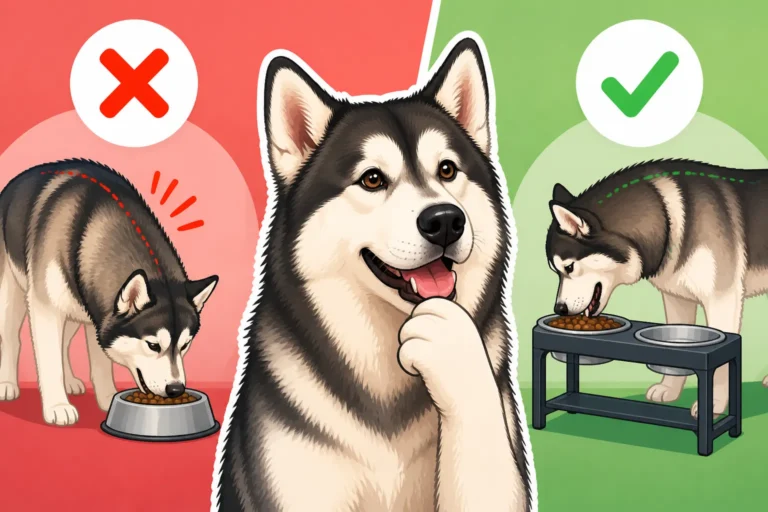
Alaskan Malamute owners evaluate raised bowls, bloat risk, and Purdue University research to protect deep-chested dogs.

Toxic foods like chocolate, grapes, and xylitol cause acute kidney failure, seizures, and death in Alaskan Malamutes.

Alaskan Malamute gut health and probiotics explained, including signs of an imbalanced canine microbiome and digestive issues.

Fish oil supplementation for Alaskan Malamutes provides omega-3 fatty acids like EPA and DHA to support joints, skin, and coat health.

Alaskan Malamute nutritional needs depend on activity levels and environment, determining whether dogs require specialized performance formulas.

Alaskan Malamute winter fat requirements depend on cold weather activity and energy needs for maintaining core body temperature.
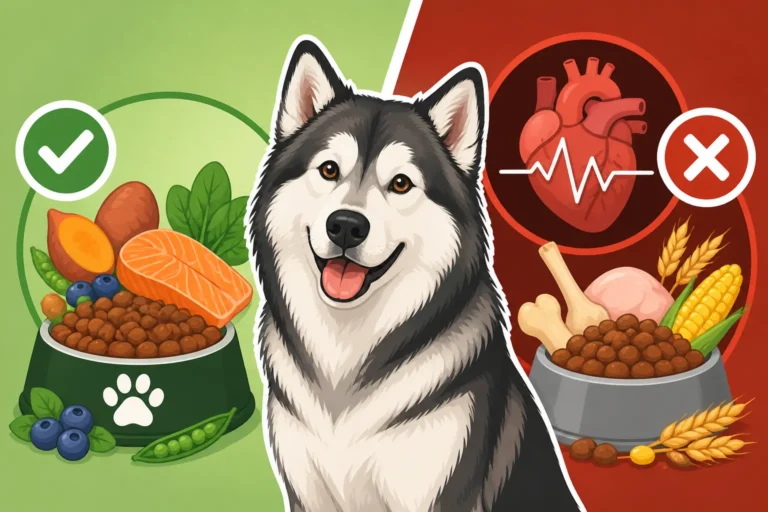
Concerns linking grain-free dog foods to serious heart conditions, with background on why the trend became popular among Malamute owners.
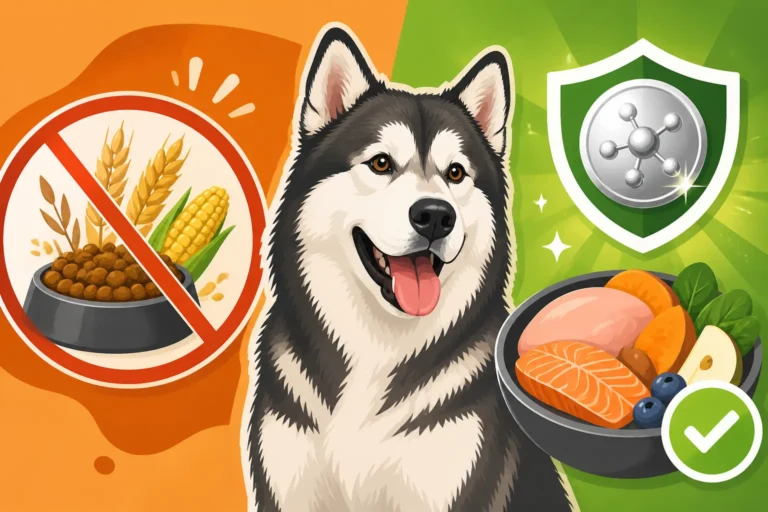
Grain-free food and its effect on zinc absorption in Alaskan Malamutes suffering from Zinc Responsive Dermatosis.