Whether Grain Free Food Risks a Malamute’s Heart
It’s a topic that has sent shivers down the spines of many dog owners, including those of us devoted to our magnificent Alaskan Malamutes: the potential link between grain-free diets and serious heart conditions. Navigating the world of canine nutrition can feel like walking through a minefield, with so much conflicting information out there, and the thought that we might be inadvertently harming our beloved companions is a heavy burden. This guide aims to clear up some of that confusion, offering a comprehensive look at the concerns surrounding grain-free dog foods and the risks they might pose to your Malamute's heart health.
The Grain-Free Trend and Its Appeal to Malamute Owners
For years, "grain-free" has been a buzzword in the pet food industry, touted as a healthier, more natural alternative for our canine companions. Many Malamute owners, dedicated to providing the best for their strong, active dogs, were naturally drawn to these claims, believing they were making a superior choice.
Why Grain-Free Became Popular for Dogs
The surge in popularity for grain-free dog foods didn't happen overnight. It was fueled by a clever marketing narrative that suggested grains were somehow "unnatural" for dogs, mere fillers, or common allergens. The idea was often presented that dogs, as descendants of wolves, thrive on a diet closer to what their wild ancestors would eat, which supposedly didn't include grains. This ancestral diet concept resonated deeply with owners who saw their Malamutes as embodying that primal spirit – majestic, powerful, and deeply connected to their wild heritage.
Companies promoted grain-free as a solution for a myriad of issues, from allergies and digestive upset to better coats and higher energy levels. When you’re faced with so much marketing, it’s easy to feel like you’re doing something wrong if your dog is eating a conventional, grain-inclusive diet. Many owners genuinely believed they were offering a premium product that aligned more closely with what their dogs were "meant" to eat, given their Malamute's robust and often sensitive systems.
Common Misconceptions About Grains and Canine Health
The truth about grains in a dog's diet is far less dramatic than the marketing often suggests. One of the biggest misconceptions is that grains are inherently bad or simply "fillers" with no nutritional value. In reality, healthy grains like corn, wheat, rice, barley, and oats provide readily digestible carbohydrates for energy, essential vitamins, minerals, and valuable fiber. Fiber is crucial for digestive health and can help regulate blood sugar, which is important for a breed like the Malamute with The Efficient Metabolism That Surprises Every New Malamute Owner.
Another common myth is that grain allergies are widespread in dogs. While true food allergies do exist in canines, they are far less common than many people believe, and grains are actually among the least common allergens. Proteins like beef, dairy, and chicken are much more frequently implicated in actual canine food allergies than grains. For a dog that truly has a diagnosed grain allergy, a grain-free diet might be necessary, but this is a rare scenario that should be confirmed by a veterinarian, not assumed based on marketing. Dogs have, through thousands of years of domestication, evolved to digest starches and utilize nutrients from a wide variety of food sources, including grains.
The Troubling Link: Grain-Free Diets and Canine Dilated Cardiomyopathy (DCM)
The landscape of canine nutrition shifted dramatically when veterinary cardiologists began noticing an alarming trend: an increase in cases of Dilated Cardiomyopathy (DCM) in dog breeds not typically predisposed to the condition, often correlating with diets labeled as "grain-free."
Understanding DCM in Dogs
Dilated Cardiomyopathy, or DCM, is a serious and potentially life-threatening heart condition. Essentially, the heart's chambers, particularly the left ventricle, become enlarged and the heart muscle thins and weakens. This makes the heart less efficient at pumping blood throughout the body. Imagine your Malamute’s powerful heart, built for endurance and strength, suddenly struggling to do its most basic job.
Symptoms of DCM can be subtle at first, and our stoic Malamutes are often experts at hiding discomfort, as discussed in Why a Malamute Shows Nothing Until It Cannot Work. However, as the disease progresses, you might notice lethargy, reduced exercise tolerance (your normally energetic Malamute might tire more quickly on walks), coughing, difficulty breathing (especially at rest or after exertion), and in severe cases, fainting or sudden collapse. DCM can lead to congestive heart failure and sudden death. While some breeds like Doberman Pinschers, Great Danes, and Irish Wolfhounds have a genetic predisposition to DCM, the recent surge in cases among non-predisposed breeds, including beloved breeds like the Alaskan Malamute, linked to diet, has been a major concern for veterinarians.
The Role of "BEG" Diets and Taurine Deficiency
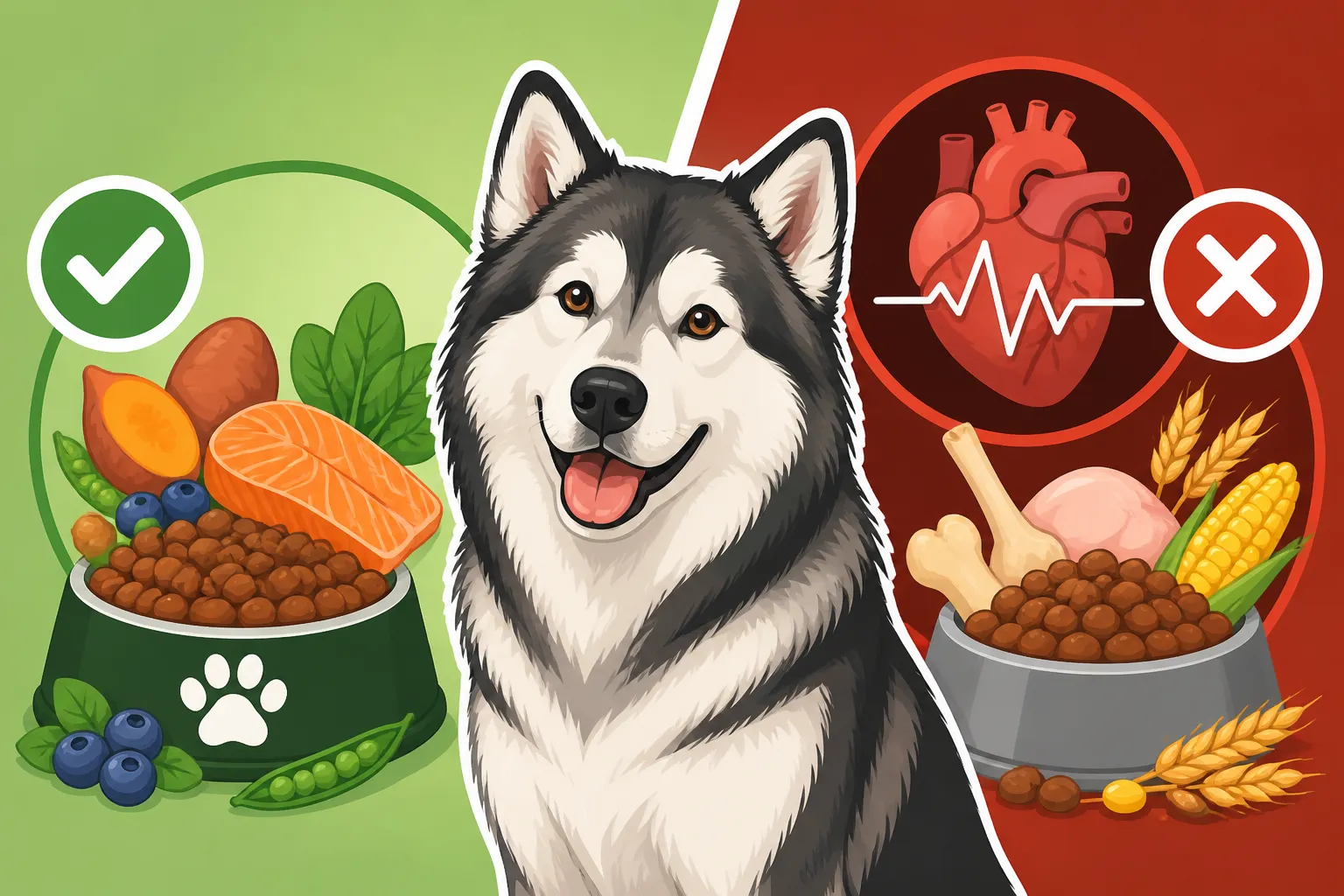
The diets most frequently implicated in these diet-associated DCM cases have been categorized as "BEG" diets: Boutique, Exotic ingredient, and Grain-free. These are often pet foods produced by smaller companies without veterinary nutritionists on staff, using novel protein sources (exotic ingredients like kangaroo or alligator), and, crucially, lacking traditional grains.
The leading theory linking these diets to DCM revolves around taurine, an amino acid critical for normal heart muscle function. Dogs can typically synthesize taurine from other amino acids, but in some cases, certain diets appear to interfere with this process or reduce tauravailable taurine. It's believed that the high inclusion of certain ingredients like peas, lentils, potatoes, and other legumes – which are often used as alternative carbohydrate sources in grain-free foods – may be a key factor. These ingredients can interfere with taurine synthesis or increase its excretion, leading to a deficiency. Even if a diet contains sufficient taurine, these ingredients might prevent the dog from properly utilizing it.
For a Malamute owner, this is particularly concerning because while the breed isn't known for a genetic predisposition to DCM, their active lifestyle demands a healthy heart. A deficiency in something as vital as taurine, exacerbated by dietary choices, could have devastating consequences. The exact mechanisms are still being researched, but the correlation is strong enough that veterinary cardiologists and nutritionists have issued strong warnings.
| Diet Type | Common Characteristics | Potential DCM Risk | Why the Concern |
|---|---|---|---|
| Traditional Grain-Inclusive | Formulated by established brands with veterinary nutritionists; contains common grains (corn, wheat, rice, barley, oats); often undergoes feeding trials. | Low (baseline risk) | These diets typically use well-researched ingredients and have a long history of safe use, providing balanced nutrition including adequate taurine precursors. |
| Grain-Free | Excludes common grains; often uses high amounts of peas, lentils, potatoes, or other legumes as carbohydrate sources; some from smaller "boutique" companies. | Moderate to High | Strong correlation observed by veterinary cardiologists with diet-associated DCM, potentially due to interference with taurine metabolism or other nutritional imbalances. |
| Exotic Ingredient | Uses novel proteins (e.g., kangaroo, alligator, duck, salmon) or carbohydrates (e.g., tapioca, quinoa) outside of typical dog food ingredients; may or may not be grain-free. | Moderate to High | Similar concerns as grain-free, especially if paired with high legume content. Less research on long-term effects of many exotic ingredients on canine nutrition. |
| Boutique/Small Brand | Often smaller companies, sometimes without board-certified veterinary nutritionists; may market heavily on "natural" or "ancestral" claims. | Moderate to High | May lack rigorous scientific formulation, quality control, or feeding trials compared to larger, established brands, increasing the risk of nutritional deficiencies or imbalances. |
What Malamute Owners Should Know and Do
Understanding the risks is the first step, but what actions can you take as a Malamute owner to protect your furry family member's heart? It’s about making informed choices and working closely with your veterinarian.
Recognizing the Signs of Heart Issues
Being vigilant for subtle changes in your Malamute is crucial. Because Malamutes are so tough and often mask pain or illness, you need to be extra observant. If you notice any of the following symptoms, it's vital to contact your veterinarian immediately:
- Lethargy or decreased activity: Your normally boisterous Malamute seems less enthusiastic about walks, playing, or even just getting up.
- Reduced exercise tolerance: They tire more quickly than usual during a hike or a game of fetch. This can be particularly noticeable for working breeds, as discussed in Why a Malamute Shows Nothing Until It Cannot Work.
- Coughing: A persistent cough, especially if it's worse at night or after exercise.
- Difficulty breathing (dyspnea): You might see them breathing rapidly, shallowly, or with more effort than usual, even when resting.
- Fainting or collapsing: Any episode of sudden weakness or collapse requires immediate emergency veterinary care.
- Weight loss despite a good appetite: While some Malamutes can be picky eaters, unexpected weight loss can be a red flag.
- Abdominal distension: Fluid buildup can cause the belly to look bloated or swollen.
Remember, early detection can make a significant difference in managing heart conditions. Don't wait if you have concerns.
Making Informed Dietary Choices for Your Malamute
This is where the rubber meets the road. If you're currently feeding a grain-free diet, or are considering one, it's time for a serious conversation with your veterinarian.
Firstly, prioritize diets that meet the guidelines established by the World Small Animal Veterinary Association (WSAVA). This means choosing foods from companies that:
- Employ a full-time, board-certified veterinary nutritionist.
- Conduct research and feeding trials (preferably AAFCO feeding trials) on their formulations.
- Have robust quality control measures in place.
Established brands that fit these criteria often produce conventional, grain-inclusive diets. For most Malamutes, a high-quality, grain-inclusive food from a reputable manufacturer is the safest and most nutritionally complete choice. These diets have a long history of safety and provide a balanced profile of nutrients, including the precursors for taurine.
If your Malamute has been diagnosed with a specific medical condition that truly necessitates a grain-free diet (e.g., a confirmed, rare grain allergy, not just a suspected sensitivity), work closely with your vet. They may recommend regular cardiac screenings (like echocardiograms) and potentially taurine supplementation, prescribed and monitored by them, to mitigate risks. However, for the vast majority of Malamutes, avoiding grain-free options entirely is the safest approach. When considering their unique needs, such as Feeding an Alaskan Malamute for Zinc It Cannot Absorb or simply How Much an Adult Alaskan Malamute Should Eat, discussing all dietary components with your vet is paramount.
Navigating Food Brands and Labels
The pet food aisle can be overwhelming, with shiny bags and enticing claims. Here’s how to cut through the noise:
- Read the ingredient list carefully: Look beyond the "first five ingredients." Pay attention to the overall composition. Be wary of diets listing peas, lentils, legumes, or potatoes among the first few ingredients, especially if you are concerned about DCM. These ingredients aren't inherently bad, but their high inclusion in grain-free formulas is where the concern lies.
- Focus on transparency, not just marketing: Brands that openly share their nutritional expertise, research, and feeding trial results are generally more trustworthy. Don't fall for vague claims of "natural" or "holistic" without scientific backing.
- Where to find reputable food: While your vet is the primary source for recommendations, you can find a wide range of reputable, science-backed dog food brands on platforms like Chewy or Amazon. However, always get your vet's input before purchasing, especially if you're making a switch. Some brands, like Ollie, offer fresh, human-grade food options. While these can appeal to owners looking for "natural" choices, it's crucial to ensure they are formulated by veterinary nutritionists, meet WSAVA guidelines, and provide balanced nutrition with adequate taurine for your Malamute's needs. Fresh food can be great, but it’s not automatically safer from DCM concerns if it heavily relies on high legume content without careful formulation.
Ultimately, your veterinarian is your best resource for navigating food brands and labels. They have access to the latest research and can help you select a diet that is appropriate for your Malamute's specific health needs and lifestage.
The Path Forward: Veterinary Consultation and Vigilance
Owning an Alaskan Malamute is a journey of responsibility, and their health, particularly their heart, is a top priority. Being proactive and informed is your best defense against potential dietary risks.
The Importance of Regular Veterinary Check-ups
Consistent, annual veterinary check-ups are non-negotiable for your Malamute. These visits aren't just for vaccinations; they are critical opportunities for your vet to assess your dog's overall health, including listening to their heart for any abnormalities. During these appointments, make sure to openly discuss your Malamute's diet – every food, treat, and supplement. If you've recently changed their food or are considering a switch, tell your vet. This open communication allows them to provide the most tailored advice.
For Malamutes who have been on "BEG" or grain-free diets, your veterinarian might recommend specific cardiac screening tests. This could include a simple blood test to check taurine levels, or a more comprehensive echocardiogram (an ultrasound of the heart) to assess heart function and structure. These screenings can help detect early signs of DCM or taurine deficiency, allowing for intervention before the condition becomes severe. Remember, early detection, especially for a dog that can gain weight easily like a Malamute and might be masking issues, is key. Whether a Malamute Gains Weight Easily can sometimes mask subtle health changes.
Advocating for Your Malamute's Heart Health
You are your Malamute's strongest advocate. Don't hesitate to ask questions, seek clarification, and if necessary, a second opinion. If your primary veterinarian isn't fully up-to-date on the latest research regarding diet-associated DCM, or if you have specific concerns, ask for a referral to a board-certified veterinary cardiologist or a veterinary nutritionist. These specialists have the most current knowledge and diagnostic tools to address complex dietary and cardiac issues.
It's a scary thought to think that the food you chose with the best intentions could be causing harm. But by staying informed, working closely with veterinary professionals, and choosing diets backed by sound science rather than marketing hype, you can significantly reduce the risk and ensure your Malamute lives a long, healthy life. Every Malamute deserves the best possible care, and that includes careful consideration of their daily nutrition, just as you'd consider all their other needs outlined in What an Alaskan Malamute Needs Every Day or plan for Caring for an Alaskan Malamute Past Eight. Proactive health management, including discussing The Health Tests Both Alaskan Malamute Parents Should Have before choosing a puppy, sets the foundation for a lifetime of well-being.
Disclaimer
This article is for general informational purposes only and does not constitute professional advice. Laws, prices and regulations vary by location and change over time. Consult a qualified professional for guidance on your specific situation.