How to Spot a Heavy Malamute Under Its Coat
Alaskan Malamute body condition assessment methods help owners check for hidden weight gain under thick double coats.
The daily stuff, done right.
Feeding amounts by life stage, coat and skin routines, dental and nail care, exercise needs, and what changes as they age.
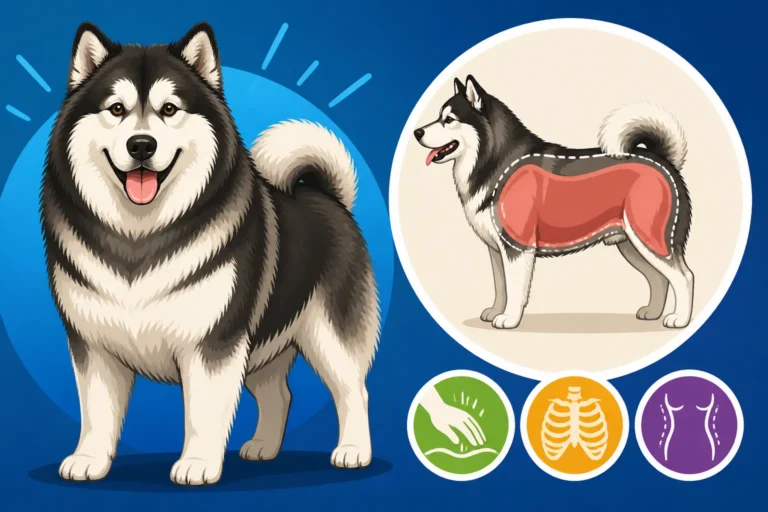
Alaskan Malamute body condition assessment methods help owners check for hidden weight gain under thick double coats.

Overweight Alaskan Malamutes overheat faster because excess body fat and thick double coats trap internal heat and prevent cooling.

Alaskan Malamute weight gain stems from an efficient ancient metabolism adapted for scarcity, requiring careful portion control.

Alaskan Malamute skipping meals is explained by their efficient metabolism, ancestral roots, and fluctuating activity levels.

Alaskan Malamute metabolism features an efficient calorie adaptation shaped by historical Arctic survival and scarcity conditions.

Alaskan Malamute puppy feeding amounts at four months old, explaining nutritional needs, calorie requirements, and large breed growth.

Adult Alaskan Malamutes typically eat two to five cups of high quality dry kibble daily, depending on weight and activity level.

Pregnant Alaskan Malamutes require careful zinc management because genetic absorption issues impact fetal development and maternal health.

Alaskan Malamute puppies have a genetic predisposition to zinc absorption issues that affect their skin, coat, and immunity.

Alaskan Malamute zinc absorption and whether a raw diet delivers more of this vital mineral to dogs with zinc responsive dermatosis.