What a Malamute Does When Someone Knocks
You've heard it a thousand times: the doorbell rings, and a cascade of chaos erupts. But if you own an Alaskan Malamute, that familiar ding-dong or knock often elicits a response far different from the traditional bark. Instead, you might be met with a symphony of "woos," excited leaps, or perhaps even a surprisingly quiet, watchful stance, leaving visitors and owners alike wondering what just happened and how to manage the unique doorway dance.
The Malamute's Signature Welcome: More "Woo" Than Woof
Let's face it, many people expect a booming bark when someone approaches the door, especially from a dog the size of an Alaskan Malamute. They imagine a formidable guard dog, standing its ground and announcing intruders with stern authority. With a Malamute, however, you're usually in for a completely different kind of greeting. Their vocalizations are often less about territorial warning and more about excited communication.
The Art of the Malamute Woo
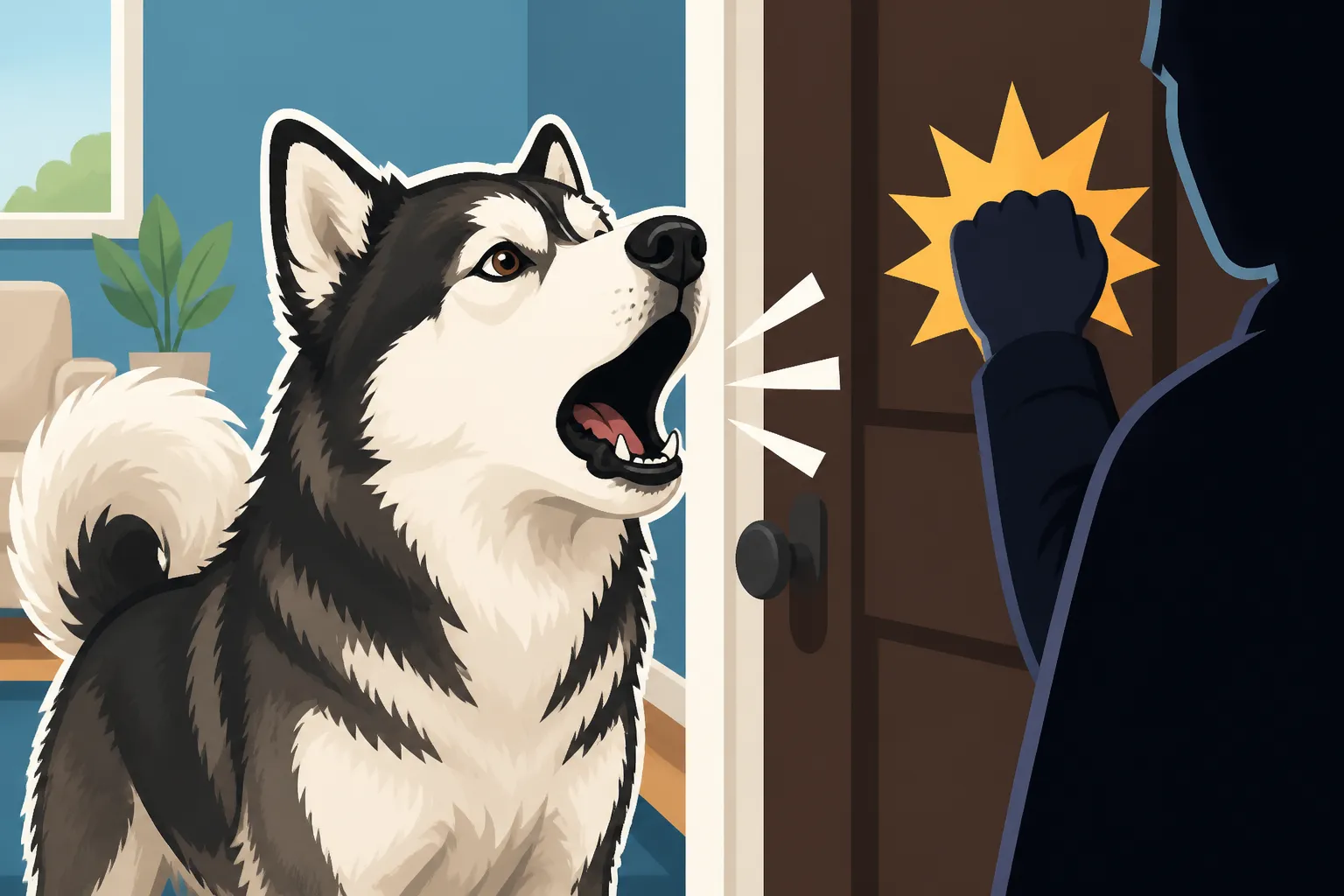
If you're a Malamute owner, you know the "woo." It's that expressive, almost conversational sound that can range from a soft moan to a full-throated, operatic howl. When a knock comes, your Malamute might launch into a series of these woos, often accompanied by tail wags, a bouncing gait, or even a full-body wiggle. It's their way of saying, "Someone's here! Look! Aren't you excited too?" rather than "Go away!" This isn't just a quirk; it's deeply ingrained in their heritage. The Mahlemut people who developed the breed needed dogs that could work collaboratively and communicate effectively within their pack, not dogs that would aggressively chase off every stranger. They are social animals at their core, and a knock represents a potential expansion of their immediate social circle, even if just for a moment.
This unique vocalization sets them apart from many other breeds. While a German Shepherd might stand stiff, hackles raised, and bark deeply, a Malamute is more likely to engage in a noisy, enthusiastic serenade. It can be quite startling for visitors who aren't familiar with the breed, often leading them to think the dog is aggressive when it's really just overjoyed, or perhaps a little over-stimulated. Understanding Why a Malamute Wooes Instead of Barking is key to interpreting their behavior at the door. They aren't trying to be rude; they're just being Malamutes.
Excitement Versus Aggression
It’s easy to mistake a Malamute's boisterous excitement for aggression, especially if they're also jumping or pawing. A large dog launching itself at a door, even playfully, can be intimidating. However, with Malamutes, this is almost always rooted in exuberance. They want to be part of whatever is happening, and a knock signals an event! Their natural pack drive means they want to greet new "pack members" or at least investigate who is at the periphery of their family unit. They might spin in circles, charge to the door, or even paw at it, all in an effort to get closer to the source of the excitement.
This distinction is crucial for owners. If you react to their excitement as if it's aggression, you might inadvertently use harsh corrections that can damage your bond and confuse your dog. Instead, recognizing it as high-energy curiosity allows you to channel that energy into appropriate greetings. Visitors, too, need to be educated; a calm, slow approach is often best, avoiding sudden movements that could further amp up an already excited Malamute.
Decoding the Knock: Why Your Malamute Reacts How It Does
The Alaskan Malamute's reaction to a knock is a direct reflection of their historical role and innate temperament. They were bred for freighting, stamina, and companionship with their human handlers in harsh Arctic environments, not for guarding property. This fundamental difference shapes their response to novel stimuli like a knock at the door.
Bred for Companionship, Not Confrontation
Historically, Malamutes lived and worked closely with their human families. Their survival depended on a strong bond and cooperative spirit. They weren't left alone to guard homes against human intruders; rather, their presence and imposing size might have been deterrent enough, but active aggression was not a desired trait. When a knock happens, their instinct isn't to protect territory through intimidation, but often to investigate or to alert their human "pack members" to the presence of another. This means you're more likely to get an alert bark or a series of enthusiastic woos than a truly aggressive display. This deep-seated trait is why understanding Why the Alaskan Malamute Is Not a Guard Dog is so important for prospective and current owners.
Their reactions are also influenced by their strong pack drive. A knock signifies an unknown entity approaching the pack's den. Their initial response is often to gather information and assess the situation alongside their human leader. They're looking to you for cues. If you become frantic or agitated, they'll mirror that energy. If you remain calm and confident, they're more likely to follow your lead, even if they're still bursting with curiosity.
The Role of Prey Drive and Socialization
While not bred for aggression towards humans, Malamutes do possess a strong prey drive, a remnant of their hunting heritage. This isn't usually activated by a stationary knock, but it can play a subtle role if visitors move quickly or make sudden noises upon entering. A darting hand or a child running can sometimes trigger a Malamute's chase instinct, leading to jumping or nipping that is not aggressive but rather a misdirected predatory play. This is why proper socialization from a young age is paramount, exposing them to a variety of people, sounds, and situations to help them differentiate between a friendly visitor and something to be chased.
Furthermore, a lack of consistent training or insufficient socialization can amplify chaotic door behavior. A Malamute that hasn't learned appropriate greetings might be overwhelmed by the excitement of a knock, leading to jumping, frantic vocalizations, or even nipping out of overstimulation. This isn't malice, but a lack of impulse control. For these dogs, every knock is an unmanaged explosion of energy, and it's up to us, their human companions, to guide them.
Managing the Doorway Dynamic: Training and Practical Solutions
Dealing with a boisterous Malamute at the door requires a combination of consistent training, environmental management, and a deep understanding of their breed specific traits. It’s not about stifling their personality, but channeling it into polite and manageable behavior.
Setting Up for Success: Environmental Control
Before you even start formal training, consider how you can manage the environment to reduce overstimulation. A physical barrier, like a baby gate or a sturdy dog gate, can be a game-changer. Placing your Malamute behind such a barrier when you anticipate a visitor gives them a designated "safe space" and prevents them from rushing the door. This allows them to observe calmly, reducing the direct impulse to jump or charge. You can find durable dog gates on Amazon that are tall enough to deter even the most determined Malamute from easily leaping over.
Another crucial step is to practice door manners before visitors arrive. Simulate knocks and doorbell rings. Don't wait for the real thing to test your Malamute's patience. Have a family member or friend knock while you practice your desired routine. This desensitization helps to make the sound less exciting and more routine, reducing the dramatic flair your Malamute might typically bring to the occasion.
Essential Training Cues for Door Greetings
Teaching specific cues can transform your Malamute's door manners. A solid "Place" or "Mat" command is invaluable. This involves teaching your Malamute to go to a designated spot (a dog bed, mat, or crate) and stay there until released. Practice this extensively, rewarding calm behavior with high-value treats. When a knock comes, direct them to their place before opening the door. This gives them a job to do and prevents them from greeting guests with a full-body tackle.
| Command | Purpose | How to Practice | Malamute Benefit |
|---|---|---|---|
| "Place" / "Mat" | Designate a calming spot for greetings. | Lure your Malamute to their bed/mat with a treat. Say "Place" as they step on it. Reward for staying, gradually increasing duration. | Teaches impulse control, provides a job during greetings, keeps them from jumping on guests. |
| "Wait" / "Stay" | Prevent rushing the door or guests. | Have your Malamute sit/stand, say "Wait," then take a step back. Reward for holding position. Gradually increase distance and duration. | Reinforces patience, prevents doorway breaches, allows you to greet visitors first. |
| "Off" | Discourage jumping on people. | When your Malamute jumps, turn away or step back. Reward when all four paws are on the floor. | Teaches polite greetings without physical contact or intimidation. |
| "Quiet" | Address excessive wooing or barking. | When your Malamute is vocalizing, wait for a brief pause, then say "Quiet" and reward. Gradually extend the quiet period. | Helps manage the volume of their enthusiastic greetings, especially in residential areas. |
Positive reinforcement is the most effective approach for Malamutes, as Why Force Fails on an Alaskan Malamute is a common lesson learned by new owners. They are intelligent and independent, and respond best to methods that build cooperation rather than coercion. Treats, praise, and favorite toys work wonders.
For more structured guidance, consider online training programs. Platforms like BAXTER & Bella offer comprehensive resources that can help owners implement these training techniques effectively, often with step-by-step videos and support. The key is consistency. Every person who interacts with your Malamute at the door must reinforce the desired behavior.
The Leash as a Training Tool
Even with rigorous training, some Malamutes will struggle with impulse control when that knock or doorbell rings. Using a leash, even indoors, can be incredibly helpful. Before you open the door, have your Malamute on a leash, secured to you or a sturdy anchor point a short distance from the door. This gives you immediate control and allows you to physically prevent jumping or rushing, without needing harsh verbal corrections.
When the visitor arrives, your Malamute can be asked to "Place" or "Sit," and then, once calm, slowly allowed to approach for a polite greeting, still under leash control. This teaches them that calm behavior earns them the privilege of greeting. This controlled interaction is vital, especially for young, excitable Malamutes or those with a history of unruly greetings. It buys you time to teach them the correct manners rather than constantly battling their natural exuberance.
Beyond the Initial Greeting: Malamute Alertness and Home Security
While a Malamute isn't your typical guard dog, their presence and particular reactions to a knock do play a role in home security. It’s important to understand the nuances of their alertness and how it differs from breeds specifically developed for protection.
An Alert, Not Aggressive, Presence
An Alaskan Malamute is inherently alert to their surroundings. They notice things, and they will almost certainly let you know if someone is at the door, whether through a series of woos, a few barks (especially if they're startled or unsure), or a focused, watchful stance. This alerting behavior can certainly deter potential intruders. The sheer size and wolf-like appearance of a Malamute can be quite intimidating, even if the dog's actual intention is to request belly rubs. For an unexpected visitor with ill intentions, the noise and imposing presence of a Malamute might be enough to make them reconsider.
However, it's crucial to reiterate that this is an alert, not typically an aggressive, response. While they will warn you, they are generally not inclined to attack a human intruder. Their instinct is usually to investigate or to alert their owner, rather than to engage in a confrontation. This is a common misconception about Northern breeds; many people assume their size means they are natural protectors, when in reality, their temperament is usually quite friendly once the initial excitement wears off. Your Malamute might just offer a stranger a big, slobbery kiss, making them a very ineffective guard dog in the traditional sense.
Understanding the Malamute's Boundaries
A Malamute's territoriality is often tied more to their human pack than a specific property line. They might not react strongly to a stranger walking past your fence, but a knock on your door, where their family resides, will definitely get their attention. The key is that their response is usually driven by curiosity and their desire to be involved, rather than a deep-seated need to protect.
They observe. They take in information. An unexpected sound will cause them to perk up, listen intently, and then decide on the appropriate vocalization or action. If the sound is familiar, like the mail carrier who visits daily, their reaction might be a muted woo or even just a glance. If it's something entirely new, you might get a more pronounced display of curiosity and vocal communication. This discerning nature makes them excellent alert dogs, just not necessarily attack dogs.
If you're concerned about true security, relying solely on a Malamute's "guarding" instincts is not advisable. Their strength lies in their ability to alert you and to deter through presence, rather than through overt aggression. How a Malamute's Noise Carries in a Neighborhood means everyone will know when someone is at your door, which offers its own form of security.
Integrating Malamute Manners into Daily Life
Training your Malamute for polite greetings is an ongoing process, not a one-and-done event. It requires patience, consistency, and a realistic understanding of your dog's inherent nature.
Consistency is Key
Every interaction at the door is a training opportunity. If you sometimes let your Malamute jump on guests and other times scold them, you're sending mixed signals that will only confuse them. Everyone in the household, and even frequent guests, should be on the same page regarding door manners. This means consistently asking for a "Place" or "Sit" before opening the door, and only allowing interaction when the Malamute is calm. Rewarding that calm behavior enthusiastically reinforces the correct response.
Remember, Malamutes are intelligent and will test boundaries. The Adolescent Malamute That Rewrites the Rules at Fourteen Months is a common experience, and door manners are often one of the first things to "break" during this challenging stage. Stay patient, recommit to your training plan, and don't give up. Consider enrolling in a local obedience class or seeking guidance from a professional trainer if you're struggling. Sometimes, an outside perspective can help identify areas for improvement or introduce new techniques.
Managing Expectations for Visitors
Educating your visitors is as important as training your dog. Explain to friends and family before they arrive what to expect and how to interact with your Malamute at the door. Ask them to wait for your cue before petting, to not encourage jumping, and to remain calm themselves. For children, this is particularly important, as their quick movements and high-pitched voices can easily overstimulate a Malamute.
By setting clear boundaries for both your dog and your guests, you create a more predictable and less stressful experience for everyone. A calm, controlled greeting ensures your Malamute understands their role and helps your visitors feel more comfortable and safe, making every knock at the door a much more pleasant occasion.
Disclaimer
This article is for general informational purposes only and does not constitute professional advice. Laws, prices and regulations vary by location and change over time. Consult a qualified professional for guidance on your specific situation.