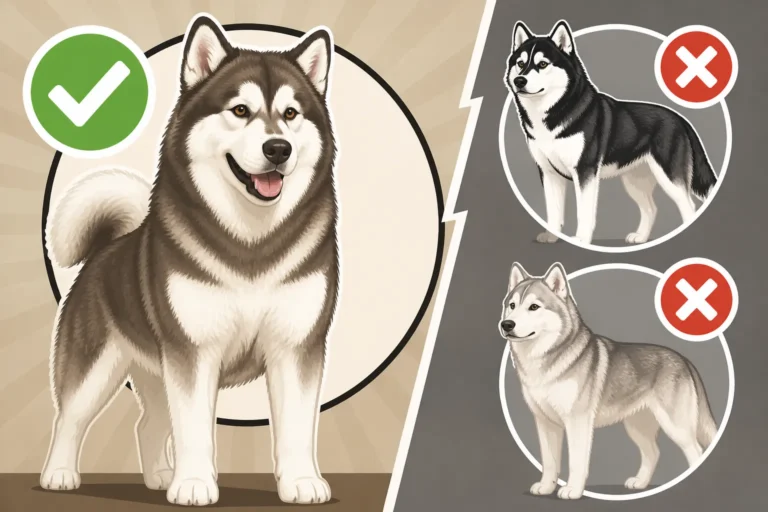
Whether a Malamute Is Calmer Than a Husky
A Malamute may look like the calmer, more imposing cousin of a Siberian Husky, but that impression can be misleading. Both breeds are energetic working dogs, and “calm” depends on age, exercise, training, temperament, and what is happening around them. This guide explains the differences owners are likely to notice at home, on walks, and around other dogs.
What people mean when they call a dog calm
Calm is not the same as low energy
When someone asks whether a Malamute is calmer than a Husky, they may mean several different things: less vocal, less restless indoors, easier to settle after a walk, or less likely to launch into activity at the sight of a squirrel. Those traits do not always come as a package. A dog can nap quietly inside and still be powerful, athletic, and determined once it gets outside.
Both Alaskan Malamutes and Siberian Huskies were developed as working sled dogs, but they were shaped for different jobs. Malamutes are associated with hauling heavy loads over distance; Huskies are associated more with covering ground efficiently at speed. That history helps explain why a Malamute may seem steadier or less constantly in motion, while a Husky may appear quicker and more animated. It does not mean every Malamute is relaxed or every Husky is frantic.
A useful way to compare two dogs is to look at what they do after their needs are met. If a dog has had an appropriate walk, a chance to sniff and explore, and some interaction with its people, can it settle comfortably? Or does it keep searching for an outlet—pacing, vocalizing, digging, or grabbing household objects? That everyday pattern tells you more than the breed label alone.
A quiet dog can still need a lot
Malamutes are not necessarily loud in the same way people expect from Huskies, but either breed can howl, “talk,” whine, or make other noises. Vocal behavior varies with the individual, household routine, boredom, and what the dog has learned gets a response. A quieter Malamute is not automatically easier to live with if it is digging under the fence or pulling hard toward every distraction.
It is also easy to mistake physical stillness for contentment. A dog lying on the floor may be resting comfortably—or may be under-stimulated, waiting for activity, or simply too warm to move around. Watch the full picture: body language, appetite, sleep, interest in walks, and whether the dog can relax after exercise.
If you’re comparing the breeds because you want a quieter household, consider noise separately from general activity. Whether a Malamute Is Quieter Than a Husky looks at vocal habits more directly, while How Much Exercise an Alaskan Malamute Needs helps frame the daily activity question.
How Malamutes and Huskies may differ at home
The Malamute may seem more deliberate
Some owners experience Malamutes as less quick to spring into action and more measured in their movements than Huskies. That can give a Malamute a calmer impression at home, especially after it has had enough physical and mental activity. A mature dog that is comfortable with its routine may spend long stretches resting near family members rather than constantly asking for the next game.
But “more deliberate” is not the same as easy to manage. A Malamute can be independent, strong, and very interested in whatever it has decided to investigate. It may ignore a familiar cue when a more exciting option appears. A calm-looking dog that suddenly leans into the leash or follows a scent can be surprisingly difficult to redirect if the handler is not prepared.
Huskies may seem more openly busy or playful, particularly when young. They often enjoy movement, exploration, and interaction, and an under-exercised Husky can make its own entertainment. Still, plenty of Huskies are excellent loungers at home, and some Malamutes are lively well into adulthood. The contrast is a tendency people may notice—not a dependable rule for predicting an individual dog.
Age and routine change the comparison
Puppies of either breed are rarely models of calm. They are learning how to live in a human household while growing quickly, testing boundaries, and exploring with their mouths. Adolescence can bring another round of apparent backsliding: a dog that once responded reliably may become more distracted, more independent, or more interested in other dogs and scents. The Age an Alaskan Malamute Tests Its Owner covers a stage that can make an otherwise steady dog feel suddenly less settled.
Daily routine matters just as much as age. A dog with regular walks, sniffing opportunities, short training sessions, and a predictable rest space is often easier to live with than a dog whose activity comes in occasional bursts. Long, intense exercise is not the only answer; many dogs benefit from manageable activities spread through the day, especially when the weather is warm or the dog is still growing.
For example, imagine a young Husky who gets a brief walk before a long day alone. The dog may spend the afternoon pacing or vocalizing. A Malamute with the same routine might appear quieter, but that does not mean its needs have disappeared; it may redirect frustration into digging, chewing, or fence testing. Whether an Alaskan Malamute Is Happy Without Work explores why a low-key appearance does not necessarily mean a working breed is fulfilled.
A practical comparison of everyday behavior
The table below describes common impressions, not guarantees. Individual dogs, upbringing, health, and household conditions can outweigh breed tendencies.
| Everyday question | Alaskan Malamute | Siberian Husky |
|---|---|---|
| May seem calmer indoors | Often perceived as more measured, especially when mature and well exercised | Can be very relaxed, but some are visibly busy or eager for activity |
| Energy needs | Needs regular activity and engagement; strength and stamina can be substantial | Needs regular activity and engagement; often especially keen on sustained movement |
| Vocal style | May howl, woo, whine, or make other sounds; individuals vary | Often known for expressive vocalizing, though some are relatively quiet |
| Response to distractions | Can be independent and difficult to redirect when focused | Can be highly distractible and inclined to explore or run |
| Settling after exercise | Often settles well when its routine and needs are met | Often settles well when its routine and needs are met |
| What may be mistaken for calm | Quietly digging, chewing, or watching for an opportunity to roam | Restlessness, vocalizing, or finding its own activity |
Exercise and enrichment are part of the answer
Neither breed should be judged by whether it can spend the day in a yard. A yard offers space, but it does not necessarily provide exercise, companionship, or mental engagement. Some dogs will pace the perimeter, dig, or wait by the door rather than entertain themselves in a healthy way. Supervised walks, safe sniffing time, and training games give owners a better sense of what their dog needs.
Enrichment can be simple. A short scent game in the house, a few minutes practicing a familiar cue, or a food puzzle can give a dog something constructive to do. If you’re choosing a puzzle feeder or another enrichment item, Chewy is one place owners may look for a range of pet supplies; choose a design that suits the dog’s chewing habits and supervise its first uses. The aim is not to keep a dog busy every minute, but to make rest feel earned and comfortable.
Be cautious about trying to tire a dog out with nonstop strenuous exercise. Growing dogs need age-appropriate activity, and hard exercise in heat can be dangerous for a heavily coated breed. A sensible routine balances movement with rest and adjusts to the dog’s age, fitness, health, and conditions outside.
Leash behavior and dog interactions matter too
A dog that is calm in the living room may be intense on leash. Both breeds can pull, and their size and strength mean leash manners are more than a convenience. A dog that spots another animal, a running child, or a tempting scent may react before its owner has time to prepare. Practicing loose-leash walking in quiet places and gradually adding distractions is more useful than assuming a calmer indoor manner will carry over outdoors.
Dog-to-dog behavior also varies. Some Malamutes and Huskies are sociable; others are selective, uncomfortable, or not suited to crowded play settings. Their behavior can change as they mature, so introductions should be managed rather than forced. If you are deciding whether the breed will fit an existing household, read The Alaskan Malamute Against the Siberian Husky alongside Why Malamutes Fight Dogs of the Same Sex for a broader view of the practical differences and social considerations.
A calm greeting is not the only measure of a good interaction. Look for loose body language, the ability to disengage, and recovery after excitement. If your dog is repeatedly lunging, stiffening, or struggling to settle around other dogs, create more distance and seek help from a qualified trainer or veterinary behavior professional rather than relying on breed stereotypes.
How to choose the right dog for your home
Look at the individual, not just the breed reputation
If you’re meeting a puppy, ask the breeder how the parents behave in ordinary home life, not only how they look in a show ring or perform in a working setting. Ask about recovery after excitement, comfort with handling, response to new environments, and the family’s experience with vocalizing, pulling, and settling. A thoughtful breeder should be willing to discuss both strengths and challenges rather than promise a perfectly calm dog.
With an adult dog, observe its behavior in more than one situation if possible. A quiet visit to a home may not reveal how the dog behaves on a walk or around unfamiliar dogs. Ask the current caregiver what happens when the dog is bored, left alone, excited, or asked to stop doing something it enjoys. Rescue staff or foster caregivers may be able to describe patterns that are not apparent during a brief meeting.
Consider your own routine honestly. A person who wants a dog that needs little exercise, rarely pulls, and responds instantly to every cue may be disappointed by either breed. If your preference is for a less hurried presence indoors, an individual Malamute might suit you—but that should be one part of a wider match, not the whole reason to choose one.
Set up the household for settling
A reliable rest routine starts with basics: enough appropriate activity, a comfortable place to sleep, consistent household rules, and opportunities to decompress without being constantly disturbed. Reward calm behavior when it happens naturally. For example, if your dog lies on its mat after a walk, quietly praise or offer a small reward rather than immediately restarting play. This teaches that settling is worthwhile.
If a dog is restless indoors, look for the cause before labeling it stubborn or hyperactive. It may need a bathroom break, a quieter place to rest, more appropriate exercise, or help adjusting to a new schedule. Persistent changes in energy or behavior—especially alongside changes in appetite, gait, breathing, or comfort—are worth discussing with a veterinarian. Pain or illness can look like irritability, withdrawal, or unusual restlessness.
Gear can help with practical routines, but it cannot replace training. A properly fitted harness or leash can make walks easier to manage, and some owners browse Chewy when looking for everyday walking or enrichment supplies. Check fit, durability, and the dog’s comfort rather than assuming a particular product will solve pulling or excitement. For a strong dog, calm handling and consistent practice remain essential.
Make the decision around your real priorities
Use “calmer than a Husky” as a starting question, then make a more specific list. Do you want a dog that is less vocal, more content to lounge, easier to walk, or less likely to seek activity? Those are separate goals, and neither breed guarantees all of them. If noise is your main concern, consider howling and neighborhood sound. If indoor rest matters most, ask about the individual dog’s behavior after exercise. If you want easier handling, evaluate leash skills and strength directly.
The Malamute may strike some people as steadier, while the Husky may strike others as more animated. In both breeds, maturity, exercise, training, and temperament can change that picture considerably. A calm Malamute is still a working-breed dog with substantial needs; a lively Husky can still learn to settle and become a peaceful companion at home.
Before bringing either dog home, plan for walks, training, grooming, safe containment, and warm-weather management. Chewy may be useful for finding routine supplies such as brushes or food puzzles, but shopping cannot substitute for a realistic care plan. Whether a Malamute Is Easier to Train Than a Husky and Whether an Alaskan Malamute Suits a First Time Owner can help you think through the commitment beyond the question of which breed seems calmer.
Disclaimer
This article is for general informational purposes only and does not constitute professional advice. Laws, prices and regulations vary by location and change over time. Consult a qualified professional for guidance on your specific situation.